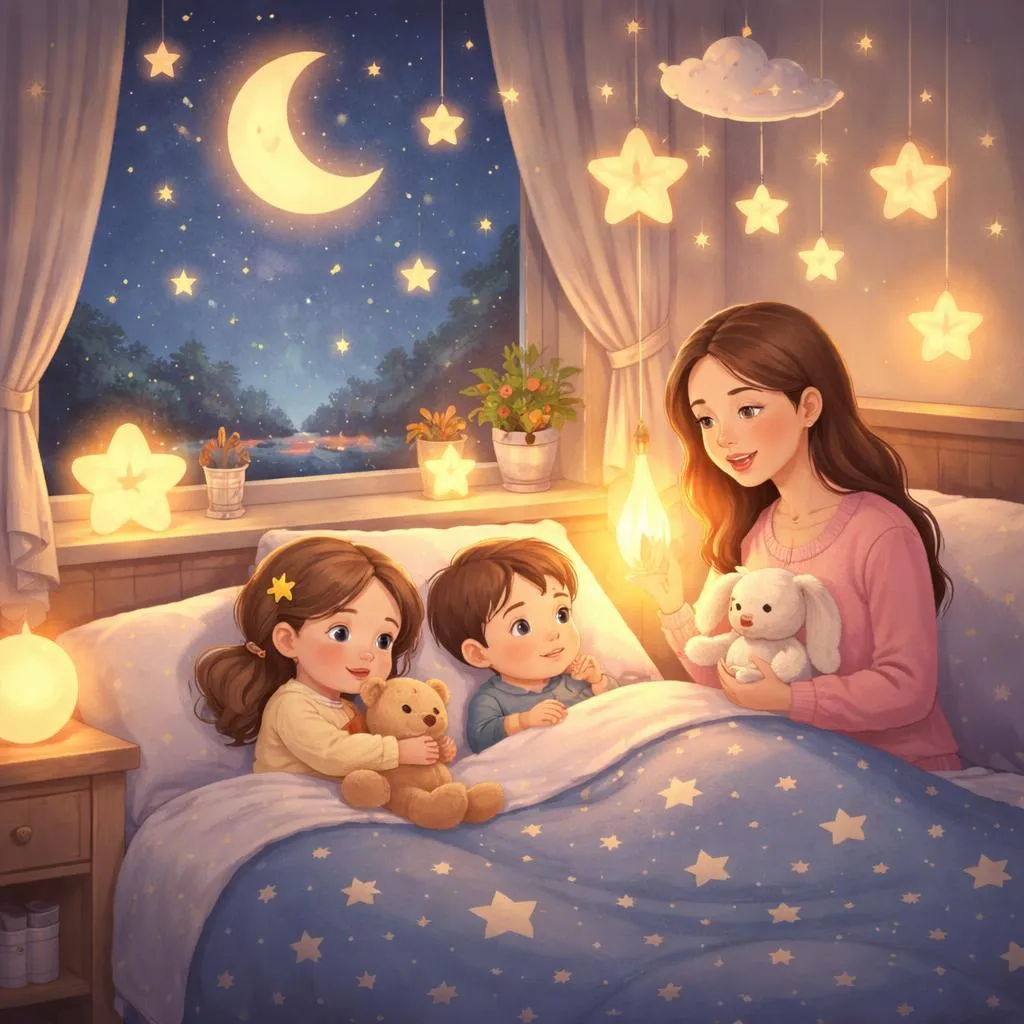

What is the twinkle twinkle little star lullaby?
The twinkle twinkle little star lullaby is one of the most famous English nursery rhymes. It has a calm melody and soft rhythm. The song often appears at bedtime. It helps create a peaceful atmosphere and supports early language learning.
This lullaby uses simple words and repeating patterns. These features make it ideal for young learners. The song connects imagination with language. It describes a star in the night sky and invites curiosity about nature.
The melody remains gentle and slow. This pace supports listening skills and pronunciation practice. The repetition supports memory and confidence in speaking and singing.
The lyrics of twinkle twinkle little star lullaby
The classic version of the song includes these well-known lines:
“Twinkle, twinkle, little star, How I wonder what you are. Up above the world so high, Like a diamond in the sky. Twinkle, twinkle, little star, How I wonder what you are.”
Many extended versions add more verses. The first verse remains the most widely used in early learning. The simple structure helps learners follow the meaning easily.
Vocabulary learning with twinkle twinkle little star lullaby
The twinkle twinkle little star lullaby introduces meaningful and poetic vocabulary. Words like twinkle, little, star, wonder, world, high, diamond, and sky appear in the lyrics. These words describe nature and imagination.
The song also includes common question words like what. This helps build curiosity-driven language. The phrase “How I wonder” introduces expressions of curiosity and thinking.
Teaching these words with pictures of stars, night skies, and diamonds helps connect language with visuals. Repetition of these words through singing strengthens retention.
Phonics points in twinkle twinkle little star lullaby
Phonics learning becomes natural with this lullaby. The rhyme includes clear vowel sounds and consonant blends. Words like twinkle and little provide practice with consonant clusters.
The long vowel sound in high and sky helps recognize vowel patterns. The rhyme between star and are supports rhyme recognition. The repeating sound patterns help build phonemic awareness.
Singing slowly supports articulation. Stretching sounds in twinkle and diamond helps learners hear each phoneme. This supports early reading development.
Grammar patterns in twinkle twinkle little star lullaby
The twinkle twinkle little star lullaby contains simple grammar structures. The sentence “How I wonder what you are” introduces a question structure. It shows how to express curiosity.
The phrase “Up above the world so high” uses prepositions and descriptive phrases. This shows how to describe location and position.
Comparisons appear in “Like a diamond in the sky.” This line introduces similes in a gentle and poetic way. It helps connect language with creative thinking.
Learning activities with twinkle twinkle little star lullaby
Singing with gestures supports understanding. Pointing to the sky or making star shapes with hands helps connect words with meaning.
Drawing stars and labeling them with words from the song reinforces vocabulary. Craft activities such as creating paper stars or night sky scenes help deepen engagement.
Role-play storytelling also works well. A short story about a curious child looking at the night sky can include repeated lines from the lullaby. This connects song lyrics with narrative language.
Printable materials for twinkle twinkle little star lullaby
Printable lyric sheets with large fonts support early reading. Adding pictures next to key words helps comprehension.
Flashcards with words like star, sky, diamond, and world help with vocabulary practice. Matching cards with pictures supports visual learning.
Simple worksheets can include fill-in-the-blank lines such as “Twinkle, twinkle, little ____.” These exercises reinforce spelling and recognition.
Educational games using twinkle twinkle little star lullaby
A word matching game works well. Match words from the song to pictures of stars, skies, and diamonds. Singing the lullaby during the game keeps the activity engaging.
A sequencing game can include pictures that represent the lines of the song. Arrange them in order while singing. This supports comprehension and memory.
A rhythm clapping game adds fun. Clap or tap to the rhythm of the song while repeating key words. This supports listening skills and rhythm awareness.
Daily life examples connected to twinkle twinkle little star lullaby
The twinkle twinkle little star lullaby connects to bedtime routines. Singing it before sleep creates a calm transition from day to night.
The song also connects to nature learning. Observing stars in the evening sky and repeating lines from the song builds a connection between language and real-world experiences.
Using the song during quiet moments supports emotional regulation and relaxation. Music helps create a peaceful learning environment.
Building emotional comfort through lullabies
Lullabies provide comfort and security. The twinkle twinkle little star lullaby offers a gentle rhythm that supports relaxation. Soft singing helps reduce stress and promotes calmness.
The repetitive melody creates predictability. Predictable patterns support emotional stability and listening skills.
The imagery of a shining star also inspires wonder and imagination. This supports emotional and cognitive development.
Integrating twinkle twinkle little star lullaby into English lessons
The lullaby fits well into lessons about space, night, and nature. It supports vocabulary themes such as sky, stars, and night.
It also integrates with science topics. Simple discussions about stars and the sky can follow the song. This supports interdisciplinary learning.
The song also supports poetry lessons. It introduces rhythm, rhyme, and figurative language in an accessible way.
Storytelling with the twinkle twinkle little star lullaby theme
Stories extend the learning experience. A story about a curious child watching stars and asking questions mirrors the theme of the song.
Repetition of lines from the lullaby within the story reinforces language patterns. Storytelling also builds listening and comprehension skills.
Illustrated storybooks with star imagery can accompany the song. This builds a rich multi-sensory learning experience.
Using visuals with twinkle twinkle little star lullaby
Visual aids enhance comprehension. Posters of stars, the moon, and the night sky help connect lyrics with real images.
Charts with the lyrics and corresponding pictures support reading. Visual cues help recall and understanding.
Using glow-in-the-dark stars or night sky projections adds a sensory element. This makes the song more immersive and memorable.
Common challenges and supportive strategies
Some words in the song may feel poetic and abstract. Words like wonder and diamond may need explanation with pictures and examples.
Pronunciation challenges may appear with twinkle and little. Slow repetition and syllable clapping help improve accuracy.
Understanding figurative language like “like a diamond in the sky” may require visual metaphors. Comparing stars to sparkling jewels helps clarify meaning.
Encouraging language practice beyond singing
After singing, simple sentences can reinforce language. For example: The star is bright. The sky is dark. I wonder about the stars.
These sentences connect the song to everyday language. They build descriptive language skills.
Connecting twinkle twinkle little star lullaby with broader language learning
The lullaby connects with adjectives, nouns, and similes. It shows how to describe objects and feelings.
It also supports question structures and expressions of curiosity. This encourages inquiry and exploration.
The song builds a foundation for poetry and storytelling. It introduces rhythm and rhyme in a natural way.
Creative extensions with art and music
Art projects extend learning. Creating star collages, night sky paintings, or paper lanterns adds creativity.
Musical activities can include playing simple instruments to the melody. Bells or xylophones match the gentle tone of the song.
Creating new verses encourages creative writing. For example, adding lines about the moon or clouds expands vocabulary and imagination.
Using twinkle twinkle little star lullaby in digital learning
Digital platforms often include animated versions of the twinkle twinkle little star lullaby. These combine sound, text, and visuals. This multi-modal input supports comprehension and engagement.
Interactive apps can include matching games, lyric tracing, and singing activities. Digital tools complement traditional learning methods.
Supporting early literacy through lullabies
Lullabies support early literacy. Repetition builds phonological awareness. Rhyme supports decoding skills. Melody supports memory.
Reading the lyrics along with singing supports print awareness. Following text with a finger helps connect spoken and written language.
The lullaby also supports vocabulary development and listening comprehension.
Cultural and historical aspects of twinkle twinkle little star lullaby
The song has a long history. It originated from an English poem and became a global children’s song. Many cultures recognize this melody.
The universality of the song creates a shared learning experience. It connects learners across languages and cultures.
The melody also appears in classical music. This connection supports musical education and cultural awareness.
Encouraging repetition and bedtime routines
Repetition strengthens learning and comfort. Singing the twinkle twinkle little star lullaby every night creates a soothing routine.
Routine supports language retention and emotional security. Predictable songs signal rest and calmness.
The bedtime context also reinforces listening and memory skills in a relaxed setting.
Language development through rhythm and melody
Rhythm supports segmentation of language. Melody supports long-term memory. The twinkle twinkle little star lullaby combines both effectively.
Singing helps internalize stress patterns and intonation. This supports natural speech development.
Chants and songs also improve listening discrimination and pronunciation.
Connecting with other night-themed songs and stories
The lullaby fits with other night-themed songs and books. Songs about the moon, stars, and bedtime routines create thematic learning units.
Combining songs with bedtime stories strengthens narrative comprehension and vocabulary.
This thematic approach builds cohesive language learning experiences.
Encouraging expressive language and imagination
The imagery of stars and the sky inspires imagination. Learners can describe what they see in the night sky.
Creative questions like “What is the star?” or “Why does it twinkle?” encourage expressive language.
Drawing imaginary night scenes and describing them builds storytelling skills.
Long-term benefits of using twinkle twinkle little star lullaby in education
The twinkle twinkle little star lullaby supports language, emotional comfort, imagination, and early literacy. It builds vocabulary, phonics awareness, and grammar understanding.
It also creates positive associations with learning and bedtime. Music-based learning strengthens memory and engagement.
The lullaby remains a timeless tool for language development and emotional well-being. It connects poetry, music, and learning in a gentle and inspiring way.