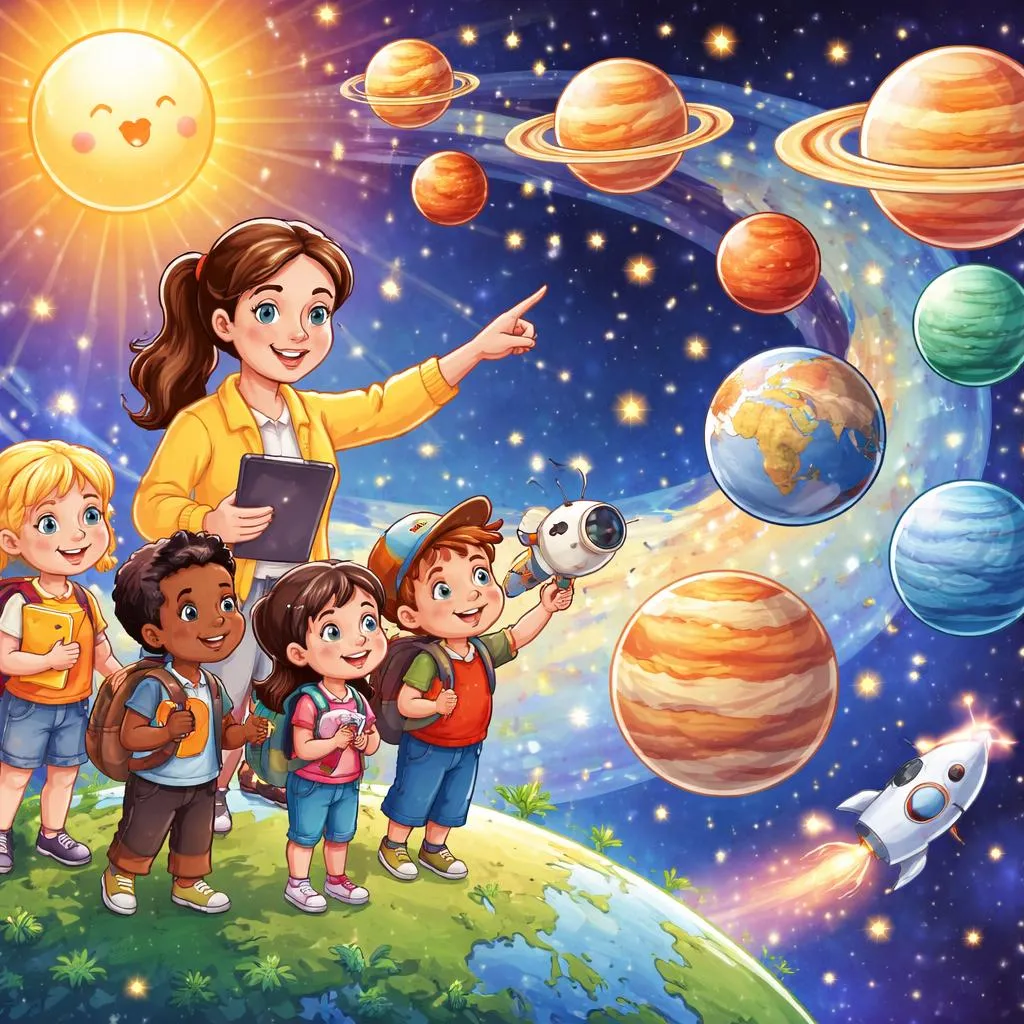

What is planets names?
In English learning, some topics spark instant curiosity. Space is one of them. Within this topic, planets names offer a clear and exciting entry point.
From a teacher’s point of view, planets names combine language and knowledge. They introduce new vocabulary. They also connect English with science and imagination.
The solar system includes several planets. Each planet has a unique name. These names appear often in books, videos, and lessons.
By learning planets names, English becomes a tool for discovery. Language and learning move forward together.
Meaning and explanation
The word planet refers to a large object in space. A planet moves around a star. In our solar system, the star is the Sun.
Planets names means the English names of these space objects. Each name begins with a capital letter. This rule matters in writing.
For example: Earth is our home planet. Mars is called the red planet.
These names come from history and mythology. Yet in class, the focus stays on recognition and pronunciation.
Understanding planets names supports reading and listening skills. It also builds world knowledge.
Categories or lists
The solar system includes eight main planets. They follow a fixed order from the Sun.
The planets names are Mercury, Venus, Earth, Mars, Jupiter, Saturn, Uranus, and Neptune.
This order helps structure learning. Closer planets appear first. Farther planets appear later.
Teachers often divide them into groups. Inner planets include Mercury to Mars. Outer planets include Jupiter to Neptune.
These categories support comparison. They also support memory.
Learning planets names in order builds clarity. It helps avoid confusion later.
Daily life examples
Although planets feel far away, they appear in daily life. Books, cartoons, and games often mention them.
For example: Earth Day connects directly to Earth. Mars appears in stories about space travel.
Weather discussions sometimes mention Earth as a planet. Night sky observations bring planets into view.
In class, simple sentences make connections clear. Earth is our planet. Mars looks red.
These examples ground planets names in real experience. They help vocabulary feel meaningful.
Printable flashcards
Flashcards work very well for space topics. Planets names benefit from strong visuals.
Each card can show one planet. The name appears clearly below the picture.
Color helps memory. Saturn shows rings. Mars shows red tones.
In class, flashcards support many activities. Pointing and naming builds confidence. Sorting cards supports order awareness.
Printable flashcards also support review at home. They keep learning consistent and calm.
Learning activities or games
Activities turn planets names into active learning. Movement-based activities work well.
One activity uses the classroom space. Planets spread around the room. The class walks from Mercury to Neptune.
Another activity uses questions. Which planet comes after Earth? Which planet is the biggest?
Drawing activities also help. Drawing a planet and labeling it supports writing.
Games using memory cards build focus. Matching names to pictures reinforces learning.
Through these activities, planets names become familiar and enjoyable.
Teaching pronunciation clearly
Each planet name has a clear pronunciation pattern. Some names sound short. Some sound longer.
Mercury has three syllables. Venus has two. Earth has one.
Teachers often slow down longer names. Clapping syllables helps.
Uranus and Neptune need extra care. Clear modeling prevents confusion.
Repeating names together builds confidence. Choral reading works well here.
Pronunciation practice supports listening and speaking. It also supports spelling awareness.
Capital letters and spelling awareness
Planets names always begin with capital letters. This rule matters in English writing.
Earth uses a capital letter when it means the planet. This detail builds grammar awareness gently.
Spelling practice works best with repetition. Writing names during art or science time helps.
Short copying activities support memory. Mercury. Venus.
Spelling becomes easier with visual support. Pictures anchor the words.
Connecting planets names with simple sentences
Vocabulary grows stronger inside sentences. Planets names fit well into simple structures.
Earth is blue. Mars is red.
Jupiter is very big. Saturn has rings.
These sentences stay short. They focus on meaning.
Teachers often model first. Then the class repeats.
This approach supports confidence. Language feels achievable.
Cross-subject learning opportunities
Planets names connect English with science. This integration strengthens understanding.
Science lessons explain size and distance. English lessons name and describe.
Art lessons involve drawing planets. Music lessons may include space songs.
Story time often includes space adventures. Planets names appear naturally there.
By using planets names across subjects, learning deepens. Language becomes a bridge, not a barrier.
Supporting different learning styles
Every learner approaches language differently. This topic supports many styles.
Visual learners enjoy planet images. Auditory learners enjoy name repetition and songs.
Kinesthetic learners enjoy movement activities. Walking the solar system helps memory.
Because planets names feel exciting, attention stays strong. Curiosity drives learning forward.
This balance supports inclusive teaching.
Classroom routines using planets names
Daily routines can include space vocabulary. A question of the day works well.
Which planet is Earth? Which planet comes next?
Morning charts may include a planet focus. One planet per day builds structure.
Over time, names become automatic. Familiarity reduces effort.
Language learning feels steady and safe.
Building confidence through curiosity
Space naturally invites questions. Questions support language growth.
Why is Mars red? Which planet is farthest?
Teachers guide answers simply. The focus stays on English use.
Encouraging curiosity builds confidence. English becomes a tool for asking and thinking.
Through planets names, learners see that language opens doors.
Extending learning beyond the classroom
At home, space topics often continue. Books and videos support review.
Families may look at the night sky together. Naming planets feels exciting.
Simple home questions reinforce learning. What planet do we live on?
These moments connect school and life. They keep English active.
A clear and inspiring path into space and language
Planets names offer more than vocabulary. They offer wonder, structure, and connection.
Through clear explanation, visuals, and guided activities, learning feels natural. Language and science support each other.
In a supportive classroom, planets names become familiar friends. They invite questions, stories, and imagination.
With steady guidance, this topic builds both knowledge and confidence. English grows alongside curiosity, reaching far beyond the classroom and into the stars.