
Fall Games as a Seasonal Learning Opportunity
Autumn brings change. Leaves turn color. Air feels cooler. Days grow shorter. This season also brings many chances for playful learning. Fall games offer rich opportunities to combine movement, language, and imagination in meaningful ways.
In learning spaces, seasonal games help connect lessons to real life. Games linked to fall themes feel familiar and exciting. Words, actions, and ideas come together naturally. Learning feels joyful and relaxed.
This article explores fall games from a teacher’s perspective. Each section explains how seasonal play supports language development, social skills, and curiosity. The focus stays on gentle guidance, clear language, and meaningful play.
What Are Fall Games?
Fall games are activities inspired by the autumn season. These games often include themes like leaves, pumpkins, apples, harvest time, and cooler weather. They may take place indoors or outdoors.
Some fall games involve movement. Others focus on thinking, language, or creativity. Many combine several skills at once.
Using seasonal games helps learning feel connected to the world outside the classroom or home.
Meaning and Explanation of Fall Games in Learning
Games support learning by engaging the body and mind together. When games reflect the season, learning feels timely and relevant.
Fall games often use natural materials. Leaves, pinecones, and apples become learning tools. These objects support vocabulary and observation.
The season also brings new words. Autumn, harvest, windy, and chilly appear in lessons. Games provide a context for these words.
Learning through play encourages participation and confidence.
Categories of Fall Games
Fall games fit into several categories. Each type supports different learning goals.
Movement games include running, jumping, and balancing. These games support physical development and listening skills.
Language games focus on words, sounds, and sentences. These games support vocabulary and communication.
Creative games include art, music, and storytelling. These games support imagination and expression.
Thinking games include sorting, matching, and problem-solving. These games support logic and focus.
Combining categories keeps learning balanced.
Outdoor Fall Games and Learning
Outdoor play feels refreshing in autumn. Cooler weather supports active movement.
Leaf games work well outside. Collecting leaves supports color and size vocabulary. Sorting leaves builds comparison skills.
A simple leaf hunt encourages observation. Naming colors and shapes adds language practice.
Running games with fall themes support listening. Directions like “run to the tree” or “jump over the leaves” build comprehension.
Outdoor fall games connect learning with nature.
Indoor Fall Games for Calm Learning Moments
Indoor games suit quieter moments. These games work well during transitions or small group activities.
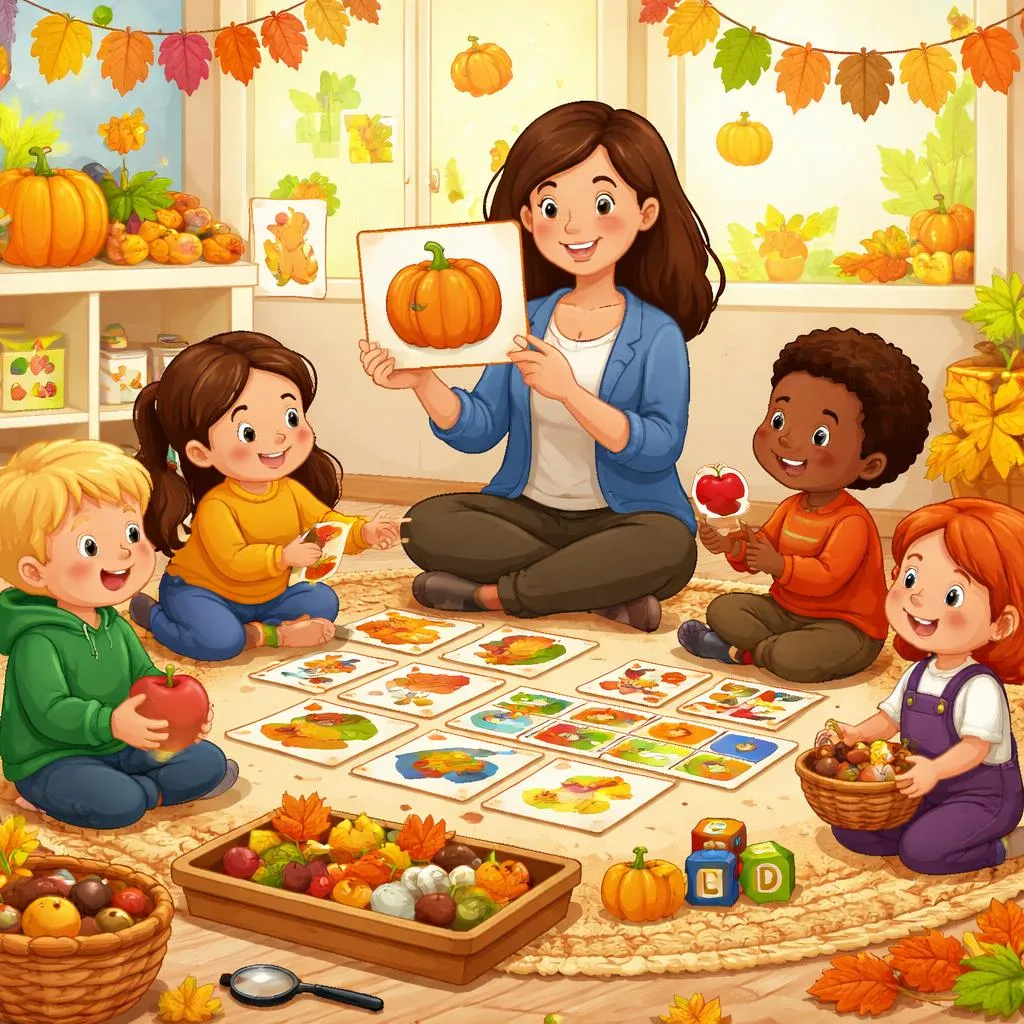
Tabletop games with fall pictures support vocabulary. Matching pumpkins or apples builds recognition.
Story-based games encourage imagination. Acting out a fall story supports speaking and listening.
Indoor fall games create a calm and focused learning atmosphere.
Language Learning Through Fall Games
Language grows naturally through play. Fall games introduce seasonal vocabulary in context.
Words like leaf, apple, pumpkin, and scarecrow appear naturally. Hearing and using these words during games supports understanding.
Simple sentences guide play. “The leaf is red.” “The apple is big.” These sentences feel clear and useful.
Repetition during games strengthens memory.
Vocabulary Development With Fall Themes
Fall themes provide rich vocabulary. Colors, weather words, and nature terms appear often.
Games encourage naming and describing. Describing leaves by color or size supports adjectives.
Counting apples or pumpkins supports number words.
Vocabulary learning feels purposeful during play.
Phonics Practice in Fall Games
Sounds and letters appear in many fall words. Leaf, log, and light support the “l” sound. Pumpkin supports the “p” sound.
Sound games work well with fall themes. Listening for beginning sounds builds phonemic awareness.
Clapping syllables in fall words adds rhythm.
Phonics practice feels playful through games.
Grammar Patterns Used in Fall Games
Simple grammar patterns appear naturally during play. Present tense verbs guide actions.
Sentences like “The leaf falls” or “The wind blows” describe observations.
Prepositions also appear. Words like under, on, and next to describe object positions.
Hearing correct patterns builds familiarity.
Daily Life Examples of Fall Games
Fall games often appear in daily routines. A walk outside becomes a learning game.
Counting steps through fallen leaves adds number practice. Naming colors on trees adds vocabulary.
At home, sorting apples or decorating pumpkins becomes playful learning.
Daily life provides many chances for seasonal games.
Printable Flashcards for Fall Games
Printable materials support structured learning. Flashcards with fall images support recognition.
Pictures of leaves, apples, pumpkins, and acorns work well.
Using flashcards before or after games reinforces vocabulary.
Printable cards also support home learning.
Learning Activities Inspired by Fall Games
Activities extend the learning experience. Drawing fall scenes supports creativity.
Craft activities using leaves or paper pumpkins support fine motor skills.
Sequencing activities based on fall routines support logic and language.
Activities should stay simple and engaging.
Educational Games With Fall Themes
Educational games combine fun and focus. A guessing game may include describing a fall object.
Memory games with fall pictures support concentration.
Board games with fall paths support turn-taking and counting.
Games encourage cooperation and communication.
Social Skills Built Through Fall Games
Group games support social learning. Sharing materials and taking turns build cooperation.
Listening to rules supports self-control.
Encouraging words during games build kindness.
Fall games create a warm social environment.
Emotional Learning Through Seasonal Play
Seasons often connect with feelings. Fall may feel calm or cozy.
Games can reflect these emotions. Calm games support relaxation. Active games release energy.
Talking about feelings during play builds emotional vocabulary.
Emotional awareness grows naturally.
Storytelling and Fall Games
Stories and games work well together. A fall story may inspire a game.
Acting out a story supports comprehension.
Creating simple stories during play supports creativity.
Story-based games deepen understanding.
Music and Movement in Fall Games
Music adds energy to play. Fall songs support rhythm and language.
Movement games set to music support coordination.
Stopping and starting with music builds listening skills.
Music enriches fall games.
Supporting Parents and Teachers With Fall Games
Fall games work well in many settings. Parents may use simple games during outdoor time.
Teachers may integrate fall themes into lessons.
Clear instructions and simple language support success.
Consistency helps learning feel safe.
Adapting Fall Games for Different Ages
Fall games can change based on age and ability. Younger learners may focus on simple actions.
Older learners may include more language or rules.
Flexibility supports inclusion.
Games should match comfort levels.
Safety and Comfort During Fall Games
Safety matters during play. Clear space supports movement games.
Comfortable clothing supports outdoor activities.
Calm reminders help maintain focus.
A safe environment supports confident play.
Connecting Fall Games to Other Learning Areas
Fall games connect easily to science, art, and math.
Observing leaves supports science learning.
Counting apples supports math.
Drawing fall scenes supports art.
Integration enriches understanding.
Building Routine With Seasonal Games
Routine supports learning. Including fall games at regular times builds familiarity.
A weekly fall game session creates anticipation.
Routine games support structure and comfort.
Learning feels predictable and enjoyable.
Encouraging Curiosity Through Fall Play
Fall offers many natural questions. Why do leaves change color? Why does the weather feel cooler?
Games open the door to exploration.
Curiosity grows through playful discovery.
A Warm and Engaging Learning Season
Autumn creates a special learning atmosphere. Colors, textures, and weather invite exploration.
Through fall games, learning becomes active, meaningful, and joyful. Seasonal play supports language growth, social development, and creativity in a gentle and inspiring way, making autumn a rich and memorable time for learning together.