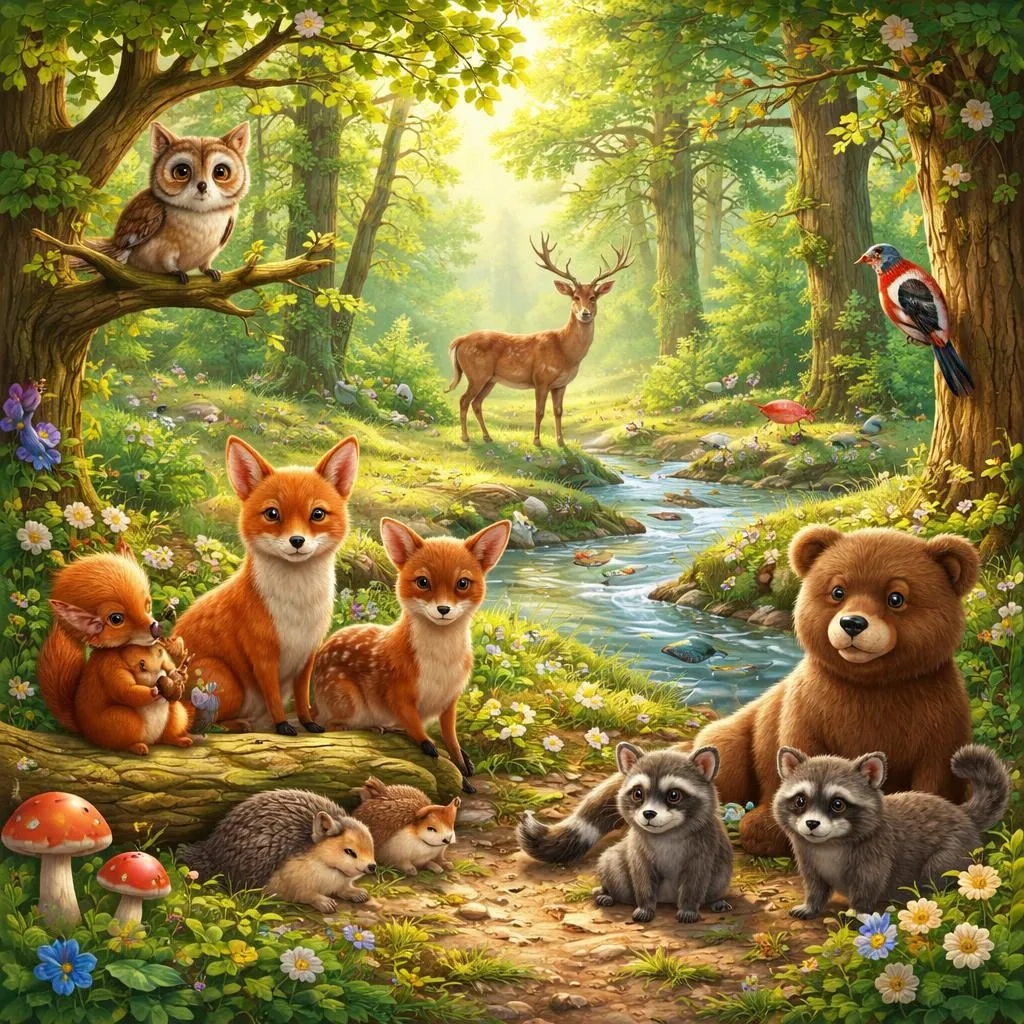

What Are Forest Animals? Forest animals are animals that live in forests all around the world. Forests are amazing places full of trees, plants, and animals, and they provide shelter and food for many species. From the tall trees that touch the sky to the small creatures hiding under the leaves, forests are home to a wide variety of animals, big and small. Forest animals are adapted to live in the unique environment of the forest. They may have special features, behaviors, or habits that help them survive in the forest. Some animals are nocturnal (they are active at night), while others are diurnal (active during the day). Forests provide many different types of habitats, including the forest floor, tree canopies, and even the water streams that run through the forest. In this article, we will learn about some of the most common forest animals, how they live, and what makes them special.
Types of Forests and the Animals That Live in Them Forests are found all over the world, and they come in different types. The animals that live in these forests are often adapted to the specific conditions of the forest. There are three main types of forests:
- Tropical Rainforests Tropical rainforests are located near the equator, where it is warm and rainy all year long. These forests are known for their rich biodiversity, meaning they have many different types of plants and animals. The animals that live in tropical rainforests have adapted to the humid, warm environment and the dense layers of trees and plants.
Animals in Tropical Rainforests:
Jaguar: A big cat that lives in the rainforests of Central and South America. Jaguars are excellent swimmers and often hunt near water.
Monkey: Various species of monkeys, like howler monkeys and capuchin monkeys, live in the trees of rainforests.
Sloth: Sloths are slow-moving animals that spend most of their time hanging upside down in trees. They are found in tropical forests in Central and South America.
Parrot: Brightly colored parrots, like macaws, live in tropical rainforests and are known for their ability to mimic sounds.
- Temperate Forests Temperate forests are found in regions with moderate climates, meaning they experience all four seasons: spring, summer, autumn, and winter. These forests are typically located in areas like Europe, North America, and parts of Asia. The animals in temperate forests must be able to survive through the changes in the seasons, including cold winters.
Animals in Temperate Forests:
Deer: Deer, such as white-tailed deer, are common in temperate forests. They are herbivores and eat plants, fruits, and leaves.
Fox: Foxes are clever animals that can adapt to various environments, including temperate forests. They are omnivores and eat fruits, small animals, and birds.
Squirrel: Squirrels are commonly seen in temperate forests, especially during the fall when they collect nuts to prepare for winter.
Owls: Owls are nocturnal birds of prey that live in temperate forests. They hunt at night and eat small animals like rodents.
- Boreal Forests (Taiga) Boreal forests, also known as taiga, are located in cold regions, particularly in northern parts of North America, Europe, and Asia. These forests are made up mostly of coniferous trees, like pines and spruces. The animals that live in boreal forests are adapted to cold winters and shorter summers.
Animals in Boreal Forests:
Moose: Moose are large herbivores that live in the cold forests of North America and Eurasia. They are well adapted to the cold and can survive harsh winters.
Bear: Bears, especially the brown bear and black bear, are common in boreal forests. They hibernate during the winter to survive the cold months.
Lynx: The lynx is a wild cat that lives in cold climates. It has large paws that help it move through deep snow.
Snowy Owl: The snowy owl is a white bird of prey found in boreal forests. It blends in with the snowy environment and hunts small animals like lemmings.
Amazing Forest Animals and Their Habitats Now, let’s take a closer look at some specific forest animals and how they have adapted to their environments.
- The Red Fox The red fox is a very adaptable forest animal that can be found in many different types of forests. It has a bushy tail and reddish fur, which helps it blend into the forest floor, especially in the fall when the leaves are changing color. The red fox is an omnivore, which means it eats both plants and animals. It hunts small mammals like rabbits and rodents, but it also eats fruits, berries, and insects.
Habitat: The red fox is found in temperate forests, woodlands, and even urban areas. It builds dens in hollow logs, burrows, or under tree roots.
Behavior: The red fox is active during the night (nocturnal) and is known for its cleverness and agility. It uses its keen sense of smell to find food.
- The Squirrel Squirrels are one of the most common forest animals, and you can find them in almost any type of forest. They have sharp claws and bushy tails, which help them climb trees and balance. Squirrels are herbivores, and their diet consists mainly of nuts, seeds, and fruits. In the fall, they gather acorns and store them in hidden locations to eat during the winter months.
Habitat: Squirrels live in the treetops of forests, where they build nests out of leaves and twigs.
Behavior: Squirrels are very active during the day (diurnal) and are often seen running up and down trees. They are excellent jumpers and climbers, and they are fast and agile when they feel threatened.
- The Deer Deer are herbivores that live in many different types of forests. They are typically shy and elusive animals, and they use their keen sense of hearing and smell to detect predators. Deer are known for their long legs, which allow them to move quickly through the forest.
Habitat: Deer are found in temperate forests, particularly in North America, Europe, and Asia. They usually live in wooded areas with plenty of vegetation for food.
Behavior: Deer are usually most active during the early morning or evening. They live in groups called herds, but some species, like the white-tailed deer, prefer to live alone.
- The Owl Owls are nocturnal birds of prey that live in forests around the world. They have large, round eyes and excellent hearing, which help them hunt for small animals, such as mice, rats, and rabbits. Owls can rotate their heads almost completely around, which gives them a wide field of vision to spot prey.
Habitat: Owls live in hollow trees, abandoned nests, or other sheltered areas in forests. They prefer dark, quiet places where they can hunt at night.
Behavior: Owls are solitary animals that hunt at night. They are known for their silent flight, which allows them to swoop down on prey without making a sound.
- The Bear Bears are large mammals that live in forests, particularly in the northern parts of the world. They are omnivores, meaning they eat both plants and animals. Bears are often seen foraging for food in the forest, including berries, nuts, insects, and small mammals. In the winter, many species of bears hibernate to survive the cold months.
Habitat: Bears live in forests and woodlands, where they build dens in caves, hollow trees, or other sheltered spots.
Behavior: Bears are usually solitary animals, but they may gather in groups during certain times of the year, such as when food is abundant. They are excellent swimmers and climbers and are also known for their strong sense of smell.
Protecting Forest Animals and Their Habitats Forests are home to many incredible animals, but they are also under threat from deforestation, climate change, and pollution. Protecting these habitats is important for the survival of the animals that live there.
- Deforestation Deforestation is the cutting down of trees for farming, logging, or urban development. This destroys the homes of many forest animals, leaving them without food and shelter.
- Climate Change Climate change is affecting forests around the world, causing changes in temperature and weather patterns. This can impact the availability of food and water for animals, as well as the ability of animals to find suitable habitats.
- Pollution Pollution, such as plastic waste, chemicals, and oil spills, can harm forest ecosystems. It can poison water sources, destroy habitats, and make it difficult for animals to survive.
Ways to Help Protect Forest Animals There are many things we can do to help protect forest animals and their habitats:
- Support Conservation Efforts You can support organizations that work to protect forests and forest animals. These organizations work to preserve natural habitats, prevent deforestation, and raise awareness about the importance of forests.
- Reduce Your Carbon Footprint By reducing the amount of energy we use and driving less, we can help fight climate change and protect forests. Using less plastic and recycling helps reduce pollution.
- Spread Awareness Educating others about the importance of forest conservation can help protect these animals. Share information about forest animals and their habitats with friends and family, and encourage them to help protect the environment.