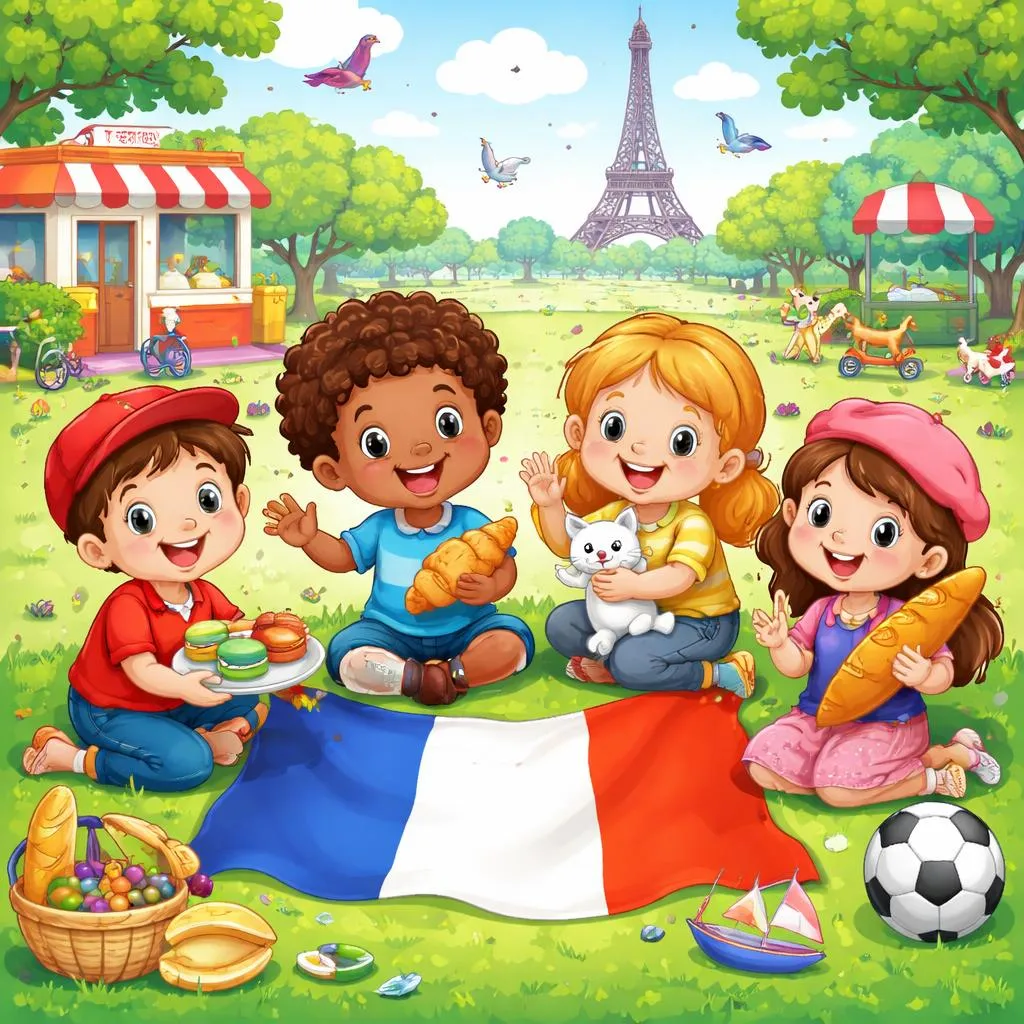

What Are Common French Phrases Common French phrases are short expressions. People use them every day. They help start conversations. They help respond politely.
Phrases are easy to remember. They appear often in daily life.
Why Children Learn Common French Phrases Common phrases help children speak quickly. Children feel successful using real language. The language feels useful and friendly.
Learning phrases builds confidence. Confidence supports curiosity.
Bonjour Bonjour means hello. It also means good morning. People say it during the day.
Bonjour is polite. Children learn it first.
Bonsoir Bonsoir means good evening. People say it later in the day. It sounds calm and warm.
Time words connect to daily routines.
Salut Salut means hi or bye. It is informal. Friends use it often.
Children learn when language is casual.
Merci Merci means thank you. It is used very often. It shows good manners.
Polite words matter.
Merci Beaucoup Merci beaucoup means thank you very much. It shows stronger feeling. It sounds kind.
Children enjoy polite phrases.
S’il Vous Plaît S’il vous plaît means please. It is used when asking for something. It shows respect.
Respectful language builds kindness.
Excusez Moi Excusez moi means excuse me. People use it to get attention. People use it to be polite.
Children learn social language.
Pardon Pardon also means excuse me. It is short. It is common.
Different phrases can share meaning.
Ça Va Ça va means how are you. It can also mean I am fine. The meaning depends on context.
Context helps understanding.
Ça Va Bien Ça va bien means I am doing well. It sounds positive. It is easy to say.
Children practice feelings.
Oui Oui means yes. It is short and clear. Children use it often.
Short answers feel safe.
Non Non means no. It is also short. It is used everywhere.
Yes and no words matter.
D’accord D’accord means okay. It shows agreement. It is friendly.
Agreement words support conversation.
C’est Bon C’est bon means it is good or okay. It can talk about food. It can show agreement.
Flexible phrases are useful.
À Bientôt À bientôt means see you soon. It sounds friendly. People use it when leaving.
Goodbye phrases feel warm.
À Demain À demain means see you tomorrow. It talks about time. It is easy to remember.
Time phrases support planning.
Bonne Journée Bonne journée means have a good day. It is polite. It is kind.
Children learn friendly endings.
Bonne Nuit Bonne nuit means good night. People say it before sleep. It sounds calm.
Night words support routines.
French Language Common Phrases at School Teachers use simple phrases. Children repeat together. Group speaking feels safe.
Classroom language builds comfort.
French Language Common Phrases at Home Families use phrases daily. They greet each other. They thank each other.
Home language feels safe.
French Language Common Phrases with Friends Friends use short phrases. They agree. They respond quickly.
Conversation flows easily.
French Language Common Phrases in Songs Songs repeat phrases. Repetition supports memory. Music helps pronunciation.
Children remember sounds.
French Language Common Phrases in Stories Stories include greetings. Stories include polite words. Children recognize them.
Recognition builds confidence.
French Language Common Phrases and Pronunciation French has smooth sounds. Phrases show rhythm. Children copy the melody.
Listening comes first.
French Language Common Phrases and Speaking Speaking starts small. One phrase is enough. Practice grows slowly.
Slow learning lasts longer.
French Language Common Phrases and Politeness Politeness is important in French. Phrases show respect. They show care.
Language teaches behavior.
French Language Common Phrases and Culture Phrases show culture. They show habits. They show values.
Language and culture connect.
French Language Common Phrases and Practice Practice is gentle. Short phrases repeat often. Repetition feels natural.
No pressure is needed.
French Language Common Phrases and Confidence Using real phrases feels good. Children feel proud. They want to speak more.
Confidence supports learning.
French Language Common Phrases Review Common phrases are short. They are used every day. They help children communicate.
Learning feels light. Progress feels steady.
French Language Common Phrases for Children Children learn phrases step by step. They listen. They repeat. They use them naturally.
Language learning stays calm. Confidence grows naturally. Curiosity continues.
French Language Common Phrases in Daily Talk People use common phrases every day. They use them without thinking. They sound natural and friendly.
Children like useful language. Useful language feels easy.
French Language Common Phrases for Greetings Greetings start conversations. They make people feel welcome.
Bonjour is used in the morning. Bonjour is also used in the day. Bonsoir is used in the evening.
Greeting words feel polite.
French Language Common Phrases for Goodbyes Goodbyes end conversations kindly.
Au revoir means goodbye. À bientôt means see you soon. À demain means see you tomorrow.
Ending words feel warm.
French Language Common Phrases for Thanks Thanks show appreciation.
Merci is used often. Merci beaucoup shows strong thanks.
Children learn kindness through words.
French Language Common Phrases for Asking Asking politely matters.
S’il vous plaît means please. It is used when asking for help.
Polite asking supports respect.
French Language Common Phrases for Apologies Apology words show care.
Pardon means sorry. Je suis désolé means I am sorry.
Children learn responsibility.
French Language Common Phrases for Agreement Agreement keeps talk smooth.
D’accord means okay. C’est bon also means okay.
Agreeing feels cooperative.
French Language Common Phrases for Disagreement Disagreement can be polite too.
Non means no. Pas vraiment means not really.
Children learn gentle honesty.
French Language Common Phrases for Feelings Feelings are important.
Ça va means how are you. Ça va bien means I am fine. Ça ne va pas means not good.
Feeling words support expression.
French Language Common Phrases for Classroom Use Teachers use phrases daily.
Écoutez means listen. Regardez means look. Asseyez vous means sit down.
Classroom phrases support routine.
French Language Common Phrases for Help Asking for help is important.
Aidez moi means help me. Pouvez vous aider means can you help.
Children learn to ask clearly.
French Language Common Phrases for Understanding Understanding matters in learning.
Je comprends means I understand. Je ne comprends pas means I do not understand.
These phrases support learning confidence.
French Language Common Phrases for Numbers and Counting Numbers appear in phrases.
Un, deux, trois means one, two, three. Counting phrases appear in games.
Games support memory.
French Language Common Phrases for Food Food phrases are common.
J’ai faim means I am hungry. C’est bon means it is tasty.
Food language feels familiar.
French Language Common Phrases for Daily Routines Daily routines use phrases.
Je me lève means I wake up. Je vais à l’école means I go to school.
Routine language repeats often.
French Language Common Phrases for Play Play language feels fun.
On joue means let’s play. À toi means your turn.
Play supports speaking.
French Language Common Phrases for Sharing Sharing words matter.
Tiens means here you are. Merci means thank you.
Social language builds connection.
French Language Common Phrases for Time Time phrases help planning.
Maintenant means now. Plus tard means later. Aujourd’hui means today.
Time words appear daily.
French Language Common Phrases for Places Place phrases guide movement.
Ici means here. Là bas means over there.
Spatial language supports understanding.
French Language Common Phrases for Directions Directions help clarity.
À gauche means left. À droite means right.
Movement language supports daily life.
French Language Common Phrases for Questions Questions invite answers.
Qu’est ce que c’est means what is this. Où is where.
Questions support curiosity.
French Language Common Phrases for Answers Answers repeat patterns.
C’est un livre means it is a book. C’est bon means it is good.
Repetition builds fluency.
French Language Common Phrases in Songs Songs repeat common phrases. Repetition supports memory. Music supports pronunciation.
Children enjoy singing.
French Language Common Phrases in Stories Stories use daily phrases. Characters greet each other. Characters say thank you.
Stories feel natural.
French Language Common Phrases and Listening Listening comes first. Children hear phrases many times. Hearing builds understanding.
Sound comes before spelling.
French Language Common Phrases and Speaking Speaking grows slowly. One phrase is enough. Practice builds confidence.
Confidence supports progress.
French Language Common Phrases and Reading Reading shows familiar phrases. Children recognize words. Recognition feels rewarding.
Reading confidence grows.
French Language Common Phrases and Writing Writing comes later. Children copy phrases. Short phrases feel safe.
Writing grows step by step.
French Language Common Phrases and Politeness French values politeness. Phrases show respect. They show care for others.
Language teaches manners.
French Language Common Phrases and Culture Phrases show culture. They show habits. They show social rules.
Culture and language connect.
French Language Common Phrases and Repetition Repetition helps memory. Phrases return often. Familiar language feels easy.
Learning feels calm.
French Language Common Phrases and Games Games use short phrases. Turn taking language appears. Instructions appear.
Games reduce stress.
French Language Common Phrases and Role Play Role play feels safe. Children pretend to talk. They use real phrases.
Practice feels natural.
French Language Common Phrases and Confidence Using real phrases feels powerful. Children feel proud. They speak more.
Confidence builds fluency.
French Language Common Phrases and Long Term Learning Common phrases stay useful. They appear in all levels. They support advanced learning later.
Strong basics matter.
French Language Common Phrases Review Common phrases are short. They are used every day. They help children communicate.
Learning feels useful.
French Language Common Phrases for Young Learners Young learners need clarity. Short phrases work best. Real language supports motivation.
Learning stays positive.
French Language Common Phrases and Language Growth Small phrases build strong language. They connect words and people. They support understanding.
Language grows step by step. Confidence grows naturally. Curiosity continues.