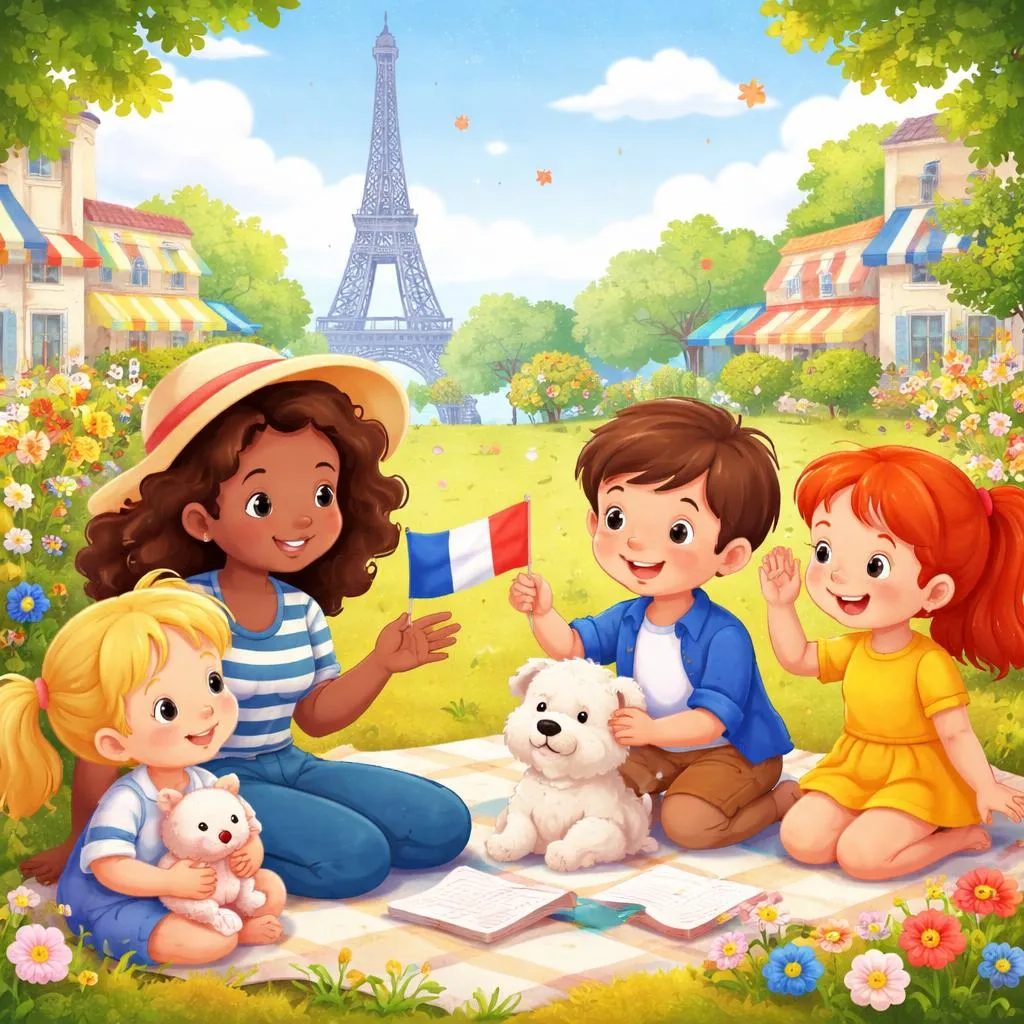

Learning French can feel like listening to a soft song.
The sounds are smooth. The rhythm is slow. Many French words sound friendly.
For children, learning French is not about rules first. It is about feeling. It is about sound. It is about simple phrases used again and again.
That is why learning a french phrase to know is a good place to start.
A french phrase to know is more than one word.
It is a small group of words. It has meaning. It has music.
Children remember phrases better than single words. They can use them faster. They can speak with confidence.
Each french phrase to know in this lesson is simple. Each one fits into daily life. Each one is easy to say out loud.
One french phrase to know appears at the start of every day.
Bonjour.
Bonjour means hello. It also means good morning.
Children can say bonjour when they wake up. They can say bonjour at school. They can say bonjour to friends.
Bonjour is warm. Bonjour is friendly. Bonjour opens conversations.
Later in the day, another french phrase to know appears.
Bonsoir.
Bonsoir means good evening. It is used when the sun goes down. It sounds calm and gentle.
Bonjour and bonsoir help children feel polite. They help children feel confident when greeting others.
Polite words are important in every language.
A very useful french phrase to know is merci.
Merci means thank you. Children can say merci after help. They can say merci after food. They can say merci after a gift.
Merci beaucoup means thank you very much. It sounds happy. It sounds kind.
Another polite french phrase to know is s’il vous plaît.
It means please. Children use it when asking for something.
S’il vous plaît sounds long. But children learn it quickly with practice. It becomes natural with time.
Talking about feelings is also important.
A common french phrase to know is ça va.
Ça va means how are you. It can also mean how is it going.
Children hear this phrase often. They learn to answer it easily.
Ça va bien means I am good. Ça va mal means I am not good. Comme ci, comme ça means so so.
These answers feel playful. They sound like a rhyme.
Short answers help children speak faster.
Oui means yes. Non means no.
These are two of the first words children learn. They are small. They are powerful.
Another french phrase to know is d’accord. It means okay. It shows agreement.
Meeting new people is exciting.
A useful french phrase to know is comment tu t’appelles.
It means what is your name.
Children love this phrase. They use it in games. They use it when making friends.
Je m’appelle means my name is. Children say their name after it.
Je m’appelle Emma. Je m’appelle Lucas.
This makes French feel personal.
Children like to talk about what they enjoy.
A helpful french phrase to know is j’aime.
J’aime means I like.
Children use it with food. They use it with animals. They use it with colors.
J’aime les chats. J’aime le bleu.
Je n’aime pas means I do not like. This phrase helps children express feelings.
Food words are always fun.
A french phrase to know at the table is c’est bon.
It means it is good. Children say it after tasting food.
J’ai faim means I am hungry. J’ai soif means I am thirsty.
These phrases are useful every day. They help children speak with meaning.
Asking questions is part of learning.
A simple french phrase to know is où est.
It means where is.
Children can ask about people. They can ask about objects.
Où est maman. Où est le livre.
They can also answer.
C’est ici means it is here. C’est là means it is there.
Sometimes children need help.
A very important french phrase to know is aide-moi.
It means help me.
Another helpful phrase is je ne comprends pas. It means I do not understand.
This phrase is important in class. It helps children feel safe.
French is often heard in songs and stories.
Phrases repeat again and again. This repetition helps memory.
Bonjour appears in many songs. Merci appears in many stories.
Each french phrase to know becomes familiar over time.
Rhythm helps learning.
Children can clap while speaking. They can sing phrases. They can whisper them.
Bonjour bonjour. Ça va ça va. Merci merci.
This turns learning into play.
Stories make phrases feel alive.
A child meets a friend. They say bonjour.
They ask ça va. They answer ça va bien.
They play together. They share toys. They say merci.
At the end, they say à bientôt.
Each french phrase to know fits naturally into the story.
Goodbye phrases are also important.
Au revoir means goodbye. À bientôt means see you soon. À demain means see you tomorrow.
These phrases close conversations gently. They feel kind and warm.
Learning French does not need to be fast.
One french phrase to know each day is enough. Children grow step by step.
Repeating phrases daily builds confidence. It builds listening skills. It builds speaking skills.
French phrases slowly become familiar sounds.
They feel less foreign. They feel friendly.
Bonjour in the morning. Merci during the day. Au revoir in the evening.
French becomes part of daily life.
Each french phrase to know is a small door.
Behind it is communication. Behind it is confidence. Behind it is joy.
Children smile when they are understood. They feel proud when they speak.
Language learning is a gentle journey.
It starts with sound. It grows with rhythm. It lives through simple phrases.
A french phrase to know is not just language. It is a small moment of connection.