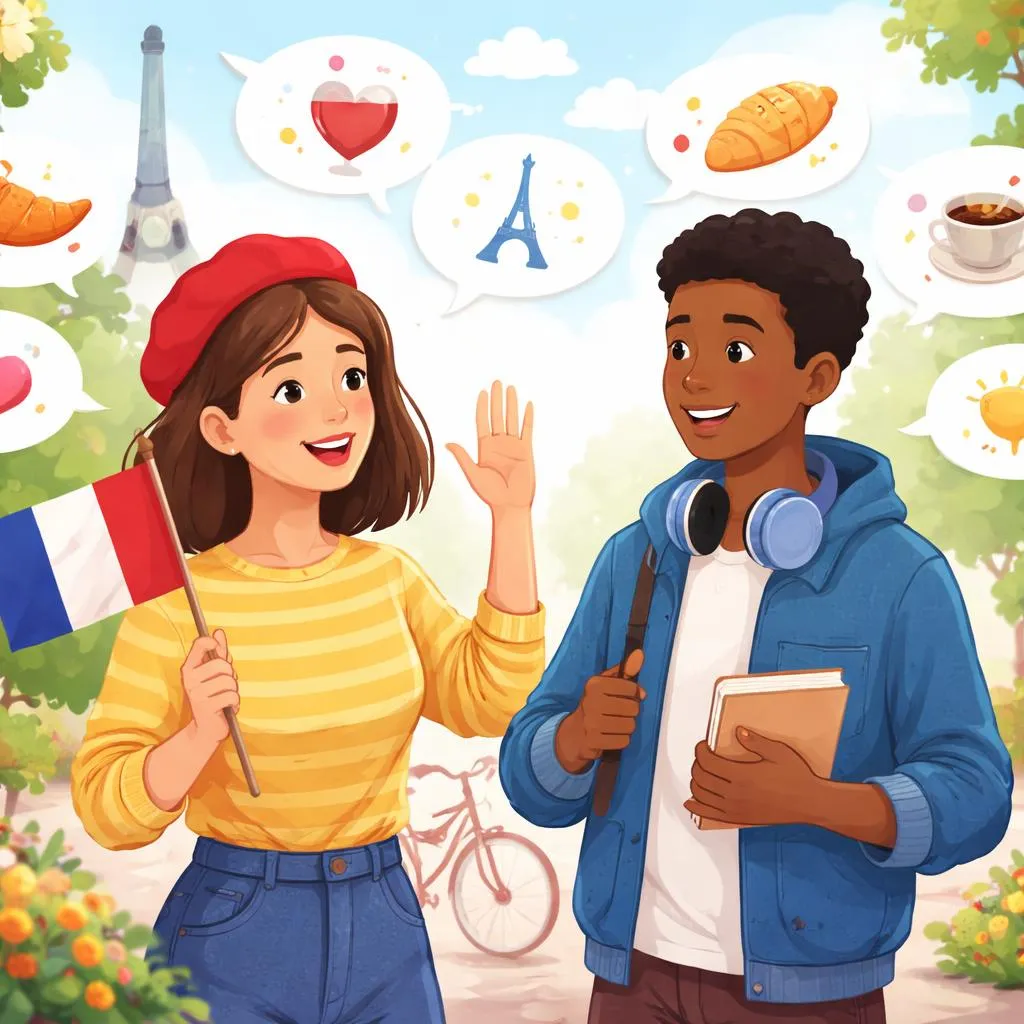

Learning French can feel exciting.
The sounds feel musical. The words feel soft.
French phrases for beginners help learners take the first step.
When learning a new language, phrases are often easier than single words.
A phrase shows how language is used. It shows how people really speak.
French phrases for beginners focus on daily communication.
Children and beginners need clear language.
Short phrases help memory. Simple patterns build confidence.
French phrases for beginners are designed for this purpose.
Listening comes before speaking.
Learners hear a phrase. They repeat it.
This is how language grows.
French phrases for beginners often start with greetings.
People greet each other every day. These phrases feel useful right away.
Use builds motivation.
Bonjour is one of the first French phrases for beginners.
It means hello. It can be used in the morning.
It sounds friendly and warm.
Children enjoy saying bonjour.
The sound is smooth. It is easy to remember.
Greeting feels natural.
Another common phrase is bonsoir.
It means good evening. It is used later in the day.
This teaches time awareness.
French phrases for beginners often include polite language.
Polite words matter in French. They show respect.
Learning politeness early is helpful.
Merci is a key phrase.
It means thank you. It is short and clear.
Children learn it quickly.
Merci can be used many times a day.
After help. After sharing.
Practice happens naturally.
French phrases for beginners also include responses.
Merci becomes merci beaucoup. This means thank you very much.
Children like hearing longer sounds.
Bonjour and merci often appear together.
They form simple exchanges. They sound friendly.
Conversation begins here.
Another useful phrase is s’il vous plaît.
It means please. It sounds polite.
This phrase teaches manners.
Children may shorten it at first.
This is normal. Accuracy comes later.
Understanding matters first.
French phrases for beginners also include casual speech.
Salut means hi. It is friendly and informal.
Children enjoy using it with friends.
Salut sounds playful.
It feels relaxed. It feels easy.
This lowers speaking anxiety.
As learning continues, children hear comment ça va.
This phrase asks how someone is.
Comment ça va is common in French conversation.
It sounds longer. But it follows a clear rhythm.
Children learn it step by step.
Responses are also important.
Ça va means I am fine. It is short and simple.
This helps conversation flow.
French phrases for beginners often repeat words.
Ça appears again and again. Repetition supports memory.
Patterns become familiar.
Children enjoy repeating rhythmical phrases.
The sound sticks. The meaning becomes clear.
This supports confidence.
French phrases for beginners also include introductions.
Je m’appelle means my name is. Children use it to share identity.
Language feels personal.
Saying one’s name feels meaningful.
Children feel proud. They feel heard.
Motivation increases.
Another helpful phrase is enchanté.
It means nice to meet you. It sounds polite and friendly.
Children enjoy the sound.
French phrases for beginners often appear in short dialogues.
One person greets. Another responds.
Turn-taking becomes clear.
Dialogue practice helps learners understand flow.
Who speaks first. Who replies.
Conversation feels organized.
French phrases for beginners also help with classroom language.
Excusez-moi means excuse me. It helps children get attention politely.
Useful phrases feel empowering.
Pardon is another common phrase.
It is used to say sorry. It is used to ask someone to repeat.
Multiple meanings are introduced gently.
French phrases for beginners support listening skills.
Learners hear tone. They notice emotion.
Meaning comes from sound.
Children learn that tone matters.
A rising tone sounds like a question. A calm tone sounds polite.
This builds awareness.
French phrases for beginners are often paired with gestures.
A wave with bonjour. A smile with merci.
Meaning feels complete.
Gestures support understanding.
Children see meaning. They hear meaning.
Learning becomes multi-sensory.
Songs and chants also include French phrases for beginners.
Music repeats language. Rhythm supports memory.
Children love singing.
Simple songs include greetings and thanks.
Words repeat. Melody supports recall.
Learning feels joyful.
French phrases for beginners often appear in stories.
Characters meet. Characters talk.
Language feels alive.
Story contexts help learners guess meaning.
They follow actions. They connect words to scenes.
Understanding deepens.
French phrases for beginners also support reading.
Short phrases appear in text. Pictures give clues.
Reading feels less difficult.
Children may point to words.
They read aloud. They repeat sounds.
Confidence grows slowly.
French phrases for beginners prepare learners for real interaction.
Not just lessons. Real communication.
This feels meaningful.
As learners grow, they recognize familiar phrases.
Recognition feels rewarding.
French phrases for beginners become building blocks.
Later sentences use them. Earlier learning supports new learning.
Progress feels connected.
Children do not need to know everything at once.
They learn gradually. They learn through use.
French phrases support this path.
With daily exposure, phrases feel natural.
Speech feels easier.
French phrases for beginners help children join conversations.
They can greet. They can respond.
Belonging matters.
Language learning continues through practice.
Listening. Speaking.
French phrases guide the way.
Each phrase adds confidence.
Each use builds skill.
Learning keeps moving forward.
French phrases for beginners stay useful.
They appear again and again. They support long-term learning.
Language grows naturally from here.
French phrases for beginners also help children feel brave when speaking.
Trying a new language can feel scary. Simple phrases reduce this fear.
Speaking feels possible.
Children often start by whispering new phrases.
They say them quietly. They listen to themselves.
Confidence grows slowly.
French phrases for beginners work well in daily routines.
Greeting in the morning. Saying thank you during the day.
Practice becomes natural.
Routine supports memory.
The same phrase appears again. The sound feels familiar.
Learning feels stable.
French phrases for beginners can be practiced through role play.
One child greets. Another child responds.
This feels like play.
Role play helps children imagine real situations.
They pretend to meet friends. They pretend to visit places.
Language feels alive.
French phrases for beginners also help with listening patience.
Children wait for their turn. They listen carefully.
Conversation skills grow.
Listening is just as important as speaking.
Children learn when to respond. They learn when to pause.
Balance develops.
French phrases for beginners support clear pronunciation.
Sounds are repeated often. Children copy slowly.
Accuracy improves with time.
Teachers often model phrases clearly.
They repeat sounds. They keep a calm pace.
Children follow naturally.
French phrases for beginners can be paired with actions.
A wave with bonjour. A nod with merci.
Movement supports understanding.
Children remember words better with movement.
The body helps the brain. Memory strengthens.
French phrases for beginners also support social connection.
Children greet each other. They respond politely.
Friendships grow.
Using polite phrases helps children feel respectful.
They feel proud. They feel kind.
Language shapes behavior.
French phrases for beginners help children notice patterns.
Words repeat. Sounds stay similar.
Recognition becomes quick.
Children start to predict what comes next.
They hear part of a phrase. They expect the rest.
Understanding deepens.
French phrases for beginners can be practiced through stories.
Characters meet. They talk.
Dialogue feels simple.
Stories make language meaningful.
Words connect to actions. Scenes help memory.
Learning feels smooth.
French phrases for beginners also prepare learners for future study.
Later lessons build on them. Early phrases stay useful.
Foundations matter.
Children carry these phrases forward.
They reuse them. They combine them with new words.
Language expands.
French phrases for beginners remind learners that progress is gradual.
One phrase at a time. One use at a time.
Growth feels steady.
With continued practice, these phrases become part of daily speech.
Language learning continues naturally.