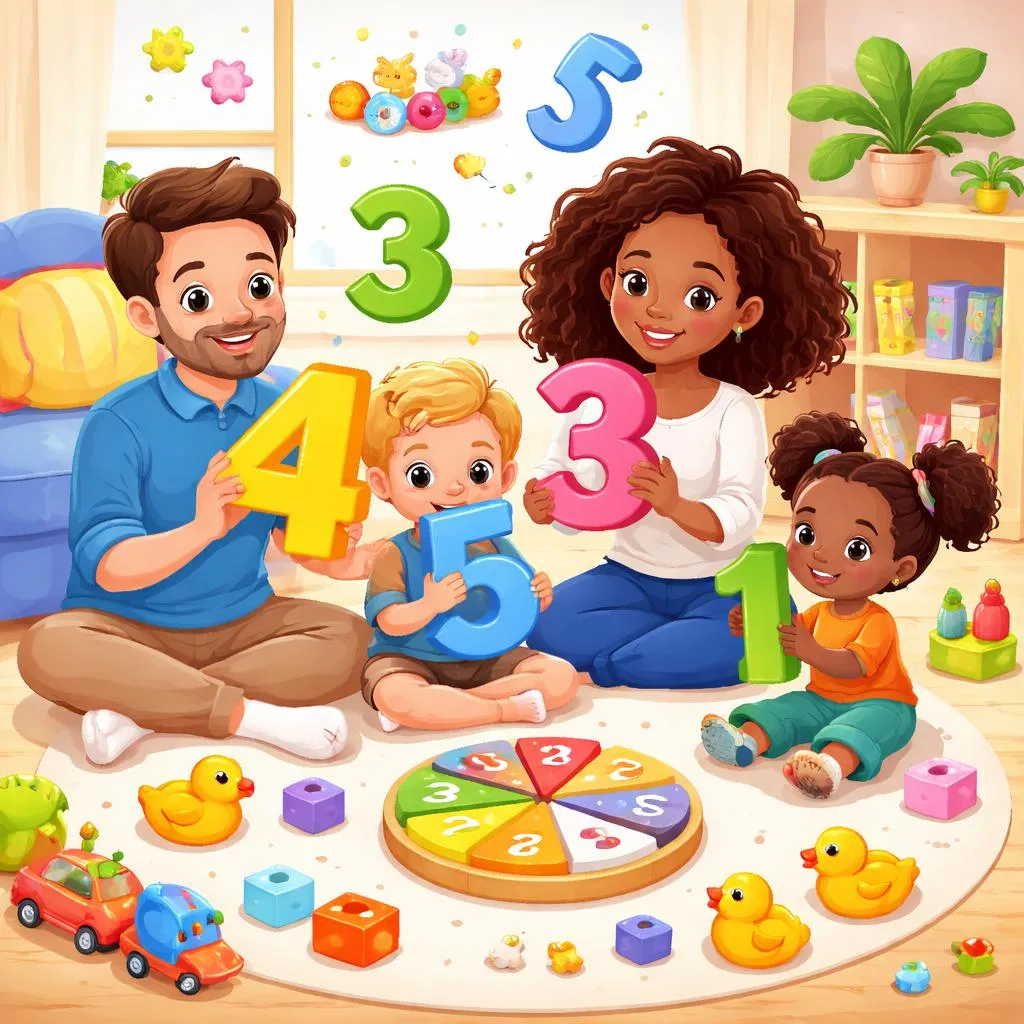

What Are numbers in english?
The topic of numbers in english introduces how to say and use numbers in the English language. Numbers appear in daily life. They help describe age, time, dates, prices, and quantities.
Learning number words supports math skills and language skills at the same time. This topic fits early learners and growing learners. Parents and teachers can use numbers as a bridge between speaking and thinking.
Meaning and Explanation of numbers in english
Numbers in English include words and symbols. The words describe quantity and order. The symbols represent values.
English number words follow clear patterns. Small numbers have unique names. Large numbers follow predictable structures.
Understanding these patterns builds confidence. It also improves reading and speaking skills.
Categories of numbers in english
Numbers in English fall into several main groups. Each group serves a different purpose.
Cardinal numbers describe quantity. Examples include one, two, three, ten, and one hundred.
Ordinal numbers describe order. Examples include first, second, third, and tenth.
Large numbers describe big quantities. Examples include thousand, million, and billion.
Decimals and fractions describe parts of a whole. Examples include point five and one half.
These categories support math and language learning.
Basic Cardinal Numbers
Cardinal numbers start with zero. Zero means nothing.
One to ten form the foundation. These words need memorization. Eleven to nineteen also have unique forms.
Twenty, thirty, forty, and higher tens follow patterns. For example, twenty-one, thirty-two, and forty-five.
Hundreds and thousands build on these patterns. One hundred, two hundred, and one thousand appear often in daily speech.
Short practice sentences help with meaning. “There are three apples.” “I see ten birds.”
Ordinal Numbers in English
Ordinal numbers describe position. First, second, and third appear often. Fourth, fifth, and sixth follow.
Dates use ordinal numbers. For example, “July first” or “October tenth.”
Competitions and lists also use ordinal numbers. “The first winner,” “the second place,” and “the third prize.”
Ordinal numbers add detail and clarity in communication.
Large Numbers and Place Value
Large numbers show big quantities. Thousands, millions, and billions appear in news and science.
Place value explains how digits work. The digit position changes meaning. Ten, hundred, thousand, and million each represent different scales.
Understanding place value supports math comprehension. It also supports reading large numbers in English texts.
Decimals and Fractions in English
Decimals use the word “point.” For example, 2.5 is “two point five.”
Fractions use special words. One half, one third, and one quarter are common.
Decimals and fractions appear in measurements and money. They connect math with real-world situations.
Pronunciation and Phonics for numbers in english
Number words include important sounds. Three starts with the /th/ sound. Four starts with the /f/ sound. Six ends with the /ks/ sound.
Some numbers stress the first syllable. Seven, eight, and nine show clear stress patterns.
Clapping syllables supports pronunciation. For example: sev-en twen-ty hun-dred
Repeated practice improves clarity and fluency.
Grammar Patterns with numbers in english
Numbers appear with nouns. One book. Two books.
Plural forms follow clear rules. Singular nouns follow one. Plural nouns follow numbers greater than one.
Numbers also appear with measurement words. Five meters. Ten minutes. Three dollars.
Question patterns include numbers. “How many books?” “How old are you?”
These patterns help build basic conversation skills.
Daily Life Examples with numbers in english
Numbers appear everywhere in daily routines. Time uses numbers. Clock reading uses numbers.
Dates use numbers. Birthdays, holidays, and school calendars include numbers.
Shopping uses numbers. Prices, discounts, and quantities all rely on numbers.
Sports scores use numbers. Classroom activities use numbers.
Connecting numbers with real-life contexts improves understanding.
Printable Flashcards for numbers in english
Flashcards help visual learning. Each card can show a number and the word form. For example, “5” on one side and “five” on the other side.
Sentence examples can appear on the back. “I have five pencils.” “She is ten years old.”
Flashcards support reading, speaking, and memory practice.
Learning Activities for numbers in english
Hands-on activities make learning meaningful. Counting objects in the classroom or home builds number sense. Drawing numbers with pictures supports visual memory.
Simple worksheets help with writing. Tracing number words builds spelling skills.
Storytelling activities integrate numbers with language. A story about counting animals or toys supports vocabulary and creativity.
Educational Games for numbers in english
Games encourage repetition and motivation. Board games with numbered spaces support counting. Dice games reinforce number recognition.
Memory games pair number symbols with words. Guessing games describe quantities and ask for number words.
Digital games and apps provide interactive practice. Instant feedback supports progress.
Teaching Strategies for Parents and Teachers
Consistent exposure builds mastery. Use numbers during daily routines. Count steps, snacks, or toys.
Use songs and chants for memorization. Rhymes and rhythms support recall.
Use visual aids like charts and posters. Number lines show order and relationships.
Encourage speaking practice with short prompts. “How many?” “What number is this?”
Integrating numbers in english into Reading and Writing
Reading texts often include numbers. Picture books include counting themes. Informational texts include statistics and dates.
Writing tasks can include simple sentences with numbers. “There are seven dogs.” “I am nine years old.”
Sentence frames support beginners. “I have ___ apples.” “There are ___ students.”
These frames build writing confidence.
Connecting numbers in english with Math Concepts
Numbers connect language with math. Addition and subtraction use number words. Word problems require language understanding.
Math vocabulary includes plus, minus, and equals. Understanding these words supports problem solving.
Place value charts and number lines support conceptual understanding. These tools integrate language and numeracy.
Cultural Notes About Numbers
Different cultures use numbers in unique ways. Some cultures have lucky numbers and unlucky numbers. Dates and calendars differ by region.
Phone numbers, addresses, and measurements vary across countries. Discussing these differences builds global awareness.
Numbers appear in stories and traditions. Counting songs and rhymes exist in many cultures.
Using Technology to Explore numbers in english
Educational apps support number practice. Interactive quizzes test recognition and spelling. Virtual manipulatives show place value and counting.
Videos and animations demonstrate counting and math concepts. Digital flashcards and games provide flexible practice.
Technology also supports remote learning and independent study.
Assessment and Progress Monitoring
Assessment can include number recognition tasks. Listening tasks check comprehension. Speaking tasks check pronunciation.
Writing tasks check spelling and grammar. Math tasks check understanding of quantity and order.
Progress monitoring helps adjust instruction. It also shows growth in confidence and accuracy.
Encouraging Curiosity About numbers in english
Curiosity supports long-term learning. Ask questions about numbers in the environment. “How many cars are there?” “What number is on the door?”
Encourage noticing numbers on signs, clocks, and books. These moments create natural learning opportunities.
Extending Learning Beyond the Classroom
Family activities can include counting games. Cooking activities use measurement numbers. Travel activities use distances and times.
School projects can include number posters and charts. Art projects can include number-themed drawings.
Books and documentaries about math inspire interest. Interactive museums and exhibits provide real-world context.
Cross-Curricular Connections with numbers in english
Numbers connect with science through measurements and experiments. They connect with geography through maps and distances. They connect with economics through prices and budgets.
Art can include number patterns and symmetry. Music can include rhythm and counting beats.
Cross-curricular learning deepens understanding and relevance.
Developing Speaking Confidence with numbers in english
Speaking confidence grows with practice and support. Model clear pronunciation and simple sentences. Encourage repetition and gradual expansion.
Use pair and group activities for communication practice. Positive feedback increases motivation and participation.
Numbers provide frequent opportunities for real conversation. Age, time, and quantity appear in everyday dialogue.
Numbers in English form a foundation for language and math learning. They connect vocabulary, grammar, and real-life communication. Clear instruction, engaging activities, and consistent practice build strong understanding and lasting skills.