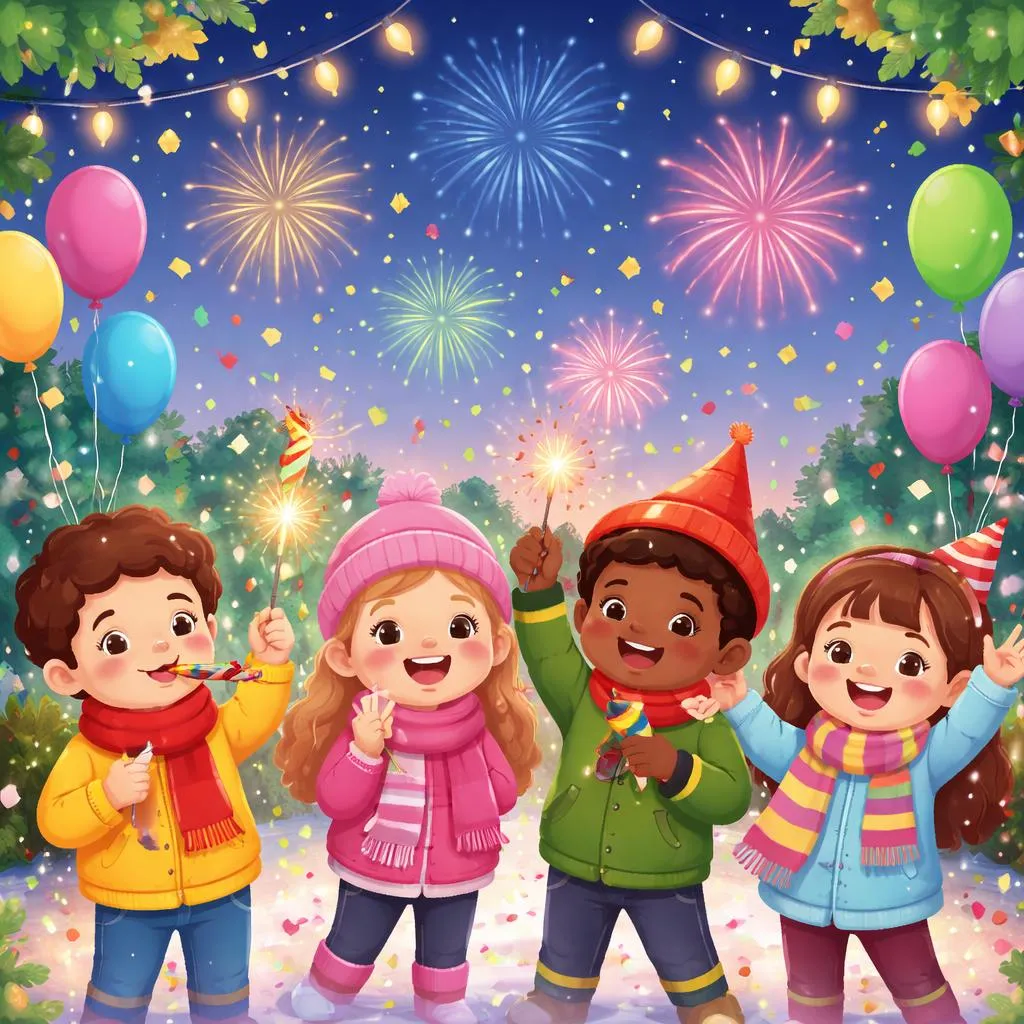

Happy New Year is a phrase many children hear.
They hear it at home. They hear it at school. They hear it on the street.
It sounds joyful. It sounds hopeful.
Happy New Year is more than a greeting. It is a feeling.
The New Year means a new beginning.
A new day. A new month. A new year.
Children like new things. New toys. New books. New ideas.
Happy New Year matches this feeling well.
Happy New Year is easy to say.
The words are simple. The meaning is clear.
Children learn this phrase early. They enjoy saying it.
Happy New Year feels friendly and kind.
People say Happy New Year at the end of the year.
They say it on the last day. They say it on the first day.
Some people say it many times. Each time feels special.
Happy New Year brings smiles.
Children often ask about the New Year.
They ask why people celebrate. They ask what changes.
The New Year is about time. Time moves forward.
Happy New Year reminds people of time passing.
In English, Happy New Year is used as a greeting.
It is used when meeting people. It is used in messages.
Children may write Happy New Year on cards. They may say it to friends.
This helps them practice polite language.
Happy New Year is used around the world.
People speak different languages. But the feeling is the same.
Joy. Hope. Kindness.
Children learn that greetings connect people.
Many families celebrate the New Year together.
They eat special food. They stay up late.
Children may watch fireworks. They may count down.
Happy New Year becomes a shared moment.
Counting is part of the New Year.
Ten. Nine. Eight.
Children count aloud. They feel excited.
When the count ends, people say Happy New Year.
Happy New Year can be spoken loudly.
It can also be whispered. It can be written.
Children enjoy saying it in different ways. This makes learning playful.
Teachers often use Happy New Year in class.
They talk about months. They talk about days.
The New Year helps children learn time words. Today. Tomorrow. Next year.
Happy New Year is often paired with wishes.
Good health. Happiness. Fun days.
Children learn new vocabulary through wishes. They learn words like happy and new.
The word happy is important.
Happy describes a feeling. A good feeling.
Children learn happy early. They show happy with smiles.
Happy New Year combines emotion and time.
The word new is also important.
New means not old. New means just starting.
Children see new things every day. New clothes. New games.
New Year feels exciting.
Happy New Year helps children understand celebration words.
Celebrate. Party. Holiday.
These words are part of daily language learning.
In stories, Happy New Year often appears.
Characters meet. They greet each other.
They smile and say Happy New Year. The story feels warm.
Stories help children remember phrases.
Songs also include Happy New Year.
The words repeat. The melody stays.
Children sing along. Language sticks through music.
Happy New Year is used in writing.
Cards. Letters. Simple messages.
Children practice writing short phrases. This builds confidence.
Writing Happy New Year is a small task.
But it feels meaningful. It feels kind.
Children feel proud when they write it correctly.
Different cultures celebrate the New Year in different ways.
Some celebrate in winter. Some celebrate in spring.
Children learn that time can be seen differently. But greetings stay similar.
Happy New Year connects cultures.
Teachers may ask children about the New Year.
What did you do. Who did you see.
Children answer using simple sentences. Language practice feels natural.
Happy New Year is often the first phrase of the year.
The first greeting. The first wish.
Children remember this moment.
Learning greetings helps social skills.
Children learn when to speak. They learn what to say.
Happy New Year teaches kindness.
The New Year also brings routines.
School starts again. Days feel normal.
But Happy New Year keeps a sense of joy.
Children may set simple goals.
Read more books. Play outside.
These ideas are part of growing up.
Happy New Year supports positive thinking.
In class, teachers may decorate the room.
Numbers of the new year appear. Bright colors appear.
Happy New Year becomes visual.
Children learn numbers through the New Year.
The year has numbers. They change each year.
This helps with number awareness.
Happy New Year can be used in role play.
Children pretend to meet friends. They greet each other.
Role play supports speaking practice.
The phrase Happy New Year stays short.
It is easy to remember. It is easy to repeat.
This makes it perfect for beginners.
Children may hear Happy New Year many times.
At home. On TV. On the phone.
Repeated exposure supports learning.
Language learning works best when words are meaningful.
Happy New Year has meaning. It has emotion.
Children understand why people say it.
As the year begins, days move forward.
Weeks pass. Months pass.
Happy New Year marks the start.
Children feel time through events.
Birthdays. Holidays. New Year.
These moments help them understand time.
Happy New Year is part of everyday English.
It is not a hard phrase. It is a useful phrase.
Children use it naturally.
Learning greetings builds confidence.
Children feel ready to speak. They feel included.
Happy New Year is a good beginning.
Each year brings change.
Children grow taller. They learn more words.
Happy New Year reflects growth.
Language learning continues.
Words add up. Sentences grow.
Happy New Year is one small part of a big journey.
Saying Happy New Year brings people together.
It shows care. It shows warmth.
Children feel this connection.
Happy New Year stays in memory.
A smile. A sound. A moment.
Language lives in these moments.
Happy New Year is simple.
Happy New Year is kind.
Happy New Year welcomes what comes next.
Happy New Year is often shared with smiles.
People smile when they say it. Children notice these smiles.
They learn that words can carry feeling. Not just meaning.
Children like to repeat greetings.
They say Happy New Year again and again. Each time feels fun.
Repetition helps memory. The phrase becomes natural.
Happy New Year is often heard with music.
Music plays during celebrations. Songs fill the air.
Children connect sound with language. This strengthens learning.
Many decorations appear during the New Year.
Lights shine. Colors sparkle.
Children describe what they see. They use simple words.
Happy New Year becomes part of observation.
The New Year is also a time for reflection.
People think about the past year. They think about the next year.
Children may talk about what they liked. They may talk about what they want to learn.
Language grows through sharing.
Happy New Year can be part of morning greetings.
Teachers greet students. Students greet teachers.
This routine feels warm. It sets a positive tone.
Children often enjoy making cards.
They draw pictures. They write words.
Writing Happy New Year gives purpose. Writing feels meaningful.
Learning greetings helps pronunciation.
Children practice clear sounds. They practice stress.
Happy New Year helps with rhythm. The words flow smoothly.
The phrase is also used in digital messages.
Phones ring. Messages appear.
Children see written language in real life. This connects learning with daily experience.
Happy New Year teaches timing.
There is a right moment to say it. Children learn when to use greetings.
This supports social understanding.
Classroom activities may include calendars.
Teachers point to dates. Children follow along.
Happy New Year helps explain time changes.
The phrase also supports listening skills.
Children hear it in different voices. They hear it in different speeds.
Listening becomes active.
Happy New Year may sound different in tone.
It can sound excited. It can sound calm.
Children notice tone. They learn that tone matters.
Using Happy New Year builds confidence.
Children speak without fear. They feel included.
Confidence supports further learning.
Language learning works best with real phrases.
Happy New Year is real. It is used every year.
Children understand its purpose.
The New Year often brings routines back.
School schedules return. Daily habits continue.
Happy New Year marks this transition gently.
Children may talk about celebrations.
Fireworks. Food. Family.
These conversations support vocabulary growth.
Happy New Year can be part of storytelling.
A story may start on New Year’s Day. Characters greet each other.
Stories help language feel alive.
The phrase stays short and clear.
This helps beginners. This helps young learners.
Happy New Year fits early language learning well.
Hearing Happy New Year from many people feels special.
It feels shared. It feels collective.
Children sense community.
Language learning is built on moments like this.
Simple words. Shared feelings.
Happy New Year becomes one of those moments.
As days move forward, the phrase slowly fades.
But the feeling remains. Hope remains.
Children carry that feeling into learning.
Happy New Year opens the door to a new chapter.
New words. New ideas.
Learning continues, day by day.