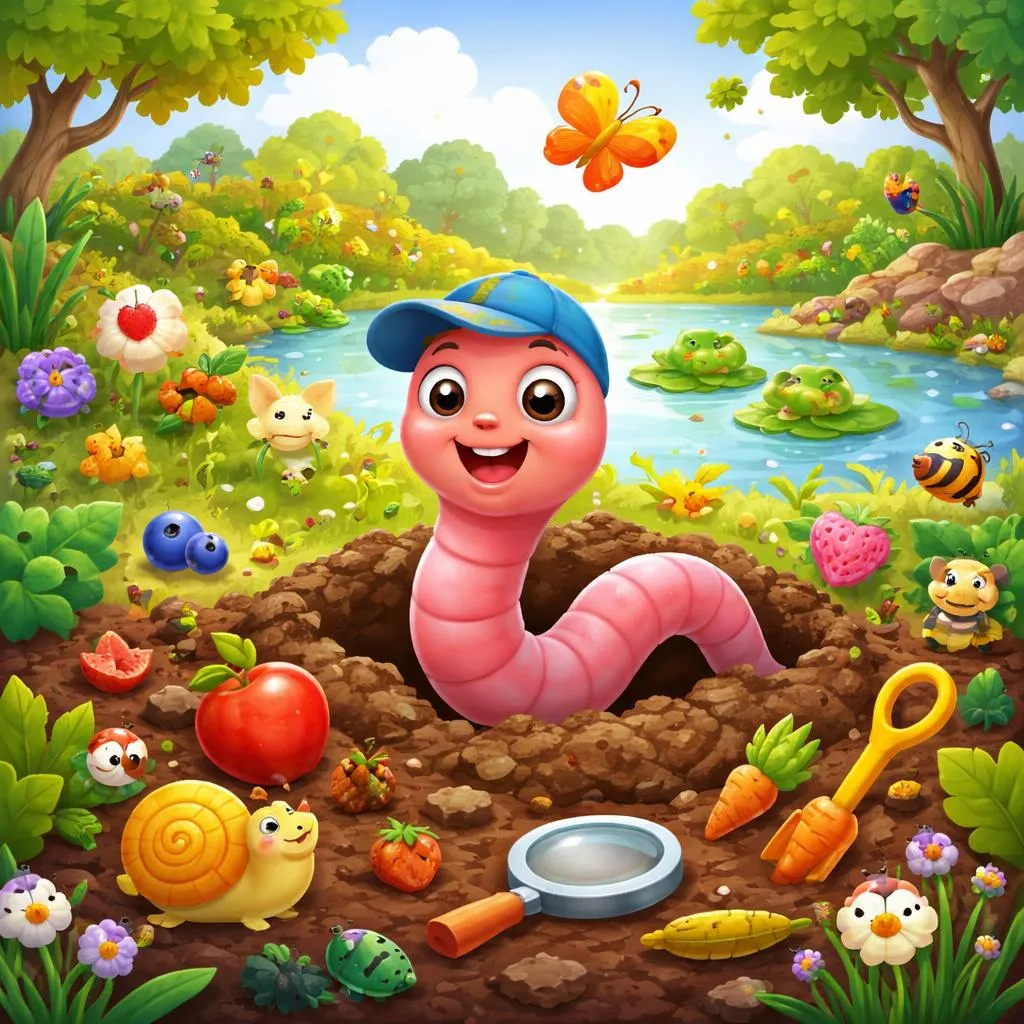

What is the Story “herman the worm”?
“Herman the Worm” is a playful story about a little worm named Herman. It introduces children to storytelling, vocabulary, and imagination. Herman’s adventures teach curiosity, friendship, and learning about nature.
The story is often used in classrooms and at home to encourage reading aloud. It combines simple sentences, repetition, and fun characters to engage young readers.
The Characters in Herman the Worm
Herman is a small, green worm who loves to explore. He lives in a garden full of flowers, plants, and insects. Other characters include:
Buzzy the bee – a helpful friend Cathy the caterpillar – curious and playful Sammy the snail – slow but wise The garden plants and flowers – create the setting
Each character teaches social skills, emotions, and interactions. Children learn to recognize different personalities and feelings through Herman’s friends.
Vocabulary Learning in Herman the Worm
The story introduces key words:
Worm – small garden animal Garden – place with plants and flowers Crawl – movement of worms Friend – someone who helps or shares Explore – to look around Flower – part of the garden Leaf – plant part
Using vocabulary in context helps children understand meaning naturally. Visual aids and actions make words more memorable.
Phonics Points in the Story
The story highlights simple phonics patterns:
Initial sounds: /w/ in worm, /g/ in garden Short vowels: /a/ in Sam, /e/ in Herman Repetition of sounds: “crawl,” “call,” “small” Ending sounds: /m/ in worm, /t/ in cat
Reading aloud while pointing to words strengthens phonics recognition. Clapping syllables can improve rhythm and pronunciation.
Grammar Patterns in Herman the Worm
The story uses simple sentence structures:
Subject + verb + object: “Herman crawls on the leaf.” Present tense verbs: “He loves flowers.” Questions: “Where is Buzzy?” Negation: “He is not scared.”
These patterns support early grammar understanding. Children can imitate sentences to practice speaking skills.
Daily Life Examples Inspired by the Story
Vocabulary from Herman can connect to real life:
Seeing worms in the garden – “Look, a worm crawls!” Identifying flowers and leaves – “The leaf is green.” Learning about insects – “A bee is buzzing.” Talking about friends – “My friend shares toys.”
Daily connections help retain new words and concepts.
Printable Flashcards for Herman the Worm
Flashcards can include:
Herman the worm – for the character Garden plants – flowers, leaves Friends – Buzzy, Cathy, Sammy Action words – crawl, explore, help
Flashcards can be used for memory games, matching games, or storytelling. Children can arrange cards to retell parts of the story.
Learning Activities with Herman the Worm
Movement games: Pretend to crawl like Herman. Art activities: Draw Herman, his friends, or the garden. Storytelling: Create new adventures for Herman and his friends. Matching games: Match characters with actions or objects.
These activities combine physical, creative, and language learning.
Educational Games Based on the Story
Memory game: Remember the order of characters in the story. Role-play game: Act out Herman’s adventures with classmates. Vocabulary game: Identify objects in the garden or movements. Sentence building: Make sentences using Herman and friends.
Games make learning fun while reinforcing comprehension and vocabulary.
Exploring Nature Through Herman the Worm
The story introduces children to garden life. Worms, bees, and caterpillars teach children about animals and insects. Children learn about plants, flowers, and how gardens grow.
This builds curiosity and observation skills. It also teaches respect for nature and living things.
Creative Writing with Herman the Worm
Children can write their own stories about Herman’s adventures. Prompts include:
Herman finds a new friend. Herman helps a lost insect. Herman discovers a secret garden. Herman and friends solve a problem.
Writing encourages imagination, sentence formation, and vocabulary use.
Building Listening and Speaking Skills
Reading the story aloud improves listening comprehension. Repeating sentences aloud improves pronunciation. Asking questions about Herman’s adventures develops speaking skills.
Clapping or acting out parts of the story supports memory and engagement.
Cross-Curricular Connections
Science: Learn about worms, insects, and plants. Art: Draw characters, garden scenes, and adventures. Math: Count leaves, flowers, or worms in illustrations. Music: Sing songs about crawling, buzzing, or exploring.
Integrating different subjects makes learning interactive and meaningful.
Tips for Using Herman the Worm in Learning
Read aloud in short sessions for better attention. Use gestures and expressions to enhance comprehension. Encourage children to act out movements or dialogue. Ask open-ended questions about the story. Celebrate creativity and storytelling to boost confidence.
Why Herman the Worm Works for Early Learning
Simple language and repetition make the story easy to follow. Characters and actions support vocabulary and grammar naturally. Clapping, crawling, and acting make learning multi-sensory.
The story encourages reading, speaking, and creativity. It builds early literacy and a love for nature and storytelling.
Herman the Worm’s adventures combine learning, imagination, and fun. Children explore vocabulary, phonics, and grammar through a playful story. Creative activities, games, and storytelling extend learning beyond reading.