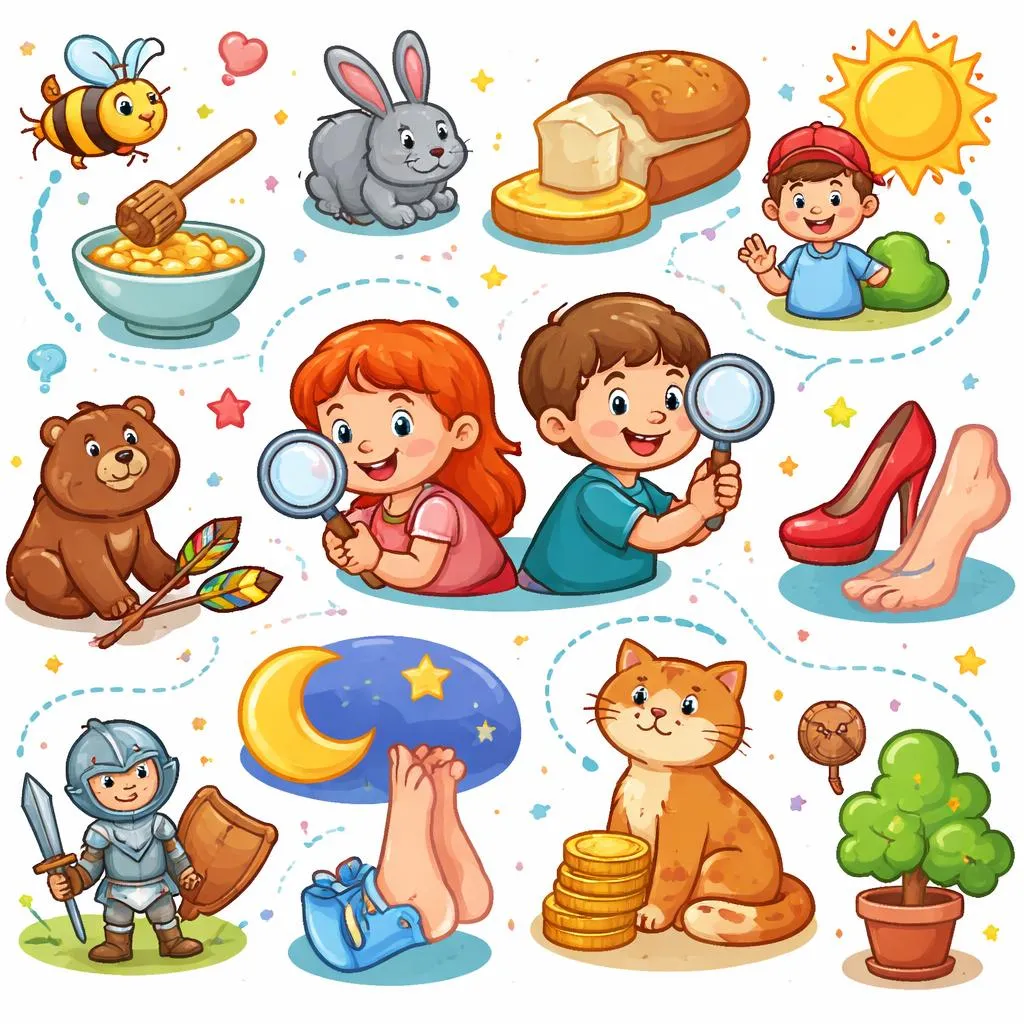

What Are Homophones? Homophones are words that sound the same but have different meanings and are often spelled differently. They are an important part of learning English because they help us understand how pronunciation and spelling can change the meaning of words. Even though these words sound the same, they can have completely different definitions and uses in sentences. Learning about homophones is fun and can be tricky at times because English has many of them. Some homophones are commonly used in daily conversations, while others might be less familiar. By understanding homophones, you can improve your vocabulary and avoid confusion when speaking and writing. In this article, we will explore some common homophones, their meanings, and how to use them correctly in sentences.
Common Examples of Homophones and Their Meanings Here are some common homophones in English, their meanings, and how to use them in sentences.
- To, Too, and Two These are three of the most commonly used homophones. Although they sound the same, each word has a different meaning and use.
To: Used to indicate direction or purpose.
Example: I am going to the store.
Too: Means “also” or “excessively.”
Example: I want one ice cream too.
Example: This bag is too heavy to carry.
Two: Refers to the number 2.
Example: I have two apples.
- There, Their, and They’re These words sound identical but are used in different ways.
There: Refers to a place or location.
Example: The book is over there on the table.
Their: A possessive form, showing ownership.
Example: Their house is big.
They’re: A contraction of they are.
Example: They’re going to the park later.
- Hear and Here These two words sound the same but have different meanings.
Hear: To listen or sense sound with your ears.
Example: Can you hear the music?
Here: Refers to a place or location.
Example: Come here and sit down.
- Brake and Break These words sound the same but are used in different contexts.
Brake: Refers to a device used to stop a vehicle.
Example: He pressed the brake to stop the car.
Break: To separate or cause something to become damaged.
Example: Be careful not to break the glass.
- Right and Write Although these words sound the same, their meanings are different.
Right: Means correct or a direction.
Example: You are right about the answer.
Example: Turn right at the intersection.
Write: To form letters or words on paper.
Example: I will write a letter to my friend.
- Sea and See These homophones sound the same but have completely different meanings.
Sea: A large body of saltwater.
Example: We went to the sea during our vacation.
See: To perceive with the eyes.
Example: I can see the mountain from here.
- Ate and Eight These two words sound the same but refer to different things.
Ate: The past tense of eat.
Example: I ate lunch at 12 PM.
Eight: The number 8.
Example: There are eight cookies on the table.
- Mail and Male These words are pronounced the same but have different meanings.
Mail: Letters, packages, or items sent through the postal system.
Example: I received a mail today.
Male: Refers to a boy or man.
Example: The male teacher is very kind.
- Complement and Compliment These two words sound the same but are used in different situations.
Complement: Something that completes or goes well with something.
Example: The wine was a perfect complement to the meal.
Compliment: A polite remark or praise.
Example: She gave me a nice compliment on my dress.
- Peace and Piece Although these two words sound the same, their meanings are quite different.
Peace: A state of tranquility or calm.
Example: We hope for peace in the world.
Piece: A portion of something.
Example: I want a piece of cake.
How to Remember the Difference Between Homophones While homophones can be tricky, there are some helpful tips you can use to remember the difference between them:
- Pay Attention to Context The best way to know which homophone to use is by looking at the context of the sentence. The other words in the sentence can give you clues about which homophone is correct.
Example: "I want to eat" (Here, "to" is the correct choice because it is showing the purpose of the action).
- Use Mnemonics Mnemonics are memory tricks that help you remember difficult concepts. For example, to remember the difference between "there", "their", and "they’re", you can use the following:
There: Refers to a place. Think of the word "here" in it.
Their: Shows ownership. Remember that "their" has "heir" in it, which refers to someone who inherits something.
They’re: A contraction of "they are." Remember it’s a combination of "they" and "are".
- Practice, Practice, Practice The more you practice using homophones, the easier it becomes to remember their meanings. Write sentences using homophones and ask someone to check your work. Over time, you will start to recognize the correct homophone more easily.
Fun Activities to Learn About Homophones Here are some fun activities you can do to practice using homophones:
- Homophone Quiz Create a quiz with pairs of homophones. For each pair, write a sentence using one of the homophones and ask someone to choose the correct one. For example:
"Your/You’re": "___ going to the park later."
Answer: "You’re" (because it’s a contraction of "you are").
- Homophone Memory Game Make flashcards with homophones written on them. Each flashcard should have one word from the pair. Spread the cards out face down, and take turns flipping over two cards at a time to find matching pairs of homophones.
- Write a Short Story Write a short story using as many homophones as you can. Afterward, read it aloud to check that you used the correct homophones. For example:
"I met my friend at the park and we ate some cake. It was a beautiful day there."
Mastering Homophones in English Learning homophones and their meanings is a fun challenge that can help improve your English skills. By practicing regularly and paying attention to context, you can become confident in using homophones correctly. Whether you're writing, reading, or speaking, mastering homophones is an important part of mastering the English language. The next time you come across homophones, try using these tips to choose the correct word and improve your spelling and grammar. Keep practicing, and soon you will be an expert at using homophones!