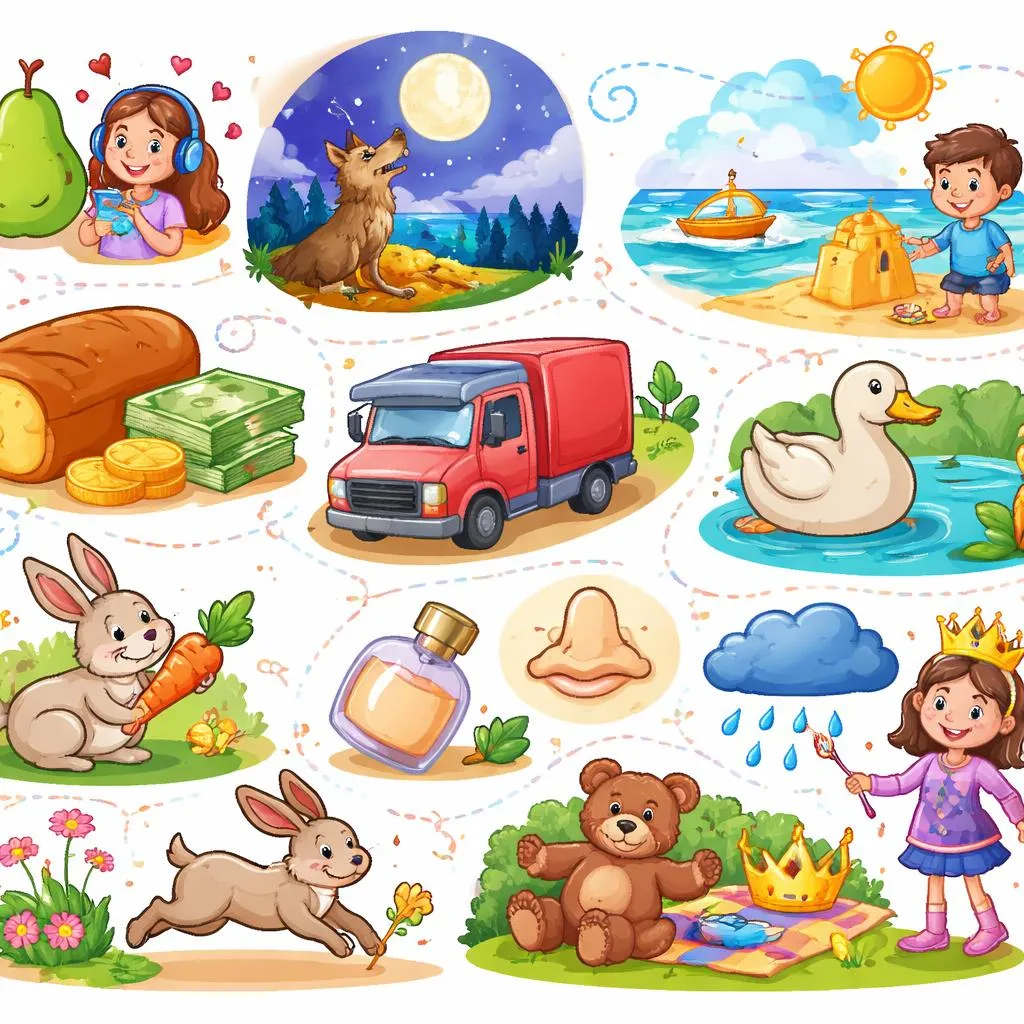

Homophones are words that sound the same. They have different meanings. They often have different spellings.
Learning homophones examples helps improve spelling and listening skills.
What Are Homophones?
Homophones are words with the same pronunciation but different meanings.
Example:
sun son
They sound the same. But their meanings are different.
The sun is in the sky. My son is five years old.
This is a clear homophones example.
Common Homophones Examples
Here are common homophones examples in English.
There – Their – They’re
There shows place. Their shows possession. They’re means they are.
Examples:
The book is over there. Their house is big. They’re coming soon.
Two – Too – To
Two is a number. Too means also or very. To is a preposition.
Examples:
I have two pencils. I like apples too. She is going to school.
Your – You’re
Your shows possession. You’re means you are.
Examples:
Your bag is here. You’re my best friend.
Right – Write
Right means correct or direction. Write means to form words.
Examples:
That answer is right. Please write your name.
Sea – See
Sea is large salt water. See means to look at.
Examples:
The sea is blue. I can see the bird.
Flower – Flour
Flower is a plant. Flour is used for baking.
Examples:
The flower is beautiful. We need flour to make bread.
Buy – By – Bye
Buy means to purchase. By means near or beside. Bye is a goodbye word.
Examples:
I want to buy a toy. She sits by me. Bye, see you tomorrow.
Here – Hear
Here shows place. Hear means to listen.
Examples:
Come here. I can hear music.
Why Homophones Are Important
Homophones examples show why spelling matters.
If you write:
I want too apples.
The sentence is incorrect.
Correct sentence:
I want two apples.
Understanding homophones prevents mistakes.
Homophones in Questions
Where are you going? Wear are you going?
The first sentence is correct. Wear means clothes.
Homophones can change meaning completely.
Homophones in Short Sentences
The knight rode a horse. The night was dark.
Knight means a soldier. Night means evening time.
Another example:
The mail arrived. He is a male teacher.
Mail and male sound the same.
Tips to Remember Homophones
Look at context. Check spelling carefully. Practice writing sentences. Read regularly.
Context helps choose the correct word.
Simple Practice
Choose the correct word:
I can (see / sea) the mountain. She has (two / too) cats. (Their / There) car is new.
Answers:
see two Their
Practice builds confidence.
Summary of Homophones Examples
Homophones are words that sound the same but have different meanings. They often have different spellings. Examples include there/their/they’re, two/too/to, and right/write.
Learning homophones examples improves spelling, reading, and writing accuracy in English.
More Common Homophones Examples
Here are additional homophones examples to expand vocabulary.
Brake – Break
Brake means to stop a vehicle. Break means to separate into pieces.
Examples:
Press the brake slowly. Be careful not to break the glass.
Meet – Meat
Meet means to see someone. Meat is food from animals.
Examples:
Nice to meet you. He eats meat every day.
Plain – Plane
Plain means simple. Plane is an aircraft.
Examples:
She wore a plain dress. The plane is landing now.
Weak – Week
Weak means not strong. Week is seven days.
Examples:
He feels weak today. Next week is busy.
Whole – Hole
Whole means complete. Hole is an empty space.
Examples:
She ate the whole cake. There is a hole in the wall.
Which – Witch
Which asks about choice. Witch is a magical character.
Examples:
Which book do you want? The witch lives in the forest.
One – Won
One is the number 1. Won is the past of win.
Examples:
I have one sister. Our team won the game.
Hour – Our
Hour is a unit of time. Our shows possession.
Examples:
The class lasts one hour. Our teacher is kind.
Pair – Pear
Pair means two of something. Pear is a fruit.
Examples:
I bought a pair of shoes. The pear is sweet.
Blue – Blew
Blue is a color. Blew is the past of blow.
Examples:
The sky is blue. The wind blew hard last night.
Homophones in Longer Sentences
The knight rode through the night. She knew the new answer. He rode his bike on the road. The sun shines on my son.
These sentences show how meaning depends on spelling.
Why English Has Many Homophones
English spelling developed from many languages.
Old English French Latin
Different origins created similar sounds but different spellings.
This is why homophones are common in English.
Pronunciation changes over time. Spelling often stays the same.
This creates sound similarity.
Homophones and Listening Skills
When listening, context is very important.
Example:
I need to buy some flour.
The word “flour” sounds like “flower.” But baking context makes meaning clear.
Listening practice improves recognition.
Homophones in Writing Practice
When writing, always check:
Does the word fit the meaning? Is the spelling correct?
Example mistake:
She sea the bird.
Correct version:
She see the bird.
Better correction:
She sees the bird.
Grammar and homophones both matter.
Homophones in Dictation
Dictation exercises are helpful.
Listen carefully. Write the correct spelling.
Example:
Their house is over there.
Two homophones appear in one sentence.
Careful attention improves accuracy.
Tricky Homophones Examples
Some homophones are harder.
Stationary – Stationery
Stationary means not moving. Stationery means paper and envelopes.
Example:
The car remained stationary. I bought new stationery.
Allowed – Aloud
Allowed means permitted. Aloud means spoken out loud.
Example:
You are allowed to enter. Read the sentence aloud.
Advice – Advise
Advice is a noun. Advise is a verb.
Example:
She gave good advice. I advise you to rest.
These words sound similar but grammar changes.
Strategies to Master Homophones
Create flashcards. Write example sentences. Group words in pairs. Review weekly.
Practice regularly.
Reading books also helps notice correct spelling patterns.
Classroom Activity Idea
Write ten homophones examples. Create two sentences for each pair.
Example:
Mail – Male
The mail arrived late. He is a male student.
Repetition strengthens memory.
Extended Review of Homophones Examples
Homophones are words that sound the same but have different meanings and spellings. Examples include sea/see, two/too/to, and break/brake. Context helps determine correct meaning. Careful spelling improves writing accuracy. Regular practice reduces confusion.
Understanding many homophones examples builds stronger reading, listening, and writing skills in English.