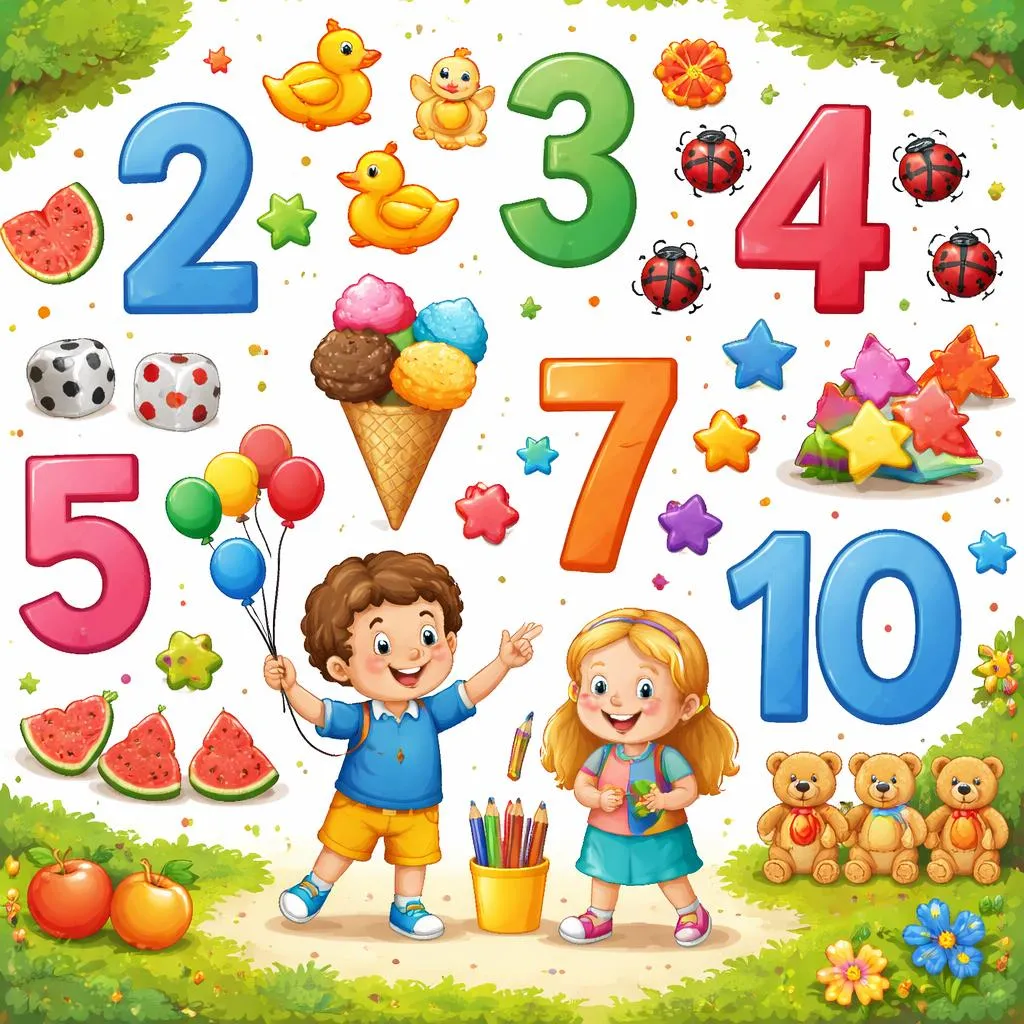

English number words show quantity.
They tell how many.
They tell how much.
They are used every day in speaking and writing.
English number words begin with small numbers.
Zero
One
Two
Three
Four
Five
Six
Seven
Eight
Nine
Ten
These words are basic vocabulary.
They appear in early lessons.
They are short.
They are easy to recognize.
Numbers from Eleven to Twenty
English number words from eleven to twenty have special forms.
Eleven
Twelve
Thirteen
Fourteen
Fifteen
Sixteen
Seventeen
Eighteen
Nineteen
Twenty
Many numbers from thirteen to nineteen end with -teen.
The ending -teen often shows numbers between 13 and 19.
Pronunciation matters.
Stress changes meaning.
Thirteen and thirty sound different.
Careful listening supports clarity.
Tens in English Number Words
Multiples of ten follow a pattern.
Twenty
Thirty
Forty
Fifty
Sixty
Seventy
Eighty
Ninety
Most of these end with -ty.
Spelling changes in some forms.
Forty drops the letter u.
Thirty changes from three.
Recognizing patterns improves spelling accuracy.
Combining Number Words
Numbers between 21 and 99 combine tens and ones.
Twenty-one
Thirty-two
Forty-seven
Eighty-nine
A hyphen connects the words.
The tens word comes first.
The ones word follows.
Clear structure supports reading and writing.
Hundreds and Thousands
English number words continue with place value.
One hundred
Two hundred
Three hundred
One thousand
Five thousand
Ten thousand
The word hundred stays singular after a number.
Two hundred students
Five thousand books
In general expressions, plural forms appear.
Hundreds of people
Thousands of stars
Understanding grammar rules improves accuracy.
Ordinal Number Words
Ordinal numbers show order.
First
Second
Third
Fourth
Fifth
Sixth
Seventh
Eighth
Ninth
Tenth
Most ordinal numbers end with -th.
First, second, and third are special forms.
Ordinal numbers are used in dates.
They are used in ranking.
They describe position.
Numbers in Daily Communication
English number words appear in many contexts.
Time
Money
Dates
Phone numbers
Addresses
Measurements
Clear pronunciation avoids confusion.
Correct spelling improves writing.
Confidence grows with practice.
Extended Explanation Sentence
English number words form a structured system based on place value in which single digits combine with tens, hundreds, thousands, and larger units through consistent grammatical patterns that allow speakers to express quantity, order, time, price, measurement, and mathematical relationships clearly and effectively in both spoken and written communication.
Building Strong Vocabulary
Learning English number words strengthens basic vocabulary.
It supports math understanding.
It improves listening skills.
It increases reading fluency.
It builds communication confidence.
Numbers are everywhere.
They appear in daily life.
They appear in school subjects.
They appear in professional settings.
Mastery of English number words provides a solid foundation for accurate expression, clear understanding of numerical information, and effective participation in academic and real-world communication.
Millions and Larger Numbers
English number words can describe very large quantities, and these larger numbers follow the same structured pattern in which each new place value increases by a factor of ten and combines clearly with smaller units.
One million
Two million
Five million
One billion
Three billion
After a specific number, the word stays singular.
Seven million people attended.
Eight billion dollars were counted.
In general expressions, plural forms appear.
Millions of people travel.
Billions of stars exist.
Recognizing this pattern strengthens number fluency.
Ordinal Number Words
Ordinal numbers show order.
First
Second
Third
Fourth
Fifth
Sixth
Seventh
Eighth
Ninth
Tenth
Most ordinal numbers end with -th.
First, second, and third are special forms.
Ordinal numbers are used in dates.
January first
March tenth
They are used in ranking.
First place
Second level
They describe position in a clear sequence.
Decimals and Fractions
English number words also describe parts of a whole.
Decimals use the word point.
Three point five
Seven point two
Zero point nine
Each digit after the point is read separately.
Fractions use ordinal forms.
One half
One third
Three quarters
Two fifths
Fractions appear in math.
They appear in cooking.
They appear in daily measurement.
Clear vocabulary supports understanding.
Numbers in Time and Dates
Time uses number words in structured patterns.
Five o’clock
Ten thirty
Seven fifteen
Dates combine ordinal numbers.
April third
July twenty-first
Years are often read in pairs.
Nineteen ninety-nine
Twenty twenty-four
Usage depends on tradition.
Pronunciation patterns support fluency.
Numbers in Money and Measurement
Money combines number words with currency.
Five dollars
Ten euros
Twenty pounds
Singular and plural forms change.
One dollar
Two dollars
Measurements follow similar rules.
Ten meters
Five kilograms
Three liters
Units remain clear.
Agreement matters.
Accurate number words prevent misunderstanding.
Mathematical Language with Numbers
Mathematical expressions also use number words.
Five plus three equals eight
Ten minus four equals six
Six times two equals twelve
Eight divided by two equals four
These patterns are common in classrooms.
They connect language and math.
Clear structure improves accuracy.
Vocabulary supports logical thinking.
Extended Structural Sentence
English number words operate within a base-ten place value system that organizes digits into hierarchical units such as ones, tens, hundreds, thousands, millions, and billions, and through consistent grammatical patterns, hyphenated combinations, ordinal transformations, and structured pronunciation conventions, this system enables speakers to express quantity, order, proportion, measurement, financial value, mathematical relationships, and chronological information with clarity and precision in both academic and everyday communication.
Strengthening Vocabulary Through Number Words
Learning English number words strengthens foundational vocabulary.
It improves listening skills.
It builds reading confidence.
It supports spelling accuracy.
It enhances speaking fluency.
Numbers appear in schedules.
They appear in prices.
They appear in textbooks.
They appear in data and research.
Strong control of English number words allows accurate interpretation of information, confident expression of quantity, and effective participation in school, work, and daily communication where numerical understanding is essential.