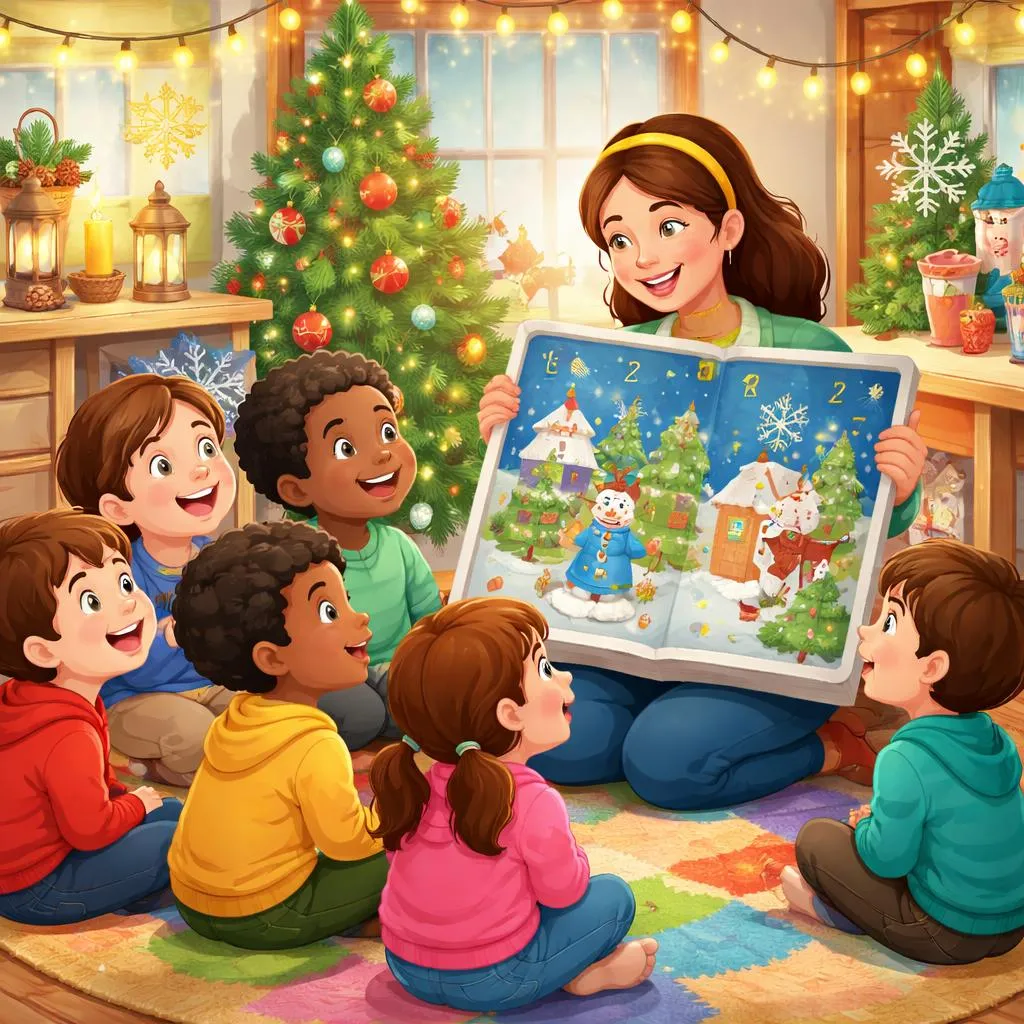

The weeks before Christmas hold special magic for children. Anticipation builds day by day. Traditions create comfort. Stories capture the meaning of the season. A children's advent story combines all these elements. It provides daily readings that build toward a celebration. It introduces vocabulary about hope, waiting, and joy. It creates classroom routines that support language development. The structured format of advent readings offers predictable language patterns. Children know what to expect. They look forward to each day's story. This anticipation supports engagement and retention. Let us explore how advent stories serve language learning during the holiday season.
What Is a Children's Advent Story?
An advent story is a narrative designed for the Advent season. Advent means "coming" or "arrival." It is the four weeks before Christmas. Traditional advent celebrates the coming of Christmas. Children's advent stories adapt this concept for young audiences. Some follow religious themes. They tell parts of the Christmas story day by day. Others use secular themes. They focus on winter, kindness, and family. Many advent storybooks have 24 or 25 short readings. Families read one each day from December 1st to Christmas. Each story builds toward the final celebration. The format creates anticipation and routine.
Categories of Children's Advent Stories
Understanding different story types helps in selecting appropriate materials for specific learning goals.
Religious Advent Stories: These follow the traditional Christmas narrative. They tell of Mary and Joseph. The journey to Bethlehem. The shepherds in the fields. The wise men following a star. Each day adds a new part of the story. These build biblical vocabulary and cultural knowledge.
Storybook Advent Calendars: These are collections of 24 short stories. Each story stands alone. They share winter or holiday themes. Animals preparing for winter. Children enjoying snow. Families celebrating together. The variety exposes children to different vocabulary each day.
Continuous Narrative Advent Books: A single story divided into 24 chapters. Each day's reading is one chapter. The cliffhanger endings create anticipation. Children want to hear what happens next. This builds narrative prediction skills.
Theme-Based Advent Stories: These focus on specific themes for each week. Hope, peace, joy, love. Each day's story connects to the weekly theme. This builds abstract vocabulary through concrete narratives.
Activity Advent Stories: Stories that include a daily activity. Read the story, then do a related craft or game. This extends language learning into hands-on experience.
Vocabulary Learning from Advent Stories
Advent narratives introduce vocabulary across multiple domains. Words connect to winter, holidays, emotions, and traditions.
Advent Words: advent, calendar, countdown, anticipation, waiting, preparation, candle, wreath, season. Winter Words: winter, snow, ice, cold, frost, evergreen, pinecone, fireplace, cocoa, blanket. Holiday Words: Christmas, holiday, celebration, family, tradition, gift, giving, sharing, kindness, joy. Story Words: journey, stable, shepherd, angel, star, wise men, manger, Bethlehem, Mary, Joseph. Emotion Words: hope, peace, joy, love, excitement, patience, wonder, gratitude, generosity, warmth.
Each day's reading introduces words in meaningful contexts. The journey story teaches travel vocabulary. The stable scene teaches animal and place words. The theme of hope builds emotional vocabulary.
Phonics Points in Advent Stories
Specific sound patterns appear through key vocabulary. Identifying these helps build decoding skills.
The /a/ sound: advent, angel, animal, away, arrive. The season name starts with this sound. Practice saying advent words together.
The /w/ sound: winter, wait, warm, wonder, wise. Winter waiting creates anticipation. The wise men travel. The sound appears frequently.
The /s/ sound: snow, star, shepherd, stable, silent. Snow falls. Stars shine. Shepherds watch. The sound repeats throughout.
The /j/ sound: joy, journey, January, Jesus. Joy is a central theme. The journey matters. The sound carries emotional weight.
Rhyming words: snow/go, star/far, night/bright, cold/old. Many advent books use rhyme. Point out patterns naturally during reading.
Grammar Patterns in Advent Stories
Children's advent stories model various grammatical structures within their narratives.
Future Tense Anticipation: Advent is about waiting for something to come. Stories use future language. "The baby will be born." "The wise men will arrive." "Christmas will come soon." This models future tense meaningfully.
Past Tense Narrative: Stories about the first Christmas use past tense. "Mary and Joseph traveled to Bethlehem." "The shepherds watched their flocks." "A star appeared in the sky." This provides past tense modeling.
Present Tense Description: Stories describing current traditions use present tense. "We light a candle each week." "Families gather to celebrate." "Children wait for Christmas morning." This connects to children's experience.
Sequence Words: Advent stories use time words naturally. "First, the angel appeared." "Then, Mary said yes." "Next, they traveled to Bethlehem." "Finally, the baby was born." These organize the narrative.
Question Formation: Characters ask questions. "Where is the newborn king?" "Why are you afraid?" "What shall we bring?" Questions model conversational patterns.
Learning Activities for Advent Stories
Active engagement helps children internalize vocabulary and themes through hands-on learning.
Advent Wreath Making: Create a simple classroom advent wreath. Use real or paper materials. Four candles represent the four weeks. Light one each week. Discuss the weekly theme. Hope, peace, joy, love. This builds tradition vocabulary.
Paper Chain Countdown: Create a paper chain with 24 links. Write a story word on each link. Remove one link each day after reading. Review the word. This builds vocabulary and anticipation simultaneously.
Nativity Scene Building: Create a simple nativity scene. Add one piece each day. Mary. Joseph. The stable. The animals. The shepherds. The angel. The wise men. Discuss each new addition using descriptive language.
Kindness Calendar: Create an advent calendar of kind actions. Each day includes a small kindness task. Share a toy. Help a friend. Say thank you. Write a kind note. This builds action vocabulary and character.
Star of the Day: Create a large star. Each day, add a word describing something good about the day. Wonderful. Fun. Peaceful. Joyful. This builds descriptive vocabulary and gratitude.
Learning Activities for Group Settings
Collaborative learning builds language through interaction and shared experiences.
Daily Story Circle: Gather in a circle each day for the advent story. Use a special candle or prop. Create routine. Predict what might happen next. Discuss using simple language. This builds listening and prediction skills.
Advent Picture Walk: Before reading each day's story, look at the pictures. Predict what the story will be about. Use observation language. "I see a star." "There is a donkey." "Someone looks happy." This builds prediction and observation.
Story Retelling Partners: After the daily reading, partners retell the story to each other. Use simple sentences. This builds narrative skills and oral language.
Advent Wreath Discussion: Each week when lighting the advent candle, discuss the weekly theme. What does hope mean? When do we feel peace? How can we show love? This builds abstract vocabulary through discussion.
Educational Games for Advent Stories
Games make learning playful and memorable.
Advent Bingo: Create bingo cards with advent and Christmas pictures. Star, angel, shepherd, stable, candle, wreath, gift, snow. Call out words. Students cover matching pictures. First to cover a row wins.
Memory Match with Nativity Cards: Create pairs of cards with nativity pictures. Mary, Joseph, baby, shepherd, sheep, star, wise man, camel. Place face down. Students flip two looking for matches. Name pictures when flipping.
Who Am I? Game: Describe a character from the advent story. Students guess who it is. "I traveled on a donkey. I am going to Bethlehem." Students respond "Mary!" This builds listening and character knowledge.
Pin the Star on the Stable: Create a large stable picture. Make paper stars with vocabulary words written on them. Blindfolded students try to place the star where it belongs. Say the word when placing.
Printable Materials for Advent Stories
Ready-to-use printables extend learning beyond story time.
Advent Vocabulary Flashcards: Create cards with advent pictures on one side and words on the other. Advent, candle, wreath, star, angel, shepherd, stable, manger, wise men, gift. Use for daily review.
Advent Calendar Template: Create a blank advent calendar with 24 windows or doors. Students add a picture or word each day based on the story. Open one window daily. This builds anticipation and vocabulary.
Nativity Coloring Pages: Print outline drawings of nativity scenes. Mary and Joseph. Shepherds and sheep. Wise men and camels. The stable with baby Jesus. Students color while discussing with partners.
Advent Mini-Book: Fold paper to create a small book. Each page represents one week of advent. Hope, peace, joy, love. Students illustrate each page and write a simple sentence about the theme.
Story Sequencing Cards: Create cards showing main events from the Christmas story. Angel appears to Mary. Journey to Bethlehem. Jesus is born. Shepherds visit. Wise men arrive. Students arrange in order and retell.
Daily Life Connections to Advent Stories
Linking story themes to daily experiences makes learning relevant and personal.
Waiting Together: Advent is about waiting. Discuss times we wait. Waiting for a turn. Waiting for an event. Waiting for a special day. Use waiting vocabulary. Patience. Anticipation. Hope.
Giving and Receiving: The wise men brought gifts. Discuss giving and receiving. What gifts can we give that are not toys? Kindness. Help. Time. A smile. This builds generosity vocabulary.
Family Traditions: Families have different advent and holiday traditions. Students share their family's traditions. Use tradition vocabulary. "In my family, we..." This builds cultural awareness and oral language.
Light in Darkness: Advent candles bring light in winter darkness. Discuss light and dark. What gives us light? What gives us hope when things feel dark? This builds metaphorical language appropriately for age.
Printable Flashcards from Advent Stories
Effective flashcards support multiple learning styles.
Picture-Word Cards: Front shows simple advent drawing or printed image. Back shows word in English. Advent, candle, wreath, star, angel, shepherd, stable, manger, wise men, gift, hope, peace, joy, love.
Weekly Theme Cards: Create cards for each advent week. Week 1: Hope. Week 2: Peace. Week 3: Joy. Week 4: Love. Discuss what each word means. Connect to daily stories.
Character Cards: Create cards for each nativity character with simple descriptions. "Mary: Jesus's mother." "Joseph: Mary's husband." "Shepherds: visited baby Jesus." "Wise men: brought gifts." Students match characters to descriptions.
Sequence Cards: Create cards showing main events in order. Students arrange and retell using complete sentences. This builds narrative skills.
Phonics Practice from Advent Words
Use advent vocabulary for targeted phonics instruction.
Initial Sound Sort: Provide advent picture cards. Advent, candle, star, angel, shepherd, stable, manger, gift. Students sort by beginning sound. A words. C words. S words. This builds phonemic awareness.
Syllable Clapping: Clap syllables in advent vocabulary. Ad-vent (2). Can-dle (2). Wreath (1). An-gel (2). Shep-herd (2). Sta-ble (2). Man-ger (2). Wise men (2). This builds phonological awareness.
Rhyming Word Hunt: Find words that rhyme with advent words. Star/car/far. Night/bright/light. Snow/go/blow. Peace/cease/fleece. Create rhyming pairs and use in sentences.
Vowel Sound Sort: Sort advent words by vowel sounds. Star has /ar/. Angel has long /a/ in first syllable. Candle has short /a/. Gift has short /i/. This builds vowel discrimination.
Grammar Patterns Practice
Use advent story sentences to practice specific grammar structures.
Future Tense Practice: Practice future tense using advent anticipation. "Tomorrow we will read the next story." "Christmas will come soon." "The baby will be born." Students make predictions about upcoming stories.
Past Tense Practice: Retell completed stories using past tense. "Yesterday we read about Mary." "The angel appeared to her." "She said yes." Students practice narrative past tense.
Question Formation: Practice asking questions about the stories. "Who traveled to Bethlehem?" "Where was Jesus born?" "Why did the shepherds come?" "What did the wise men bring?" Students ask and answer with partners.
Because Sentences: Practice causal sentences using "because." "Mary was happy because the angel brought good news." "The shepherds came because they heard about Jesus." "We light candles because they remind us of hope." Students create because sentences.
The Anticipation Building Power of Advent Stories
A children's advent story offers unique advantages in language classrooms during the holiday season. The daily format creates routine and anticipation. Children look forward to each new installment. This engagement supports language retention. The stories build vocabulary about winter, holidays, emotions, and traditions. The themes of hope, peace, joy, and love provide abstract vocabulary in concrete contexts. The narrative builds cultural knowledge and literacy simultaneously. For educators, advent stories provide structured daily lessons that feel like gifts rather than work. The countdown format builds excitement. The stories connect to family traditions. The language learning happens naturally within a context of wonder and anticipation. That combination creates memorable, meaningful language acquisition.