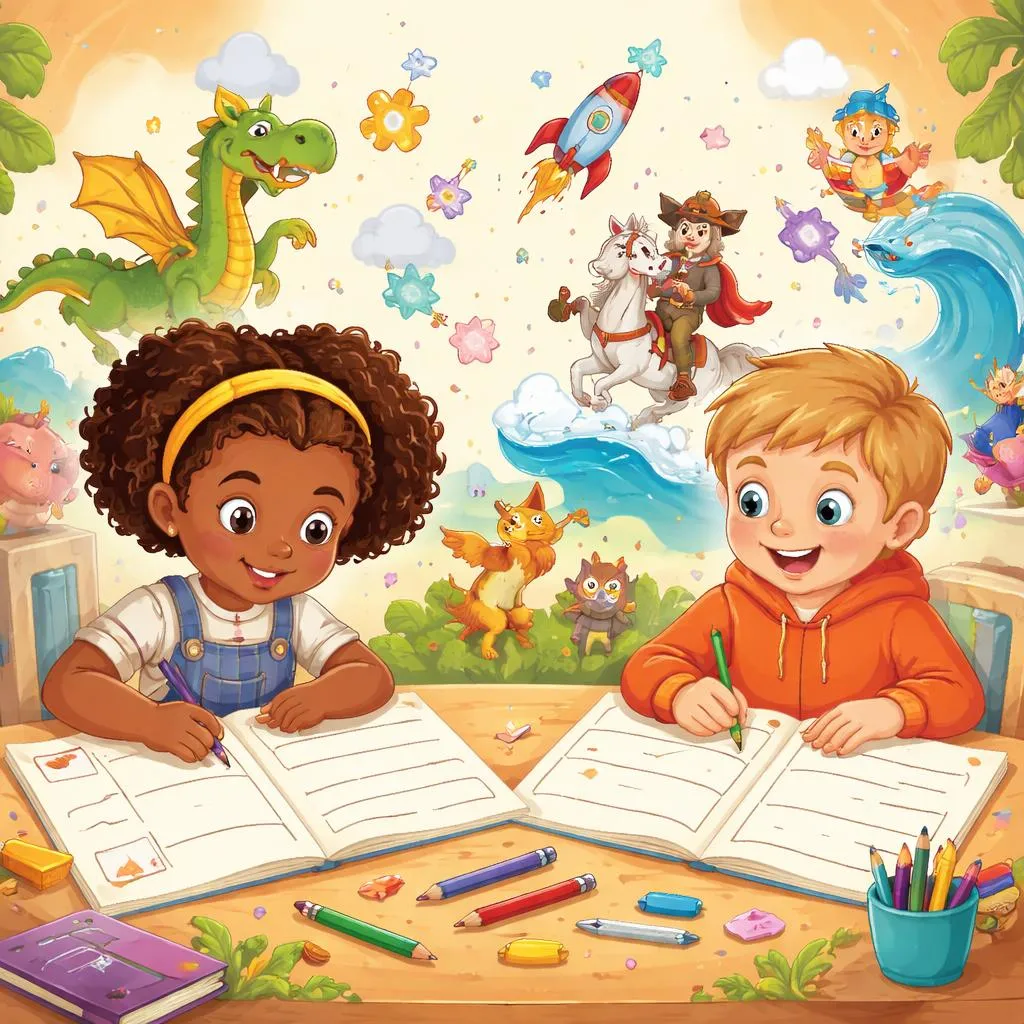

Every child has a story inside them waiting to come out. The challenge is knowing where to start. A blank page can feel overwhelming. A template for children's story book solves this problem completely. It provides structure without limiting creativity. It guides young writers through each part of the storytelling process. It turns a daunting task into a series of simple steps. This article explores how teachers can use story templates to help children become confident authors of their own original tales.
What Is a Template for Children's Story Book? A template for children's story book is a structured framework that guides young writers through the process of creating their own story. It provides a clear container for creativity. The template includes spaces for each essential story element. A place for the title and author name. Pages for the beginning, middle, and end. Spots for illustrations alongside text. Some templates include prompts or sentence starters. Others provide blank boxes with simple labels. The template ensures no important part gets forgotten. It gives children a roadmap for their storytelling journey while leaving plenty of room for their unique ideas to shine.
Meaning and Explanation Behind Story Templates Story templates serve several important purposes in developing young writers. They reduce the cognitive load of writing. Creating a complete story involves many decisions at once. What is the story about? Who are the characters? What happens first? What comes next? How does it end? A template breaks these decisions into separate steps. Children focus on one element at a time. This makes the whole process feel manageable.
Templates also teach story structure implicitly. By filling in the template sections, children internalize the pattern of a good story. They learn that stories have a beginning that introduces characters and setting. They learn that a middle part presents a problem or adventure. They learn that an ending resolves everything satisfactorily. This understanding transfers to future writing, even when templates are no longer used.
The visual organization of a template provides another benefit. Children see their story taking shape across multiple pages. They flip through and see their work growing. This visual progress builds motivation and pride. The completed template becomes a real book they created themselves.
Categories or Lists of Story Templates Templates for children's story books come in different formats for different purposes and age levels.
Basic Story Structure Templates: These provide the simplest framework for young writers.
Title page with space for author name.
Page 1: Characters and setting introduction.
Page 2: The problem or adventure begins.
Page 3: What happens next.
Page 4: The solution or ending.
About the Author page with space for a drawing.
Picture-First Templates: These emphasize illustration for pre-writers or emerging writers.
Large box for drawing on each page.
Small line for a simple sentence or caption.
Space for labeling important elements in pictures.
Word bank at the bottom with helpful vocabulary.
Prompt-Based Templates: These include sentence starters to support hesitant writers.
Once upon a time there was...
One day something surprising happened...
First, the character tried to...
Then, something even more exciting occurred...
In the end, everything worked out because...
Genre-Specific Templates: These provide structures tailored to different story types.
Adventure story templates with space for a journey.
Friendship story templates focusing on relationship changes.
Animal story templates featuring animal characters.
Fantasy templates with room for magical elements.
Digital Templates: These work on tablets or computers for tech-friendly classrooms.
Clickable fields to fill in text.
Digital drawing tools for illustrations.
Options to add more pages as needed.
Save and print functionality.
Daily Life Examples Using Story Templates A template for children's story book connects to everyday experiences in natural ways. After a class field trip, use a template to create a story about the adventure. After a holiday celebration, capture the memories in story form. When a class pet does something funny, turn it into a narrative. These real-life connections show children that stories come from their own experiences.
The templates also work for responding to stories read in class. After enjoying a favorite book, children use a template to write a new adventure for the same characters. This builds comprehension while encouraging creativity. They understand the characters deeply enough to imagine what they might do next.
Seasonal events provide perfect story material. A template helps capture Halloween costume adventures. It structures tales of lost teeth and visits from the tooth fairy. It organizes stories about family traditions and holiday magic. The template makes these precious moments into permanent stories children can keep and share.
Printable Flashcards for Story Elements Flashcards help children understand the building blocks that go into a template for children's story book.
Character Cards: Show different types of characters children might include. Boy, girl, animal, monster, fairy, robot, king, queen, baby, grandparent.
Setting Cards: Show different places where stories happen. Forest, castle, beach, school, park, home, garden, ocean, city, farm.
Problem Cards: Show simple story problems. Lost toy, broken toy, getting lost, making a mistake, feeling left out, something missing.
Solution Cards: Show ways problems get solved. Finding help, working together, trying again, asking kindly, thinking creatively.
Teachers can use these cards during the planning phase. Children select one card from each category to build their story framework. A character from this pile. A setting from that pile. A problem from another. The random combinations often create the most creative stories.
Learning Activities or Games for Story Templates Activities make using a template for children's story book an engaging classroom experience.
Activity 1: Story Planning Together Before children write independently, plan a class story using a large template on the board. Discuss each section together. What characters should we include? Where should the story happen? What problem will they face? How will it be solved? Write the class ideas in each section. This modeling shows exactly how to use the template before children try on their own.
Activity 2: Story Element Scavenger Hunt Read a familiar story to the class. Then give children a blank template. Ask them to fill in each section based on the story they just heard. Who were the characters? Where did it happen? What was the problem? How did it end? This builds comprehension while teaching template use.
Activity 3: Partner Story Creation Pair children together to create a story using one template. They discuss ideas together. One child writes while the other illustrates, or they take turns. This collaboration builds language skills through discussion. It also supports children who might struggle with independent writing.
Activity 4: Story Swap After children complete their story books, swap them with partners. Each child reads their partner's story and draws a new illustration for it. This builds reading skills and shows children that their words create pictures in other people's minds.
Vocabulary Learning from Story Templates Using a template for children's story book naturally introduces important writing and storytelling vocabulary.
Story Structure Words: Title, author, beginning, middle, end, character, setting, problem, solution, page.
Writing Process Words: Plan, write, illustrate, revise, edit, publish, share, read.
Story Element Words: Hero, friend, villain, helper, magic, adventure, journey, discovery, surprise.
Publishing Words: Cover, spine, page number, illustration, caption, dedication, about the author.
Teachers can introduce these words during template work. Point out the title page. Discuss what an author does. Talk about illustrations and illustrators. The vocabulary becomes meaningful through hands-on use.
Phonics Points in Story Writing Creating stories provides authentic opportunities for phonics practice.
Sound Spelling: When children write their own stories, they practice connecting sounds to letters. Encourage them to listen for sounds and write what they hear. This invented spelling builds phonemic awareness.
Sight Words: Templates often include common sight words in prompts. The, and, was, said, went. Repeated exposure helps these words become instantly recognizable.
Word Families: When children write, they naturally use words from the same families. Cat, hat, sat. Run, fun, sun. These patterns reinforce phonics learning.
Punctuation: Templates introduce basic punctuation naturally. Periods at the end of sentences. Question marks for questions. Exclamation points for excitement.
Teachers can notice and celebrate phonics growth in student writing. "I see you wrote the word 'light' with an 'ite' ending. That's one way to spell that sound."
Grammar Patterns in Story Templates Story templates provide natural contexts for using correct grammar.
Past Tense for Stories: Most stories use past tense. The template prompts encourage this naturally. "The character went to..." "Then something happened..." This reinforces irregular past forms through use.
Descriptive Language: Templates with blanks encourage descriptive word choices. "The ______ dog." Children fill in adjectives like furry, spotted, tiny, brave. This builds vocabulary and descriptive skills.
Dialogue: Some templates include space for characters to speak. "The bear said, '______'." This introduces quotation marks and dialogue punctuation naturally.
Sentence Variety: Templates with different page types encourage varied sentence structures. Questions on one page. Exclamations on another. Statements on most pages.
Teachers can gently guide grammar during the editing phase. "Let's read this sentence together. Does it sound like something is missing?"
Learning Activities for Deeper Engagement Beyond basic template use, other activities deepen the story creation experience.
Activity: Story Illustration Day After stories are written, dedicate a day to illustration. Provide various art materials. Crayons, markers, colored pencils, watercolors. Discuss how illustrations add to the story. They show what the words describe. They add details the text leaves out.
Activity: Author's Chair Create a special chair where young authors sit to share their completed stories. The class listens quietly and claps afterward. This celebrates the writing achievement. It builds confidence and community. Children see themselves as real authors.
Activity: Classroom Library Collect completed story templates into a classroom library basket. Children can read each other's books during quiet reading time. This honors their work and provides authentic reading material.
Activity: Story Template Gallery Display completed story templates on a bulletin board. Arrange them by genre or theme. Children walk around and read each other's work. This builds a culture of writing and sharing.
Printable Materials for Story Templates Printable resources support ongoing use of templates for children's story books.
Blank Template Sets: Create packets with multiple blank templates ready for use. Include different formats for different story types. Keep copies available for spontaneous writing moments.
Story Idea Cards: Create cards with story starters, character ideas, and setting suggestions. Children who feel stuck can draw from this deck for inspiration.
Word Banks: Create themed word bank sheets. Animal words. Feeling words. Action words. Weather words. Children reference these during writing to find just the right word.
Editing Checklist: Create simple checklists for young editors. Does my story have a title? Did I write my name? Does each page have a picture? Does the ending make sense?
Book Cover Templates: Create special cover pages where children design the front of their book. Space for title, author name, and cover illustration makes the final product feel real.
Educational Games for Story Development Games make story planning playful and engaging.
Game: Story Dice Create or purchase dice with pictures on each side. Character dice, setting dice, problem dice. Children roll all three and create a story using what they rolled. This random element often sparks the most creative ideas.
Game: Pass the Story Give each child a template with only the first page filled. After a few minutes, they pass their template to the next person. That person fills the next page. Continue until all pages are complete. The final stories are always surprising and collaborative.
Game: Story Detective Read a completed story template with one element missing. No title. No character names. Children act as detectives to figure out what is missing and suggest what it should be.
Game: Template Race Set a timer for a short, fun writing challenge. How many pages can we complete in five minutes? The pressure creates energy and reduces overthinking.
Connecting Story Templates to Other Subjects Story templates connect naturally to other areas of the curriculum.
Social Studies Connection: Use templates to create stories about historical figures or events. George Washington's childhood. Life in a different time period. Coming to a new country. The template structure makes history personal.
Science Connection: Create stories about plant life cycles, animal habitats, or weather events. A seed's journey to becoming a flower. A raindrop's trip through the water cycle. The template makes science narrative and memorable.
Math Connection: Write stories that include counting, shapes, or simple math problems. Five little ducks went out to play. A shape's adventure in Shape Town. Math becomes part of the narrative.
Social Emotional Learning: Use templates for stories about feelings, friendship, and problem-solving. A time when someone felt left out. A story about sharing. The template provides structure for processing experiences.
A template for children's story book does more than help children write. It shows them that they are authors. Their ideas matter. Their words can become books. Their stories deserve to be shared. This belief in themselves as writers matters more than any specific skill taught. The template is just a tool. The real magic happens when a child looks at their completed book and realizes, "I made this. I am a writer." That realization changes everything. It creates a person who writes not because they have to, but because they have something to say. And that is the greatest gift any literacy education can give.