
Draw and Tie: What’s the Difference?
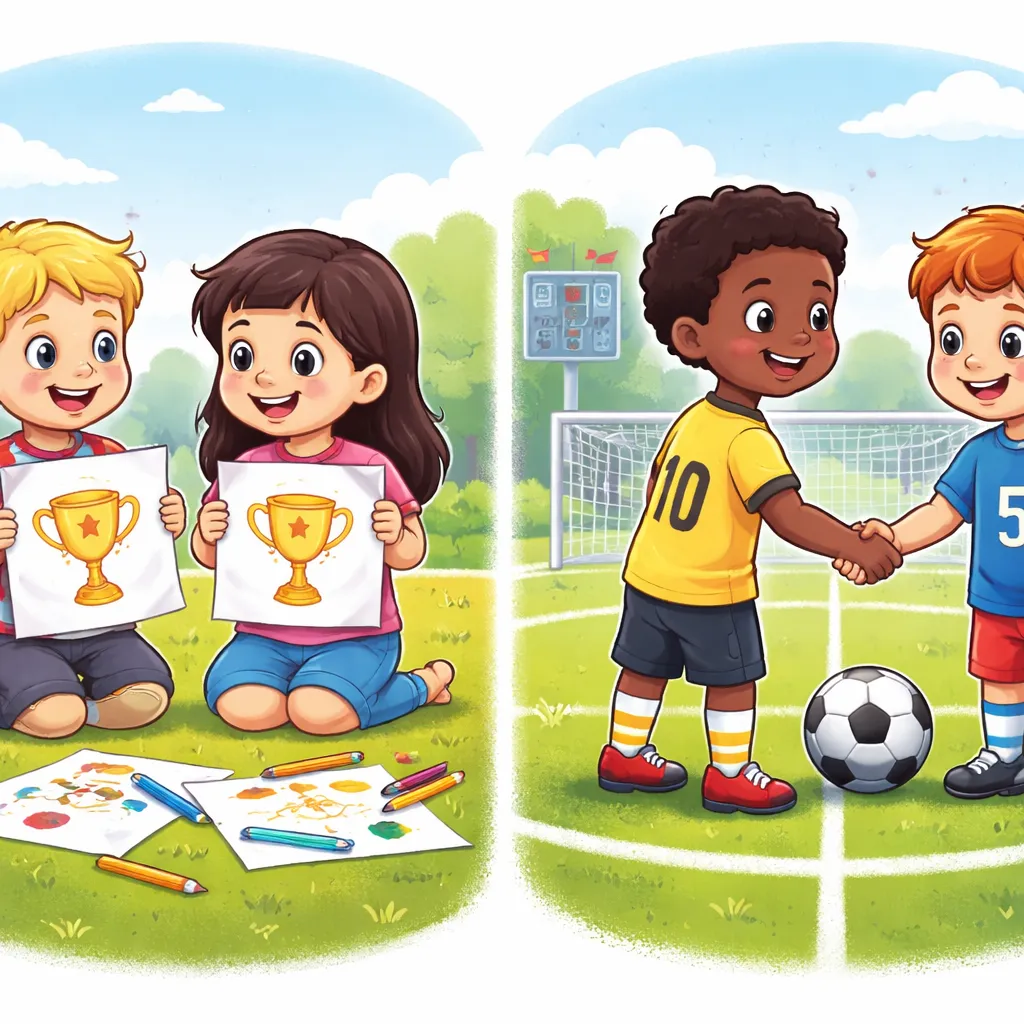
In English, some words appear to mean the same thing but are used in different ways. Draw and tie are two words that children may find confusing because they both relate to situations where there is no clear winner. However, they are used in different contexts and have subtle differences that can help children express themselves more accurately.
Understanding the distinctions between draw and tie is important for expanding vocabulary. As parents and educators, you can help children learn these differences by offering examples, explanations, and plenty of practice. Let’s explore how draw and tie are used in English.
Are Similar Words Really Interchangeable?
Words that seem similar, like draw and tie, often appear interchangeable, but they aren’t always used the same way. While both words refer to situations where no one wins outright, their meanings and usage can vary depending on the context.
Draw is often used when discussing games, matches, or competitions where the scores or outcomes are equal. Tie, on the other hand, is frequently used in the same way but may also refer to a situation where two opponents or teams finish with identical results.
So, even though draw and tie are similar, they can’t always be swapped in every sentence. Let’s dive into how they differ in more detail.
Set 1: Draw vs Tie — Which One Is More Common?
In everyday speech, draw is more common, especially in British English. It’s often used in casual conversation when talking about sports, games, or competitions. For example, if a soccer game ends with the same number of goals on both sides, you could say, “The game ended in a draw.”
In American English, tie is just as common, and in fact, in many cases, it is used more often than draw. People in the United States are more likely to say, “The match was tied,” or “It was a tie.”
Both words are commonly used, but regional preferences can make one sound more natural than the other depending on where you are.
Set 2: Draw vs Tie — Same Meaning, Different Contexts
Although draw and tie both refer to situations where no one wins, they tend to appear in slightly different contexts. Draw is typically used in competitions or games. It is more common in British English and is usually used in sports like soccer, chess, and rugby. For example:
“The football match ended in a draw.” “The chess game was a draw.”
Tie, on the other hand, can refer to any situation where two or more things have the same result, whether it's a competition or another context. It is used in both sports and more general settings. For example:
“They tied for first place in the race.” “The score was tied at the end of the game.”
In addition, tie can also refer to a piece of clothing, such as a necktie, which is a completely different meaning. So, it’s important to use draw and tie in the right contexts.
Set 3: Draw vs Tie — Which Word Is “Bigger” or More Emphatic?
In terms of intensity or emphasis, neither draw nor tie is necessarily “bigger” than the other, as they both refer to the same outcome of no one winning. However, tie can sometimes feel more neutral or less formal, while draw might sound slightly more formal or specific.
For example, in a very serious or competitive context, people might say, “It was a draw,” to emphasize that no one emerged victorious. On the other hand, in more casual or everyday situations, people might say, “It was a tie,” to indicate that both sides were equally matched.
Set 4: Draw vs Tie — Concrete vs Abstract
Both draw and tie are used to describe abstract outcomes rather than concrete objects. They refer to situations where two or more competitors or teams finish with the same result. Neither word describes something you can touch or physically see; they describe the results of a competition, game, or other event.
However, tie may also be used to describe a physical object, like a necktie, which is worn around the neck. This is a different meaning entirely and doesn’t relate to the idea of a competition or contest.
Set 5: Draw vs Tie — Verb or Noun? First Understand the Role
Both draw and tie can be used as both nouns and verbs, though draw is more frequently used as a noun. When used as a verb, draw refers to the action of ending with an equal score or result in a game:
“They drew the match 2-2.” “The game ended in a draw.”
Tie, however, is commonly used as both a noun and a verb as well:
As a noun: “The match ended in a tie.” As a verb: “They tied the game in the final minute.”
Both words work as nouns and verbs, but they may be used differently depending on the region and context.
Set 6: Draw vs Tie — American English vs British English
There is a noticeable difference between American and British English when it comes to using draw and tie.
In British English, draw is more commonly used. For example, “The match ended in a draw” is standard in the UK. In American English, tie is the preferred term. People in the U.S. often say, “The game ended in a tie,” or “It was a tie.”
While both terms are understood globally, children learning English should be aware of the slight regional differences. Using the word that’s more common in the country they live in will help them sound more natural when speaking.
Set 7: Draw vs Tie — Which Fits Formal Situations?
Draw tends to sound more formal or precise, especially in sports commentary or news reports. It is frequently used in contexts where the outcome of a game or competition is being discussed in a more serious or official manner.
Tie is often used in more casual settings and is less formal than draw. For example, in everyday conversation, people are more likely to say, “It was a tie,” rather than “It was a draw.”
In professional or formal settings, especially in news broadcasts or competitive sports, draw may be the more appropriate word to use.
Set 8: Draw vs Tie — Which One Is Easier for Kids to Remember?
For young learners, tie may be easier to remember, especially since it is often used in more casual contexts. It is a simpler word and can be used to describe a situation where two things are equal, whether it’s in a game, a race, or any other context.
Draw, while still easy to understand, may sound a little more formal to young learners, especially since it’s more commonly used in British English. It may require some additional explanation or practice to help children fully grasp its usage.
Mini Exercise: Can You Spot the Differences Between These Similar Words?
To help solidify the differences between draw and tie, let’s try this mini quiz:
Which word would you use when talking about two people who finish a game with the same score? a) Draw b) Tie “They played so well that the final score was a ____.” a) Draw b) Tie “The football game ended with a ____.” a) Draw b) Tie “The two teams ____ after the final whistle.” a) Drew b) Tied Parent Tips: How to Help Kids Learn and Remember Similar Words
As a parent or educator, helping children understand subtle differences between words like draw and tie can be challenging but rewarding. Here are some tips to make the process easier:
Use real-life examples: Engage children in games or activities where the outcome can be a draw or a tie. This gives them a practical understanding of how the words are used. Read stories or watch games: Children can learn a lot from watching sports or reading stories about competitions. Point out when the result is a draw or a tie and explain why the word is used in that context. Practice regularly: Encourage children to use draw and tie in their daily conversations. The more they practice, the more comfortable they will become with using the words in the right context.
By following these simple tips, children will be able to use draw and tie correctly and confidently in no time.