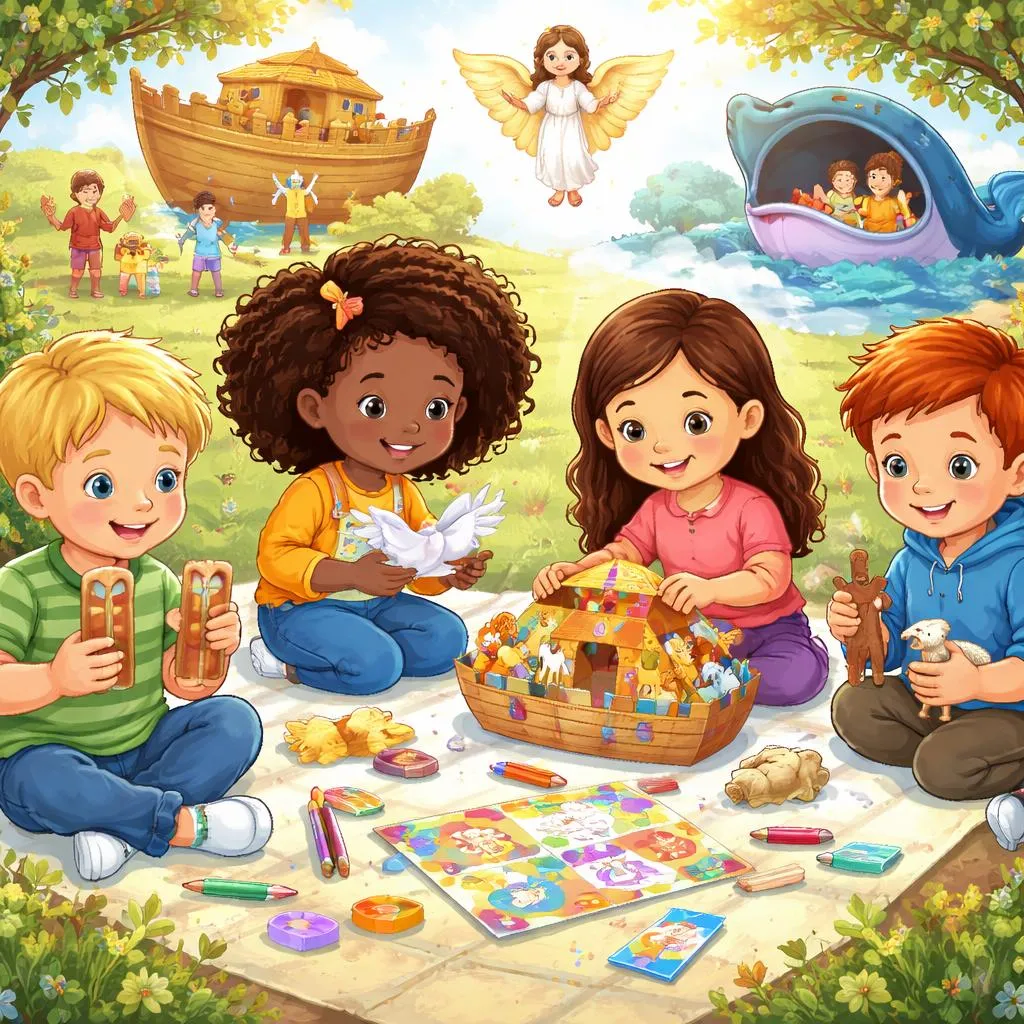

Bible stories have nourished young hearts for generations. They carry timeless lessons about faith, courage, kindness, and trust. When combined with thoughtful activities, these stories become even more powerful. Children's bible stories and activities work together to create lasting understanding. The story plants the seed. The activity helps it grow. This article explores how teachers can use this powerful combination to nurture both spiritual development and essential learning skills in their students.
What Are Children's Bible Stories and Activities? Children's bible stories and activities represent a complete approach to teaching Scripture to young learners. The stories themselves are simplified versions of biblical narratives. They use language children can understand. They focus on the main characters and events. They highlight the core message without getting lost in details. The activities extend the learning beyond the story time. Crafts help children remember key elements. Games reinforce important concepts. Discussions explore what the stories mean for daily life. Prayers connect the ancient words to children's own experiences. Together, stories and activities create a learning environment where faith can take root and grow.
Meaning and Explanation Behind Bible Stories and Activities Bible stories carry deep meaning that unfolds gradually for young children. On the surface, they tell exciting tales. A boy defeats a giant. A man survives in a lion's den. A baby is saved from a river. These narratives capture attention immediately.
Below the surface, these stories teach foundational truths about God and people. David and Goliath shows that God sees strength differently than people do. Daniel in the lion's den demonstrates that God protects those who trust Him. Baby Moses in the basket reveals that God has plans even for the smallest and weakest.
Activities make these truths tangible. When children create a stone to represent Goliath, they remember the story's size contrast. When they act out Daniel praying, they experience what faithfulness might feel like. When they make a basket for a baby doll, they connect with Moses' mother's love and courage. The activities transform abstract concepts into concrete experiences.
Categories or Lists of Bible Stories and Activities Children's bible stories and activities can be organized by theme or Bible section. This helps teachers plan cohesive lessons.
Old Testament Stories and Activities:
Creation Story:
Activity: Create a seven-day wheel showing what God made each day.
Activity: Go on a nature walk and thank God for specific creations.
Noah's Ark:
Activity: Make animal pairs using clay or paper.
Activity: Create a rainbow collage to remember God's promise.
David and Goliath:
Activity: Make five smooth stones from clay and paint them.
Activity: Act out the story with simple costumes and props.
Daniel in the Lion's Den:
Activity: Create lion masks using paper plates and yarn.
Activity: Practice praying in different positions like Daniel.
Jonah and the Whale:
Activity: Make a whale from a paper bag that opens and closes.
Activity: Discuss times when it is hard to obey and why.
New Testament Stories and Activities:
Birth of Jesus:
Activity: Create a simple nativity scene from craft materials.
Activity: Learn and sing a simple Christmas carol together.
Jesus Calms the Storm:
Activity: Make waves in a water bottle with oil and blue coloring.
Activity: Practice being still and calm like Jesus.
Good Samaritan:
Activity: Draw pictures of ways to help neighbors.
Activity: Role-play helping scenarios from daily life.
Zacchaeus:
Activity: Make a tree from a paper tube and green tissue paper.
Activity: Discuss what it feels like to be included.
Jesus Feeds the 5000:
Activity: Share a simple snack with the class.
Activity: Count how many people a small snack could feed.
Daily Life Examples from Bible Stories Children's bible stories and activities connect to everyday experiences naturally. After learning about the Good Samaritan, notice helpful actions in the classroom. When someone shares, connect it to the boy who shared his lunch. When someone feels scared, remember Daniel in the lion's den.
The story of Zacchaeus teaches about inclusion. Children understand what it feels like to be left out. They know the joy of being noticed and included. This story gives language to those experiences.
The calming of the storm connects to times when children feel overwhelmed. A difficult test. A conflict with a friend. A worry about home. Jesus' words "Peace, be still" become something children can remember in their own storms.
Vocabulary Learning from Bible Stories Bible stories introduce rich vocabulary in meaningful contexts.
Old Testament Words: Ark, covenant, prophet, giant, shepherd, sling, lion's den, whale, commandment.
New Testament Words: Disciple, miracle, parable, Pharisee, tax collector, temple, cross, tomb, resurrection.
Faith Words: Faith, trust, obey, believe, pray, worship, praise, thank, promise.
Character Words: Brave, faithful, obedient, kind, generous, repentant, forgiven, grateful.
Teachers can introduce these words before reading the story. Use simple definitions with pictures. Point out the words as they appear. After the story, use the words in discussion and activities. The vocabulary becomes meaningful through repeated use in context.
Phonics Points in Bible Stories The names and words in Bible stories offer excellent phonics practice.
Beginning Sounds: David starts with D. Goliath starts with G. Jesus starts with J. Practice these sounds together. Find other words that start the same way.
Syllable Practice: Bible names help children practice breaking words into syllables. Da-vid has two syllables. Go-li-ath has three. Ze-ba-dee has three. Je-ru-sa-lem has four. Clapping syllables makes this physical.
Letter Patterns: Words like angel have the soft G sound. Compare with giant which has a soft G at the beginning. This teaches that letters can make different sounds.
Rhyming Words: Find rhyming pairs related to stories. Ark and dark. Pray and day. King and ring. These reinforce phonemic awareness.
Teachers can pause during reading to notice these patterns naturally. The story provides meaningful context for phonics instruction.
Grammar Patterns in Bible Stories The simple narrative structure of Bible stories provides clear grammar models.
Past Tense Verbs: Bible stories use past tense consistently. God created the world. Noah built an ark. Jesus healed the man. This provides natural exposure to regular and irregular past forms.
Commands and Instructions: God gives commands throughout Scripture. "Love your neighbor." "Do not be afraid." "Go and tell." These imperative sentences show how English gives instructions.
Questions and Answers: Bible stories include many questions. "Who is my neighbor?" "Where is your brother?" "Do you believe?" These model question forms naturally.
Descriptive Language: Bible stories use adjectives to paint pictures. The giant was enormous. The sea was stormy. The shepherd was faithful. These descriptions enrich language.
Teachers can point out these patterns gently during reading. The goal is exposure and recognition, not formal grammar drills.
Learning Activities for Bible Stories Activities bring children's bible stories and activities to life in the classroom.
Activity 1: Story Sequencing Cards Create picture cards showing key moments from a Bible story. Children arrange them in correct order, retelling the story as they work. This builds comprehension and narrative skills.
Activity 2: Character Puppets Create simple puppets of Bible characters. Children use them to act out the story. This builds speaking skills and deepens understanding of character motivation.
Activity 3: Story Maps Draw a simple map showing where the story happened. Mark the character's journey. Label important places. This builds comprehension and sequencing skills.
Activity 4: What Would You Do After reading a Bible story, discuss what children would have done in that situation. Would you have gone with David to face Goliath? Would you have obeyed Jonah? This builds personal connection to the stories.
Activity 5: Prayer Journal Create simple prayer journals where children can write or draw prayers. Connect prayers to the Bible story theme. After learning about thankfulness, write thank you prayers. After learning about helping, pray for people who help others.
Printable Materials for Bible Stories Printable resources extend learning from any Bible story.
Story Sequencing Cards: Create picture cards showing key moments from specific stories. Children arrange them in order.
Character Masks: Create masks of Bible characters. Children wear them during retelling or dramatic play.
Coloring Pages: Create outline drawings of story scenes. Children color while listening to the story again.
Memory Verse Cards: Create small cards with key verses from each story. Children decorate and take them home to practice.
Activity Sheets: Create simple worksheets with mazes, word searches, or connect-the-dots related to the story theme.
Mini-Books: Create folded paper books with simplified versions of each story. Children illustrate each page and take them home.
Educational Games for Bible Stories Games provide a fun way to review Bible stories while maintaining engagement.
Game: Bible Story Charades Write story titles or events on slips of paper. Children draw a slip and act it out without speaking. The class guesses which story they are performing.
Game: Who Said That Read lines from various Bible stories. Children guess which character spoke each line. For extra fun, they say the line again using the character's voice.
Game: Story Bingo Create bingo cards with words and images from multiple Bible stories. Read definitions. Children cover the matching square. The first to complete a row wins.
Game: Pass the Scroll Sit in a circle with a pretend scroll. Pass it around while music plays. When music stops, the child holding the scroll answers a question about a Bible story.
Game: Bible Story Match Create pairs of cards. One card shows a story element. The matching card shows the story title. Children play memory match by turning over two cards at a time, looking for matches.
Connecting Bible Stories to Character Education Bible stories provide rich material for character education lessons.
Courage: David facing Goliath models courage. Esther approaching the king shows bravery. Daniel in the lion's den demonstrates faith overcoming fear.
Kindness: Ruth staying with Naomi shows loyalty and kindness. The Good Samaritan models compassion for strangers. Jesus healing the sick demonstrates care for others.
Honesty: Zacchaeus repaying what he stole shows the importance of honesty. Ananias and Sapphira show the consequences of deception.
Forgiveness: Joseph forgiving his brothers models profound forgiveness. The prodigal son's father shows God's forgiving heart. Jesus on the cross praying for forgiveness shows ultimate grace.
Obedience: Noah building the ark shows patient obedience. Abraham leaving his home shows trust-based obedience. Mary accepting God's plan shows humble obedience.
Teachers can weave these character lessons throughout the day. When a child shows courage, connect it to David. When someone forgives, remember Joseph. The stories become touchstones for character development.
Connecting Bible Stories to Other Subjects Bible stories connect naturally to many curriculum areas.
Art Connection: Create art inspired by Bible stories. Paint scenes. Sculpt characters from clay. Design stained glass windows using tissue paper. Illustrate favorite parables.
Music Connection: Learn songs based on Bible stories and verses. Add instruments to praise songs. Create rhythm patterns to accompany story retelling.
Science Connection: Explore the science behind story elements. Learn about sheep and shepherds. Study weather patterns related to storms. Examine plants mentioned in parables.
Math Connection: Count animals on the ark. Measure the giant Goliath's height. Calculate how many fish and loaves fed the 5000. Graph favorite Bible stories.
Geography Connection: Find Bible locations on a map. Learn about the climate and geography of Israel. Follow Paul's missionary journeys on a map.
The Importance of Repetition Children's bible stories and activities benefit from repetition. Each encounter with a story reveals something new.
First Encounter: Focus on the basic story line. Who are the characters? What happens? Simple comprehension.
Second Encounter: Notice details. What did characters feel? Why did they make certain choices? Deeper understanding.
Third Encounter: Connect to personal life. How does this story relate to me? What can I learn? Personal application.
Fourth Encounter: Explore the story through activity. Create, act, build, draw. Kinesthetic learning.
Fifth Encounter: Share the story with others. Tell it to family. Teach it to a friend. Mastery through teaching.
Each repetition builds new understanding. The story deepens rather than becoming boring. This is the power of combining stories with varied activities over time.
Bible stories carry truths that last a lifetime. A child who learns about David's courage carries that memory into challenges. A child who hears about Jesus' love carries that comfort through difficulties. A child who experiences Noah's faithfulness remembers that God keeps promises. The activities attached to these stories make them stick. They become more than words heard once. They become experiences lived and remembered. For teachers, this combination of story and activity is the most powerful tool for nurturing both faith and learning. It honors the ancient words while making them new for each generation of young hearts.