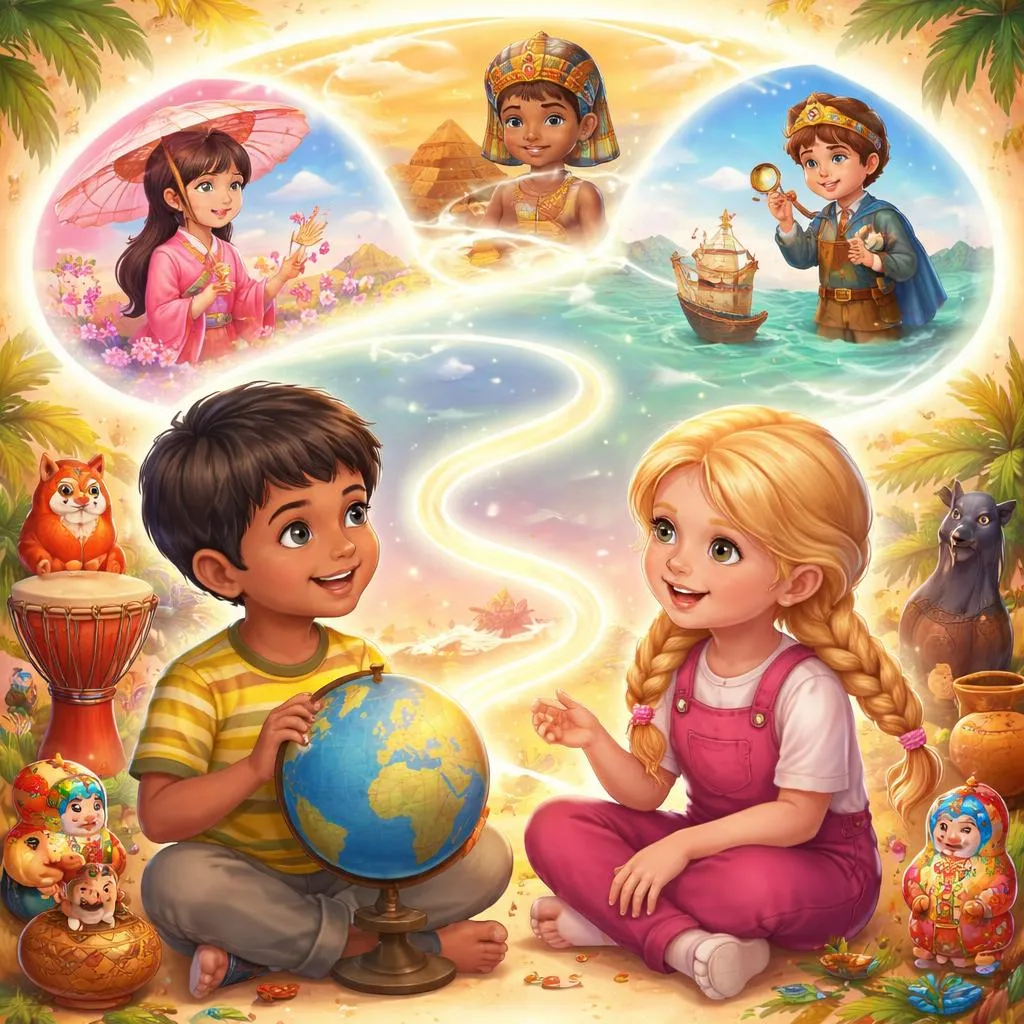

Stories about life continuing beyond death appear in many cultures. They offer comfort and explanation. They address questions children naturally ask. What happens after we die? Where do we come from? Children's reincarnation stories approach these questions gently. They use simple narratives to explore complex ideas. The stories often feature animals or children who remember previous lives. These narratives introduce vocabulary about time, memory, and nature. They also build cultural awareness. Different traditions understand reincarnation differently. Exploring these stories helps children appreciate diverse perspectives while developing language skills.
What Are Children's Reincarnation Stories?
These are gentle narratives about the concept of being born again. They present reincarnation in ways young minds can understand. Some stories feature animals remembering past lives. Others show children with mysterious knowledge. The stories avoid frightening details. They focus on continuity and growth. A butterfly remembers being a caterpillar. A child feels connected to a place they have never visited. These narratives appear in various cultures. Buddhist and Hindu traditions include many such tales. Some modern picture books also explore these themes. The common thread is the idea that life continues in new forms.
Categories of Children's Reincarnation Stories
Understanding different story types helps in selecting appropriate materials for specific learning goals.
Animal Transformation Stories: These show creatures changing form. The caterpillar becomes a butterfly. The tadpole becomes a frog. These provide accessible introductions to transformation concepts. The science is real. The metaphor carries deeper meaning.
Cultural Folk Tales: Many cultures have traditional stories about rebirth. Japanese tales about returning spirits. Native American stories about ancestors returning as animals. African narratives about children who remember past villages. These introduce cultural vocabulary and perspectives.
Memory and Connection Stories: Tales about children who remember things they could not know. A child who speaks a language never learned. A child who recognizes a place never visited. These build vocabulary about memory, knowledge, and mystery.
Seasonal Cycle Stories: Narratives about nature's cycles. Trees losing leaves and growing new ones. Flowers dying and returning in spring. These use observable phenomena to explore renewal concepts.
Gentle Introduction Stories: Modern picture books that introduce reincarnation softly. Stories about grandparents becoming stars or returning as birds. These use metaphor rather than doctrine. They comfort while teaching.
Vocabulary Learning from Reincarnation Stories
These narratives introduce vocabulary across multiple domains. Words connect to time, nature, memory, and cycles.
Time Words: past, present, future, before, after, again, always, never, forever, memory. Nature Words: caterpillar, butterfly, tadpole, frog, seed, flower, tree, leaf, river, mountain. Life Cycle Words: birth, life, death, rebirth, transformation, change, growth, cycle, return, continue. Memory Words: remember, forget, know, feel, sense, dream, recognize, familiar, strange. Emotion Words: comfort, wonder, mystery, peace, sadness, joy, hope, love, connection.
Each story introduces words in meaningful contexts. A caterpillar story teaches transformation vocabulary naturally. A cultural tale introduces tradition words through narrative.
Phonics Points in Reincarnation Stories
Specific sound patterns emerge through key vocabulary. Identifying these helps build decoding skills.
The /r/ sound: remember, rebirth, return, river, rainbow. Memory and return words feature this sound. Practice saying them together.
The /s/ sound: seed, sun, star, spirit, season. Nature and spirit words use this sound frequently.
The /ch/ sound: change, child, reach, teach. Transformation stories emphasize change. Children appear in many tales.
The /th/ sound: birth, earth, growth, thought. Life cycle words use the /th/ sound. Practice feeling tongue position.
Consonant blends: transformation, tree, butterfly. Longer words offer blend practice. Break them into syllables for young learners.
Grammar Patterns in Reincarnation Stories
Children's reincarnation stories model various grammatical structures within their narratives.
Past and Present Connection: These stories often shift between past and present. "She was once a caterpillar. Now she is a butterfly." "He lived in another village. Now he lives here." This models tense contrast meaningfully.
Questions About Memory: Characters ask and answer questions about remembering. "Do you remember before?" "I feel like I know this place." Question patterns appear naturally.
Cycle Language: Stories use words showing repetition. "The leaves fall and grow again." "Every spring, the flowers return." This models cyclical time language.
Wonder and Mystery: Stories use language of possibility. "Maybe he remembers." "Perhaps she was here before." "The child seemed to know." Modal verbs express uncertainty kindly.
Connection Words: These stories use words showing relationships. "Like the butterfly, we change." "Just as the seed becomes a flower." Similes and metaphors appear naturally.
Learning Activities for Reincarnation Stories
Active engagement helps children internalize vocabulary and themes through hands-on learning.
Life Cycle Charts: Create visual charts showing life cycles. Caterpillar to butterfly. Tadpole to frog. Seed to flower. Label each stage in English. Discuss the idea of transformation.
Memory Drawing: Ask students to draw something they remember from when they were very young. A place. A person. A feeling. Share drawings using simple sentences. "I remember my grandmother's kitchen."
Nature Observation: Observe seasonal changes. Trees losing leaves. New growth in spring. Document changes with drawings and simple sentences. "The tree was bare. Now it has leaves."
Cultural Story Sharing: Invite students to share stories from their family traditions about life and death. Use respectful language. Compare different perspectives using simple comparative sentences.
Dream Journal: Some reincarnation stories involve dreams. Students keep simple dream journals for a week. Draw or write about dreams. Share if comfortable. Use present tense for dreams. "In my dream, I fly."
Learning Activities for Group Settings
Collaborative learning builds language through interaction and shared experiences.
Transformation Charades: Students act out transformations. Caterpillar becoming butterfly. Tadpole becoming frog. Seed becoming flower. Others guess the transformation. This builds vocabulary through physical expression.
Memory Circle: Sit in a circle. One student shares a memory. The next student connects with a related memory. "I remember going to the beach." "I remember playing in the sand." This builds narrative skills and listening.
Cultural Comparison Chart: Create a large chart showing different cultural beliefs about life after death. Use simple words. Pictures support understanding. Discuss respectfully.
Story Retelling with Puppets: Use simple puppets to retell a reincarnation story. Students work in small groups. Each takes a part of the story. This builds collaboration and narrative skills.
Educational Games from Reincarnation Stories
Games make learning playful and memorable. These require minimal preparation.
Life Cycle Match: Create cards showing stages of various life cycles. Caterpillar, chrysalis, butterfly. Tadpole, froglet, frog. Seed, sprout, flower. Students match stages in correct order.
Memory Game: Place 10-15 small objects on a tray. Students study them. Cover tray. Remove one object. Students identify what disappeared. Connect to memory theme. "Our memory helps us know what is missing."
Transformation Freeze Dance: Play music. Students move like caterpillars. When music stops, they freeze as chrysalises. Music resumes, they move like butterflies. This builds vocabulary through movement.
I Remember Bingo: Create bingo cards with memory-related pictures. Cradle, baby toy, family home, pet. Call out items. Students cover if they remember that thing from their own lives.
Printable Materials for Reincarnation Stories
Ready-to-use printables extend learning beyond story time into independent practice.
Life Cycle Flashcards: Create cards showing stages of various life cycles. Front shows picture. Back shows stage name in English. Caterpillar, chrysalis, butterfly. Use for sequencing games.
Vocabulary Flashcards: Create cards with key words on one side and simple definitions or pictures on the other. Remember, memory, cycle, transformation, birth, rebirth.
Memory Journal Pages: Create simple journal pages with space for drawing and one sentence. "Today I remember..." Students complete and share.
Coloring Pages: Print outline drawings showing life cycles. Caterpillar and butterfly. Tadpole and frog. Seed and flower. Students color while discussing transformations.
Cultural Stories Mini-Book: Create a simple booklet with short versions of reincarnation stories from different cultures. One page per story. Simple illustrations support text.
Daily Life Connections to Reincarnation Stories
Linking story themes to daily experiences makes abstract concepts concrete for young learners.
Growth Observations: Students change constantly. They grow taller. They lose teeth. They learn new things. Document these changes. Use transformation language. "You are changing just like the caterpillar."
Family Resemblances: Students often look like family members. Discuss these connections gently. "You have your grandmother's smile." "You laugh like your father." This introduces continuity language.
Seasonal Changes: Observe how the world changes and returns. Trees lose leaves and grow new ones. Flowers die and return. Use cycle language to describe observations.
Memory Sharing: Share positive memories regularly. "I remember when we..." This builds community while practicing memory vocabulary. Students learn that memories connect us across time.
Printable Flashcards from Reincarnation Stories
Effective flashcards support multiple learning styles and review methods.
Life Cycle Cards: Show each stage of a transformation with clear images. Use for sequencing games or display on classroom walls. Add simple sentences. "The caterpillar eats leaves."
Word-Definition Cards: One card shows "transformation." Matching card shows "a big change." Students match words to simple definitions. This builds reading comprehension.
Memory Word Cards: Create cards with memory-related words. Remember, forget, dream, know, feel. Use in sentences about personal experiences.
Cultural Vocabulary Cards: Introduce words from various cultural traditions about reincarnation. Use respectful, simple definitions. Focus on building cultural awareness alongside vocabulary.
Phonics Practice from Story Words
Use reincarnation story vocabulary to practice specific phonics patterns.
Syllable Clapping: Clap syllables in key vocabulary. Trans-for-ma-tion (4). Re-mem-ber (3). But-ter-fly (3). This builds phonological awareness.
Initial Sound Sort: Sort vocabulary by beginning sounds. Remember, rebirth, return for /r/. Caterpillar, cycle, change for /c/ and /ch/. This builds phonemic awareness.
Rhyming Word Hunt: Find words that rhyme with key vocabulary. Change/range/strange. Flower/power/shower. Create rhyming pairs and use in sentences.
Vowel Sound Sort: Sort words by vowel sounds. Remember has short /e/ and schwa. Butterfly has /u/ and /i/. This builds vowel discrimination at appropriate levels.
Grammar Patterns Practice
Use reincarnation story sentences to practice specific grammar structures naturally.
Past and Present Practice: Create sentence pairs showing change. "The caterpillar was small. Now it is a butterfly." "She was a baby. Now she is a girl." Students create their own before/after sentences.
Question Formation: Practice asking questions about memory and transformation. "What do you remember?" "How does a caterpillar change?" "Where do butterflies come from?" Students ask and answer with partners.
Because Sentences: Practice causal sentences using "because." "The caterpillar changes because it grows." "Leaves fall because winter comes." Students create because sentences about observed changes.
Wonder Language: Practice using words like "maybe," "perhaps," and "might." "Maybe the child remembers." "Perhaps the butterfly was once a caterpillar." This models possibility language.
The Gentle Teaching Power of These Stories
Children's reincarnation stories offer unique opportunities in language classrooms. They introduce vocabulary about time, memory, and transformation naturally. They build cultural awareness through gentle exposure to diverse beliefs. They address big questions in age-appropriate ways. The stories comfort while they teach. They connect language learning to personal experience through memory and observation. They link to science through life cycles and nature study. For language educators, these narratives provide rich material across multiple domains. Vocabulary, phonics, grammar, cultural studies, and social-emotional learning all find a place. The stories respect children's questions while providing language to express them. That combination creates meaningful, lasting learning.