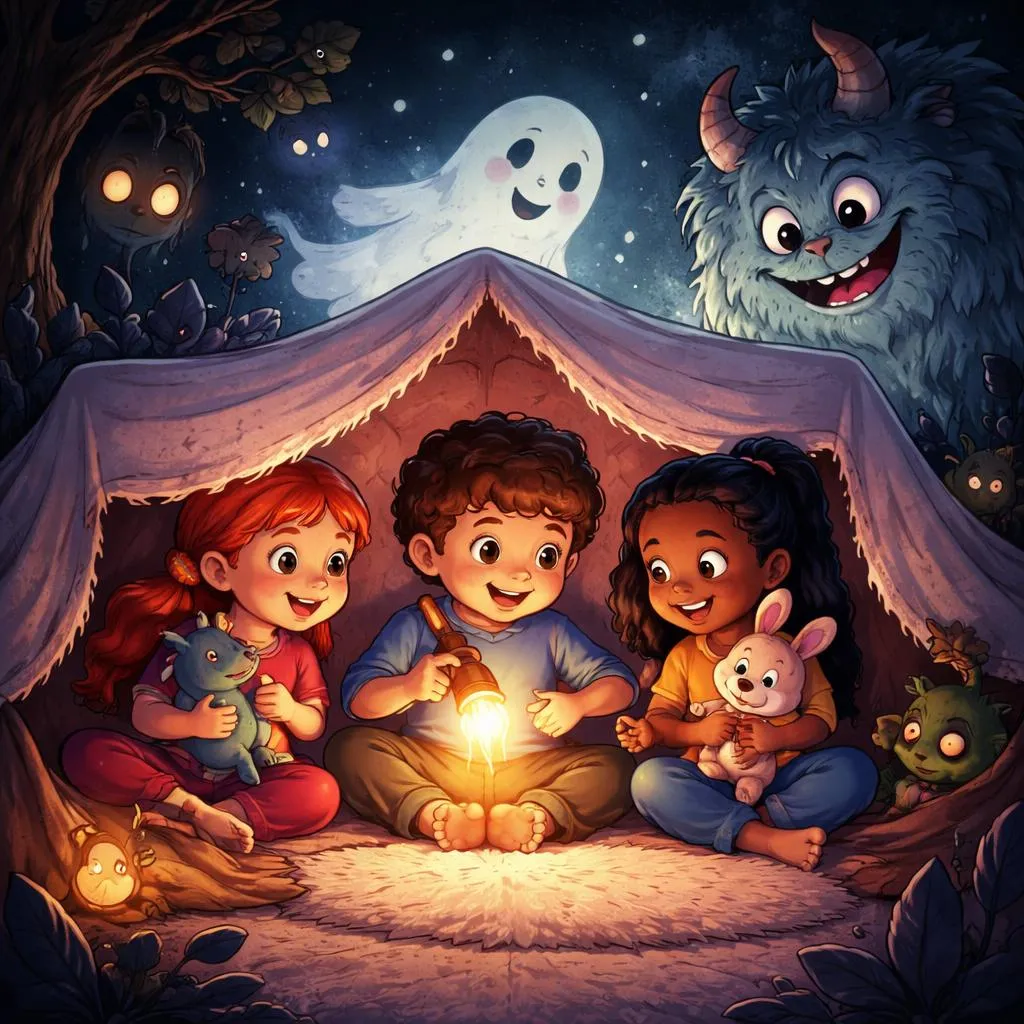

A shiver can capture attention like nothing else. The right amount of suspense keeps listeners engaged. Children's scary stories offer this controlled tension. They create safe spaces to experience fear. The story provides distance from real danger. This combination supports language learning in unique ways. This article explores practical teaching applications for mildly frightening tales. The focus remains on language development through suspenseful narrative. Let us examine how scary stories support English learning.
What Are Children's Scary Stories? Children's scary stories are mildly frightening tales designed for young listeners. These stories create suspense without genuine terror. The endings usually resolve happily. Monsters turn out to be friendly. Strange noises have simple explanations. Dark places reveal familiar things.
These stories differ from horror for older audiences. The fear level remains manageable. Characters face challenges but survive. Adults appear nearby for safety. The scary elements serve excitement rather than genuine fright. This careful balance allows children to experience suspense within safe boundaries. The stories build resilience while entertaining.
Vocabulary Learning from Scary Stories Children's scary stories introduce vocabulary for discussing fear and the unknown. Emotion words appear frequently throughout. "Scared," "nervous," "worried," "brave," "relieved," and "safe" describe character feelings. Students learn nuanced emotional vocabulary naturally.
Setting words create atmospheric descriptions. "Dark," "shadow," "moonlight," "forest," "basement," and "attic" establish location. Students build vocabulary for describing places with mood.
Sound words bring scary moments to life. "Creak," "whisper," "footsteps," "howl," "crack," and "rustle" appear throughout. These onomatopoeic words connect sound to language directly.
Action words describe character responses to fear. "Hide," "freeze," "shake," "whisper," "run," and "investigate" show different reactions. Students learn verbs for describing behavior under stress.
Phonics Points in Scary Stories Children's scary stories emphasize sound patterns that create mood. The "s" sound appears frequently. "Scary," "shadow," "sneak," "softly," and "silently" use the hissing quality. This sibilance creates atmosphere through sound.
Long vowel sounds stretch in suspenseful moments. "Moon" draws out the "oo" sound. "Howl" extends the "ow" diphthong. These elongated sounds mirror the drawn-out tension in stories.
Consonant blends appear in action words. "Creak" uses the "cr" blend. "Crack" uses the same pattern. "Footsteps" contains multiple blends. Students practice these combinations in memorable contexts.
Word families connect through sound patterns. "Dark" connects to "park" and "mark." "Night" connects to "light" and "bright." Students extend patterns from story vocabulary.
Grammar Patterns in Scary Stories Children's scary stories model specific grammatical structures for creating suspense. Past tense dominates narratives consistently. "The children walked through the woods." "A noise came from behind them." Students encounter regular and irregular past forms naturally.
Questions create uncertainty throughout. "What was that sound?" "Who is behind the door?" "Where did everyone go?" Students hear question patterns that drive suspense.
Short sentences increase tension effectively. "The door opened slowly. Someone entered. Everyone held their breath." Brief structures mirror racing heartbeats. Students absorb this stylistic choice.
Long sentences build descriptive suspense. "In the corner, where the moonlight could not reach, something moved slowly in the darkness." Extended structures create anticipation. Students encounter complex sentences in meaningful contexts.
Learning Activities with Scary Stories Several activities work well with children's scary stories. Sound effect creation engages creative thinking. Read a scary story without sound effects. Students add vocal sounds at appropriate moments. Creaking doors. Howling wind. Footsteps approaching. This builds listening comprehension and creativity.
Fear chart discussion normalizes emotional responses. Create a simple chart with character names and what they fear. Discuss how characters face fears. Connect to student experiences. This builds emotional vocabulary and self-awareness.
Alternate ending writing reduces fear through control. After reading, discuss how the story could end differently. Students write kinder endings where nothing scary actually happens. This gives control over frightening material.
Setting drawings transfer verbal description to visual form. Read descriptions of scary settings. Students draw what they imagine. Compare interpretations. This builds visualization skills essential for comprehension.
Printable Flashcards for Scary Vocabulary Flashcards reinforce key vocabulary from children's scary stories. Create cards for setting words. "Forest," "cave," "basement," "attic," "castle," and "graveyard" appear. Use simple drawings on one side, words on the reverse.
Feeling word flashcards support emotional vocabulary. Create cards with "scared," "brave," "curious," "nervous," "relieved," and "safe." Match each feeling to moments in stories when characters felt that way.
Sound word flashcards connect writing to noise. Write "creak," "howl," "whisper," "footsteps," "crack," and "rustle." Students make the sound when they see the card. This creates multisensory learning.
Character flashcards help students remember story roles. Create cards showing scary characters. Ghost, monster, witch, skeleton, shadow, and stranger appear often. Students name each character and recall its role.
Educational Games with Scary Stories Games transform children's scary stories into interactive experiences. Scary bingo works well. Create cards with story elements. Shadows, noises, dark places, brave characters, and surprising endings. Call out descriptions. Students mark matches.
Sound matching connects story vocabulary to audio. Record sounds mentioned in stories. Creaking door. Howling wind. Footsteps. Students match sounds to story moments. This builds listening discrimination.
Story sequencing with picture cards supports comprehension. Provide images representing key events. Students arrange them in correct order. This builds understanding of narrative structure.
Charades with scary elements engages physical learning. Write story elements on cards. Characters walking through dark forest. Hearing strange noises. Finding something unexpected. Students act out while others guess.
Printable Materials for Scary Story Lessons Printable materials support structured learning with scary stories. Fear thermometer worksheets help quantify emotions. Draw a thermometer with levels from calm to terrified. Students mark where characters felt during different story moments.
Story maps organize narrative elements visually. Provide spaces for characters, setting, problem, suspenseful moments, and solution. Students complete after reading.
Vocabulary collectors encourage active word learning. Provide sheets with columns for scary words, student drawings, and simple definitions. Drawing scary images makes words memorable.
Comprehension questions check understanding after each story. Create questions about who, what, where, when, and why. Include questions about feelings and reactions.
Managing Fear Through Story Control Children's scary stories provide safe spaces to practice fear management. The story format creates distance. Events happen to characters, not to the listener. This distance allows emotional processing without real danger.
Discussion normalizes fear responses. Characters feel scared. This validates similar feelings in listeners. Students learn that fear is normal and manageable.
Prediction gives control over uncertainty. Stopping to ask what might happen next allows students to prepare mentally. They imagine possibilities before they occur. This reduces surprise fear.
Happy endings provide emotional resolution. Most scary stories for children end safely. This teaches that frightening experiences pass. Safety returns. This builds emotional resilience.
Creating Classroom Scary Stories Students benefit from creating their own scary narratives. Provide sentence starters. "It was a dark and stormy night when..." "The old house at the end of the street..." "I heard a strange noise coming from..."
Illustration adds visual dimension to written stories. Students draw their scary scenes. They add captions describing what happens. This combines art with language production.
Group storytelling builds collaboration. Start a scary story with one sentence. Each student adds a sentence. The story develops collectively. This builds listening and creative thinking.
Safe ending requirement maintains appropriate boundaries. Require that stories end safely. No one gets truly hurt. The scary element resolves. This keeps creativity within safe limits.
Cross-Curricular Connections Scary stories connect to multiple subject areas. Science explores fear responses. What happens in the body during fear? Adrenaline, faster heartbeat, sharper senses. Students learn biological vocabulary.
History examines why people told scary stories in the past. Stories explained mysterious events before science. Students learn about historical beliefs.
Art creates scary illustrations using techniques for mood. Dark colors, shadows, unusual perspectives. Students apply these techniques to their own artwork.
Drama explores vocal techniques for scary storytelling. Whispering, pauses, sudden loud sounds. Students practice using voice to create mood.
Children's scary stories occupy a unique place in language learning. They capture attention through suspense. They introduce vocabulary for fear and courage. They provide safe spaces to practice managing uncertainty. The controlled tension keeps students engaged. The happy endings provide emotional resolution. Young learners acquire language while experiencing the thrill of a good story. The combination of excitement and safety creates powerful learning experiences.