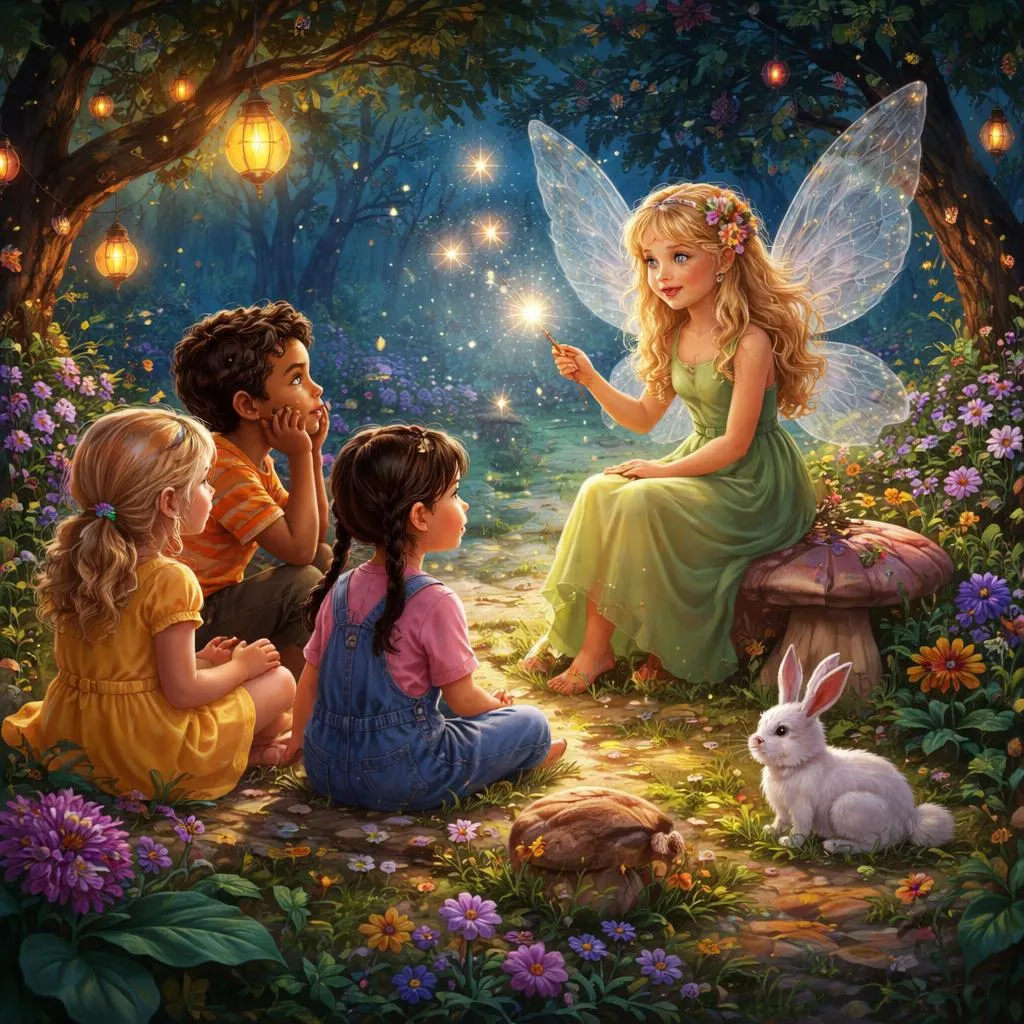

Tiny winged creatures capture young imaginations like few other characters. They represent magic in miniature. Children's stories fairies feature prominently in this tradition. These tales transport readers to enchanted worlds. They introduce vocabulary for wonder and whimsy. This article explores practical teaching applications for fairy stories. The focus remains on language development through magical narrative. Let us examine how fairy tales support English learning.
What Are Children's Stories About Fairies? Children's stories fairies are narratives featuring magical winged beings. These creatures range from helpful to mischievous. They live in hidden places. Gardens, forests, and meadows serve as homes. They interact with humans sometimes. Other times they remain invisible.
These stories follow traditional patterns. A human child discovers the fairy world. The fairies need help with a problem. The child assists using ordinary skills. Magic combines with everyday courage. The stories usually end well for all. Fairies return to their hidden world. The child retains special memories. This structure provides comfort while delivering wonder.
Vocabulary Learning from Fairy Stories Children's stories fairies introduce specialized vocabulary for magical worlds. Fairy terminology appears throughout. "Wings," "wand," "dust," "spell," "enchantment," and "magic" create the fantasy context. Students learn words for supernatural elements.
Size vocabulary describes tiny creatures. "Tiny," "small," "little," "miniature," "delicate," and "petite" appear frequently. Comparative forms describe relative size. Students build vocabulary for describing scale.
Nature words connect fairies to their environments. "Flower," "mushroom," "stream," "glade," "petal," and "dew" create setting vocabulary. Students learn words for natural elements through magical contexts.
Action words describe fairy movements. "Flutter," "dance," "glow," "sparkle," "whisper," and "vanish" show how fairies move. These verbs carry magical connotations in context.
Phonics Points in Fairy Stories Children's stories fairies contain useful phonics patterns. The "f" sound appears prominently. "Fairy," "flit," "flutter," "flower," "forest," and "friendly" offer practice opportunities. The initial sound connects to the creatures themselves.
The "sp" blend appears in magical contexts. "Sparkle," "spell," "spring," and "sprinkle" share the sound pattern. Students collect these words from stories.
Long vowel sounds appear in fairy names. "Titania" contains long vowels. "Oberon" contains long "o." "Ariel" contains long vowels. These names provide memorable examples.
Word families connect through sound patterns. "Wing" connects to "spring" and "bring." "Spell" connects to "tell" and "well." Students extend patterns from story vocabulary.
Grammar Patterns in Fairy Stories Children's stories fairies model essential grammar structures. Past tense dominates narratives. "The fairy flew through the garden." "She sprinkled magic dust on the flower." Students encounter regular and irregular past forms naturally.
Present tense appears in dialogue. Fairies speak in the moment. "I need your help," whispered the fairy. "Please come with me." Students see tense shifts between narration and speech.
Question forms appear throughout. Children ask fairies questions. Fairies ask children for help. "Can you help us?" "Why are you sad?" "Where is your home?" Students hear question patterns repeatedly.
Conditional language appears in magical contexts. "If you sprinkle the dust, the flower will bloom." "When the moon rises, we will dance." Students encounter conditionals in meaningful fantasy settings.
Learning Activities with Fairy Stories Several activities work well with children's stories fairies. Fairy house building extends the narrative creatively. After reading, provide natural materials. Leaves, twigs, moss, and small stones. Students construct fairy houses. This connects story to physical creation.
Wish writing practices expressive language. Fairies often grant wishes in stories. Students write their own wishes using conditional language. "If I had three wishes, I would wish for..." This builds creative writing skills.
Fairy character descriptions develop descriptive vocabulary. Students describe a fairy character. Appearance, personality, powers, and home. This builds organized descriptive writing.
Garden exploration connects stories to nature. Visit a garden area. Look for places fairies might live. Under mushrooms. Inside flowers. Behind leaves. This connects imagination to observation.
Printable Flashcards for Fairy Vocabulary Flashcards reinforce key vocabulary from children's stories fairies. Create cards for fairy characters. "Fairy," "pixie," "sprite," "elf," "brownie," and "leprechaun" distinguish creature types. Use simple drawings on one side, words on the reverse.
Magic object flashcards build fantasy vocabulary. "Wand," "dust," "spell book," "magic stone," "crystal," and "potion" appear in stories. Students connect objects to their magical purposes.
Nature word flashcards connect to fairy settings. "Flower," "mushroom," "stream," "meadow," "forest," and "garden" provide setting vocabulary. Students match places to fairies who might live there.
Action word flashcards capture fairy movements. "Flutter," "dance," "sparkle," "glow," "vanish," and "appear" describe fairy activities. Students can act out each action.
Educational Games with Fairy Stories Games transform children's stories fairies into interactive experiences. Fairy bingo works well. Create cards with fairy story elements. Magic dust, fairy wings, enchanted forest, helpful creature, special wish. Call out descriptions. Students mark matches.
Match game pairs creatures with homes. Create cards with fairy types and cards with typical homes. Flower fairies match to flowers. Tree fairies match to trees. Water fairies match to streams.
Fairy charades engages physical learning. Write fairy actions on cards. Sprinkling dust. Fluttering wings. Casting spells. Dancing in moonlight. Students act out while others guess.
Storytelling circle builds oral language. Sit in a circle. One student starts a fairy story. Next student continues. The story develops collectively. This builds narrative skills and listening attention.
Printable Materials for Fairy Story Lessons Printable materials support structured learning with fairy stories. Fairy character sheets guide creative development. Provide spaces for name, appearance, home, powers, and personality. Students create original fairies.
Story maps organize narrative elements. Provide spaces for characters, setting, problem, magical elements, and solution. Students complete after reading.
Wish lists encourage expressive writing. Students write wishes using conditional grammar. They illustrate each wish. This combines art with language production.
Fairy door templates allow creative craft. Print door shapes. Students decorate them as fairy doors. Display around the classroom. This creates ongoing imaginative engagement.
Imagination and Language Connection Children's stories fairies activate imagination in ways that support language. Mental images form from words alone. Students visualize scenes described in text. This visualization strengthens comprehension.
Imaginative play extends story language. Students act out fairy scenarios. They use vocabulary from stories in their play. This voluntary production reinforces learning.
Creative writing flows from imaginative engagement. Students want to write about fairies. The motivation comes from within. This produces more language than assigned topics.
Belief in possibility supports creative thinking. Fairies represent magic in the everyday world. This worldview encourages looking for wonder. Students notice beauty they might otherwise miss.
Character Education Through Fairy Stories Fairy stories naturally support character education. Kindness appears throughout. Fairies help those in need. Children assist fairies. Students discuss kindness in their own lives.
Courage features in many tales. Characters face challenges despite fear. They help others even when uncertain. Students connect this to personal courage moments.
Cooperation solves problems. Fairies and children work together. Each contributes unique abilities. Students discuss teamwork in classroom contexts.
Respect for nature emerges from fairy settings. Fairies protect natural spaces. Characters learn to appreciate gardens and forests. Students connect this to environmental awareness.
Cross-Curricular Connections Fairy stories connect to multiple subject areas. Science explores insect anatomy and behavior. How do fairy wings compare to butterfly wings? What can we learn from real tiny creatures?
Art creates fairy-inspired projects. Drawings, paintings, and sculptures bring stories to life. Different media express magical qualities differently.
Gardening connects to fairy habitats. Plant flowers that attract butterflies. Create spaces that might appeal to fairies. This connects imagination to practical skills.
Music explores fairy themes. Many composers wrote fairy music. Mendelssohn's Midsummer Night's Dream. Students listen and imagine fairies dancing.
Creating a Fairy Story Collection Building a collection of fairy stories supports ongoing learning. Include versions from different cultures. Fairies appear worldwide under different names. Students learn cultural diversity through stories.
Classroom libraries should include varied reading levels. Picture books for younger readers. Chapter books for advancing readers. All students access fairy magic at their level.
Student authors create original fairy tales. They apply story patterns they have learned. They illustrate their own books. This builds authorship and ownership.
Seasonal connections link stories to calendar events. Spring fairies connect to growth. Summer fairies connect to flowers. Autumn fairies connect to harvest. Winter fairies connect to snow magic.
Children's stories fairies provide rich material for language development. The magical context engages imagination deeply. Vocabulary builds through specialized fantasy terms. Grammar appears in natural narrative contexts. Character education emerges through fairy behavior patterns. Young learners acquire language while exploring worlds of wonder. The combination of magic and language creates powerful learning experiences that extend far beyond the classroom.