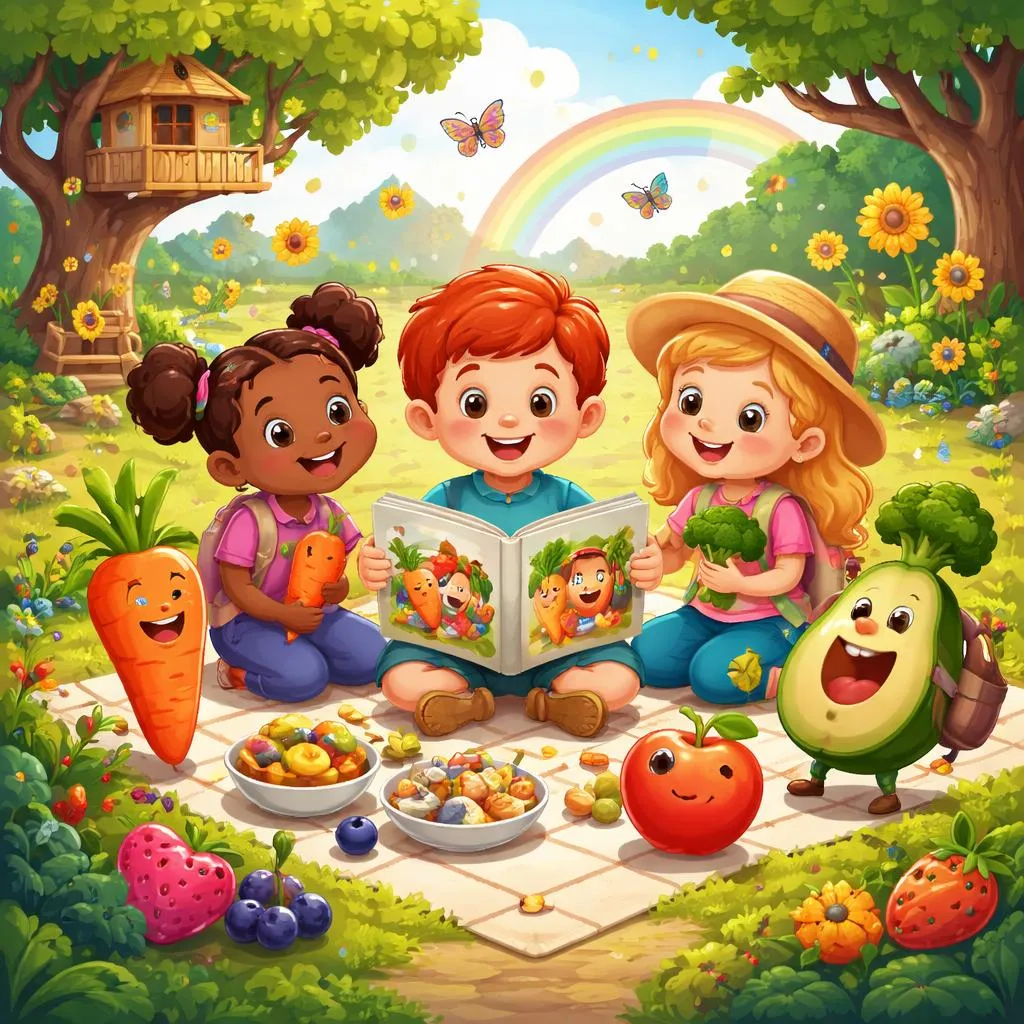

Getting children excited about healthy food can be challenging. Broccoli and carrots often face suspicion. Spinach and beans meet resistance. Children's stories about healthy eating offer a powerful solution. They transform vegetables into characters. They turn trying new foods into adventures. They show favorite characters making healthy choices. The stories do not lecture. They entertain while gently teaching. This article explores how teachers can use these narratives to build positive attitudes toward nutritious food that last a lifetime.
What Are Children's Stories About Healthy Eating? Children's stories about healthy eating are narratives that promote good nutrition through engaging storytelling. They feature characters who learn about food. They show the benefits of eating well. They make healthy choices feel exciting rather than boring. Some stories feature personified fruits and vegetables having adventures. Others show human characters discovering new foods. Some address picky eating directly. Others simply model healthy habits without preaching. The best stories avoid making any food "bad." They focus on the positives of nutritious options. They present healthy eating as normal and enjoyable. The goal is not to shame children about what they eat. It is to open their minds to delicious possibilities.
Meaning and Explanation Behind Healthy Eating Stories These stories serve multiple important purposes. First, they create positive associations with healthy food. A child who meets a charming strawberry character in a story feels differently about real strawberries. The positive emotion transfers from story to food.
Second, they demystify unfamiliar foods. Many children reject foods simply because they do not know them. Stories introduce new foods in a safe context. By the time the real food appears, it feels like an old friend.
Third, they explain why healthy food matters in child-friendly terms. Not lectures about vitamins. Instead, stories show characters feeling strong after eating well. They show energy for play. They show growing big and healthy. Children understand these concrete benefits.
Fourth, they address picky eating without confrontation. A character who refuses to try something new models the behavior. Their journey to trying and liking the food provides a template. Children see themselves in the character and follow their example.
Categories or Lists of Healthy Eating Stories Children's stories about healthy eating come in several types.
Personified Food Adventures: Fruits and vegetables as characters with personalities.
A shy carrot who wants to be noticed.
A brave broccoli who saves the day.
A team of fruit friends on a mission.
A vegetable garden coming alive at night.
Picky Eater Journeys: Characters who learn to try new things.
A child who only eats beige food.
Someone afraid to try anything green.
A character who discovers they actually like tomatoes.
The great "just one bite" challenge.
Growing Food Stories: Narratives about where food comes from.
Planting a garden and watching it grow.
Visiting a farm and meeting the farmers.
A seed's journey to becoming a vegetable.
Farmers market adventures.
Cooking Together Stories: Families preparing healthy meals.
Making soup together.
Baking healthy treats.
Trying recipes from different cultures.
A child who becomes the family chef.
Energy and Strength Stories: Connecting food to how bodies feel and perform.
Athletes who eat well to play better.
Children who notice they feel great after healthy meals.
The connection between food and energy for fun.
Trying New Things Stories: Gentle encouragement to explore unfamiliar foods.
A new fruit at the grocery store.
Trying food at a friend's house.
School taste-testing adventures.
Daily Life Examples from Healthy Eating Stories Children's stories about healthy eating connect directly to classroom experiences. Snack time becomes an extension of story time. The carrot sticks on the plate connect to the brave carrot in the story. The apple slices remind children of the fruit friends they met in a book.
Teachers can draw these connections naturally. "Remember how the characters in our story felt after eating their vegetables? How do you feel after snack?" "The story said trying new foods can be an adventure. Who wants to try something new today?"
Classroom cooking activities bring stories to life. Make a simple vegetable soup after reading a soup story. Create fruit kebabs following a fruit adventure. Taste a new vegetable each week, connecting to characters who tried new things.
The stories also provide language for talking about food. Children learn words like crunchy, juicy, sweet, and fresh. They can describe what they eat with richer vocabulary.
Vocabulary Learning from Healthy Eating Stories These stories introduce important food and nutrition vocabulary.
Food Names: Broccoli, cauliflower, asparagus, zucchini, cucumber, spinach, kale, berry, melon, citrus.
Food Descriptions: Crunchy, juicy, sweet, sour, bitter, fresh, ripe, raw, cooked, roasted, steamed.
Eating Words: Bite, chew, swallow, taste, swallow, enjoy, share, try, explore, discover.
Body Words: Energy, strong, healthy, grow, bones, muscles, brain, heart, body.
Garden Words: Plant, seed, grow, harvest, soil, sun, water, garden, farmer, market.
Teachers can introduce these words before reading. Point them out in the story. Use them during snack and meal times. Create a food word wall with pictures. The vocabulary becomes meaningful through repeated use.
Phonics Points in Healthy Eating Stories Food words offer excellent phonics practice.
Beginning Sounds: Broccoli starts with BR. Carrot starts with C. Pepper starts with P. Apple starts with A. Practice these beginning sounds with real foods.
Syllable Practice: Food names help with syllable counting. Apple has two. Banana has three. Broccoli has three. Cauliflower has four. Practice clapping syllables while eating.
Letter Patterns: Vegetable has soft G. Cucumber has hard C and soft C. These patterns appear in other words too.
Rhyming Food Words: Find foods that rhyme. Pear and bear. Peach and reach. Plum and drum. These build phonemic awareness playfully.
Teachers can use real foods during phonics practice. Hold up a broccoli while practicing the BR blend. The multisensory connection strengthens learning.
Grammar Patterns in Healthy Eating Stories Healthy eating stories provide natural grammar instruction contexts.
Imperative Sentences for Recipes: Cooking stories use commands. Wash the vegetables. Cut the carrots. Stir the soup. Taste and enjoy. These imperatives appear naturally.
Sequencing Words: Recipes and food preparation use sequence language. First, gather ingredients. Next, wash everything. Then, cut the vegetables. Finally, cook and eat.
Comparatives: Comparing foods uses comparative language. Apples are sweeter than lemons. Carrots are crunchier than bananas. This feels natural in food contexts.
Descriptive Language: Food stories paint pictures with words. The shiny red apple. The bumpy green cucumber. The sweet juicy orange. These descriptions enrich language.
Teachers can point out these patterns during cooking activities. The grammar learning happens through real experience.
Learning Activities for Healthy Eating Stories Activities make healthy eating concepts concrete.
Activity 1: Food Taste Testing Bring in a new fruit or vegetable each week. Children observe, smell, and taste. Graph who liked it. Connect to stories about trying new foods.
Activity 2: Grow Something Simple Plant easy vegetables like beans or lettuce in cups. Watch them grow. Connect to garden stories. Eat what grows.
Activity 3: Food Collage Provide magazines with food pictures. Children cut out healthy foods and create collages. Discuss their choices.
Activity 4: Class Cookbook After reading cooking stories, create a class cookbook. Each child contributes a healthy recipe with a drawing. Send copies home.
Activity 5: Farmers Market Visit If possible, visit a farmers market. Meet farmers. See where food comes from. Buy something to try in class.
Activity 6: Rainbow Food Chart Create a chart showing foods of different colors. Children add stickers when they eat foods from each color. Aim to "eat the rainbow."
Printable Materials for Healthy Eating Stories Printable resources extend learning from these stories.
Food Group Sorting Cards: Pictures of different foods. Children sort into food group categories.
My Healthy Plate Template: A plate divided into sections. Children draw or paste foods that make a balanced meal.
Taste Testing Chart: Simple chart for recording food experiences. Food name, color, smell, taste rating.
Fruit and Vegetable Coloring Pages: Outline drawings of various produce for coloring.
Recipe Cards: Simple, healthy recipes for children to try at home with family.
Food Journal: Pages for recording what children eat and how it makes them feel.
Educational Games for Healthy Eating Games make nutrition learning playful.
Game: Food Group Bingo Create bingo cards with foods from different groups. Call out food names. Children cover matching squares.
Game: Mystery Food Touch and Feel Put various fruits and vegetables in a bag. Children reach in, feel, and guess what they are without looking. Builds sensory awareness.
Game: Grocery Store Dramatic Play Set up a play grocery store with empty food containers. Children shop for healthy foods and explain their choices.
Game: Food Group Relay Place food pictures at one end of the room. Children race to collect foods from a specific group and bring them back.
Game: Yes Please, No Thank You Hold up food pictures. Children give thumbs up if they like it, thumbs down if they have not tried it, wiggly hand if they are unsure. Discuss without pressure.
Connecting Healthy Eating Stories to Other Subjects These stories connect naturally across the curriculum.
Science Connection: Learn how plants grow. What do they need? Explore different parts of plants we eat. Roots like carrots. Stems like celery. Leaves like lettuce. Flowers like broccoli.
Math Connection: Count pieces of fruit. Measure ingredients for recipes. Sort foods by color, size, or type. Create graphs of class food preferences.
Social Studies Connection: Explore foods from different cultures. How do eating habits vary around the world? Learn about traditional dishes.
Art Connection: Create fruit and vegetable prints using real produce cut in half and dipped in paint. Arrange beautiful fruit platters as edible art.
Health Connection: Discuss how food affects bodies. Energy for playing. Strength for growing. Brain power for learning.
Addressing Picky Eating Gently Children's stories about healthy eating can help with picky eating when used carefully. The key is no pressure. The story does the work. The child identifies with a character who was also hesitant. They follow that character's journey to trying something new.
Teachers can support this by creating a low-pressure tasting environment. Offer tiny amounts. No requirement to eat. Just look, smell, touch. Maybe taste. Maybe not. All responses accepted. The story has planted a seed. Given time, it may grow.
Repeated exposure matters. Children may need to encounter a new food many times before accepting it. Stories provide positive exposure without pressure. Each reading is another gentle introduction.
Celebrate brave tasting when it happens. Not just for eating, but for trying. The child who puts a pea in their mouth, even if they spit it out, has been brave. That courage deserves recognition.
The Lifelong Impact Food habits formed early often last a lifetime. Children who learn to enjoy vegetables carry that habit into adulthood. They make healthier choices naturally. They pass those habits to their own children someday.
Children's stories about healthy eating contribute to this foundation. They do not guarantee that every child will love every vegetable. Nothing can do that. But they open doors. They create curiosity instead of resistance. They make the unfamiliar feel friendly.
A child who meets a charming broccoli character in a story is more likely to try real broccoli. A child who watches a favorite character enjoy carrots feels differently about carrots. A child who hears that trying new foods is an adventure approaches the table with anticipation instead of fear.
These are not small victories. They are the building blocks of a healthy relationship with food that will serve children for their entire lives. And it all starts with a simple story, a few colorful pages, and a character who took that first brave bite.