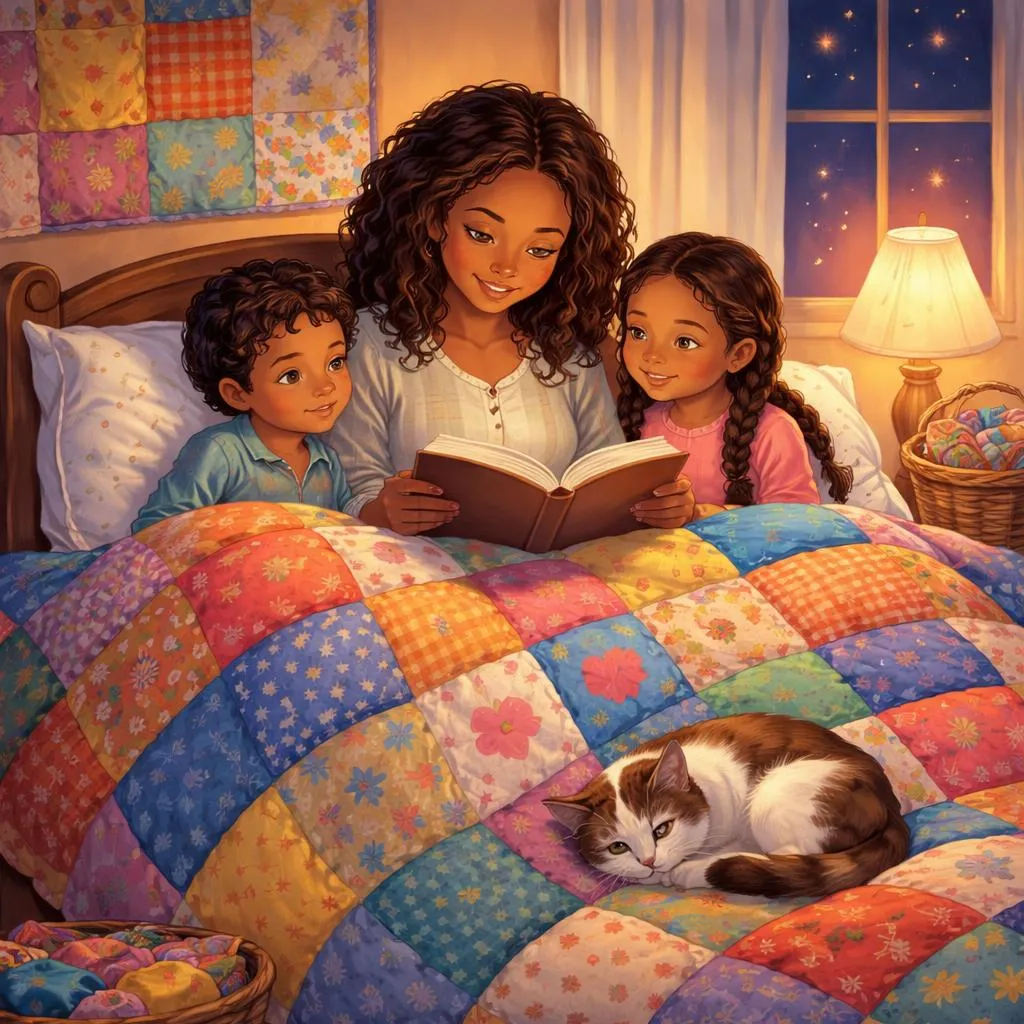

What Are Children's Stories About Quilts? Let us explore this warm and comforting genre together. Children's stories about quilts feature these special blankets as central elements. The quilt often carries memories and family history. Each patch might tell its own small story. Grandmothers pass quilts down through generations. Characters wrap themselves in comfort and love. The quilts in these stories connect past to present. They hold stories of where fabric came from. A piece of dress from a special occasion appears. Another patch comes from a baby blanket now outgrown. The quilts become maps of family life. They preserve moments that might otherwise be forgotten. Young characters learn about relatives they never met. They discover their place in a larger family story. These tales celebrate creativity, memory, and connection.
Meaning and Purpose of Quilt Stories Quilt stories serve several important purposes for children. They introduce the concept of family history in tangible ways. A quilt feels real and warm, unlike abstract dates. Children understand holding onto memories through objects. These stories also celebrate the work of women and elders. Quilt makers often remain unseen in traditional histories. Stories bring their creativity and love into focus. The tales teach about resourcefulness and recycling. Nothing gets wasted when every scrap holds potential. Children learn to value handmade things in a mass-produced world. Quilt stories also model how to preserve memories. Characters save fabric from important events. They stitch stories into something useful and beautiful. This inspires children to think about their own memory keeping. The stories show that ordinary lives matter and deserve remembering.
Common Elements in Quilt Stories We can identify several elements common to quilt tales. A special quilt appears as the story's heart. It might be old and worn or newly created. Generations connect through the quilt's journey. Grandmother, mother, and daughter appear across time. Memory patches hold stories within the story. Each piece of fabric has its own tale to tell. A making scene shows quilting in progress. Characters gather to cut, stitch, and talk together. A passing on moment transfers the quilt to new hands. This often happens at significant life moments. Comfort scenes show characters wrapped in quilt warmth. The blanket provides physical and emotional security. A discovery moment reveals a patch's hidden story. Someone finally learns what that fabric means. These elements weave together into rich narrative fabric.
Categories of Quilt Stories for Children We can organize quilt stories into helpful categories. Family history quilts tell stories of ancestors. Patches represent relatives and their lives. Migration quilts follow families moving to new places. Each stop adds a new piece to the growing quilt. Celebration quilts mark special occasions. Wedding, birth, and birthday quilts appear in these tales. Comfort quilts help through difficult times. A child receives one during illness or loss. Friendship quilts come from many hands working together. Each friend contributes a square of meaning. Cultural heritage quilts preserve traditional patterns. Stories teach about quilting traditions from around the world. Imaginary quilts appear in fantasy stories. Magic quilts might fly or grant wishes. Each category offers different lessons about connection.
Daily Life Connections Through Quilt Stories Quilt stories connect naturally to children's experiences. Many children have special blankets they love. They understand the comfort of something soft and familiar. Family members may have made things for them. A knitted scarf or sewn pillow feels personal. Grandparents often appear in children's lives. The grandparent connection in quilt stories feels familiar. Families have traditions of passing things down. A special toy or book might travel through generations. Children save things that matter to them. Ticket stubs, drawings, and small treasures fill their spaces. We can point out these connections during reading. "You have a special blanket too." "Grandma made that for you just like in the story." "What would you put in a memory quilt?" These links make story themes personally meaningful.
Vocabulary Learning from Quilt Stories Quilt stories introduce rich and specialized vocabulary. Quilt parts have specific names worth learning. Patch, square, border, and binding describe physical elements. Quilting actions build understanding of the craft. Stitch, cut, piece, and layer describe the making process. Fabric words expand descriptive vocabulary. Cotton, flannel, calico, and patchwork appear in stories. Pattern names add visual vocabulary. Nine-patch, log cabin, and star patterns appear regularly. Memory words connect to the stories' deeper meaning. Heirloom, legacy, tradition, and heritage carry weight. Feeling words describe quilt associations. Comfort, security, warmth, and love wrap through the tales. We can teach these words with picture cards showing examples. Use them in sentences about the story. Practice using them during craft activities.
Phonics Points in Quilt Stories Quilt stories provide useful phonics practice. Quilt itself offers the QU digraph, a special sound combination. Patch has the short A and CH ending. Stitch has the short I and TCH trigraph. Fabric words contain valuable sound patterns. Cotton has the short O and double T. Flannel has the FL blend and short A. Calico has the hard C and long E. Pattern names provide phonics elements. Nine has the long I and silent E. Star has the AR combination. Log has the short O and G ending. Action words demonstrate patterns. Sew has the long O. Cut has the short U. Piece has the long E and silent E. We can focus on one sound pattern from each story. Find all words with that sound in the quilt tale. Write them on quilt square shapes for practice.
Grammar Patterns in Quilt Narratives Quilt stories model useful grammar for young readers. Past tense carries the family history. "Grandmother sewed this patch from her wedding dress." Present tense appears in current scenes. "Now the quilt keeps me warm at night." Future tense shows hopes and plans. "Someday I will pass this quilt to my daughter." Questions explore meaning and memory. "Who made this square?" "What does this fabric remember?" Descriptive language paints quilt pictures. "The worn, soft squares held decades of stories." Prepositional phrases describe quilt locations. "On the bed, over the chair, inside the chest." Possessive forms show ownership and connection. "Grandmother's quilt, the family's treasure." We can point out these patterns during reading. Notice how past tense tells old stories. See how present tense shows current comfort.
Learning Activities for Quilt Stories Many activities extend the warmth of quilt reading. Create a paper quilt with each child making a square. Use construction paper, fabric scraps, or drawings. Display the finished quilt on a classroom wall. Draw a family memory quilt showing important moments. Each square represents a special event or person. Write about a special blanket or toy from home. Describe how it feels and what it means. Interview grandparents or older relatives about family traditions. Ask about things passed down through generations. Bring a real quilt to share if available. Examine the patterns and imagine the stories. Create a classroom story quilt with written memories. Each child contributes a square with a short memory. These activities make quilt themes personal and real.
Printable Materials for Quilt Learning Printable resources support deep engagement with quilt stories. Create quilt square templates for children to design. Include space for drawing and a sentence about meaning. Design pattern cards showing traditional quilt designs. Children can copy or create their own versions. Make family tree templates connecting to quilt themes. Show how generations link together. Create memory cards for recording important moments. "A time I felt warm and safe." "Someone who made something for me." Design vocabulary cards with quilt words and pictures. Use them for matching and sorting games. Make sequencing cards showing quilt-making steps. Cut, piece, stitch, bind, and use appear in order. These printables structure quilt exploration activities.
Educational Games Inspired by Quilts Games make quilt learning playful and interactive. Play "Pattern Match" finding identical quilt square designs. Create pairs from printed pattern cards. Design "Memory Quilt" where each square reveals a story. Turn over squares and share associated memories. Play "Pass the Quilt" like hot potato with a soft blanket. When music stops, share a family memory or story. Create "Quilt Scavenger Hunt" finding patterns around the room. Look for stripes, flowers, and geometric designs. Play "Stitch Relay" with lacing cards and yarn. Race to complete a sewing pattern. Design "Pattern Sort" grouping squares by design type. Stars with stars, stripes with stripes. These games build pattern recognition while honoring quilt themes.
Connecting Quilts to Family History Quilt stories naturally lead to family history exploration. Children can investigate their own family stories. Who came before them? Where did they live? What did they make? Families might have actual quilts passed down. These become primary sources for learning. Photographs of quilts work when objects are unavailable. Children can interview relatives about family objects. What things have been passed down? What stories do they hold? Creating a family object inventory builds research skills. Each object becomes a story starting point. Children might discover immigration stories through objects. A quilt from the old country tells migration tales. Family recipes, tools, and clothes all hold memories. Quilt stories teach the method of asking. What is this? Where did it come from? Who used it? Why does it matter? These questions apply to all family treasures.
Teaching Cultural Diversity Through Quilts Quilt traditions exist in cultures worldwide. Stories can introduce this beautiful diversity. African American quilting traditions carry deep history. Quilts held maps and messages on the Underground Railroad. Native American quilts incorporate traditional designs. Each pattern holds cultural meaning and stories. Amish quilts feature simple patterns and bold colors. Their simplicity reflects community values. Hawaiian quilts use unique applique techniques. Nature motifs appear throughout. European patchwork traditions vary by region. Each country brings distinctive patterns. Children learn that quilting belongs to everyone. Different cultures express similar needs for warmth and beauty. They all preserve memory through fabric. This builds respect for diverse traditions. Children see creativity as a universal human gift.
The Comfort of Quilts in Difficult Times Quilt stories often address challenging emotions. Characters face loss, change, or loneliness. The quilt provides comfort during hard times. This models healthy coping for young readers. A child missing a parent wraps in the quilt. Another faces a move and brings the familiar blanket. The quilt holds love even when loved ones are away. Stories show that comfort objects help temporarily. Characters eventually find strength within themselves. But the quilt remains a symbol of that support. We can discuss these themes with children. What helps when feeling sad or scared? Who and what provide comfort? How do we carry love when apart? The stories validate children's need for comfort. They show that seeking warmth is natural and healthy. The quilt becomes a metaphor for all sources of support.
Creating Classroom Quilt Traditions Classrooms can develop their own quilt-inspired traditions. Start a year-long memory quilt project. Each month add a square representing class activities. Photographs, drawings, and writing document the year. Create a welcoming quilt for new students. Each current student contributes a welcome square. The new child receives this gift of belonging. Develop a kindness quilt where each act adds a square. Display growing kindness throughout the year. Create a story quilt of books read together. Each favorite book gets a square representation. Celebrate completion of class quilts with special events. Share the stories each square represents. These traditions build classroom community. They create shared memories that last beyond the year. The quilt becomes a physical record of time together. Children learn they are part of something larger than themselves.