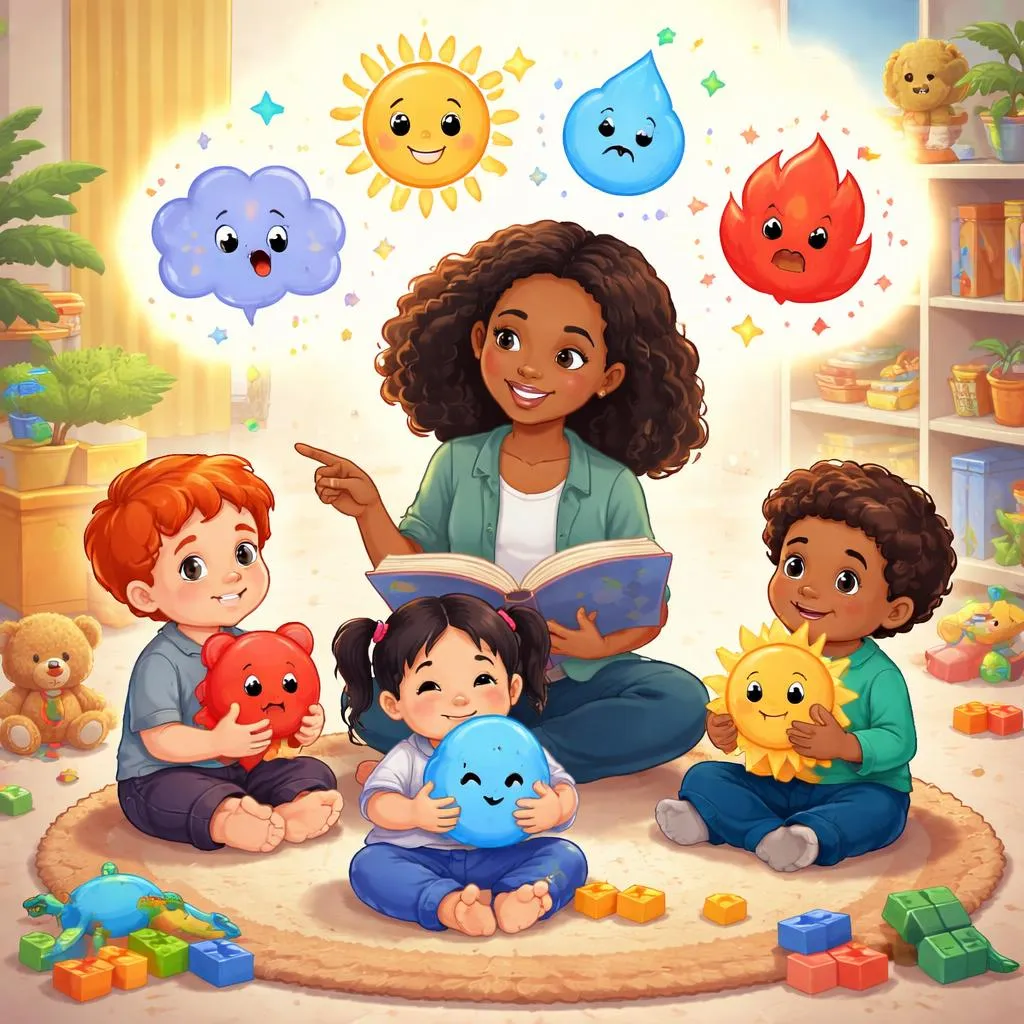

Young children feel big emotions every day. Joy that explodes into laughter. Anger that erupts like a volcano. Sadness that feels overwhelming. Fear that stops them in their tracks. These feelings are natural and normal. Managing them is a skill that must be learned. Children's stories teaching emotions management provide the perfect tool for this learning. They give names to feelings. They show characters experiencing the same emotions. They model healthy ways to cope. This article explores how teachers can use these powerful narratives to help children understand and regulate their emotional lives.
What Are Children's Stories Teaching Emotions Management? Children's stories teaching emotions management are narratives specifically designed to help young readers understand and handle their feelings. The story centers on a character experiencing a strong emotion. Anger at a friend. Fear of the dark. Jealousy of a sibling. Sadness about a loss. Excitement that feels overwhelming. The story shows the character's journey with this feeling. It may show unhealthy responses first. Yelling. Hiding. Giving up. Then it models healthier strategies. Talking about feelings. Taking deep breaths. Asking for help. Finding a calm space. The story ends with the character managing the emotion successfully. Young readers learn that feelings are normal and that they have power to choose their responses.
Meaning and Explanation Behind Emotions Management Stories These stories serve several crucial developmental purposes. First, they build emotional vocabulary. Children need words for what they feel. Without words, feelings remain confusing and overwhelming. Stories introduce words like frustrated, disappointed, nervous, and content. These labels help children understand their inner world.
Second, they normalize all emotions. Many children learn early that some feelings are "bad." They try to push anger or sadness away. This never works. Stories show that every feeling has a purpose. Anger signals unfairness. Fear keeps us safe. Sadness helps us process loss. All feelings belong.
Third, they demonstrate that emotions pass. The character feels angry, but the anger eventually fades. They feel scared, but the fear subsides. This teaches children that no feeling lasts forever. They can ride the wave and come out the other side.
Fourth, they model specific coping strategies. Breathing slowly. Counting to ten. Asking for a hug. Drawing a picture. Talking to someone who listens. These strategies become tools children can use themselves.
Categories or Lists of Emotions Management Stories These stories focus on different emotions and situations.
Anger Management Stories: Characters learning to handle frustration.
A child who hits when angry learns other ways.
A monster whose steam comes out in healthier ways.
Learning to use words instead of actions.
The volcano who learns to cool down.
Fear and Anxiety Stories: Gentle tales about facing fears.
Being scared of the dark and finding courage.
First day of school nerves.
Worries about making mistakes.
Separation anxiety when parents leave.
Sadness and Grief Stories: Narratives about loss and healing.
Losing a beloved pet.
A friend moving away.
Feeling left out at school.
Disappointment about canceled plans.
Jealousy Stories: Tales about wanting what others have.
A new baby in the family.
A friend with a better toy.
Feeling overlooked when someone else succeeds.
Overexcitement Stories: Managing big happy feelings too.
So excited it is hard to listen.
Energy that needs productive outlets.
Learning to calm down after play.
Frustration and Perseverance: Stories about things not working.
Learning something difficult.
Making mistakes and trying again.
When things do not go as planned.
Daily Life Examples from Emotions Stories Children's stories teaching emotions management connect directly to classroom moments. A child who knocks over a block tower feels frustration like the character. Someone who misses their parent feels separation anxiety like in the story. A child left out at recess recognizes the jealousy tale.
Teachers can draw these connections gently. "Remember how the character in our story felt when their tower fell? That looks like how you feel right now." "The story showed us that taking deep breaths helps when we are angry. Would you like to try that together?"
The stories also provide shared language for emotional moments. A teacher can say, "You seem to have a volcano building. Want to try some cooling-down strategies?" The child understands because of the shared story.
Vocabulary Learning from Emotions Stories These stories introduce essential emotional vocabulary.
Basic Emotion Words: Happy, sad, angry, scared, surprised, disgusted.
Complex Emotion Words: Frustrated, disappointed, embarrassed, jealous, worried, anxious, lonely, proud, grateful.
Physical Sensation Words: Tense, calm, shaky, warm, cold, butterflies, heavy, light, tight, relaxed.
Coping Strategy Words: Breathe, count, talk, share, ask, rest, draw, move, hug, pause.
Emotion Intensity Words: Mild, medium, intense, overwhelming, slight, huge, tiny, enormous.
Teachers can introduce these words during and after reading. Point them out in the text. Use them in daily conversation. Create an emotion word wall with faces showing each feeling.
Phonics Points in Emotions Stories Emotion words offer phonics practice opportunities.
Beginning Sounds: Happy starts with H. Sad starts with S. Mad starts with M. Scared starts with SC. Practice these beginning sounds.
Vowel Sounds: Mad has short A. Scared has the AIR sound. Proud has the OW sound. These appear in other words too.
Syllable Practice: Emotion words help with syllable counting. Mad has one. An-gry has two. Frus-tra-ted has three. Dis-ap-point-ed has four.
Word Families: Mad, sad, glad share the AD family. Scared, shared, prepared share the ARED pattern.
Teachers can notice these patterns during reading. The emotional content makes the words personally meaningful.
Grammar Patterns in Emotions Stories Emotions stories provide natural grammar instruction.
First Person for Feelings: Many use first person. I feel angry. I am scared. I feel proud. This models talking about emotions.
Comparatives: Emotions have degrees. I am more frustrated than before. She was less scared after. This compares feeling levels.
Cause and Effect: Emotions have causes. I felt sad because my friend moved away. When he took my toy, I got angry. These sentences show relationships.
Modal Verbs for Coping: Coping strategies use modals. I can take a breath. I could ask for help. I will try counting. These show possibility and choice.
Teachers can point out these patterns gently. The grammar learning supports emotional expression.
Learning Activities for Emotions Stories Activities deepen understanding of emotions management.
Activity 1: Feelings Check-In Create a feelings chart with faces showing different emotions. Each day, children place their name by the face that matches how they feel. Discuss without pressure.
Activity 2: Emotion Charades Children act out emotions without speaking. Others guess the feeling. This builds recognition of emotional expressions.
Activity 3: Coping Strategies Toolbox Create a physical toolbox with cards showing coping strategies. Deep breath card. Hug card. Draw card. Talk card. When upset, children visit the toolbox.
Activity 4: Feelings Journal Provide journals where children draw or write about feelings. What happened? How did they feel? What helped?
Activity 5: Calm Down Corner Create a classroom space with soft items, books about feelings, and coping tools. Children visit when needing to regulate.
Activity 6: Emotion Monster Art Children create monsters representing different emotions. Angry monster. Scared monster. Happy monster. Discuss how each monster can be soothed.
Printable Materials for Emotions Stories Printable resources support emotions learning.
Feelings Flashcards: Cards showing faces with different emotions and the emotion word.
Coping Strategies Cards: Small cards illustrating different coping strategies. Children keep a set at their desk.
My Feelings Chart: A chart where children can point to how they feel. Useful for non-verbal or overwhelmed moments.
Emotion Intensity Thermometer: A visual showing feeling levels from calm to explosive. Children identify where they are.
Feelings Journal Pages: Printable pages with prompts. Today I felt... because... Something that helped was...
Calm Down Sequence Cards: Step-by-step cards showing a calming routine. Stop. Breathe. Count. Talk.
Educational Games for Emotions Learning Games make emotional learning playful.
Game: Feelings Bingo Create bingo cards with emotion words or faces. Call out scenarios. "Someone took your toy." Children cover the emotion they might feel.
Game: Emotion Match Create pairs of cards. One with an emotion word, one with a face showing that emotion. Children play memory match.
Game: Feelings Freeze Dance Play music. Children dance showing different emotions as directed. Happy dancing. Sad dancing. Angry dancing. Freeze when music stops.
Game: Coping Strategy Relay Set up stations with different coping strategies. Deep breathing station. Counting station. Drawing station. Children rotate through.
Game: Emotion Story Dice Create dice with emotions on each side. Roll and tell a story about a time someone felt that emotion.
Connecting Emotions Stories to Other Subjects These stories connect across the curriculum.
Art Connection: Explore how art expresses emotion. Look at paintings that feel happy, sad, or scary. Create emotion art.
Music Connection: Listen to music that evokes different feelings. Discuss how music makes us feel. Create classroom playlists for different moods.
Science Connection: Learn about the brain and emotions. What happens in the body when angry? What chemicals create calm? Age-appropriate brain science.
Movement Connection: Explore how bodies feel with different emotions. Tense for anger. Collapsed for sadness. Bouncy for happiness. Move accordingly.
Literature Connection: Identify emotions in all stories read. How did that character feel? Why? What did they do?
The Lifelong Gift of Emotional Intelligence Children's stories teaching emotions management offer more than reading practice. They offer emotional intelligence that serves children forever. The child who can name their feelings has power over them. The child who knows coping strategies can calm themselves. The child who understands that emotions pass can ride out storms.
These skills predict future success better than IQ scores. They determine relationship quality. They influence career success. They affect mental health. Teaching emotions management is not just nice. It is essential.
Stories provide the safest possible context for this learning. A child can watch a character struggle with anger without feeling threatened. They can see coping strategies modeled without pressure to perform. They can return to the same story many times, each time absorbing more.
The classroom becomes emotionally safer when these stories are shared. Children learn that all feelings are welcome. They learn strategies for handling difficult moments. They learn to ask for help. They learn to offer comfort to others.
In the end, these stories teach something profound. Feelings are not enemies to defeat. They are messengers to understand. They are energy to channel. They are part of being human. And every child, with help and stories, can learn to live with them wisely.