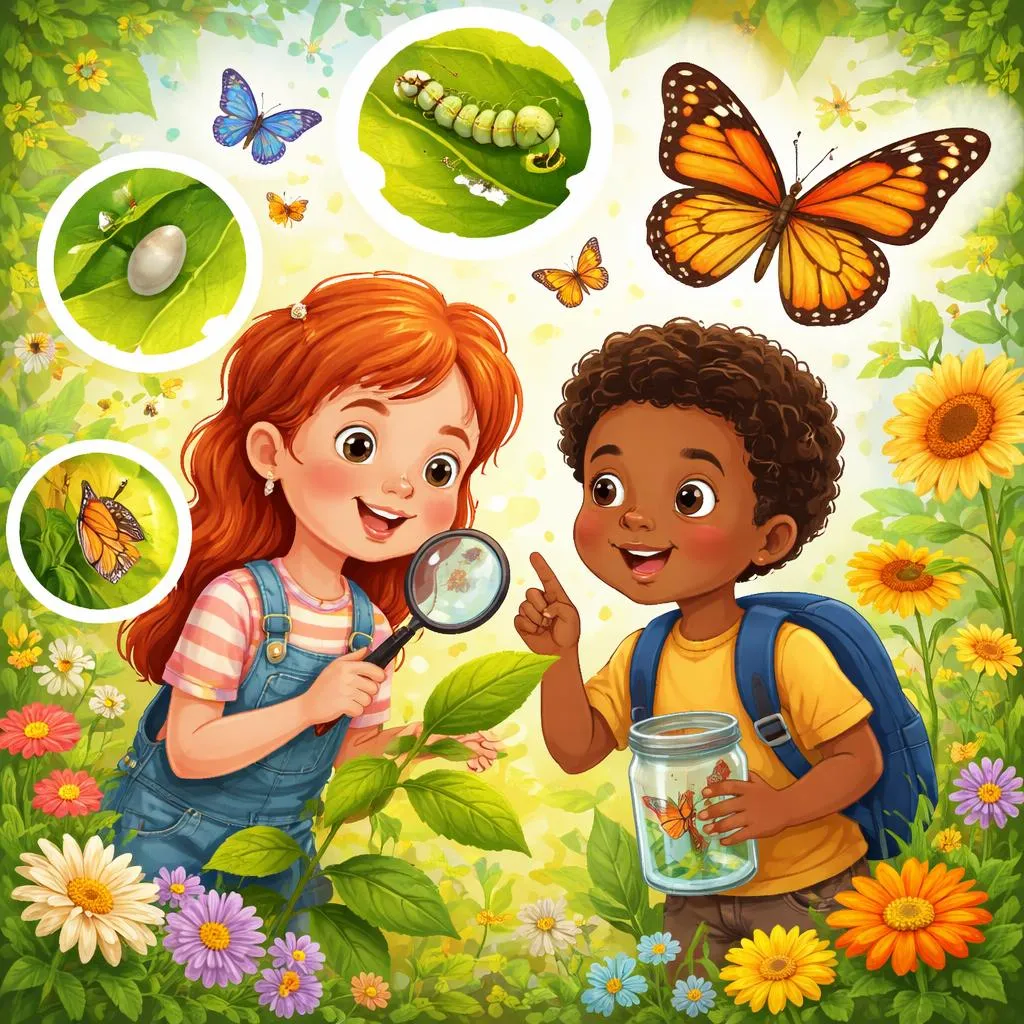

Butterflies capture children's imaginations like few other creatures. Their colors delight the eye. Their transformation amazes the mind. Children's story books about butterflies combine this natural wonder with language learning. The stories teach science while building vocabulary. This article explores practical teaching applications for butterfly-themed books. The focus remains on language development through nature-based narrative. Let us examine how butterfly stories support English learning.
What Are Children's Story Books About Butterflies? Children's story books about butterflies are narratives featuring these colorful insects. Some tell factual stories about butterfly life cycles. Others create fictional adventures with butterfly characters. Many combine both approaches naturally.
These books vary widely in presentation. Picture books dominate the genre. Vivid illustrations show butterfly colors and patterns. Some include diagrams of butterfly anatomy. Others feature garden settings where butterflies live. The common thread involves using butterflies to engage young readers with nature and language simultaneously.
Vocabulary Learning from Butterfly Stories Children's story books about butterflies introduce specialized vocabulary naturally. Life cycle words appear throughout. "Egg," "caterpillar," "chrysalis," "pupa," "larva," and "adult" name developmental stages. Students learn scientific terms through story context.
Body part vocabulary describes butterfly anatomy. "Wings," "antennae," "proboscis," "thorax," "abdomen," and "compound eyes" appear in illustrations and text. Students build precise biological vocabulary.
Color words abound in butterfly descriptions. "Bright," "colorful," "patterned," "spotted," "striped," and "shimmering" describe wing appearances. Students expand descriptive language through butterfly observations.
Action words describe butterfly movement. "Flutter," "dance," "glide," "soar," "hover," and "drift" show how butterflies move. These gentle verbs enrich student writing.
Phonics Points in Butterfly Stories Children's story books about butterflies contain useful phonics patterns. The "fl" blend appears frequently. "Flutter," "fly," "flower," and "flutterby" (an old word for butterfly) share this sound. Students practice this blend in meaningful contexts.
The "er" sound appears in key words. "Butterfly," "caterpillar," "flutter," and "summer" contain this pattern. Students hear it repeatedly throughout stories.
Long vowel sounds appear in descriptive words. "Bright" contains the long "i" sound. "Beautiful" contains the long "u" sound. "Colorful" contains multiple vowel sounds. Students encounter these in rich descriptive contexts.
Word families extend from story vocabulary. "Wing" connects to "spring" and "bring." "Caterpillar" connects to "pillar" and "willar." Students extend patterns from nature words.
Grammar Patterns in Butterfly Stories Children's story books about butterflies model specific grammatical structures. Present tense describes butterfly behavior. "The butterfly flutters among the flowers." "Caterpillars eat leaves all day." Students learn scientific present tense naturally.
Past tense tells transformation stories. "The caterpillar spun its chrysalis." "One day, a butterfly emerged." Students encounter past forms in narrative contexts.
Comparative language describes butterfly differences. "This butterfly is larger than that one." "Its wings are more colorful than the moth's." Students learn comparatives through nature observation.
Prepositional phrases describe butterfly locations. "On the flower." "Above the garden." "Among the leaves." "Beneath the branch." Students build spatial language through butterfly settings.
Learning Activities with Butterfly Stories Several activities work well with children's story books about butterflies. Life cycle sequencing builds scientific understanding. Provide pictures of butterfly life stages. Students arrange them in correct order. Egg, caterpillar, chrysalis, butterfly. This combines science with sequencing skills.
Butterfly observation connects stories to real life. If possible, observe real caterpillars. Watch them transform. Document changes with drawings and words. Students connect story language to real experiences.
Butterfly drawings transfer verbal description to visual form. Read descriptions of butterflies. Students draw what they imagine. Add labels with vocabulary words. This builds comprehension and art skills.
Garden planning extends butterfly learning. Research plants that attract butterflies. Design a butterfly garden. Draw and label plants. This builds research and planning vocabulary.
Printable Flashcards for Butterfly Vocabulary Flashcards reinforce key vocabulary from children's story books about butterflies. Create cards for life cycle stages. "Egg," "caterpillar," "chrysalis," "pupa," "larva," and "butterfly." Use simple drawings on one side, words on the reverse.
Body part flashcards build anatomy vocabulary. "Wings," "antennae," "proboscis," "thorax," "abdomen," and "eyes." Students match parts to diagrams.
Color word flashcards expand descriptive language. "Bright," "colorful," "patterned," "spotted," "striped," and "shimmering." Students use these words to describe butterfly pictures.
Action word flashcards capture butterfly movement. "Flutter," "dance," "glide," "soar," "hover," and "drift." Students act out each action while saying the word.
Educational Games with Butterfly Stories Games transform children's story books about butterflies into interactive experiences. Butterfly bingo works well. Create cards with butterfly vocabulary. Call out definitions or descriptions. Students mark matches.
Life cycle relay races build active learning. Create cards for each life stage. Teams race to arrange stages in correct order. This builds science knowledge through movement.
Butterfly memory match pairs vocabulary with images. Create cards with words and matching pictures. Students play traditional memory game while saying words aloud.
Butterfly charades engages physical learning. Write butterfly actions on cards. Fluttering, sipping nectar, emerging from chrysalis. Students act out while others guess.
Printable Materials for Butterfly Story Lessons Printable materials support structured learning with butterfly stories. Life cycle diagrams organize scientific understanding. Provide blank diagrams. Students label each stage with correct vocabulary word. They add simple drawings.
Butterfly observation journals document real or imagined butterflies. Provide pages for date, observations, drawings, and new words. Students record butterfly encounters.
Comparison charts contrast butterflies with moths. Create two columns. List similarities and differences. Students research and fill in information.
Comprehension questions check understanding of butterfly stories. Create questions about character, setting, plot, and scientific information. Students answer verbally or in writing.
Science and Language Connections Children's story books about butterflies naturally connect science and language. The life cycle provides clear narrative structure. Students learn scientific content while acquiring vocabulary. This dual learning strengthens both domains.
Metamorphosis offers powerful metaphor. Transformation from caterpillar to butterfly mirrors personal growth. Stories often use this theme. Students discuss how they have changed and grown.
Habitats introduce ecosystem vocabulary. Gardens, meadows, and forests appear in stories. Students learn words for natural environments and the plants within them.
Migration appears in some butterfly stories. Monarch butterflies travel great distances. Students learn geography vocabulary alongside butterfly facts.
Art and Creativity Connections Butterfly stories inspire rich artistic response. Symmetry painting teaches butterfly wing patterns. Fold paper. Paint one side. Press and reveal symmetrical wings. This connects art to butterfly anatomy.
Butterfly masks encourage dramatic play. Create simple masks with antennae. Students become butterflies. They act out stories using vocabulary learned. This builds oral language through play.
Wing design projects encourage creativity. Students design original butterfly wings. They describe their designs using color and pattern vocabulary. This combines art with descriptive language.
Classroom butterfly displays celebrate learning. Hang student artwork with vocabulary labels. Create a butterfly gallery. Students view and discuss each other's work.
Character Education Through Butterfly Stories Butterfly stories naturally support character education. Patience appears in waiting for transformation. The caterpillar must wait to become a butterfly. Students discuss patience in their own lives.
Courage appears as butterflies emerge. Breaking from the chrysalis requires effort. Students connect this to their own brave moments.
Beauty in diversity appears through different butterfly species. Each butterfly looks different. All are beautiful. Students discuss appreciating differences in themselves and others.
Gentleness appears in how we treat delicate creatures. Butterflies need careful handling. Students practice gentleness with living things.
Creating Classroom Butterfly Gardens Butterfly stories inspire real-world action. Research plants that attract butterflies. Milkweed for monarchs. Butterfly bush for many species. Plant a small garden outside classroom windows.
Observation opportunities arise daily. Students watch for butterflies. They document visitors with drawings and words. This builds ongoing vocabulary use.
Seasonal changes affect butterfly activity. Students notice when butterflies appear and disappear. They learn words for seasons and migration.
Responsibility develops through garden care. Students water plants. They protect the garden. They learn vocabulary for caring for living things.
Home Connection Through Butterfly Stories Butterfly stories travel easily between school and home. Share book titles with families. Suggest backyard butterfly observation. Families enjoy nature together while using story vocabulary.
Butterfly kits allow home observation. Families can order caterpillar kits. They watch transformation together. This extends classroom learning into home environments.
Gardening together creates family bonding. Planting butterfly-attracting flowers involves everyone. Parents and children learn together.
Nature walks become vocabulary opportunities. Families spot butterflies in parks. They use words from stories to describe what they see. Language practice happens naturally during family time.
Children's story books about butterflies provide rich material for integrated learning. They teach science vocabulary through engaging narratives. They introduce descriptive language for color and movement. They connect to art, character education, and nature study. Young learners acquire English while exploring the wonder of metamorphosis. The combination of scientific and linguistic learning creates powerful educational experiences. Students remember the words because they love the creatures.