
The Big Mix-Up in Squirrel Town
Meet Sam the squirrel. He loves playing knight with his friends. One afternoon, he wanted to protect his little sister. He puffed up his chest and shouted, "I am the guard!" But he used the wrong word. He actually meant he was a guardian. His sister looked confused. She thought he was a fence post. Later, at school, Sam made another mistake. He tried to describe a safe castle. He said, "The guarding is high!" His teacher smiled. She thought he meant the wall was being watched. Sam meant the guarded wall was tall. Poor Sam! These words look alike but work differently. Think of them as a tool family. Guard is the worker. Guardian is the protector. Guarding is the action. Guarded is the safe result. They live together but do different jobs. Today, we fix Sam's mistakes. Follow his day. You will master these tools. No more silly mix-ups. Let's start!
Sam's troubles continued. At the playground, he organized a game. He yelled, "I guard the gate!" His friends cheered. Then he added, "I am the guarding!" They giggled. They thought he meant the action itself. Sam meant he was the guard. He kept mixing words. At home, he said, "The guardian is guarding!" Mom nodded. She thought he meant the protector was watching. Sam meant the guarded house was safe. He even said, "We guarded yesterday!" Dad asked about the fence. Sam felt confused. He knew he needed help. Do not worry. This lesson will clear everything up. We will use fun stories and simple rules. By the end, you will pick the right word every time. No more silly mix-ups. Let's learn!
Meet the Word Toolbox
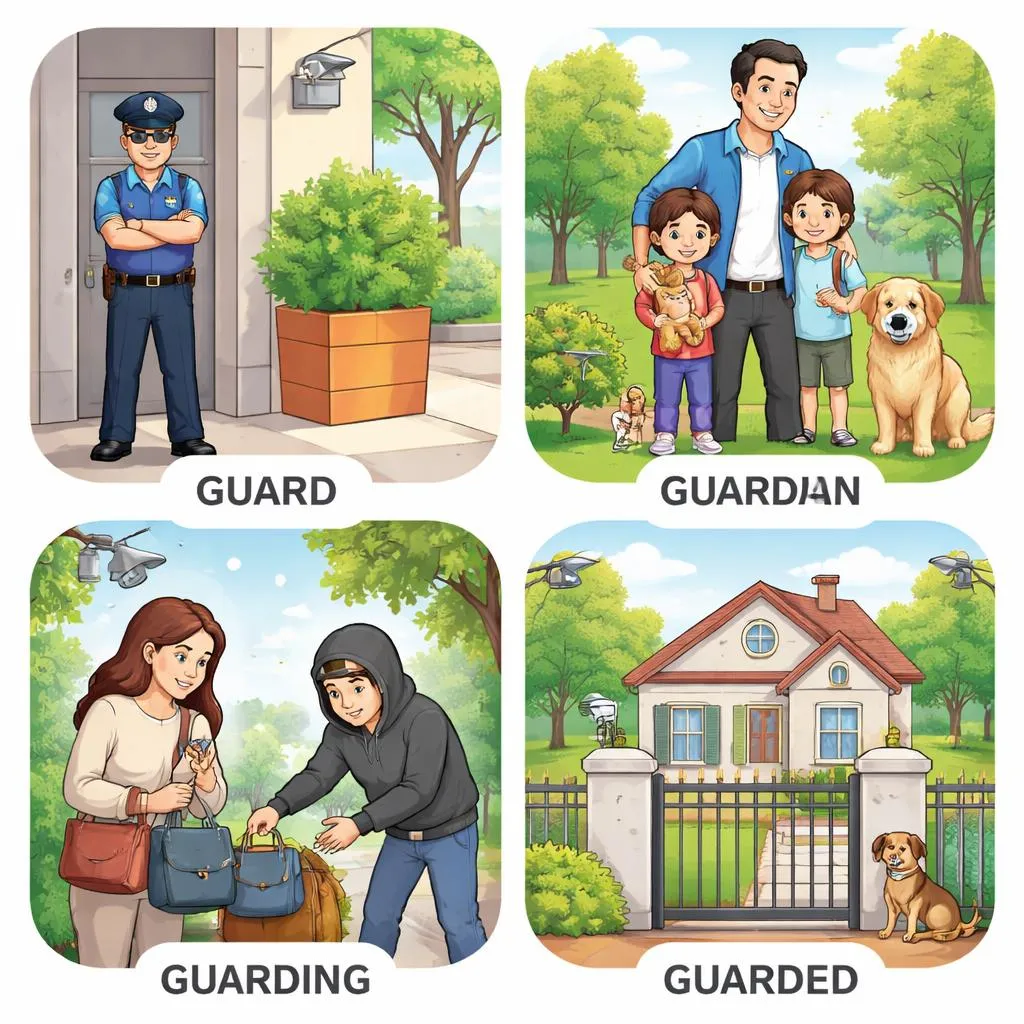
First, let us meet each tool. Guard is a noun or verb. It means a person who protects or the act of protecting. We call it the Action Guard. Guardian is a noun. It means a person legally responsible for someone. We call it the Protector. Guarding is a verb form or noun. It means the process of protecting. We call it the Active Shield. Guarded is a verb past tense or adjective. It means being protected or careful. We call it the Safe Result. These nicknames help us remember. Watch Sam use them. At home, he pretends to be a guard. He calls himself a guardian. He practices guarding the door. He says the house is guarded. Each tool fits its spot. But Sam still mixes them. We will learn why. Next, we dig deep into comparisons. We explore time, job, partners, small differences, and traps. Get ready to master these tools.
Guard stands watch. Guardian cares for others. Guarding shows the work. Guarded shows the safety. Together, they make sense. Sam used to think they were the same. Now he knows better. Let's see how they act in real life. We will follow Sam from morning to night. You will see each word in action. No more confusion. Ready? Let's go!
Time Tells the Tale
Words change with clocks and calendars. Some show now. Some show yesterday. Others show always. At home, Sam says, "I guard the cookie jar." That is habit. He says, "I am guarding the door now." That is present action. He says, "I guarded the cookies yesterday." That is past action. In the playground, Sam shouts, "Kids guard the base!" That is regular activity. He adds, "We are guarding the fort!" That is current fun. He recalls, "We guarded the slide last week." That is past event. At school, the teacher says, "We guard our school rules." That is routine. She notes, "Students are guarding their books." That is ongoing task. She adds, "They guarded the library." That is past duty. In nature, Sam watches a dog. He whispers, "It guards the house." That is natural habit. He sees a bird. "It is guarding its nest." That is present care. He remembers, "The cat guarded her kittens." That is past protection. See the pattern? Guard is for now or habit. Guarding is for right now. Guarded is for yesterday. Guardian does not change with time. Remember your clock. Pick the right word.
Time never lies. If you do something every day, use guard. If you are doing it this second, use guarding. If you did it before, use guarded. Sam learned this the hard way. Now he checks the clock first. You should too. It saves a lot of trouble. Try it next time you speak. You will sound smart!
Jobs in the Sentence
Each word wears a uniform. Some do actions. Others name things. Guard is a noun or verb. It names a person or shows action. Example: "The guard stands tall." Or "I guard the gate." Guardian is a noun. It names a protector. Example: "My uncle is my guardian." Guarding is a gerund or participle. As a gerund, it names the process. As a participle, it describes something. Example: "Guarding takes focus." Or "The guarding dog barks." Guarded is a verb past tense or adjective. It shows finished action or a safe state. Example: "I guarded the door." Or "The gate is guarded." At home, Sam says, "I am a guard." Noun person. He says, "I guard the cookies." Verb action. He says, "Guarding is my job." Gerund process. He says, "The house is guarded." Adjective state. In the playground, Sam shouts, "Be the guard!" Noun person. He says, "We guard the base." Verb action. He says, "Guarding needs teamwork." Gerund process. He says, "The fort is guarded." Adjective state. At school, the teacher says, "The guard helps us." Noun person. She says, "We guard our values." Verb action. She says, "Guarding knowledge is wise." Gerund process. She says, "The entrance is guarded." Adjective state. In nature, Sam whispers, "The dog is a guard." Noun person. He says, "It guards the sheep." Verb action. He says, "Guarding the nest is tiring." Gerund process. He says, "The kittens are guarded." Adjective state. Always check the uniform. Is it doing or naming? Choose right.
Jobs matter more than you think. A worker (guard) cannot be a protector (guardian). A process (guarding) cannot be a result (guarded). Sam used to mix them up. Now he checks the job first. You can do it too. Just ask: "Is this word doing something or naming something?" Easy!
Who Likes Helpers
Some words stand alone. Others need buddies. Guard stands alone as a noun. Example: "The guard waits." As a verb, it stands alone. Example: "I guard the door." Guardian stands alone. Example: "The guardian cares." Guarding needs "is/am/are" for present continuous. Example: "I am guarding the gate." Guarded as past tense stands alone. Example: "I guarded the cookies." As past participle, it needs "is/was/were" or "have/has/had." Example: "The door is guarded." Or "I have guarded it." At home, Sam says, "The guard stands." Alone. He says, "I guard the jar." Alone. He says, "I am guarding it." Needs "am." He says, "The jar is guarded." Needs "is." In the playground, Sam says, "Be the guard." Alone. He says, "We guard the base." Alone. He says, "We are guarding it." Needs "are." He says, "The base is guarded." Needs "is." At school, the teacher says, "The guard helps." Alone. She says, "We guard the rules." Alone. She says, "We are guarding them." Needs "are." She says, "The rules are guarded." Needs "are." In nature, Sam says, "The dog is a guard." Alone. He says, "It guards the sheep." Alone. He says, "It is guarding them." Needs "is." He says, "The sheep are guarded." Needs "are." Learn the buddy system. It makes sentences smooth.
Helpers are like friends. They make words work better. Guard and guardian do not need friends. Guarding needs "is/am/are" to play. Guarded needs "is/was/were" or "have/has/had" to join the party. Sam forgot this once. He said, "I am guard." His mom corrected him. Now he remembers the buddies. You will too!
Small Differences Matter
Words seem alike but have secrets. Guard is the act or person. Guardian is a legal protector. Guarding is the process of protecting. Guarded is the result of being safe. At home, Sam says, "The guard watches." Person. He says, "My dad is my guardian." Legal protector. He says, "Guarding the door is fun." Process. He says, "The door is guarded." Safe result. In the playground, Sam says, "I guard the gate." Action. He says, "The coach is the guardian." Protector. He says, "Guarding the base takes skill." Process. He says, "The base is guarded." Safe result. At school, the teacher says, "The guard helps us." Person. She says, "Parents are guardians." Protectors. She says, "Guarding knowledge matters." Process. She says, "Our school is guarded." Safe result. In nature, Sam says, "The dog is a guard." Person. He says, "The mother bird is a guardian." Protector. He says, "Guarding the nest is hard." Process. He says, "The nest is guarded." Safe result. Using the wrong twin changes meaning. Say "guard" for the person or action. Say "guardian" for the legal protector. Say "guarding" for the process. Say "guarded" for the safe state. Be exact.
Small differences make big sense. Sam learned this when he said, "The guardian is guarding." His friend laughed. Now he knows: guard = person/action, guardian = protector, guarding = doing, guarded = safe. Simple! Keep these differences in mind. You will never mix them up again.
Avoid the Common Traps
Kids often trip here. Let us fix mistakes. Mistake one: "I am guard the door." Wrong. Guard is noun/verb, cannot follow "am" as verb. Correct: "I am a guard." Or "I guard the door." Mistake two: "The guardian is guard." Wrong. Guardian is noun, cannot be verb. Correct: "The guardian is guarding." Or "The guard is here." Mistake three: "Guarding is a guard." Wrong. Guarding is gerund, cannot equal noun. Correct: "Guarding needs a guard." Mistake four: "The guarded is guard." Wrong. Guarded is adjective/verb, cannot be noun. Correct: "The guarded door is safe." Or "The guard is here." Mistake five: "I guarded the guardian." Confusing. Guarded means protected, guardian is person. Correct: "I guarded the door." Or "I am the guardian." Why these happen? Kids swap nouns and verbs. They ignore meanings. Memory rhyme: Guard is watch, Guardian is care, Guarding is doing, Guarded is safe. Say it loud. It sticks. Practice spotting errors. You will dodge traps.
Traps are everywhere. But you can avoid them. Just remember the rhyme. Test yourself often. Ask: "Is this word doing, being, or naming?" Soon, traps will disappear. Sam used to fall for them. Now he laughs at his old mistakes. You will too!
Quick Review of the Word Tools
Let us wrap up the rules. Guard is a noun or verb for protecting. Use it for the person or action. Guardian is a noun for a protector. Use it for legal or caring protectors. Guarding is a gerund or participle for the process. Use it for ongoing protection. Guarded is a past tense verb or adjective for safety. Use it for finished protection or a safe state. Remember time: guard for now/habit, guarding for right now, guarded for past. Jobs: guard is noun/verb, guardian is noun, guarding is gerund/participle, guarded is verb/adjective. Partners: guard and guardian stand alone. Guarding needs "is/am/are." Guarded needs "is/was/were" or "have/has/had." Small differences keep meanings clear. Avoid traps by checking job and meaning. If you protect something now, use guard. If you are protecting, use guarding. If you protected before, use guarded. If someone is a protector, use guardian. Keep these tools handy.
This review is your cheat sheet. Read it before bed. Say it out loud. You will remember everything. Sam keeps it on his fridge. You can too!
Practice Time
Task A: Best Choice. At dinner, Dad ____ the house at night. (guard/guardian) Answer: guard. Because it is the action of protecting. Task B: Spot the Errors. Read this paragraph: "Yesterday, I am guard the door. The guardian is guard. Guarding is a guard. The guarded is guard." Fix it: "Yesterday, I guarded the door. The guardian is here. Guarding is important. The door is guarded." Task C: Be a Director. Scene: Playing a game. Make one sentence with guard and one with guarded. Sample: "I guard the treasure chest." "The chest is guarded by a dragon."
Practice makes perfect. Do these tasks today. Show them to your mom. She will be proud. Sam did them and got an A+ in English. You can too!
What You Learned
You learned to tell guard, guardian, guarding, and guarded apart. You know guard is a person or action. You know guardian is a protector. You know guarding is the process. You know guarded means safe or protected. These skills make your English clear.
Your Action Step
Today, pretend to be a guard for your toys. Talk about your guardian. Write one sentence about guarding something. Practice makes perfect.