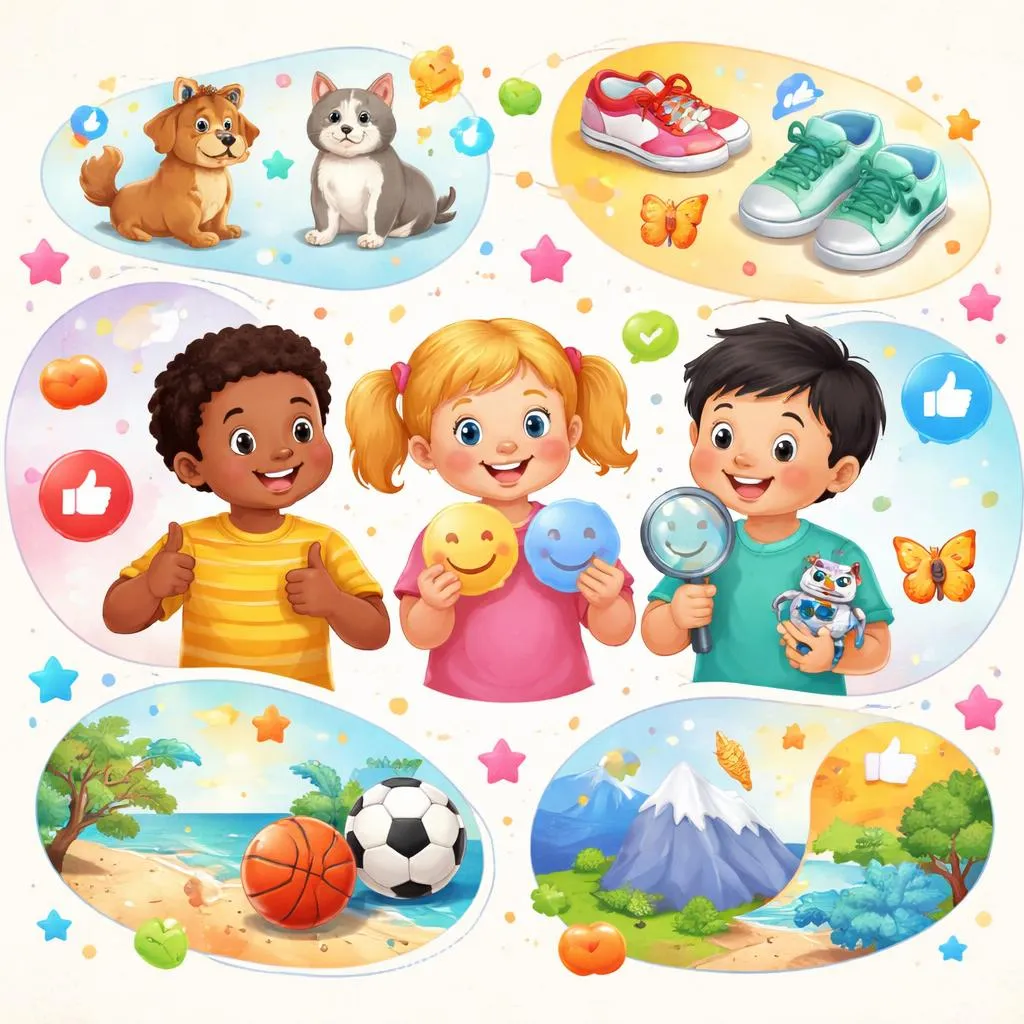

Every child has favorites. Every child notices differences. English gives us a flexible family of words built on “like.” The root “like” means similar or enjoyable. From this root come four more words. “Liking” names the feeling of enjoyment. “Likely” describes something that will probably happen. “Likeness” names the quality of being similar. “Unlike” means not similar or different. These five words help children express preferences. They also help children compare things and predict outcomes. Let us explore this useful family.
What Does “Same Word, Different Forms” Mean? One root takes many shapes. “Like” can be a verb. I like ice cream. “Like” can be a preposition. She runs like a cheetah. “Like” can be an adjective. They have like interests. “Liking” is the noun for enjoyment. My liking for pizza grows every day. “Likely” is the adjective for probability. Rain is likely today. “Likeness” is the noun for similarity. The likeness between twins amazes me. “Unlike” is the opposite preposition or adjective. Unlike my brother, I love spinach. This family gives your child tools for preferences, comparisons, and predictions.
Personal Pronouns Change Their Form Pronouns shift shape too. “I” becomes “me.” “She” becomes “her.” “We” becomes “us.” This shows that English changes words for grammar. Our word family “like” changes for grammar as well. But it also changes for meaning. A verb shows action. A noun names a feeling or quality. A preposition shows relationship. An adjective describes. Learning these roles helps your child use “like” words in many sentences.
From Verb to Noun to Adjective to Preposition – One Family, Many Words “Like” is a verb. You like warm cookies. “Like” is a preposition. He swims like a fish. “Like” is an adjective. They have like tastes in music. “Liking” is the noun. My liking for reading grows each year. “Likely” is the adjective. It is likely to snow tomorrow. “Likeness” is the noun. The likeness between the two drawings is striking. “Unlike” is the preposition or adjective. Unlike a cat, a dog loves fetch. This family gives your child seven meanings from one small root.
One Root, Many Roles – How Words Grow from Actions to Qualities Let us follow a comparison story. A child likes dogs more than cats. The child’s liking for dogs started as a baby. The child is likely to become a veterinarian. The child notices the likeness between a husky and a wolf. Unlike wolves, huskies are friendly to people. See how “like” runs through all five sentences. Each form adds a new layer. Your child can say “I like dogs.” “My liking is strong.” “I am likely to own a dog someday.” “The likeness is amazing.” “Unlike wolves, dogs trust humans.” One root tells a whole story of preference and comparison.
Same Meaning, Different Jobs – Is It a Verb or a Preposition? How does your child know the job? Look at the sentence position. After “I,” “you,” or “we,” use the verb. Example: “We like bedtime stories.” After a noun and before another noun, use the preposition. Example: “He runs like the wind.” After “a” or “my,” use the noun “liking.” Example: “My liking for art grows.” Before a verb or after “is,” use the adjective “likely.” Example: “She is likely to win.” After “the” or “a,” use the noun “likeness.” Example: “The likeness is uncanny.” At the start of a sentence or after “is,” use “unlike.” Example: “Unlike my sister, I am tall.” Context tells you the job.
Adjectives and Adverbs – When Do We Add -ly? From “like” as an adjective, we do not make an adverb. From “likely,” we can make “likelily.” That word is very rare. Instead, use “probably.” From “unlike,” no adverb. From “liking,” no adverb. Focus first on the main five words. Teach the “-ly” rule briefly. Most adjectives become adverbs with “-ly.” “Quick” becomes “quickly.” “Likely” is already an adjective ending in “-ly.” That is unusual. “Likely” looks like an adverb but works as an adjective. “It is likely rain” (adjective). Not “It is likely raining” (that is different). This is advanced. Let young learners use “likely” as an adjective only.
Watch Out for Tricky Spelling Changes (Double Letters, y to i, and More) “Like” has a silent “e” at the end. When we add “-ing” to make “liking,” we drop the “e.” “Like” becomes “liking.” When we add “-ly” to make “likely,” we keep the “e”? No. “Like” + “ly” = “likely.” We drop the “e.” Yes. “Likely” has no “e.” When we add “-ness” to make “likeness,” we keep the “e”? No. “Like” + “ness” = “likeness.” We keep the “e” in this case. “Likeness” has an “e.” Why? Because “like” ends with “e.” Adding “-ness” usually keeps the “e.” “Aware” becomes “awareness.” “Like” becomes “likeness.” But “likely” drops the “e.” That is an exception. When we add “un-” to make “unlike,” keep the “e.” “Un” + “like” = “unlike.” No change. This family has some spelling quirks. Practice each word separately.
Let’s Practice – Can You Choose the Right Form? Try these simple sentences with your child.
I (like / unlike) to draw pictures. (Answer: like)
My (liking / likely) for music started early. (Answer: liking)
It is (likely / likeness) to be sunny tomorrow. (Answer: likely)
The (likeness / unlike) between the two sisters is strong. (Answer: likeness)
(Like / Unlike) a car, a bicycle needs no gas. (Answer: Unlike)
Make your own sentences from daily life. Say “I like your outfit.” Say “My liking for bedtime stories is strong.” Say “It is likely to rain, so bring an umbrella.” Say “The likeness between these two drawings is amazing.” Say “Unlike yesterday, today is warm.”
Tips for Parents – Help Your Child Learn Word Families in a Fun Way Play the “like” game. Take turns saying things you like. “I like pizza.” “I like blue.” “I like jumping.” Then say “Our liking for fun brings us together.” This game builds connection and vocabulary.
Use “likely” for predictions. Before an event, ask “How likely is that to happen?” “It is likely to snow.” “It is unlikely to be hot.” Say “Likely means probably yes. Unlikely means probably no.” This teaches probability and thinking ahead.
Find likenesses. Look at two leaves. Two shoes. Two faces. Ask “What is the likeness between them?” Ask “How are they alike?” Use the noun. “The likeness is in the shape.” This builds observation and comparison skills.
Use “unlike” for differences. Say “Unlike a fork, a spoon holds soup.” Say “Unlike morning, night is dark.” Say “Unlike me, you love spiders.” This teaches vocabulary and celebrating differences.
Play the “alike and different” game. Place two objects. Ask “What is one likeness?” Ask “What is one difference?” Use “unlike” for differences. “Unlike an apple, an orange has a thick peel.” This game builds critical thinking.
Read books about preferences. Many children’s books show characters liking different things. Pause during reading. Ask “What does this character like?” Ask “What is your liking for that thing?” Ask “Is it likely the character will change their mind?” Ask “What is the likeness between the two friends?” Ask “Unlike the rabbit, what does the bear like?” These questions build deep reading comprehension.
Create a family “likeness and difference” chart. Draw two circles that overlap. In the overlap, write likenesses. In the separate parts, write differences using “unlike.” “Unlike Dad, I like broccoli.” This visual tool makes comparison clear.
Do not correct mistakes with “like” as a filler word. Many children say “like” many times in speech. That is fine. Focus on the word family meanings. When they use “like” as a verb, praise it. When they use “unlike” correctly, celebrate. Over time, the filler “like” will naturally reduce.
Now you have a complete guide. Express your likes. Notice your likings. Predict what is likely. Find likenesses everywhere. Celebrate differences with unlike. This word family does more than teach English. It teaches that words help us connect and compare. It teaches that preferences make us unique. It teaches that similarity and difference both bring joy. Keep comparing. Keep connecting. Keep growing together. One word family at a time.