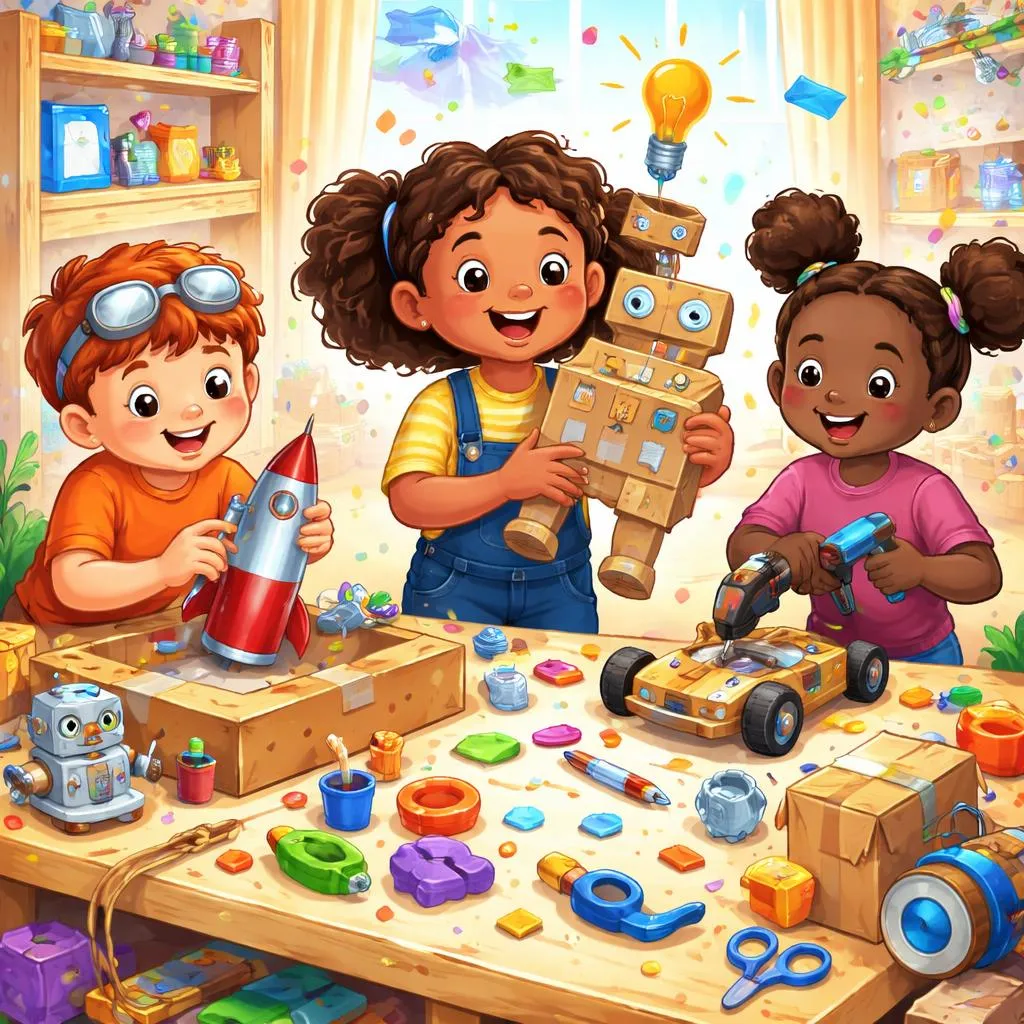

Every child makes things. A tower from blocks. A drawing on paper. A fort from blankets. English gives us a powerful family of words for this act of creation. The root is “make.” From this root come three more words. “Maker” names the person who creates. “Making” names the activity itself. “Makeshift” describes a temporary solution made from available things. These four words help children celebrate their creativity. They also help children solve problems when the perfect tool is not available. Let us explore this practical family.
What Does “Same Word, Different Forms” Mean? One action takes different word shapes. “Make” is the verb. You make a sandwich. “Make” can also be a noun. Every new make teaches a lesson. “Maker” is the person noun. A maker builds things with their hands. “Making” is the noun for the activity. Making requires patience. “Making” can also be an adjective. The making process takes time. “Makeshift” is the adjective for temporary solutions. A makeshift table uses a cardboard box. Your child sees this pattern in other words. “Build” becomes “builder” and “building.” “Make” gives us even more options.
Personal Pronouns Change Their Form Pronouns shift shape too. “I” becomes “me.” “She” becomes “her.” “We” becomes “us.” This shows that English changes words for grammar. Our word family “make” changes for grammar as well. But it also changes for meaning. A verb shows action. A noun names a person or activity. An adjective describes. Learning these roles helps your child talk about creating things clearly.
From Verb to Noun to Adjective – One Family, Many Words “Make” is the verb. You make a birthday card. “Make” is also a noun. This is a good make. “Maker” is the person noun. She is a doll maker. “Making” is the activity noun. Making is fun. “Making” is also an adjective. The making steps are simple. “Makeshift” is the adjective for temporary things. We slept on a makeshift bed of cushions. This family gives your child six meanings from one small root.
One Root, Many Roles – How Words Grow from Actions to Qualities Let us follow a making moment. A child wants to make a birdhouse. The child starts making with wood and glue. The child becomes a maker of homes for birds. When a nail is missing, the child creates a makeshift solution using a small screw. See how “make” runs through all four sentences. Each form adds a new layer. Your child can say “I will make a gift.” “I am a maker.” “Making takes practice.” “This makeshift table works fine.” One root tells a whole story of creativity.
Same Meaning, Different Jobs – Is It a Verb or a Noun? How does your child know the job? Look at the sentence position. After “can,” “will,” or “want to,” use the verb. Example: “She wants to make a cake.” As a subject or object, use the noun “make” for the product. Example: “This is a good make.” For a person noun, use “a” or “the.” Example: “He is a furniture maker.” As a subject or object, use the activity noun “making.” Example: “Making is satisfying.” Before a noun, use the adjective “making.” Example: “The making process took an hour.” Before a noun, use “makeshift” for temporary solutions. Example: “We used a makeshift bridge.” Endings give clues. “Make” is verb or product noun. “-er” signals a person. “-ing” signals activity or description. “-shift” signals temporary.
Adjectives and Adverbs – When Do We Add -ly? From “makeshift” we can make the adverb “makeshiftly.” This word is rare. Young learners do not need it. From “making” as an adjective, we can make “makingly.” That is also rare. Focus first on “make,” “maker,” “making,” and “makeshift.” Teach the “-ly” rule briefly. Most adjectives become adverbs with “-ly.” “Quick” becomes “quickly.” “Makeshift” would become “makeshiftly.” Your child will meet this pattern later. For now, celebrate the main four words.
Watch Out for Tricky Spelling Changes (Double Letters, y to i, and More) “Make” has a silent “e” at the end. When we add “-er” to make “maker,” we keep the “e.” No change. “Make” + “er” = “maker.” When we add “-ing” to make “making,” we drop the “e.” “Make” becomes “making.” When we add “-shift” to make “makeshift,” we keep the “e.” “Make” + “shift” = “makeshift.” The “e” stays. This family has mixed rules. “Making” drops the “e.” “Maker” keeps it. “Makeshift” keeps it. Practice each word separately. Also note that “make” is irregular in the past tense. “Make” becomes “made.” That is a different form. Teach present tense first.
Let’s Practice – Can You Choose the Right Form? Try these simple sentences with your child.
Let’s (make / maker) a card for Grandma. (Answer: make)
My dad is a (make / maker) of wooden toys. (Answer: maker)
(Making / Makeshift) a new friend takes courage. (Answer: Making)
We used a (make / makeshift) umbrella from a plastic bag. (Answer: makeshift)
This Lego tower is your best (make / maker) yet. (Answer: make)
Make your own sentences from daily creativity. Say “Let us make a fort.” Say “You are a great maker of stories.” Say “Making breakfast is fun.” Say “We built a makeshift tent with chairs and sheets.”
Tips for Parents – Help Your Child Learn Word Families in a Fun Way Make things together every week. A drawing. A snack. A craft. As you create, use the words. Say “Let us make a bird feeder.” Say “You are the maker today.” Say “The making is almost done.” Say “This is a makeshift hook, but it works.” This hands-on learning teaches vocabulary and skills.
Play the maker game. Name different kinds of makers. “A baker makes bread.” “A painter makes art.” “A writer makes stories.” “A carpenter makes furniture.” Ask “What kind of maker do you want to be?” This game builds career awareness and vocabulary.
Celebrate makeshift solutions. When a toy breaks and you fix it with tape, say “Look at this makeshift repair.” When you use a book as a table mat, say “This is a makeshift placemat.” When you build a fort from pillows, say “This is a magnificent makeshift castle.” This teaches resourcefulness. Your child learns that you do not always need the perfect tool.
Read books about makers and inventors. Many children’s books celebrate people who make things. Pause during reading. Ask “What did this person make?” Ask “Was this person a maker?” Ask “What was the making process like?” Ask “Did they use any makeshift solutions?” These questions build inspiration.
Create a family maker space. A corner of the living room. A box of supplies. Paper, tape, string, recycled boxes. Say “This is our maker space.” Say “What will you make today?” Say “The making can get messy. That is okay.” Say “You are the maker in charge.” This space builds creativity and independence.
Distinguish “makeshift” from “bad.” Makeshift means temporary and creative. It is not an insult. Say “Makeshift means we used what we had. That is smart.” This reframing builds a positive attitude toward problem-solving.
Do not over-correct the past tense. When your child says “I made a cake” that is correct. When your child says “I make a cake yesterday,” gently say “You made it yesterday. Today you can make another one.” No shame. The past tense “made” will come with time.
Now you have a complete guide. Make things with joy. Be a proud maker. Enjoy the making process. Celebrate makeshift solutions. This word family does more than teach English. It teaches that every child is a creator. It teaches that problems become solutions with creativity. It teaches that making is how we learn. Keep making. Keep growing together. One word family at a time.