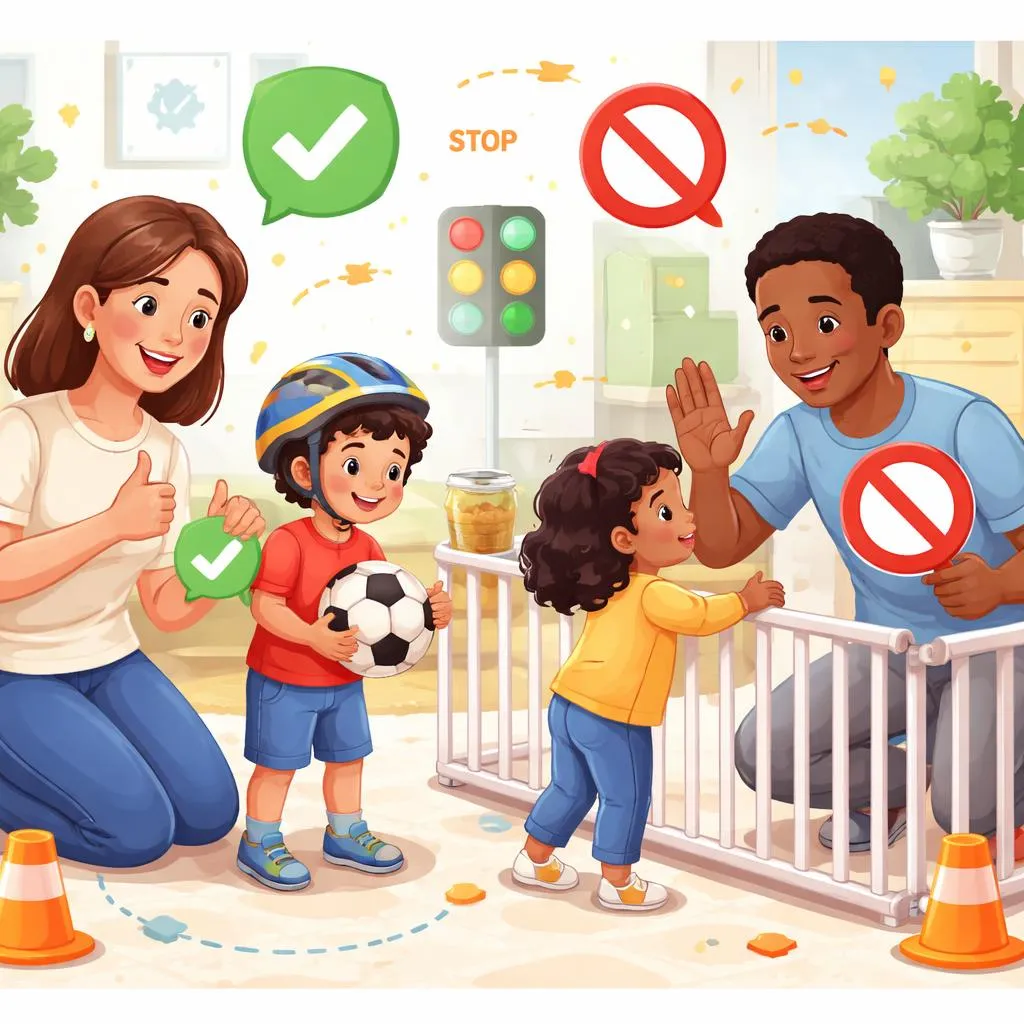

Every child hears “yes” and “no” every day. Yes to playtime. No to touching the stove. English gives us a clear family of words for talking about what is allowed. The root is “permit.” From this root come three more words. “Permission” names the approval to do something. “Permissible” describes something that is allowed. “Permissibly” describes how an action is done in an allowed way. These four words help children understand boundaries. They also help children ask for and give consent. Let us explore this respectful family.
What Does “Same Word, Different Forms” Mean? One action takes different word shapes. “Permit” is the verb. The rules permit you to bring water. “Permit” can also be a noun. You need a parking permit. “Permission” is the noun for approval. Ask permission before leaving the table. “Permissible” is the adjective. Is it permissible to talk during the movie? “Permissibly” is the adverb. You may act permissibly within the rules. Your child sees this pattern in other words. “Allow” becomes “allowance.” “Permit” gives us even more precision.
Personal Pronouns Change Their Form Pronouns shift shape too. “I” becomes “me.” “She” becomes “her.” “We” becomes “us.” This shows that English changes words for grammar. Our word family “permit” changes for grammar as well. But it also changes for meaning. A verb shows action. A noun names approval or a document. An adjective describes. An adverb describes an action. Learning these roles helps your child talk about rules and boundaries clearly.
From Verb to Noun to Adjective to Adverb – One Family, Many Words “Permit” is a verb. The teacher will permit you to sharpen your pencil. “Permit” is a noun. You need a building permit to add a room. “Permission” is the approval noun. I have permission to go to the park. “Permissible” is the adjective. Is it permissible to wear a hat in class? “Permissibly” is the adverb. They acted permissibly within the guidelines. This family gives your child five tools for talking about what is allowed. One root. Five ways to understand consent.
One Root, Many Roles – How Words Grow from “Yes” to “No” Let us follow a permission story. A child wants to borrow a friend’s toy. The child must ask the friend to permit it. The child needs permission before touching the toy. The friend decides whether it is permissible. If the friend says yes, the child acts permissibly. See how “permit” runs through all four sentences. Each form adds a new layer. Your child can say “Will you permit me to borrow this?” “I need your permission.” “Is it permissible to play with this now?” “You acted permissibly by asking first.” One root tells a whole story of respect.
Same Meaning, Different Jobs – Is It a Verb or a Noun? How does your child know the job? Look at the sentence position. After “will,” “please,” or “can,” use the verb. Example: “Please permit me to explain.” For the document, use “a” or “the.” Example: “The permit is on the fridge.” For approval, use “a” or “the.” Example: “She gave permission.” Before a noun or after “be,” use “permissible.” Example: “That is a permissible question.” Before a verb or at the end of a clause, use “permissibly.” Example: “The dog acted permissibly on its leash.” Endings give clues. “Permit” is verb or document noun. “-ion” signals approval noun. “-ible” signals an adjective. “-ibly” signals an adverb.
Adjectives and Adverbs – When Do We Add -ly? This family shows the “-ly” rule clearly. Take the adjective “permissible.” Add “-ly” to make “permissibly.” Change the “le” to “ly”? No. “Permissible” ends with “le.” Add “-ly” to make “permissibly.” Drop the “e”? Yes. “Permissible” becomes “permissibly.” The final “e” drops, and we add “y.” Many adjectives ending in “-able” or “-ible” become “-ably” or “-ibly” adverbs. “Comfortable” becomes “comfortably.” “Terrible” becomes “terribly.” “Permissible” becomes “permissibly.”
Watch Out for Tricky Spelling Changes (Double Letters, y to i, and More) “Permit” has one “r” and ends with “mit.” When we add “-ion” to make “permission,” we double the “t”? No. “Permit” becomes “permission.” The “t” changes to “ss.” That is a big change. “Permit” has one “t.” “Permission” has two “s”s. That is unusual. When we add “-ible” to make “permissible,” we change the “t” to “ss”? “Permit” becomes “permissible.” Yes. The “t” becomes “ss” again. “Permissible” has double “s.” When we add “-ly” to make “permissibly,” keep the double “s.” “Permissible” becomes “permissibly.” Drop the “le,” add “y.” So the main challenge is the “t” to “ss” change. Practice: permit, permission, permissible, permissibly. All have “ss” except “permit.”
Let’s Practice – Can You Choose the Right Form? Try these simple sentences with your child.
Will you (permit / permission) me to sit here? (Answer: permit)
You need a fishing (permit / permission) from the store. (Answer: permit)
I have (permit / permission) to stay up late tonight. (Answer: permission)
Is it (permissible / permissibly) to bring a snack to the movie? (Answer: permissible)
The player acted (permissible / permissibly) within the rules. (Answer: permissibly)
Make your own sentences from daily life. Say “The rules permit you to read before bed.” Say “We need a permit for this fireworks show.” Say “You have my permission to play outside.” Say “Is it permissible to pet your dog?” Say “They acted permissibly during the game.”
Tips for Parents – Help Your Child Learn Word Families in a Fun Way Teach the power of asking permission. Before your child borrows something, say “You need to ask permission.” Before you take something from your child, say “May I have your permission?” This models respect and consent. Use the words. “I permit you to use my tape.” “Thank you for asking permission.” “Is it permissible to touch this?” “You acted permissibly.” This builds social skills and vocabulary.
Play the permit game. Create “permits” for different activities. “TV permit.” “Snack permit.” “Park permit.” Your child must present the permit to do the activity. Say “Do you have a permit for that?” “That activity is not permissible without a permit.” “You acted permissibly because you had your permit.” This game makes rules concrete and fun.
Read books about rules, safety, and consent. Many children’s books teach about asking before touching or taking. Pause during reading. Ask “Does the character ask permission?” Ask “Who can permit this?” Ask “What is permissible here?” Ask “Did they act permissibly?” These questions build social-emotional learning.
Create a family permission chart. List things that always need permission. “Using the computer.” “Having a friend over.” “Baking with the oven.” Say “You need a permit for these activities.” “Asking permission keeps everyone safe.” “We act permissibly in this family.” This builds structure and vocabulary.
Distinguish “permit” (verb) from “permit” (noun). “I permit you to go” (verb). “I have a permit” (document noun). Pronunciation? The verb “permit” stresses the second syllable: per-MIT. The noun “permit” stresses the first syllable: PER-mit. This advanced nuance can wait until older grades.
Use “permissible” for gray areas. When your child asks “Can I have a cookie before dinner?” say “Is that permissible? What do the rules say?” This builds decision-making.
Now you have a complete guide. Permit others their space. Ask for permission before acting. Know what is permissible. Act permissibly within boundaries. This word family does more than teach English. It teaches that rules protect us. It teaches that asking permission shows respect. It teaches that boundaries are not walls; they are guides. Keep asking. Keep growing together. One word family at a time.