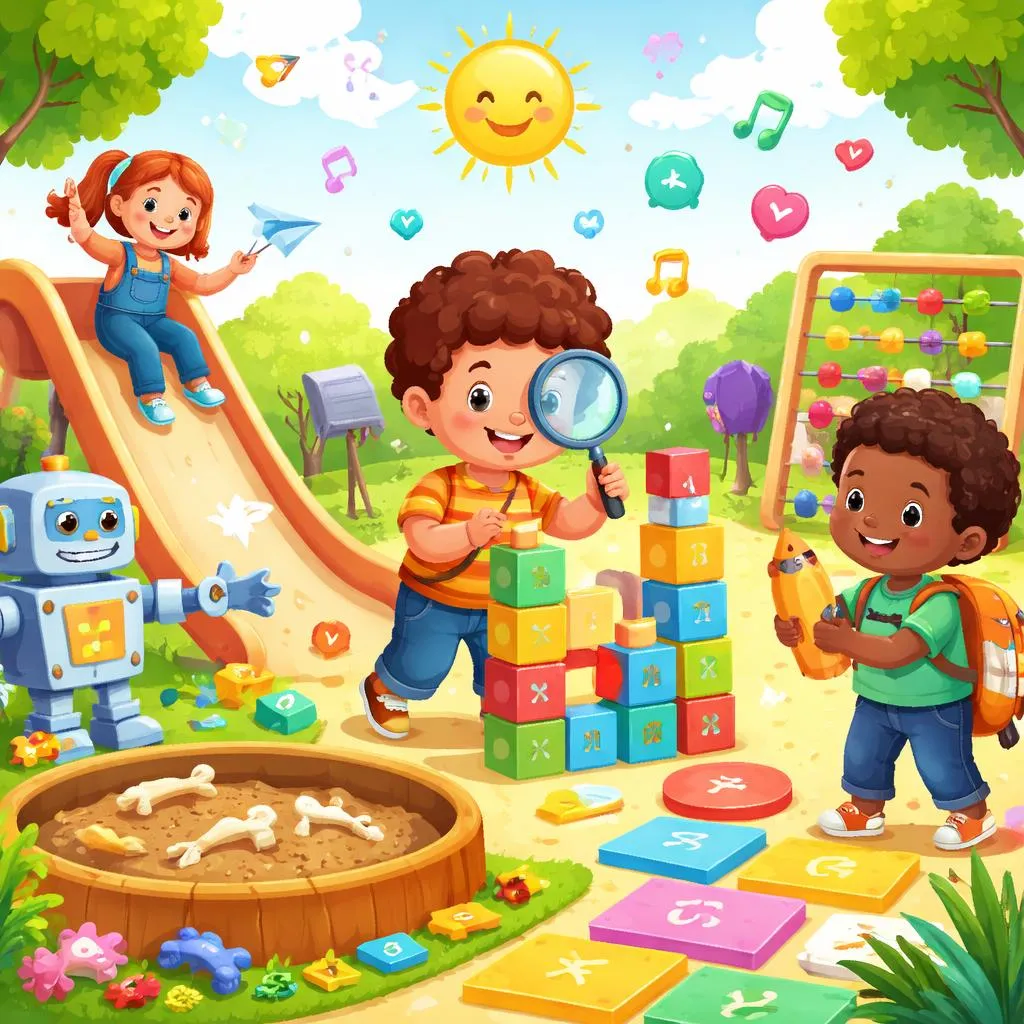

Every child plays. Running. Laughing. Pretending. Building. Play is how children learn best. English gives us a joyful family of words for this essential activity. The root is “play.” From this root come four more words. “Player” names a person who plays a game or sport. “Playful” describes a fun, lighthearted attitude. “Playfully” describes an action done in a fun, joking way. “Playground” names the place where children play outside. These five words help children talk about fun and games. They also help parents remember that play is serious learning. Let us explore this happy family.
What Does “Same Word, Different Forms” Mean? One action takes different word shapes. “Play” is a verb. Play hide and seek with me. “Play” is also a noun. Let’s have a play in the park. “Player” is the person noun. A chess player thinks ahead. “Playful” is the adjective. A playful puppy chases its tail. “Playfully” is the adverb. The kittens tumbled playfully on the rug. “Playground” is the place noun. The playground has swings and slides. Your child sees this pattern in other words. “Game” becomes “gamer.” “Fun” becomes “funny.” “Play” gives us even more joy.
Personal Pronouns Change Their Form Pronouns shift shape too. “I” becomes “me.” “She” becomes “her.” “We” becomes “us.” This shows that English changes words for grammar. Our word family “play” changes for grammar as well. But it also changes for meaning. A verb shows action. A noun names a person, place, or activity. An adjective describes. An adverb describes an action. Learning these roles helps your child talk about fun clearly.
From Verb to Noun to Adjective to Adverb to Place – One Family, Many Words “Play” is a verb. Play tag with your friends. “Play” is a noun. The school play was about a dragon. “Player” is the person noun. The soccer player scored a goal. “Playful” is the adjective. A playful mood makes everything better. “Playfully” is the adverb. She playfully splashed water. “Playground” is the place noun. The new playground has a zip line. This family gives your child six meanings from one small root.
One Root, Many Roles – How Words Grow from Fun to Friendship Let us follow a play story. A child wants to play on the swings. The child joins other players on the playground. The child’s playful energy makes everyone smile. The child playfully reaches for the sky on each swing. See how “play” runs through all four sentences. Each form adds a new layer. Your child can say “Let’s play together.” “You are a good player.” “You have a playful spirit.” “You act playfully with your friends.” “Let’s go to the playground.” One root tells a whole story of joy and connection.
Same Meaning, Different Jobs – Is It a Verb or a Noun? How does your child know the job? Look at the sentence position. After “let’s,” “can,” or “want to,” use the verb. Example: “I want to play outside.” As a subject or object, use the noun “play” for drama. Example: “The school play is next week.” For a person, use “a” or “the.” Example: “The best player got a trophy.” Before a noun or after “be,” use “playful.” Example: “A playful kitten makes you laugh.” Before a verb or at the end of a clause, use “playfully.” Example: “The dog bit the rope playfully.” For the place, use “a” or “the.” Example: “The playground closes at dusk.” Endings give clues. “Play” is verb or drama noun. “-er” signals a person. “-ful” signals an adjective. “-fully” signals an adverb. “-ground” signals a place.
Adjectives and Adverbs – When Do We Add -ly? This family shows the “-ly” rule clearly. Take the adjective “playful.” Add “-ly” to make “playfully.” No spelling change. Many adjectives work this way. “Quick” becomes “quickly.” “Kind” becomes “kindly.” “Playful” becomes “playfully.” Most “-ful” adjectives become “-fully” adverbs. “Careful” becomes “carefully.” “Hopeful” becomes “hopefully.” “Playful” becomes “playfully.”
Watch Out for Tricky Spelling Changes (Double Letters, y to i, and More) “Play” has no double letters. Ends with “ay.” When we add “-er” to make “player,” keep the “ay.” No change. “Play” + “er” = “player.” When we add “-ful” to make “playful,” keep the “ay.” “Play” + “ful” = “playful.” When we add “-ly” to make “playfully,” keep the “ful.” “Playful” + “ly” = “playfully.” No double letters. No “y” changes. But note that “playful” has one “l” in “ful.” “Playfully” has double “l” (the “l” from “ful” plus the “l” from “ly”). That is correct. When we add “ground” to make “playground,” keep the “ay.” “Play” + “ground” = “playground.” No change. This family is very stable. The only challenge is remembering that “play” has “ay,” not “ey.” A “y” after “a.”
Let’s Practice – Can You Choose the Right Form? Try these simple sentences with your child.
Let’s (play / player) a board game. (Answer: play)
The soccer (play / player) kicked the ball far. (Answer: player)
A (playful / playfully) puppy makes everyone smile. (Answer: playful)
She (playful / playfully) pulled my hat over my eyes. (Answer: playfully)
The (play / playground) has a new slide. (Answer: playground)
Make your own sentences from daily life. Say “Let’s play catch.” Say “You are a great team player.” Say “Your playful mood is contagious.” Say “He playfully hid behind the door.” Say “The playground is our favorite place.”
Tips for Parents – Help Your Child Learn Word Families in a Fun Way Play with purpose. As you play games, use the words. Say “Let’s play a game.” Say “You are a good player.” Say “Your playful attitude helps everyone.” Say “You acted playfully but kindly.” Say “Let’s go to the playground.” This hands-on learning builds vocabulary naturally.
Play the player game. Name different kinds of players. “A soccer player.” “A video game player.” “A board game player.” “A pretend player.” Use the words. “Every player has a role.” “A good player takes turns.” “A playful player makes the game fun.” “Playgrounds are for all players.” This game builds social skills and vocabulary.
Read books about games, sports, and recess. Pause during reading. Ask “What game do they play?” Ask “Who is the best player?” Ask “Is this a playful scene?” Ask “How do they act playfully?” Ask “Where is the playground?” These questions build comprehension.
Visit different playgrounds. Use the words. “This playground has swings.” “The players on the slide take turns.” “A playful child invents new games.” “The wind playfully blows your hair.” “Every playground is an adventure.” This real-world learning makes vocabulary vivid.
Use “playful” for tone of voice. “You used a playful voice, so I knew you were joking.” “A playful tease is different from a mean one.” This builds emotional intelligence.
Distinguish “play” as verb vs. noun. “We play after school” (verb). “The school play was funny” (noun). This simple distinction builds grammar skills.
Now you have a complete guide. Play every day. Be a kind player. Keep a playful heart. Act playfully with those you love. Visit the playground often. This word family does more than teach English. It teaches that play is serious learning. It teaches that playing together builds friendships. It teaches that a playful spirit is a gift. Keep playing. Keep growing together. One word family at a time.