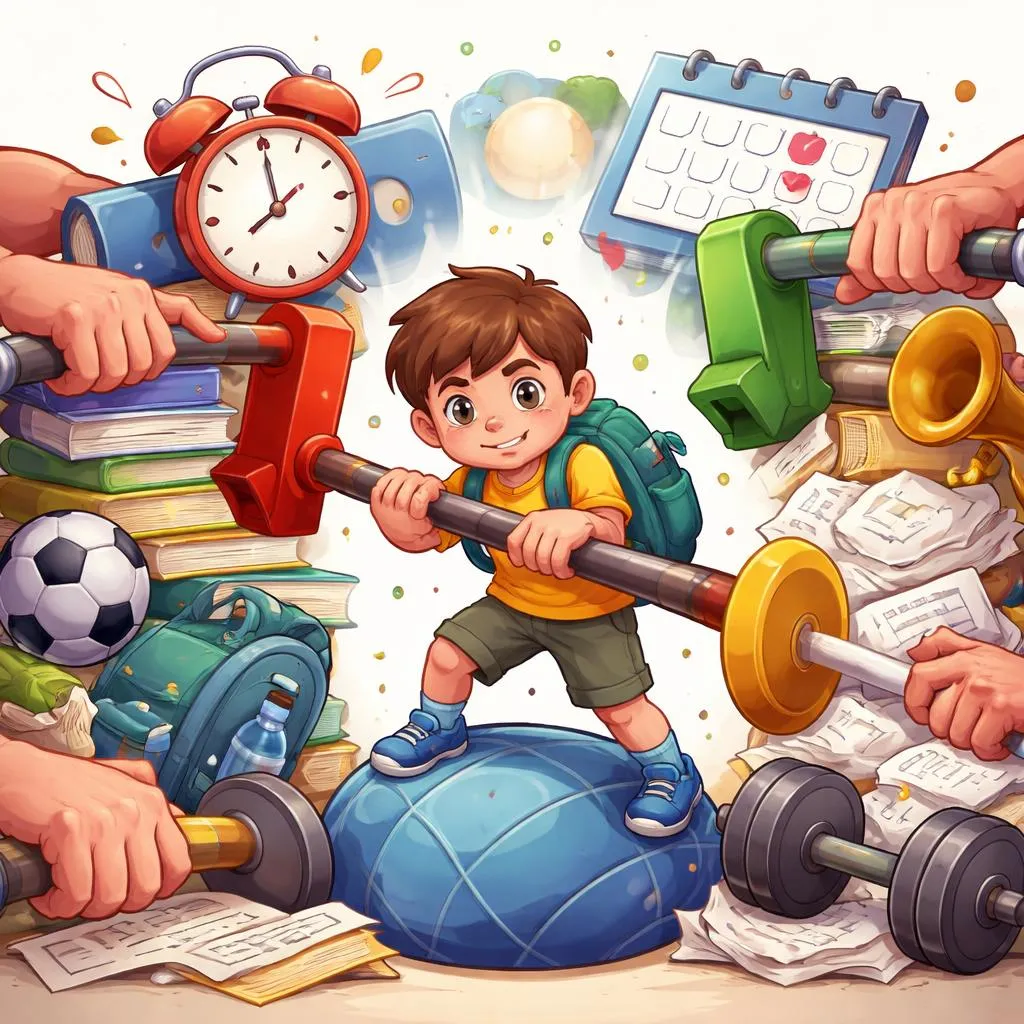

Every child feels pressure. A test. A race. A loud room. Learning to handle pressure is a life skill. English gives us a strong family of words for pushing, squeezing, and urgency. The root is “press.” From this root come three more words. “Pressure” names the force of pushing or the feeling of stress. “Pressing” describes something urgent or a continuous push. “Presser” names a person or machine that presses. These four words help children understand physical forces and emotional stress. Let us explore this squeezing family.
What Does “Same Word, Different Forms” Mean? One action takes different word shapes. “Press” is a verb. Press the button to call the elevator. “Press” is also a noun. The printing press prints newspapers. “Pressure” is the noun for force or stress. The pressure of water breaks the dam. “Pressing” is the adjective. A pressing problem needs immediate attention. “Presser” is the person or tool noun. A clothing presser irons shirts. Your child sees this pattern in other words. “Push” becomes “pushing.” “Squeeze” becomes “squeezer.”
Personal Pronouns Change Their Form Pronouns shift shape too. “I” becomes “me.” “She” becomes “her.” “We” becomes “us.” This shows that English changes words for grammar. Our word family “press” changes for grammar as well. But it also changes for meaning. A verb shows action. A noun names a machine, force, or person. An adjective describes. Learning these roles helps your child talk about physical and emotional forces.
From Verb to Noun to Adjective – One Family, Many Words “Press” is a verb. Press the dough flat with your hands. “Press” is a noun. The printing press changed history. “Pressure” is the force noun. Air pressure keeps balloons inflated. “Pressure” is also the stress noun. Test pressure can feel heavy. “Pressing” is the adjective. The most pressing issue is safety. “Presser” is the person noun. The garment presser works in a dry cleaner. This family gives your child five tools for talking about pushing and urgency.
One Root, Many Roles – How Words Grow from Physical to Emotional Let us follow a pressure story. A child needs to press the elevator button. The button requires firm pressure to light up. The child’s most pressing need is to get to the right floor. A helpful presser (another person) pushes the button for the child. See how “press” runs through all four sentences. Each form adds a new layer. Your child can say “Press the clay.” “Too much pressure breaks it.” “This is a pressing task.” “The presser helped me.” One root tells a whole story of force and help.
Same Meaning, Different Jobs – Is It a Verb or a Noun? How does your child know the job? Look at the sentence position. After “can,” “will,” or “please,” use the verb. Example: “Press the red button to start.” As a subject or object, use the noun “press” for a machine. Example: “The press prints newspapers.” For force or stress, use “pressure.” Example: “The pressure from the crowd was intense.” For urgent tasks, use the adjective “pressing.” Example: “A pressing phone call came in.” For a person or tool, use “presser.” Example: “The olive presser makes oil.” Endings give clues. “Press” is verb or machine noun. “-ure” signals a force noun. “-ing” signals an adjective. “-er” signals a person or tool.
Adjectives and Adverbs – When Do We Add -ly? From “pressing” as an adjective, we can make “pressingly.” Example: “The problem begged pressingly for a solution.” This word is advanced. From “pressured” we can make “pressuredly.” That is also rare. Focus first on “press,” “pressure,” “pressing,” and “presser.” Teach the “-ly” rule briefly. Most adjectives become adverbs with “-ly.” “Quick” becomes “quickly.” “Pressing” would become “pressingly.” Your child will meet this pattern later. For now, celebrate the main four words.
Watch Out for Tricky Spelling Changes (Double Letters, y to i, and More) “Press” has a double “s.” That is the main challenge. One “s” or two? “Press” has two. When we add “-ure” to make “pressure,” we keep the double “s.” “Press” + “ure” = “pressure.” The double “s” stays. When we add “-ing” to make “pressing,” we keep the double “s.” “Press” + “ing” = “pressing.” When we add “-er” to make “presser,” we keep the double “s.” “Press” + “er” = “presser.” So every word in this family has the double “s” from “press.” That is consistent. Practice writing “press” with two “s”s. Also note the vowel pair “re.” “Press” rhymes with “dress,” not “preese.”
Let’s Practice – Can You Choose the Right Form? Try these simple sentences with your child.
Please (press / pressure) the green button. (Answer: press)
The (press / pressure) of deep water can crush a submarine. (Answer: pressure)
A (pressing / presser) deadline means you must work fast. (Answer: pressing)
The laundry (presser / pressure) ironed all the shirts. (Answer: presser)
Don’t (press / pressure) too hard on the glass or it might break. (Answer: press)
Make your own sentences from daily life. Say “Press the play button.” Say “Peer pressure means doing what friends push you to do.” Say “Our most pressing task is homework.” Say “A garlic presser crushes cloves.”
Tips for Parents – Help Your Child Learn Word Families in a Fun Way Explore physical pressure. Press play dough. Press a sponge. Press a button. Use the words. “Press here.” “Feel the pressure on your hand.” “This is a pressing motion.” “You are the presser today.” This hands-on learning builds vocabulary and science understanding.
Talk about emotional pressure. “Test pressure is normal.” “Pressure to be perfect feels heavy.” “What is your most pressing worry?” “You don’t need to pressure yourself.” “A good friend is not a presser.” This builds emotional intelligence.
Play the pressure game. Give small challenges with time limits. “Press these five buttons in ten seconds.” “Stack these blocks under pressure.” “A pressing task means no pauses.” “Who can be a calm presser?” This builds resilience.
Read books about stress, deadlines, and problem-solving. Pause during reading. Ask “What does the character press?” Ask “What pressure do they feel?” Ask “What is their most pressing problem?” Ask “Who or what acts as a presser?” These questions build coping skills.
Create a family stress-busting plan. When pressure builds, name it. Say “I feel pressure right now.” “This is a pressing moment. Let’s breathe.” “We can be gentle pressers of ourselves.” “Pressure passes. Calm remains.” This builds emotional regulation.
Distinguish “pressure” vs. “stress.” Pressure is the force from outside. Stress is how you feel inside. “Homework puts pressure. How you react is stress.” This distinction builds self-awareness.
Use “pressing” to prioritize. “What is the most pressing thing right now?” “Not everything is pressing.” “Pressing tasks first, then fun.” This builds executive function.
Now you have a complete guide. Press with care. Understand pressure’s limits. Focus on pressing priorities. Be a kind presser, not a pusher. This word family does more than teach English. It teaches that some pressure helps us grow. It teaches that too much pressure needs release. It teaches that your child can handle the squeeze. Keep pressing forward gently. Keep growing together. One word family at a time.