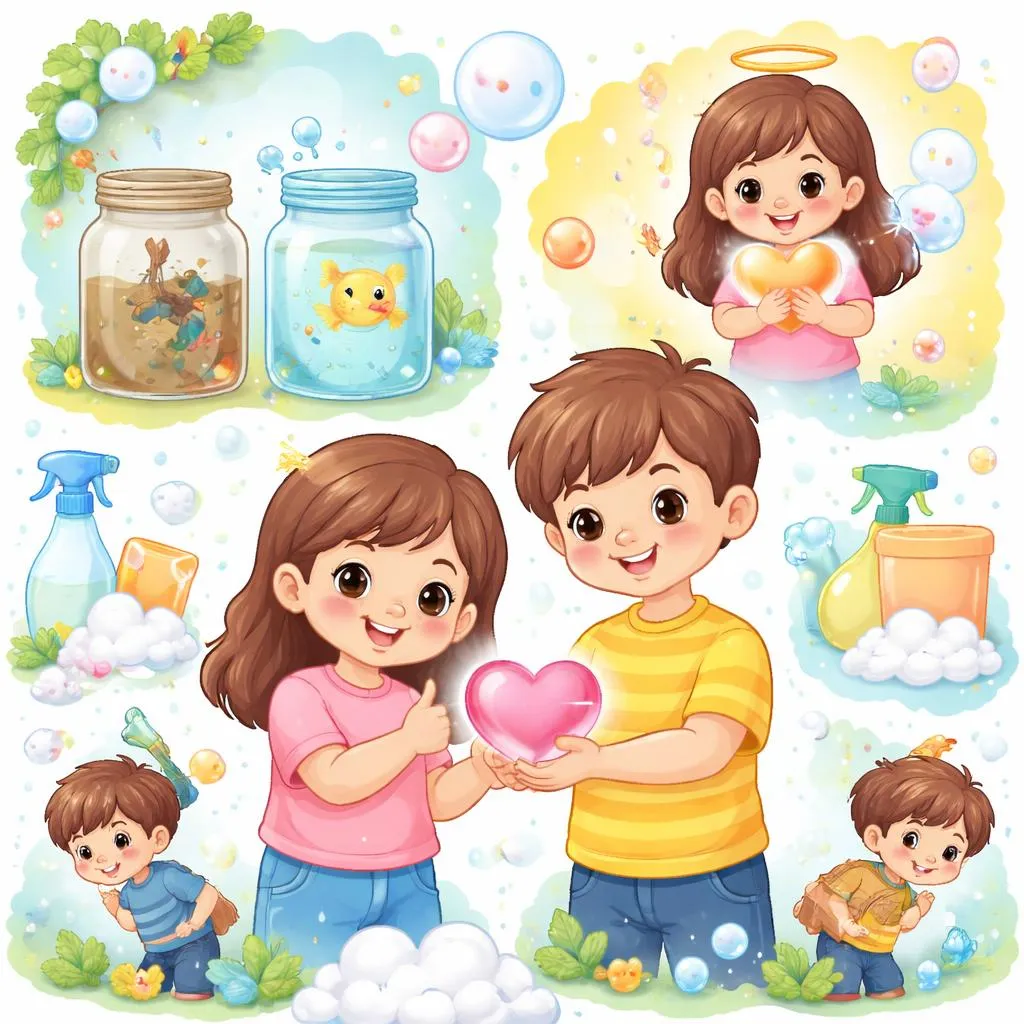

Every child values pure things. Clean water. Fresh air. A honest friend. English gives us a clean family of words for things that are unmixed and true. The root is “pure.” From this root come four more words. “Purify” means to make something pure. “Purity” names the state of being pure. “Purely” means in a pure way or completely. “Impure” is the opposite, meaning mixed with something bad. These five words help children talk about physical and moral cleanliness. Let us explore this clean family.
What Does “Same Word, Different Forms” Mean? One quality takes different word shapes. “Pure” is the adjective. Pure water has no dirt. “Purify” is the verb. Filters purify drinking water. “Purity” is the noun. The purity of gold is measured in karats. “Purely” is the adverb. She acted purely out of kindness. “Impure” is the opposite adjective. Impure salt has sand in it. Your child sees this pattern in other words. “Clean” becomes “cleanly.” “Clear” becomes “clarity.” “Pure” gives us even more options.
Personal Pronouns Change Their Form Pronouns shift shape too. “I” becomes “me.” “She” becomes “her.” “We” becomes “us.” This shows that English changes words for grammar. Our word family “pure” changes for grammar as well. But it also changes for meaning. An adjective describes. A verb shows action. A noun names a state. An adverb describes an action. Learning these roles helps your child talk about cleanliness and honesty clearly.
From Adjective to Verb to Noun to Adverb – One Family, Many Words “Pure” is the adjective. Pure honey has no added sugar. “Purify” is the verb. The plant will purify the waste water. “Purity” is the state noun. The purity of the diamond was perfect. “Purely” is the adverb. He made the decision purely for family reasons. “Impure” is the opposite adjective. Impure air can cause illness. This family gives your child five tools for understanding unmixed things. One root. Five ways to talk about cleanliness and honesty.
One Root, Many Roles – How Words Grow from Clean Water to Clean Hearts Let us follow a purity story. A child drinks pure water from a filter. The filter works to purify every drop. The child learns that water purity keeps us healthy. The child acts purely by telling the truth. Impure water would make people sick. See how “pure” runs through all five sentences. Each form adds a new layer. Your child can say “This is pure juice.” “A filter can purify water.” “The purity of the air matters.” “I helped purely because I wanted to.” “Don’t drink impure water.” One root tells a whole story of cleanliness and health.
Same Meaning, Different Jobs – Is It an Adjective or a Verb? How does your child know the job? Look at the sentence position. Before a noun or after “be,” use the adjective “pure.” Example: “That is pure silk.” After “can,” “will,” or “help,” use the verb “purify.” Example: “This machine can purify the air.” As a subject or object, use the noun “purity.” Example: “Purity is important in medicine.” Before a verb or at the end of a clause, use the adverb “purely.” Example: “She spoke purely from the heart.” Before a noun or after “be,” use “impure.” Example: “Impure metals can rust faster.” Endings give clues. “Pure” is the base adjective. “-ify” signals a verb meaning to make pure. “-ity” signals a state noun. “-ly” signals an adverb. “Im-” signals the opposite.
Adjectives and Adverbs – When Do We Add -ly? This family shows the “-ly” rule clearly. Take the adjective “pure.” Add “-ly” to make “purely.” No spelling change. Many adjectives work this way. “Quick” becomes “quickly.” “Kind” becomes “kindly.” “Pure” becomes “purely.” Also from “impure” we can make “impurely.” Example: “The silver was impurely mixed with copper.” That is advanced. Focus first on “purely” for doing something in a pure way.
Watch Out for Tricky Spelling Changes (Double Letters, y to i, and More) “Pure” has a silent “e” at the end. When we add “-ify” to make “purify,” we drop the “e.” “Pure” becomes “purify.” Add “y” after the “r”? No. “Puri” + “fy.” The “e” drops. When we add “-ity” to make “purity,” we drop the “e.” “Pure” becomes “purity.” The “e” drops. The “u” stays. When we add “-ly” to make “purely,” we keep the “e.” No change. “Pure” + “ly” = “purely.” When we add “im-” to make “impure,” we keep the “pure.” “Im” + “pure” = “impure.” The main challenge is dropping the “e” for “purify” and “purity.” Practice: pure — purify — purity — purely — impure.
Let’s Practice – Can You Choose the Right Form? Try these simple sentences with your child.
Drinking (pure / purify) water is important for health. (Answer: pure)
A filter can (pure / purify) dirty water. (Answer: purify)
The (purity / purely) of the diamond was perfect. (Answer: purity)
She helped (purity / purely) because she wanted to. (Answer: purely)
The sample was (impure / purity) because it had sand mixed in. (Answer: impure)
Make your own sentences from daily life. Say “Pure honey tastes sweet.” Say “We purify water by boiling it.” Say “The purity of the air is better after rain.” Say “I acted purely out of love.” Say “Impure gold is mixed with other metals.”
Tips for Parents – Help Your Child Learn Word Families in a Fun Way Talk about pure things at home. “Pure orange juice has no sugar added.” “Pure cotton feels soft.” “We purify our water with a filter.” “The purity of a gift is the thought behind it.” “A purely kind act expects nothing back.” “Impure water can make you sick.” This builds vocabulary and health awareness.
Play the purity game. Ask “Is this pure or impure?” “Water from the tap? Usually pure.” “Muddy water? Impure.” “Gold jewelry? Often not pure, it’s mixed.” “A friend who tells the truth? Pure in heart.” This builds critical thinking.
Read books about science, health, or character. Pause during reading. Ask “Is this substance pure?” Ask “How can we purify it?” Ask “Why is purity important here?” Ask “Did the character act purely?” Ask “What is impure in this situation?” These questions build comprehension.
Create a home purification experiment. Mix sand and water. Show impure water. Let it settle or use a coffee filter. Say “The filter purifies the water.” “The purity increases.” “Now the water is pure.” “This is purely a science experiment.” This hands-on learning builds science vocabulary.
Use “pure” for honesty. “A pure heart tells the truth.” “Purity in friendship means no lies.” “You acted purely when you confessed the mistake.” This builds character education.
Distinguish “pure” from “perfect.” Pure means unmixed. Perfect means without any flaw. “Pure water can still have minerals. Perfect water does not exist.” This nuance builds precise science thinking.
Now you have a complete guide. Value pure water and pure air. Learn to purify what is dirty. Protect the purity of your environment. Act purely with good motives. Avoid impure things for health and honesty. This word family does more than teach English. It teaches that pure things are precious. It teaches that purification takes effort. It teaches that your child’s heart can be purely kind. Keep purifying. Keep growing together. One word family at a time.