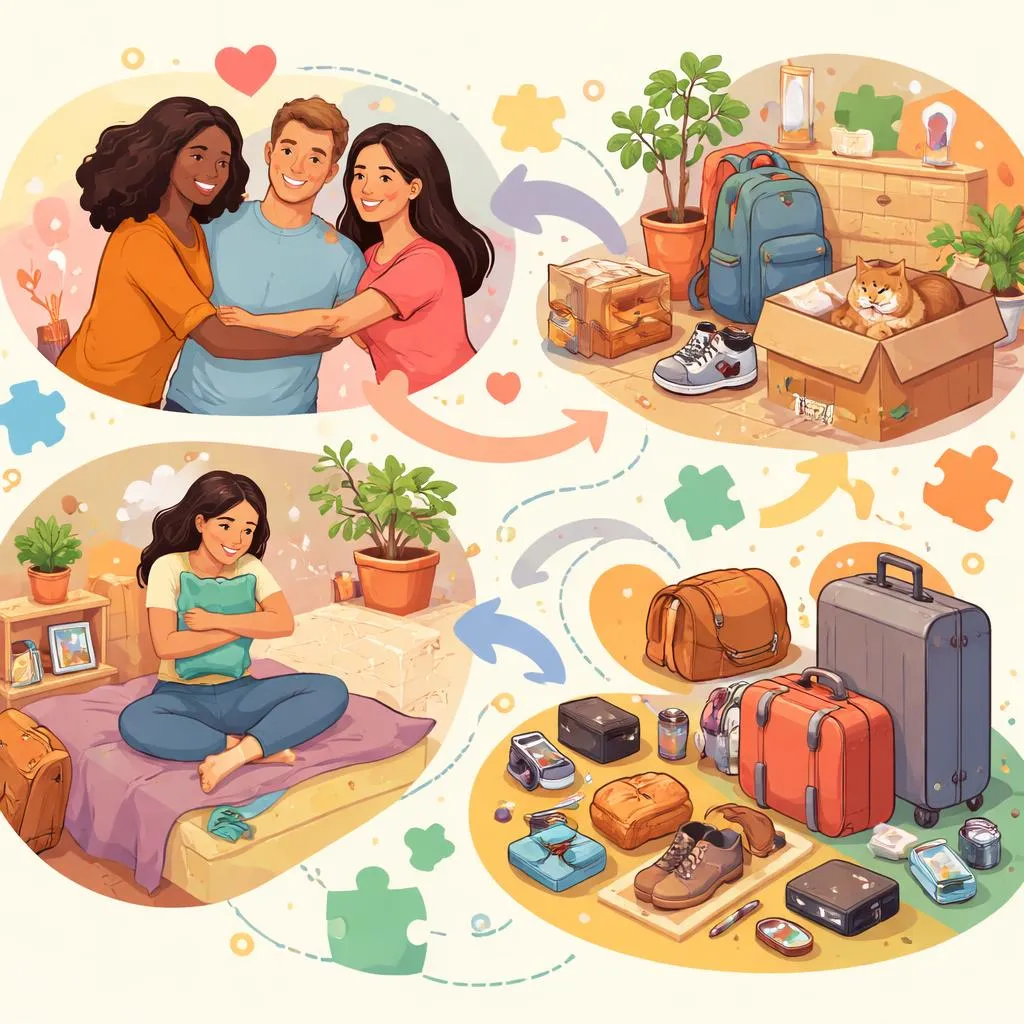

What Does “belong, belonging, belongings” Mean? English becomes easier when children see how words grow in families. The words belong, belonging, belongings come from one root, but each has a different job. Belong is a verb. It shows connection. It tells us where something fits or who owns it.
This book belongs to Mia.
Penguins belong in cold places.
We all want to belong in a group.
Children often first learn belong as “to be owned by,” but it also means “to fit” or “to be accepted.” Belonging can work in more than one way. It can be a noun or part of a verb phrase. As a noun:
A sense of belonging helps children feel safe.
As part of a verb:
The puppy is belonging nowhere. (This sounds unnatural. We usually say “The puppy belongs nowhere.”)
This teaches an important point. Some verbs, like belong, do not often use continuous forms. Belongings is a plural noun. It means personal things someone owns.
Pack your belongings before the trip.
The lost bag held all her belongings.
One root creates several useful words. This is how word families help vocabulary grow. Personal Pronouns Change Their Form Word families and pronouns both show change in English. Just as pronouns change:
I → me → my
he → him → his
Word families also shift forms:
belong (verb)
belonging (noun)
belongings (plural noun)
Children begin to notice patterns. Patterns make learning easier. “Belong” focuses on action or state. “Belonging” often focuses on feeling. “Belongings” focuses on objects. Though these words look similar, they do different jobs. That is the power of word families. From Verb to Noun to Adjective to Adverb – One Family, Many Words Some word families grow into verbs, nouns, adjectives, and adverbs. With belong, we mainly see: Verb: belong
These shoes belong to Dad.
Noun: belonging
Friendship gives a child belonging.
Plural Noun: belongings
Put your belongings in the locker.
This family does not commonly make an adverb or regular adjective, but it still teaches an important pattern. Children can ask:
Is this word doing an action?
Is it naming a feeling?
Is it naming objects?
That helps them choose the correct form. Notice the meaning shifts: Belong → fit or be owned Belonging → connection or acceptance Belongings → possessions One small root can carry many ideas. One Root, Many Roles – How Words Grow from Actions to Qualities Many children first meet belong in ownership sentences.
This pencil belongs to Leo.
Later they learn a deeper social meaning.
Every child wants to belong.
This use matters in emotional language. Schools often talk about belonging. Why? Because belonging means feeling included. It means:
being welcomed
being valued
being part of something
Children hear:
classroom belonging
community belonging
cultural belonging
This expands vocabulary while building social understanding. Then belongings adds another branch.
Don’t leave your belongings on the bus.
Same root. New role. New meaning. This is how English grows from one word into many useful tools. Same Meaning, Different Jobs – Is It a Verb or a Noun? Sometimes children know a word but use the wrong form. Look at these: ? I have many belong. ? I have many belongings. Why? Because objects need the noun belongings. Another example: ? I am belonging this club. ? I belong to this club. Here we need the verb belong. Another: ? My backpack is my belong. ? My backpack is one of my belongings. This is why grammar and meaning work together. Ask children: What job is the word doing? Action? Feeling? Thing? That question often leads to the right answer. Adjectives and Adverbs – When Do We Add -ly? Some word families teach adjective and adverb patterns. Quick → quickly Careful → carefully Children may wonder if belongingly exists. It does not work in normal modern English. That matters too. Learning word families includes learning what does not grow. Not every root makes every form. That is a useful lesson. With belong, focus on the real family:
belong
belonging
belongings
Mastering real forms matters more than inventing forms. Children gain confidence when they learn both possibilities and limits. Watch Out for Tricky Spelling Changes (Double Letters, y to i, and More) Word families often change spelling. Happy → happiness Carry → carried Run → running But belong is simpler. belong → belonging Just add -ing. No doubled consonant. No y-to-i change. That makes it beginner-friendly. Still, children may confuse: belonging belongings Only one small s changes the meaning. Compare: belonging A feeling of connection. belongings Personal possessions. Examples:
A sense of belonging matters.
Pack your belongings carefully.
One letter changes everything. That is a great spelling lesson. Let’s Practice – Can You Choose the Right Form? Try these simple choices.
This jacket ______ to my brother. Answer: belongs
Good friendships create a sense of ______. Answer: belonging
Put your ______ in the suitcase. Answer: belongings
Now try sentence building. Use belong:
I belong to the art club.
Use belonging:
Our school builds belonging.
Use belongings:
My belongings are in my backpack.
Mini challenge: Which word fits? “Children need a feeling of ______.” Not belongings. Not belong. Correct answer: belonging These little practice moments build strong vocabulary. Common Mistakes Children Make with belong, belonging, belongings Many learners mix ownership and possession. They say: ? This belongs of me. ? This belongs to me. Remember: belong takes to. Always: belong to someone belong to a place belong to a group Another mistake: ? I packed my belonging. ? I packed my belongings. Because personal possessions usually use the plural form. Another: ? I am belong here. ? I belong here. No helping verb needed. Simple present works. Fixing these common errors early helps children write more naturally. Why “Belonging” Is More Than a Vocabulary Word Some words teach grammar. Some words also teach life ideas. Belonging does both. Children hear this word in stories. Characters search for belonging. Families create belonging. Schools support belonging. This vocabulary carries emotional meaning. When children understand that belong can mean “fit in,” their reading grows deeper. Example: “The young bird finally found where it belonged.” This is not about ownership. It is about identity. That is advanced meaning through simple vocabulary. Very powerful for young learners. Fun Ways to Remember the Differences Use a memory trick: Belong = action I belong here. Belonging = feeling I feel belonging. Belongings = things These are my things. Action. Feeling. Things. Easy pattern. You can also use picture learning. Draw:
a club for belong
a happy group for belonging
a backpack for belongings
Visual learning helps children remember faster. Stories help too. Example story: Mila joined a music club. She felt a strong sense of belonging. She put her belongings by the door before practice. One tiny story uses all three forms. That builds lasting memory. Tips for Parents – Help Your Child Learn Word Families in a Fun Way Word families grow best through everyday talk. Use natural moments. At home say: “These toys belong in this box.” During travel say: “Check your belongings.” After school ask: “What makes you feel belonging in your classroom?” Vocabulary becomes real when children hear it in life. Word-family games help too. Try making root trees. Write: belong Then grow branches: belonging belongings Children love seeing words “grow.” Reading books also helps. When a story uses belong or belonging, pause and ask: Is this talking about ownership? Or fitting in? That small question develops deep language thinking. Most importantly, praise curiosity. When children notice how one root creates many meanings, they begin thinking like real language learners. And that is where strong English begins. Words are not isolated pieces. They live in families. The family of belong, belonging, belongings teaches grammar, meaning, spelling, and even human connection. A child who understands these three forms learns much more than vocabulary. They learn how English builds meaning from one root. And they learn a beautiful idea too: People want to belong. Our belongings may be things we carry. But belonging is something we feel. That is a word worth learning well.