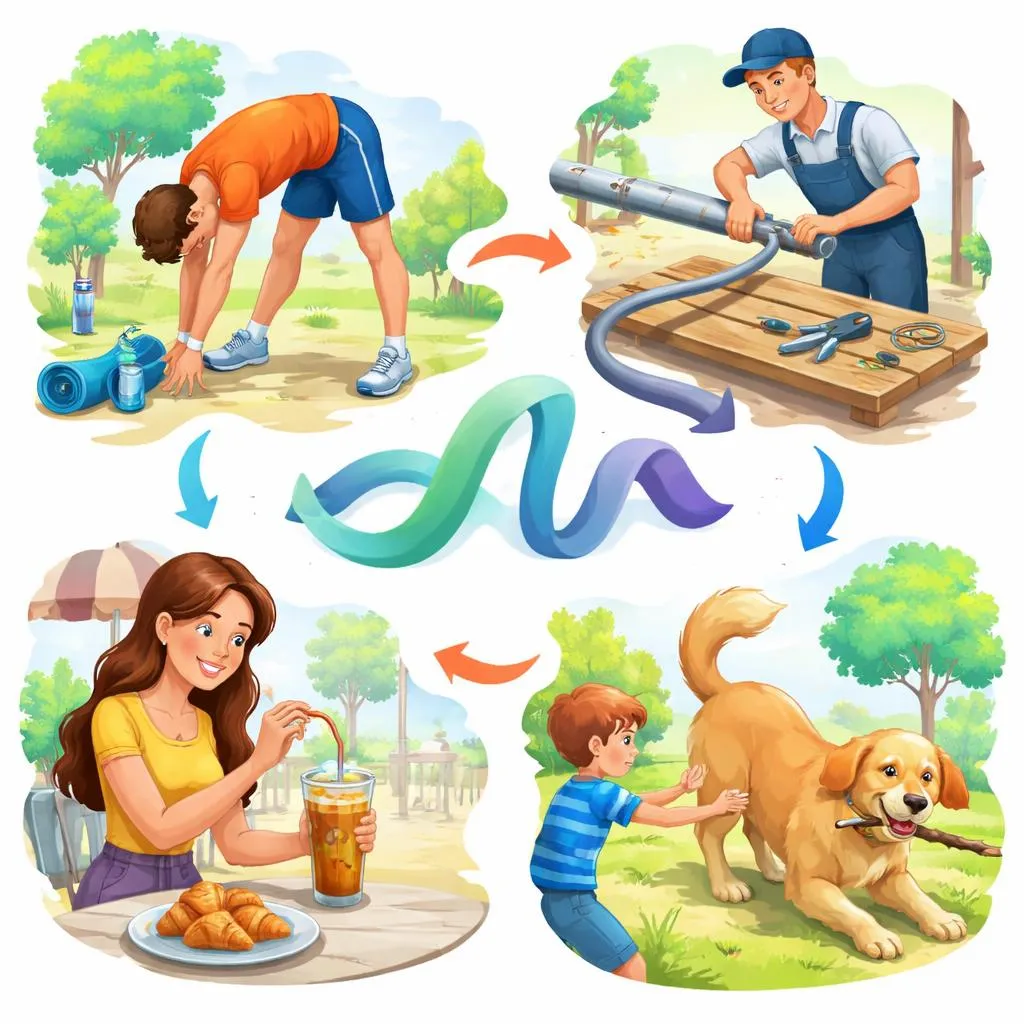

What Does “Same Word, Different Forms” Mean?
Many English words grow into families. One root can create many forms. This helps children build vocabulary in a natural way.
The word family bend, bender, bending, bent is a great example.
Bend is usually a verb. It means to curve, move, or shape something.
Bend your knees. Do not bend the paper. Trees bend in strong wind.
Bender is a noun. It can mean a tool that bends things.
A pipe bender shapes metal.
In some contexts, bender has other meanings, but children usually first learn the tool meaning.
Bending can act as a verb form or a noun.
She is bending the wire. Bending takes practice.
Bent can be the past tense of bend.
He bent the spoon.
It can also be an adjective.
The ruler is bent.
One root gives many forms. Each form has a special job.
That is how word families help children grow in English.
Personal Pronouns Change Their Form
Children already know forms can change.
Pronouns do this:
I → me → my she → her → hers
Words do it too.
Look at this family:
bend bender bending bent
The root stays.
The job changes.
Meaning can shift too.
Bend shows action.
Bender names a thing.
Bending may show action in progress.
Bent may show past action or describe shape.
Seeing these changes helps children notice patterns.
Patterns make grammar easier.
From Verb to Noun to Adjective to Adverb – One Family, Many Words
Word families often grow across grammar roles.
With this family we see:
Verb — bend
Bend the branch gently.
Noun — bender
The mechanic used a pipe bender.
Verb form or noun — bending
She is bending down. Bending metal takes skill.
Adjective or past tense — bent
The bent nail cannot be used. He bent the wire.
This family does not commonly create a regular adverb.
That matters too.
Not every root grows into every form.
Children learn real language patterns this way.
They begin asking:
Is this an action?
Is it naming a tool?
Is it describing shape?
That thinking builds grammar awareness.
One Root, Many Roles – How Words Grow from Actions to Qualities
The root bend starts with movement.
Something changes shape.
Bend the straw. Bend your arm.
Then the root expands.
Bending often focuses on process.
Bending takes patience.
Now the action becomes an idea.
Then bent can describe quality.
A bent frame looks crooked.
Action became description.
That is how words grow.
Even bent has another interesting meaning.
Sometimes it means a natural tendency.
She has a musical bent.
Here bent means talent or strong interest.
Children may meet this meaning in books later.
One small root can carry many layers.
That is why word families matter.
Same Meaning, Different Jobs – Is It a Verb or a Noun?
Children often know a word but choose the wrong form.
Look at these:
? I used a bend to shape the pipe. ? I used a bender to shape the pipe.
Why?
A tool needs a noun.
Use bender.
Another:
? The stick is bending yesterday. ? The stick bent yesterday.
Past action needs bent.
Another:
? This is a bend ruler. ? This is a bent ruler.
To describe shape, use bent.
Ask this question:
What job is the word doing?
Action?
Object?
Description?
That often leads to the correct form.
Grammar starts making sense.
Adjectives and Adverbs – When Do We Add -ly?
Children often learn:
Quick → quickly Slow → slowly
They may wonder:
Can we say bently?
No.
That is not standard English.
Again, not every root makes every form.
That is an important lesson.
Focus on real forms:
bend bender bending bent
Also notice bent acts like an adjective.
a bent spoon a bent branch
This teaches that some past forms can become describing words.
That pattern appears often.
broken toy fallen leaves bent wire
Children begin spotting these in reading.
That grows confidence.
Watch Out for Tricky Spelling Changes (Double Letters, y to i, and More)
Word families often change spelling.
Run → running Happy → happier
This family has a special change too.
bend → bent
The d changes to t.
That is irregular.
Children need to notice it.
It does not become bended in normal everyday use.
We say:
He bent the rod.
Not:
He bended the rod.
This is important.
Irregular forms appear often in English.
Also notice:
bend → bending
Just add -ing.
No doubled consonant.
Simple and useful.
Small spelling shifts can change meaning.
Learning to notice them helps children read and write more accurately.
Let’s Practice – Can You Choose the Right Form?
Choose the correct word.
Please ___ your elbows. Answer: bend The metal tube looked ___. Answer: bent The worker used a pipe ___. Answer: bender ___ the wire takes skill. Answer: Bending
Now try sentence building.
Use bend:
Do not bend the card.
Use bender:
The plumber needs a bender.
Use bending:
Bending forward stretches muscles.
Use bent:
The key is bent.
Mini challenge:
Which word fits?
“The old nail was badly _____.”
Correct answer:
bent
Little practice helps word forms stick.
Common Mistakes Children Make with bend, bender, bending, bent
Some learners confuse bending and bent.
? The branch is benting. ? The branch is bending.
Another:
? Yesterday I bend the wire. ? Yesterday I bent the wire.
Present and past forms matter.
Another:
? The worker used a bending. ? The worker used a bender.
Action is not a tool.
Children improve when they match meaning and grammar.
Encourage them to check:
Is this present?
Past?
Object?
Description?
These questions build accuracy.
How These Words Appear in Everyday Reading
Children see this word family often.
In stories:
The road bends near the river.
In science:
Heat can bend plastic.
In sports:
Players bend their knees.
In tools and machines:
A wire bender shapes metal.
In descriptions:
The old sign looked bent.
One family appears in many subjects.
That helps children remember it.
Vocabulary grows faster when words appear in real contexts.
Reading makes that happen.
Bend and Bent in Idioms and Expressions
Some advanced phrases use this family too.
Bend the rules
This means not follow rules exactly.
On bended knee
This means kneeling.
Children may see it in stories.
Bent on something
This means strongly determined.
He is bent on winning.
This does not mean physically curved.
It means mentally focused.
This shows how words can grow beyond literal meaning.
Very exciting for young learners.
One root can support simple and advanced English.
Tips for Parents – Help Your Child Learn Word Families in a Fun Way
Use movement.
Act out the words.
Bend an arm.
Point to something bent.
Pretend to use a bender.
Physical actions help memory.
Try word sorting games.
Make columns:
Action — bend Tool — bender Process — bending Description — bent
Children enjoy sorting.
Use drawing too.
Draw:
a bent spoon someone bending a pipe bender
Pictures strengthen learning.
Read aloud and pause at word families.
Ask:
Which form is this?
What job does it do?
That small question grows grammar thinking.
Most of all, celebrate noticing.
When children spot patterns, they become stronger readers.
That is real progress.
The family bend, bender, bending, bent teaches much more than one root.
It teaches actions.
It teaches objects.
It teaches description.
It teaches spelling changes.
It teaches how English grows.
A child who understands one word family can understand many more.
That is how vocabulary expands step by step.
Words bend into new forms.
Meanings bend too.
And every new form gives children another way to express ideas clearly.