
What Does “Same Word, Different Forms” Mean?
Many English words grow in families. One root can create many related forms. Each form can do a different job.
The family bloom, blooming, bloomy, blossom is a beautiful example.
Bloom can be a verb.
Flowers bloom in spring.
It can also be a noun.
The rose is in full bloom.
One word can do two jobs.
Blooming can be a verb form.
The tulips are blooming.
It can also be an adjective.
A blooming garden looked lovely.
Bloomy is an adjective.
The field looked bloomy in spring.
It describes something full of blooms or flower-like freshness.
Blossom can be a noun or a verb.
Cherry blossoms fall gently. Trees blossom in April.
These words connect, but each has its own role.
That is the power of word families.
Personal Pronouns Change Their Form
Children already know forms can change.
Pronouns do it:
I → me → my he → him → his
Word families do it too.
Look at this family:
bloom blooming bloomy blossom
The root idea stays.
Growth.
Flowers.
Opening.
But the forms shift.
Bloom often shows action.
Blooming can show ongoing action.
Bloomy describes.
Blossom may show action or name flowers.
Patterns like this help children understand English structure.
Patterns make learning easier.
From Verb to Noun to Adjective to Adverb – One Family, Many Words
This family stretches across grammar.
Verb — bloom
Sunflowers bloom in summer.
Noun — bloom
The garden reached full bloom.
Verb form or adjective — blooming
Roses are blooming. A blooming tree shaded the yard.
Adjective — bloomy
The hillside looked bloomy.
Noun or verb — blossom
Apple blossom smells sweet. Apple trees blossom each spring.
One root creates many roles.
That is exciting vocabulary growth.
This family does not commonly form a regular adverb children use often.
That matters too.
Not every root grows into every form.
Real patterns matter most.
One Root, Many Roles – How Words Grow from Actions to Qualities
The root bloom begins as action.
A flower opens.
Simple image.
Easy for children.
Then meaning grows.
Blooming focuses on process.
The flowers are blooming.
Now the action feels alive.
Then bloomy turns action into description.
a bloomy meadow
Now the root becomes quality.
Then blossom expands meaning.
It can mean flowers.
It can also mean grow or develop.
Friendship can blossom.
Now the word becomes figurative too.
Action became process.
Process became quality.
Then quality became metaphor.
That is how language grows.
Same Meaning, Different Jobs – Is It a Verb or a Noun?
Children sometimes mix forms.
Look at this:
? The tree is blossom. ? The tree is blooming.
Ongoing action needs blooming.
Another:
? The apple tree has many blooming. ? The apple tree has many blossoms.
Flower parts need blossoms.
Another:
? The hill looked bloom. ? The hill looked bloomy.
Description needs bloomy.
Ask:
Is this action?
A flower?
A description?
That often reveals the correct form.
Grammar becomes clearer.
Adjectives and Adverbs – When Do We Add -ly?
Children often learn:
Quick → quickly Soft → softly
But this family teaches another pattern.
Sometimes we use adjectives without -ly forms.
Bloomy is an adjective.
Bloomingly is not a normal everyday word.
That matters.
Not every adjective makes a common adverb.
Focus on real usage.
Also compare:
blooming as adjective
blooming roses
bloomy as adjective
bloomy hillside
They are related.
But not identical.
Blooming often focuses on active flowering.
Bloomy suggests covered in bloom or flower-rich.
These shades of meaning help vocabulary grow deeper.
Watch Out for Tricky Spelling Changes (Double Letters, y to i, and More)
This family has useful spelling patterns.
bloom → blooming
Add -ing.
Simple.
No doubled letters.
Now:
bloom → bloomy
Add -y.
Another common word-building pattern.
Then:
bloom and blossom
These are related, but not simple suffix changes.
That teaches an important lesson.
Some word families include close cousins, not only direct endings.
English grows in families and networks.
Children may also confuse:
bloom blossom
They overlap, but differ.
Bloom often means flowering in general.
Blossom often refers especially to flowers on trees.
Interesting distinction.
Good vocabulary noticing.
Let’s Practice – Can You Choose the Right Form?
Choose the correct word.
Roses ___ in spring. Answer: bloom The garden is ___ beautifully. Answer: blooming The valley looked soft and ___. Answer: bloomy Cherry trees ___ in April. Answer: blossom
Now build sentences.
Use bloom:
Lilies bloom in summer.
Use blooming:
The garden is blooming.
Use bloomy:
We walked through a bloomy field.
Use blossom:
Peach trees blossom early.
Mini challenge:
Which fits?
“The rose reached full ______.”
Correct answer:
bloom
Practice helps children remember form and meaning.
Common Mistakes Children Make with This Word Family
Many learners mix bloom and blossom.
? The tree is full of bloom flowers. ? The tree is full of blossoms.
Specific flowers need blossoms.
Another:
? The flowers are blossom. ? The flowers are blooming.
Action needs blooming.
Another:
? The field looked bloom. ? The field looked bloomy.
Description needs adjective form.
Small endings matter.
So do word choices.
That is how vocabulary becomes precise.
Literal and Figurative Meanings
This family has beautiful figurative meanings too.
Ideas can bloom.
Not real flowers.
Ideas grow.
Friendships blossom.
Relationships grow stronger.
A child can blossom.
This means develop and thrive.
Children often meet these meanings in stories.
They are powerful.
They show words can grow beyond literal meanings.
That makes reading richer.
How These Words Appear in Books and Nature Topics
This family appears often.
In science books:
Plants bloom in warm weather.
In poetry:
Blossoms drift in wind.
In stories:
A shy child blossomed.
In nature writing:
A bloomy meadow stretched wide.
One family appears across subjects.
That helps memory.
Words learned in many contexts stay strong.
That is natural vocabulary growth.
Word Patterns Children Can Compare
Compare:
bloom → blooming
Like:
sing → singing play → playing
Now compare:
bloom → bloomy
Like:
cloud → cloudy wind → windy
Now compare related cousins:
bloom blossom
Some word relatives are siblings, not just suffix forms.
That is an exciting idea for children.
Language is a family tree.
Not only straight lines.
Tips for Parents – Help Your Child Learn Word Families in a Fun Way
Use nature walks.
Point to flowers.
Ask:
Are they blooming?
Are they blossoms?
Real examples help memory.
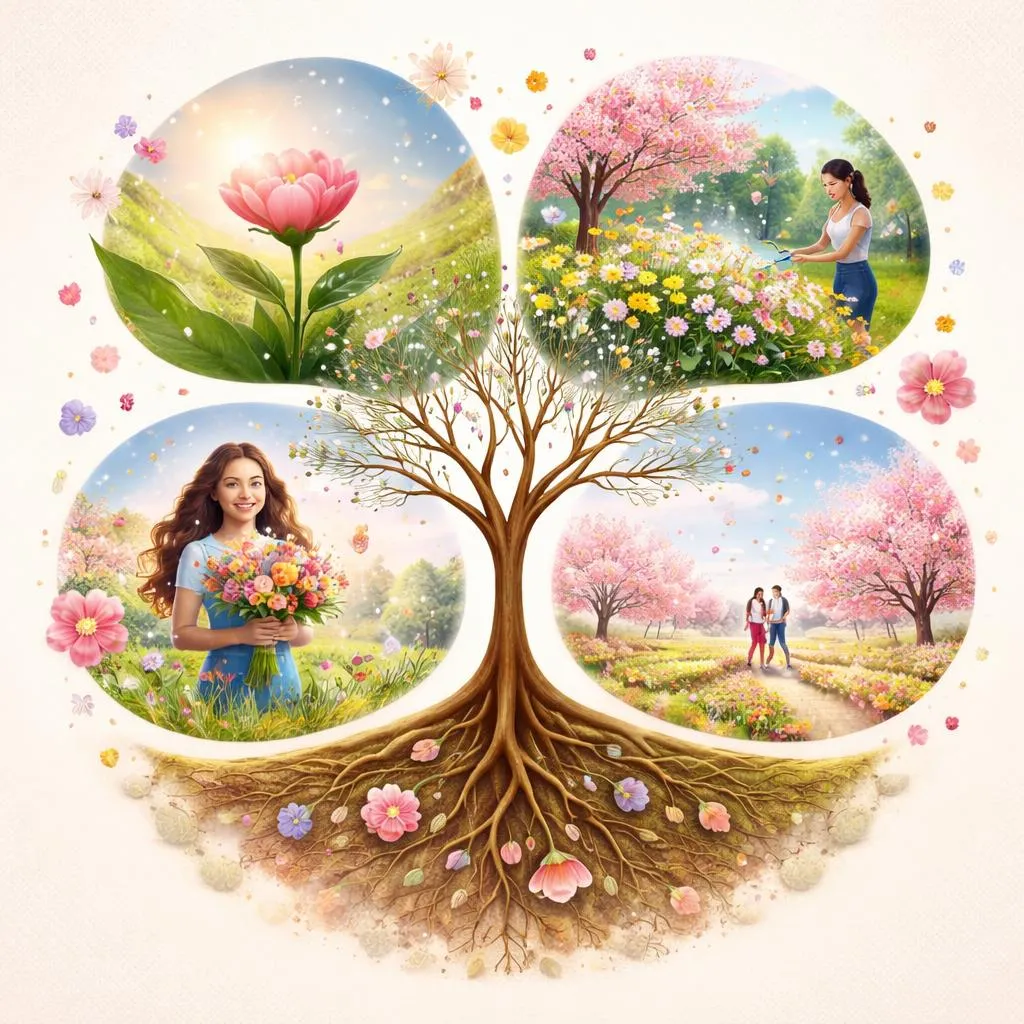
Draw a word family tree.
Put bloom in the center.
Add:
blooming bloomy blossom
Let children decorate it with flowers.
Use comparison games.
Action or description?
Flower or process?
Children enjoy sorting.
Read spring poems together.
Notice each form.
Ask:
Why use blossom here, not bloom?
That builds word awareness.
Try sentence swaps.
Flowers bloom. The flowers are blooming. The meadow is bloomy. Trees blossom in spring.
One root idea.
Many forms.
Wonderful practice.
Most of all, connect vocabulary with beauty.
These words feel alive.
Children remember living words.
The family bloom, blooming, bloomy, blossom teaches much more than one root.
It teaches verbs and nouns.
It teaches adjectives.
It teaches figurative meaning.
It teaches how words can grow like plants.
That is a beautiful lesson in English.
Vocabulary blooms the same way flowers do.
Slowly.
Naturally.
And with care, every young learner can blossom too.