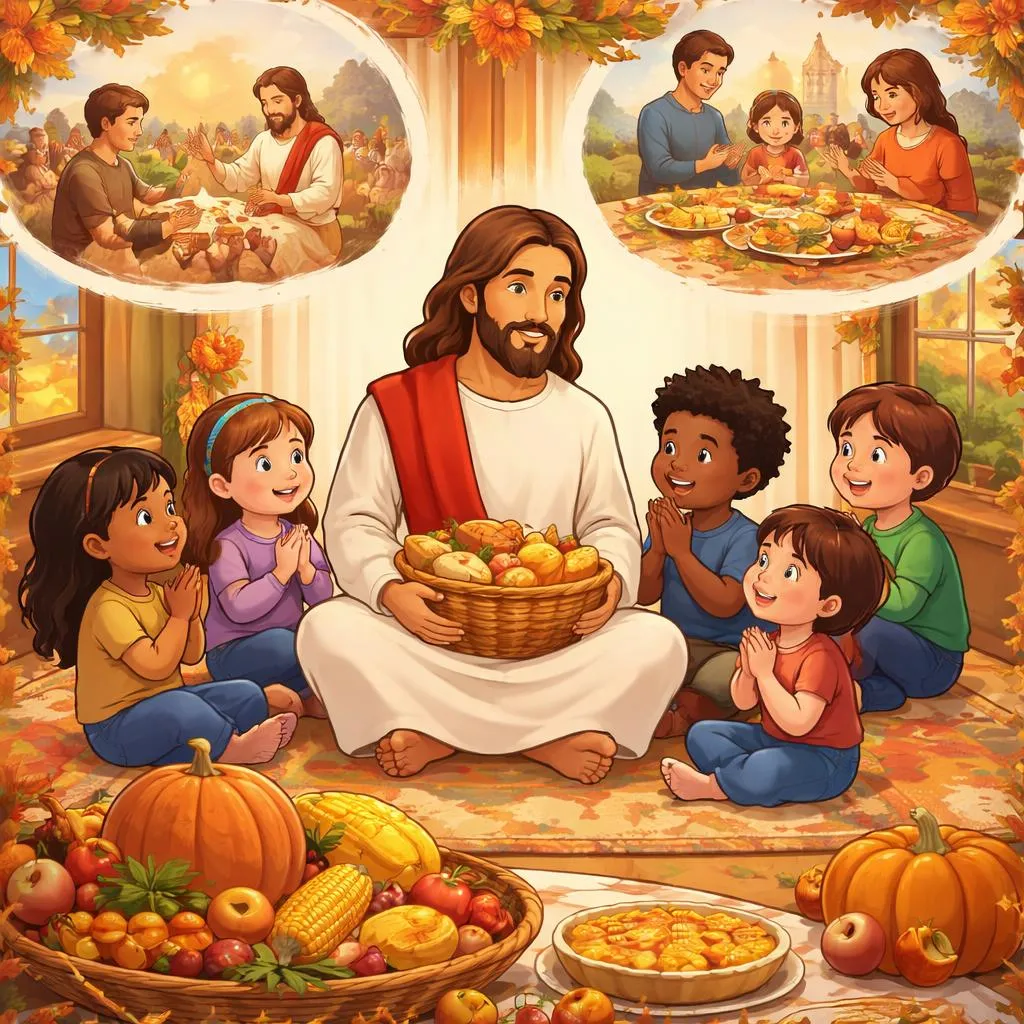

What Are Children's Bible Stories on Thanksgiving? Let us explore these meaningful biblical narratives together. Children's Bible stories on Thanksgiving focus on gratitude throughout scripture. They are not about the American holiday of Thanksgiving specifically. Instead they highlight times when God's people gave thanks. These stories appear throughout both Old and New Testaments. They show characters thanking God for provision and protection. The stories model gratitude in good times and hard times both. Children learn that thankfulness is a daily practice always. The Bible contains many examples of thanksgiving to explore. These narratives connect naturally to holiday gratitude themes. They provide a biblical foundation for understanding thankfulness. The stories help children see gratitude as faith in action.
Meaning and Purpose of Biblical Gratitude Stories These stories serve several important purposes in faith formation. They teach children that gratitude pleases God always. The Bible repeatedly commands giving thanks to the Lord. The stories also show gratitude as a response to God's goodness. Characters thank God after receiving help or provision. The narratives model thanksgiving in community celebrations together. God's people often gathered to offer thanks corporately. The stories also prepare children for worship participation. Understanding biblical gratitude enriches church experience greatly. The narratives connect everyday blessings to God's character. Children learn that every good gift comes from above. This builds a foundation of trust and appreciation lifelong.
Categories of Thanksgiving Stories in the Bible We can organize biblical thanksgiving stories into helpful categories. Creation stories show God's goodness in making the world. Everything God made was good and worthy of thanks. The Psalms contain many songs of thanksgiving completely. David and others wrote songs praising God's faithfulness. The wilderness stories show God providing for Israel. Manna from heaven and water from rocks appeared. Harvest festivals celebrated God's provision annually. The Feast of Tabernacles thanked God for the harvest. Jesus gave thanks before feeding thousands of people. He thanked God for the loaves and fishes provided. Paul and Silas sang praises while in prison. Their gratitude led to miraculous freedom eventually. Mary's song of praise thanks God for choosing her. Hannah's prayer thanks God for answering her petition.
Daily Life Connections Through Bible Stories These stories connect to children's experiences in meaningful ways. Thanking parents for meals parallels thanking God for provision. Children understand gratitude toward those who care for them. Celebrating birthdays connects to celebrating God's goodness. Special occasions naturally prompt thankfulness and joy. Receiving gifts relates to recognizing God's blessings. All good gifts ultimately come from God above. Helping others connects to gratitude for our own help. When we receive help, we learn to help others too. Singing thank you songs parallels Psalms of thanksgiving. Children naturally express gratitude through music and art. We can point out these connections during reading. "We thank God for food just like Jesus did." "Your thank you song is like the Psalms David wrote."
Vocabulary Learning from Thanksgiving Stories Bible thanksgiving stories introduce rich spiritual vocabulary naturally. Gratitude means being thankful and showing appreciation. Thanks appears throughout scripture in many contexts. Praise means expressing approval and admiration to God. Worship means showing reverence and adoration toward God. Blessing means a gift from God or words of favor. Provision means God supplying what people need daily. Harvest means gathering crops God made grow abundantly. Feast means a special meal celebrating God's goodness. Offering means giving something back to God willingly. Psalm means a sacred song or poem of praise. We can teach these words with examples from stories. Use them in sentences about biblical events. Create picture cards showing vocabulary in context.
Phonics Points in Thanksgiving Bible Stories Thanksgiving stories provide useful phonics practice with sacred language. Thanks has the TH digraph and ANK ending. Praise has the PR blend and long A and silent E. Worship has the WOR combination and SH digraph. Harvest has the HAR blend and short E and ST blend. Feast has the F sound and EA digraph and ST blend. Biblical names offer valuable sound patterns. Hannah has the short A and short A. David has the long A and short I. Miriam has the short I and long A. Jesus has the long E and short U. Paul has the PAU blend and L sound. Silas has the long I and short A. Place names provide phonics elements. Jerusalem has the soft G and short U. Galilee has the short A and long I. Canaan has the long A and short A. We can focus on one sound pattern from each story. Find all words with that sound in the biblical account. Write them on corn or leaf shapes for practice.
Grammar Patterns in Thanksgiving Narratives Bible stories model useful grammar for young readers consistently. Past tense carries the main historical narrative throughout. "The people gathered to thank God for the harvest." Present tense appears in Psalms and prayers still used. "Give thanks to the Lord for he is good." Future tense shows promises and hope ahead. "I will praise you forever for what you have done." Questions explore character responses to God. "What shall I render to the Lord for all his benefits?" Commands appear in instructions about worship. "Enter his gates with thanksgiving and his courts with praise." Descriptive language paints worship scenes vividly. "The joyful, singing crowd filled the temple courts with sound." Prepositional phrases describe locations and positions. "In the temple, before the altar, with raised hands." We can point out these patterns during reading.
Learning Activities for Thanksgiving Bible Stories Many activities deepen understanding of biblical gratitude. Create a gratitude tree with paper leaves for blessings. Write one blessing on each leaf and add to branches. Make a thankful journal listing things to thank God for. Add new items each day throughout the month. Act out thanksgiving stories from the Bible together. Hannah praying, David dancing, Jesus feeding thousands. Create a harvest basket with pictures of blessings. Draw food, family, home, and other provisions. Sing Psalms of thanksgiving set to simple melodies. Children learn gratitude through music and repetition. Write thank you prayers to God for specific blessings. Use the Psalms as models for prayer writing. These activities make biblical gratitude tangible and personal.
Printable Materials for Thanksgiving Learning Printable resources support deep engagement with thanksgiving themes. Create a gratitude journal template with daily prompts. "Today I thank God for..." with space to draw. Design vocabulary cards with thanksgiving words and definitions. Thanks, praise, worship, harvest, feast, blessing included. Make a Psalms of thanks booklet with selected verses. Children illustrate each Psalm page creatively. Create a thank you prayer template with sentence starters. "Thank you God for..." "I praise you because..." Design a harvest coloring page showing biblical scenes. Ruth gathering grain, Jesus feeding thousands, Psalms celebration. Make a comparison chart for thanksgiving in different stories. List who thanked God and what they thanked for. These printables structure gratitude learning activities effectively.
Educational Games About Biblical Gratitude Games make thanksgiving learning playful and interactive. Play "Thanksgiving Charades" acting out Bible gratitude stories. Hannah praying, David dancing, Paul singing in prison. Create "Psalm Match" pairing Psalm numbers with first lines. "Give thanks to the Lord" matches Psalm 136. Play "Gratitude Scavenger Hunt" finding things to thank God for. Look around room and name blessings from God. Design "Thankful Bingo" with blessings on cards. Mark when you identify each blessing in life. Play "Who Gave Thanks?" matching characters with their stories. Match Hannah with baby Samuel, David with Psalms. Create "Harvest Relay" gathering pretend crops and foods. Thank God for each item as it is collected. These games build gratitude awareness through active participation.
Teaching Thanksgiving Through Old Testament Stories The Old Testament contains many thanksgiving examples for children. Hannah's prayer thanks God for answering her petition. She had wanted a child for many long years. God gave her Samuel, and she gave him back to God. Her song of praise models complete gratitude always. David's Psalms overflow with thanksgiving continually. He thanked God in good times and hard times both. The Psalms give children words for their own prayers. Israel celebrated harvest festivals with great thanksgiving. The Feast of Tabernacles remembered God's wilderness provision. Families gathered to thank God for crops gathered. Solomon's temple dedication included massive thanksgiving celebration. The people praised God for his faithful promises kept. Daniel thanked God even when it meant danger. He prayed facing Jerusalem despite the law against it.
Teaching Thanksgiving Through New Testament Stories The New Testament continues thanksgiving examples for children. Jesus gave thanks before feeding thousands of people. He thanked God for the loaves and fishes provided. This teaches gratitude even when resources seem small. Jesus thanked God at the Last Supper with disciples. He transformed Passover into communion thanksgiving. Mary's Magnificat thanks God for choosing her. Her song praises God for looking on her humility. The angel told Mary she would bear the Savior. She responded with beautiful words of gratitude. Paul and Silas sang praises while in prison. Their thanksgiving led to earthquake and freedom. Paul's letters constantly encourage giving thanks always. "In everything give thanks" he wrote to churches. The early church devoted themselves to thanksgiving continually. They broke bread with glad and generous hearts.
Connecting Bible Stories to Modern Thanksgiving Bible stories enrich modern Thanksgiving celebrations significantly. Reading these stories before holiday meals adds meaning. Families can discuss what they thank God for specifically. The stories provide language for gratitude prayers together. Children learn to express thanks using biblical words. The narratives also connect holiday traditions to faith. Pilgrims thanked God like Israelites before them. The harvest celebration mirrors biblical harvest festivals. Giving thanks around tables follows biblical patterns. God's people always gathered to praise together. The stories also put modern abundance in perspective. Compared to biblical times, we have so much more. This awareness deepens genuine gratitude and generosity.
The Practice of Daily Gratitude Bible stories encourage gratitude as daily practice, not just holiday. Daniel prayed and gave thanks three times daily. David praised God at morning, noon, and night. Jesus regularly gave thanks before meals always. Paul encouraged constant prayer and thanksgiving continually. Children can develop habits of daily gratitude too. Morning thanks for new day and night for blessings. Mealtime thanks for food before eating together. Bedtime thanks for the day just completed. These small practices build grateful hearts over time. The Bible models this pattern of regular thanksgiving. It becomes natural rather than forced or artificial. Children grow up with gratitude woven into daily life.
Why Gratitude Matters in Faith Biblical thanksgiving is central to healthy faith development. Gratitude acknowledges God as source of all goodness. It counters entitlement and selfishness in hearts. Thankful people recognize their dependence on God always. Gratitude also builds trust during difficult circumstances. Remembering past faithfulness helps face future trials. The Psalms often recall what God did before. This memory fuels present trust and hope ahead. Gratitude also draws us closer to God relationally. Thankfulness opens hearts to deeper intimacy with Him. It shifts focus from what we lack to what we have. This perspective brings peace and contentment daily. Teaching children gratitude builds resilient faith for life.