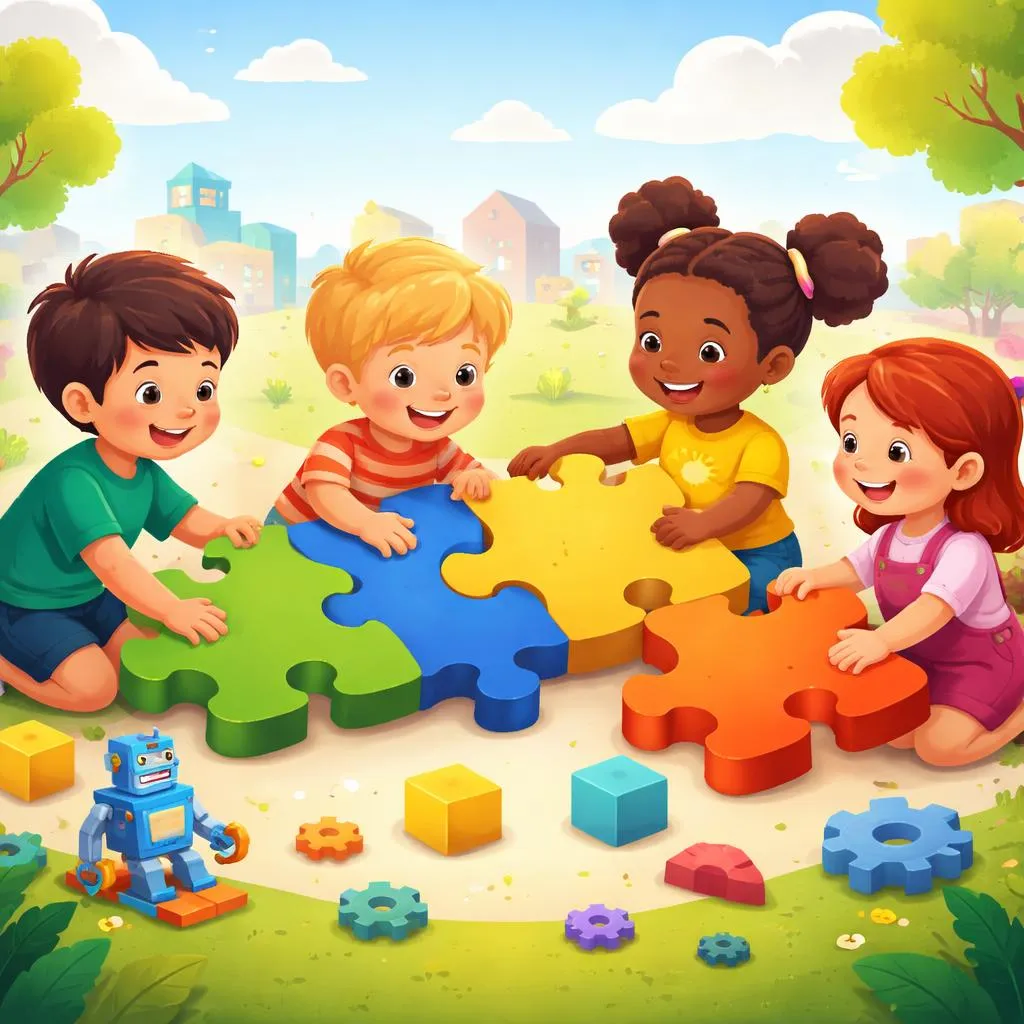

We live in a world of connections. Pieces join together to make something whole. People join together to form families and teams. The English language has a strong word family for this idea. The root is “join.” From this root come three more words. “Joint” names the place where two things connect. “Joiner” names a person who connects things. “Joining” describes the action of coming together. These four words help children understand how things and people work as one. Let us explore this practical family.
What Does “Same Word, Different Forms” Mean? One action produces many word shapes. “Join” means to put together or become part of something. “Joint” is the noun for the connection point. “Joiner” is the person who does the joining. “Joining” can be a noun or an adjective. As a noun, joining means the act of connecting. As an adjective, joining describes something that connects. Your child sees this pattern in other words. “Connect” becomes “connection” and “connector.” “Join” follows the same logic. Learn the root. Then add endings.
Personal Pronouns Change Their Form Pronouns shift shape too. “I” becomes “me.” “We” becomes “us.” “They” becomes “them.” This shows that English changes words for different grammar jobs. Our word family “join” changes for grammar jobs as well. But it also changes the meaning. A verb shows action. A noun shows a thing or person. An adjective describes. A gerund (joining) acts like a noun. Learning these roles helps your child use “join” words correctly.
From Verb to Noun to Adjective – One Family, Many Words “Join” is the verb. You join two puzzle pieces. “Joint” is the noun. The place where the pieces meet is the joint. “Joiner” is also a noun. It names a person who joins things. A carpenter is a joiner. “Joining” can be a noun. The joining of two parts takes care. “Joining” can also be an adjective. A joining piece connects everything. This family gives your child three nouns and one verb from one root. That is efficient learning.
One Root, Many Roles – How Words Grow from Actions to Qualities Let us follow a real example. A child wants to build a long train track. The child joins two pieces of track together. The joint between them must be tight. The child becomes a joiner of tracks. The joining process takes focus. See how “join” runs through all four sentences. Each form adds a new layer. Your child can say “I will join these.” “This joint holds them.” “I am a joiner today.” “The joining was fun.” One root tells a whole story of building.
Same Meaning, Different Jobs – Is It a Verb or a Noun? How does your child know the job? Look at the sentence position. After “can,” “will,” or “want to,” use the verb. Example: “Let us join our snacks together.” After “a,” “the,” or “this,” use the noun. Example: “The joint is strong.” For a person noun, use “a” or “the.” Example: “He is a skilled joiner.” Before a noun, use the adjective form “joining.” Example: “The joining part goes here.” The -ing form can also be a subject. Example: “Joining takes practice.” Endings give clues. “-oin” signals the verb base. “-oint” signals a noun. “-er” signals a person. “-ing” signals an action or description.
Adjectives and Adverbs – When Do We Add -ly? From “joining” as an adjective, we can make an adverb. Add “-ly” to make “joiningly.” This word is very rare. Young learners do not need it. We can also take “joint” and add “-ly” to make “jointly.” That word is common. “Jointly” means together. Example: “They worked jointly on the project.” Teach “jointly” instead. It is useful. Many nouns become adverbs with “-ly.” “Kind” becomes “kindly.” “Joint” becomes “jointly.” This rule builds many useful words.
Watch Out for Tricky Spelling Changes (Double Letters, y to i, and More) “Join” has no double letters. Good news. “Joint” adds a “t.” No other changes. “Joiner” adds “-er.” Keep the “i.” No change. “Joining” adds “-ing.” Drop nothing. Keep the “i.” This family is very simple. No silent “e” to drop. No “y” to change. No double letters to remember. However, watch the word “joint” as an adjective. It can mean shared. “A joint effort” means everyone works together. Your child will meet this meaning often. Both the noun and adjective forms are useful.
Let’s Practice – Can You Choose the Right Form? Try these simple sentences with your child.
Let us (join / joint) our hands in a circle. (Answer: join)
The (joiner / join) between the blocks is loose. (Answer: joint)
My uncle is a wood (joining / joiner). (Answer: joiner)
The (joining / joint) of two families was a happy day. (Answer: joining)
They worked (joint / jointly) to clean the room. (Answer: jointly)
Make your own sentences from daily life. Say “Help me join these Lego pieces.” Say “Check the joint between them.” Say “You are a great joiner of ideas.” Say “The joining of our two playlists made a great mix.”
Tips for Parents – Help Your Child Learn Word Families in a Fun Way Build things together. Use blocks, clay, or paper. Say “Let us join these two towers.” Say “The joint needs more glue.” Say “You are the joiner today.” Say “The joining process is almost done.” This hands-on play teaches the word family naturally. No worksheets needed. Just building and talking.
Look for joints in your home. Doors have hinges. Hinges are joints. Drawers have joints. Your body has joints. Knees, elbows, and knuckles are joints. Point to them. Say “This is a joint. It joins two parts.” Say “Our bodies are full of joiners.” This real-world connection makes vocabulary stick.
Play the joining game. Each person says one thing they want to join. “I want to join the art club.” “I want to join this book to that book with a string.” “I want to join two songs together.” Use all four forms. Say “I will join.” Say “That is a good joint.” Say “You are a creative joiner.” Say “The joining of ideas is fun.”
Read books about building and teamwork. Many stories show characters joining forces. Pause during reading. Ask “How did they join their efforts?” Ask “What was the joint plan?” Ask “Who was the joiner in this story?” Ask “What did the joining achieve?” These questions connect vocabulary to cooperation.
Celebrate teamwork moments. When siblings share toys, say “You joined your play.” When family members cook together, say “This is a joint effort.” When your child helps a friend, say “You are a friendship joiner.” When your class works on a project, say “The joining of your skills made it work.” This positive language links the word family to proud moments.
Use “jointly” for shared decisions. Say “We jointly chose this movie.” Say “Let us jointly decide the bedtime story.” Say “You and your friend jointly built that fort.” This teaches collaboration. It also teaches a useful adverb. Your child learns that big things happen when people join forces.
Do not correct every mistake. If your child says “Let’s make a join,” you can understand. Gently offer “joint” or “connection.” Say “Yes, let us make a joint. Let us join them.” No pressure. The natural form will come with repeated exposure.
Now you have a full path. Join things together. Notice every joint. Become a joyful joiner. Celebrate every joining. This word family does more than teach English. It teaches cooperation. It teaches that together is stronger than alone. It teaches that connections create new things. Keep joining. Keep building. Keep growing together. One word family at a time.