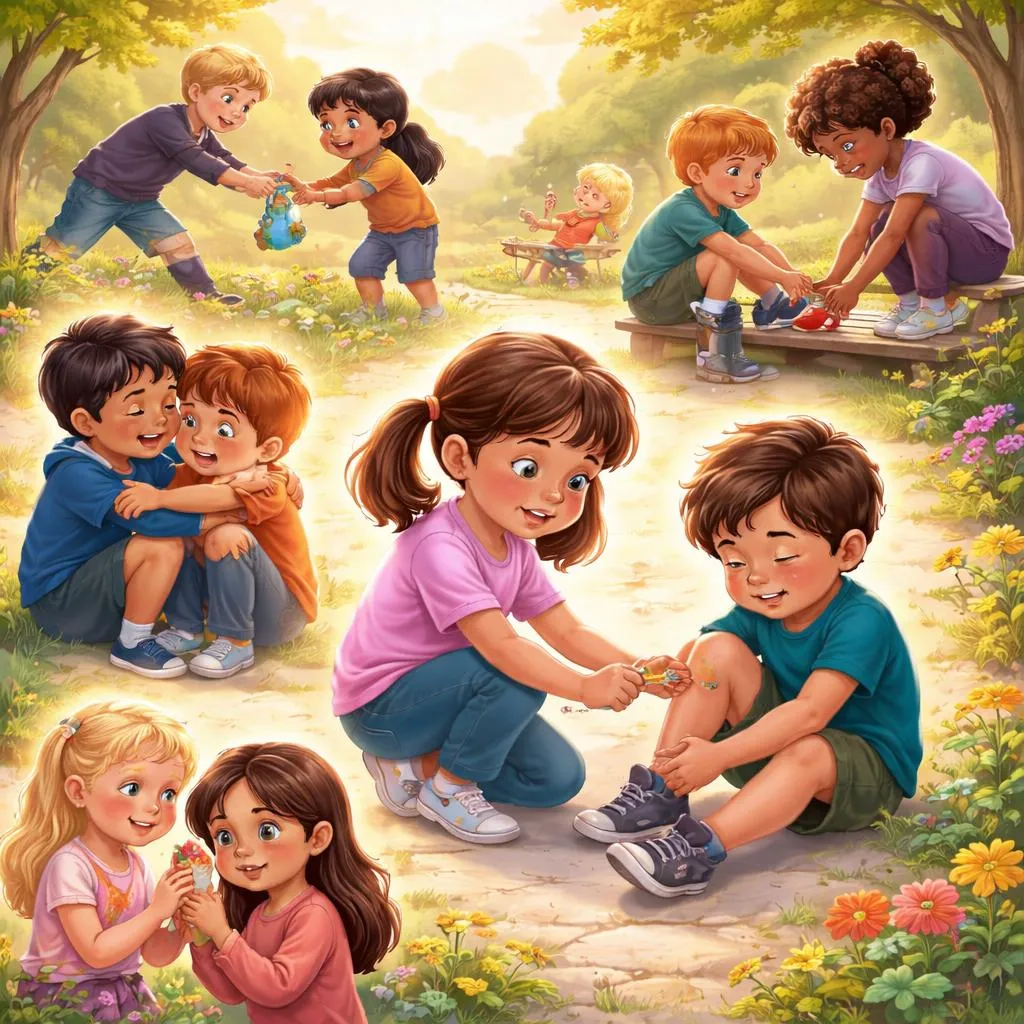

Every day your child chooses how to treat others. A small word can change someone's whole day. English gives us a beautiful family of words for gentle behavior. The root is "kind." From this root come three more words. "Kindness" names the quality of being gentle and good. "Kindly" describes actions done with warmth. "Unkind" is the opposite. It means lacking kindness. These four words help children understand how to treat others. They also help children recognize when someone needs care. Let us explore this important family.
What Does "Same Word, Different Forms" Mean? One quality takes different word shapes. "Kind" is the adjective. A kind person shares and helps. "Kindness" is the noun. Kindness makes people feel safe. "Kindly" is the adverb. You act kindly when you help. "Unkind" is the opposite adjective. An unkind word hurts feelings. Your child sees this pattern in other words. "Help" becomes "helpful" and "helpfully." "Care" becomes "careful" and "carefully." "Kind" follows a similar logic. Learn the root. Then add endings.
Personal Pronouns Change Their Form Pronouns shift shape too. "I" becomes "me." "She" becomes "her." "They" becomes "them." This shows that English changes words for grammar. Our word family "kind" changes for grammar as well. But it also changes for meaning. An adjective describes. A noun names a quality. An adverb describes an action. Learning these roles helps your child express care with precision.
From Adjective to Noun to Adverb – One Family, Many Words "Kind" is the base adjective. A kind child shares toys. "Kindness" is the noun. Kindness fills a home with warmth. "Kindly" is the adverb. Speak kindly to everyone. "Unkind" is the negative adjective. An unkind push hurts more than a fall. This family gives your child tools for good character. One root. Four uses. Your child can name the quality, describe the person, describe the action, and name the opposite. All from one small word.
One Root, Many Roles – How Words Grow from Qualities to Actions Let us follow a kind moment. A child sees a friend crying. The child decides to be kind. The child shows kindness by offering a hug. The child speaks kindly: "I am here for you." The child avoids any unkind words. See how "kind" runs through all four sentences. Each form adds a new layer. Your child can say "I want to be kind." "Kindness matters." "I act kindly." "That would be unkind." One root tells a whole story of compassion.
Same Meaning, Different Jobs – Is It an Adjective or a Noun? How does your child know the job? Look at the sentence position. Before a noun or after "be," use the adjective. Example: "She is a kind girl." "She is kind." For the noun "kindness," use it as a subject or object. Example: "Kindness spreads fast." Example: "I appreciate your kindness." Before a verb or at the end of a clause, use the adverb. Example: "Please speak kindly." The word "unkind" works like "kind" as an adjective. Example: "That was an unkind thing to say." Endings give clues. "Kind" alone is the adjective. "-ness" signals a noun. "-ly" signals an adverb. "Un-" signals the opposite.
Adjectives and Adverbs – When Do We Add -ly? This family shows the "-ly" rule perfectly. Take the adjective "kind." Add "-ly" to make "kindly." No spelling change. Many adjectives work this way. "Quick" becomes "quickly." "Soft" becomes "softly." "Kind" becomes "kindly." Also note that "kindly" can be an adjective too. "A kindly face" means a kind face. That is an exception. Most "-ly" words are adverbs. "Kindly" can be both. Teach your child the adverb use first. Later they will learn the adjective use.
Watch Out for Tricky Spelling Changes (Double Letters, y to i, and More) "Kind" has no double letters. No silent "e." No "y" to change. When we add "-ness" to make "kindness," keep the "d." No change. "Kind" + "ness" = "kindness." When we add "-ly" to make "kindly," keep the "d." No change. When we add "un-" to make "unkind," just add the prefix. "Un" + "kind" = "unkind." This family is very simple. No spelling tricks. Your child can focus on meaning instead of letter rules. That is a gift for young learners.
Let's Practice – Can You Choose the Right Form? Try these simple sentences with your child.
A (kind / kindness) person helps without being asked. (Answer: kind)
(Kind / Kindness) is free but very valuable. (Answer: Kindness)
Please treat the new student (kind / kindly). (Answer: kindly)
That was an (kind / unkind) thing to whisper. (Answer: unkind)
She showed great (kind / kindness) to the lost puppy. (Answer: kindness)
Make your own sentences from daily life. Say "You made a kind choice." Say "Thank you for your kindness." Say "She spoke kindly to her little brother." Say "Let us not say unkind words."
Tips for Parents – Help Your Child Learn Word Families in a Fun Way Catch kindness in action. When your child shares, name it. Say "That was kind." Say "Thank you for your kindness." Say "You acted kindly." Say "That would have been unkind, but you chose kindness." This immediate feedback connects the words to real behavior.
Play the kindness jar game. Every time someone shows kindness, write it on a slip. "Mia shared her crayons. That was kind." "Dad listened patiently. That was kindness." "Leo spoke kindly to his friend." "Nobody said anything unkind today." Fill the jar. Read the slips together at dinner. This builds a culture of noticing kindness.
Read books about feelings and friendship. Many children's books explore kind and unkind behavior. Pause during reading. Ask "Is this character being kind?" Ask "What kindness could they show?" Ask "How could they speak more kindly?" Ask "Is that character being unkind?" These questions build moral reasoning.
Role-play kind responses. Practice what to say when someone falls. "Are you okay?" Practice what to say when someone feels left out. "Come play with us." Practice kindly words. Use the vocabulary. Say "That was a kind thing to say." Say "Your kindness helped." Say "You spoke so kindly." Say "An unkind response would have hurt."
Distinguish "kind" from "nice." Kindness takes courage. Being nice is easy. Kindness sometimes means telling a hard truth gently. "I cannot let you copy my homework" is kind but not nice. This distinction helps older children. For young children, start with simple sharing and helping.
Celebrate kindly speech at home. Make a rule: "We speak kindly here." When voices rise, say "Please say that kindly again." When a child uses a kind tone, say "I love how kindly you asked." When siblings solve a problem, say "That was kind negotiation." This practice builds lasting habits.
Do not punish unkind words harshly. Instead, teach. Say "That word sounded unkind. Let us try again." Say "How could you say that kindly?" Say "Unkind words leave marks inside." Use the vocabulary without shame. Your child learns to recognize unkindness and choose kindness instead.
Model kindness to yourself. Children learn from what you do. When you make a mistake, say "Let me speak kindly to myself." Say "I will treat myself with kindness." Say "I kindly forgive my own mistake." This shows your child that kindness starts inside. A kind heart first learns to be kind to itself.
Now you have a complete guide. Be kind every day. Practice kindness together. Speak kindly to everyone you meet. Notice when unkind words try to sneak in. This word family does more than teach English. It teaches humanity. It teaches that small kind choices make a big kind world. It teaches that every child can grow a kind heart. Keep being kind. Keep growing together. One word family at a time.