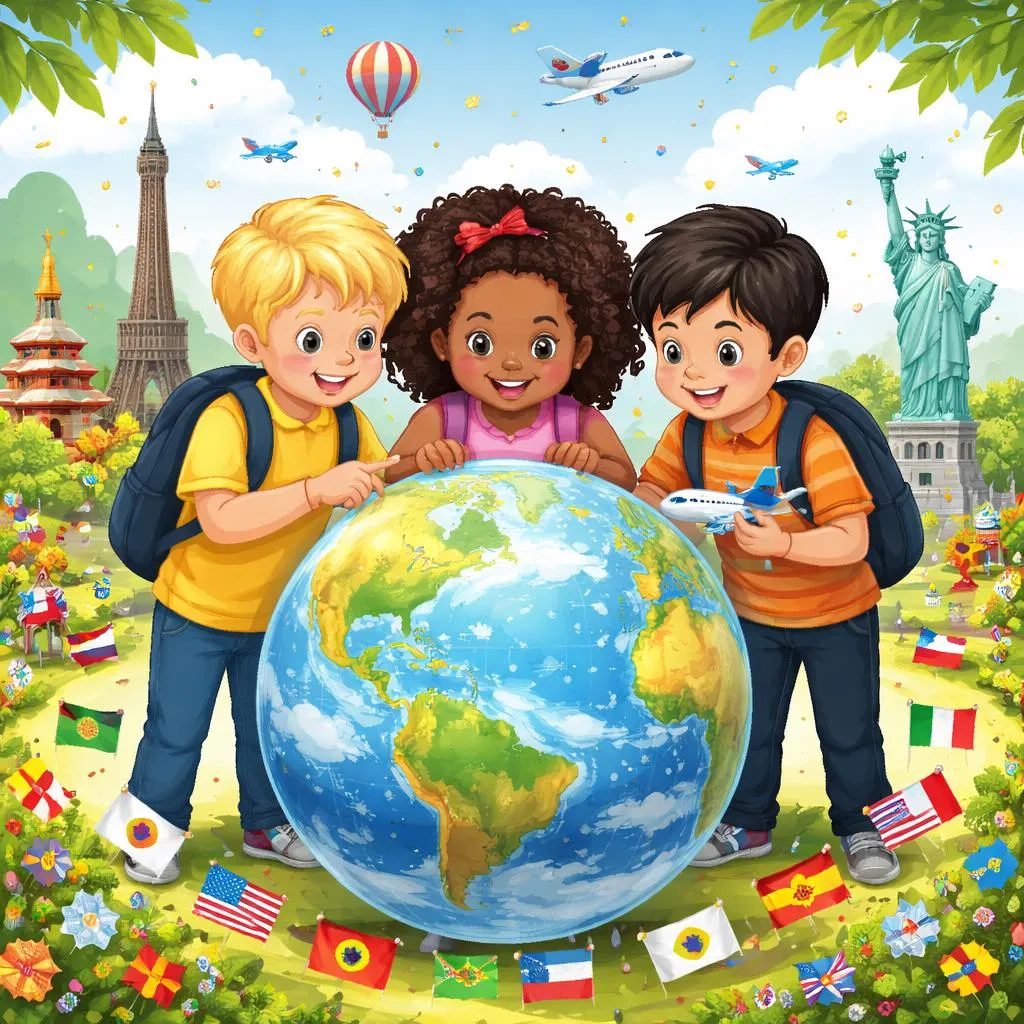

Every child belongs to a country. That country has a name, a flag, and a people. English gives us a rich family of words for this sense of belonging. The root is “nation.” From this root come four more words. “National” describes anything related to a nation. “Nationality” names the legal belonging to a nation. “Nationally” describes an action that happens across a whole nation. “International” describes anything between or across nations. These five words help children understand geography and community. They also help children respect people from other places. Let us explore this connecting family.
What Does “Same Word, Different Forms” Mean? One idea takes different word shapes. “Nation” is the noun. A nation has land and people. “National” is the adjective. The national flag flies high. “Nationality” is the noun for belonging. Her nationality is Canadian. “Nationally” is the adverb. The event was broadcast nationally. “International” is the adjective. An international flight crosses oceans. Your child sees this pattern in other words. “Country” becomes “countrywide.” “Global” becomes “globally.” “Nation” gives us even more options.
Personal Pronouns Change Their Form Pronouns shift shape too. “I” becomes “me.” “She” becomes “her.” “We” becomes “us.” This shows that English changes words for grammar. Our word family “nation” changes for grammar as well. But it also changes for meaning. A noun names a place or belonging. An adjective describes. An adverb describes an action. Learning these roles helps your child talk about countries clearly.
From Noun to Adjective to Adverb – One Family, Many Words “Nation” is the noun. Our nation celebrates many cultures. “National” is the adjective. The national bird symbolizes freedom. “Nationality” is the belonging noun. What is your nationality? “Nationally” is the adverb. The team competed nationally before going global. “International” is the adjective. An international agreement helps world peace. This family gives your child five tools for talking about countries. One root. Five ways to connect.
One Root, Many Roles – How Words Grow from Countries to Connections Let us follow a national story. A child lives in a nation with mountains and rivers. On national holidays, the family flies the national flag. The child’s nationality is a source of pride. The news reports nationally about the festival. The child also learns about international friends from other countries. See how “nation” runs through all five sentences. Each form adds a new layer. Your child can say “My nation is special.” “Our national flower is the rose.” “My nationality is American.” “The song is famous nationally.” “We have international pen pals.” One root tells a whole story of belonging.
Same Meaning, Different Jobs – Is It a Noun or an Adjective? How does your child know the job? Look at the sentence position. As a subject or object, use the noun “nation.” Example: “Our nation values education.” Before a noun or after “be,” use “national.” Example: “That is a national monument.” For the belonging noun, use “a” or “the.” Example: “Her nationality is Japanese.” Before a verb or at the end of a clause, use “nationally.” Example: “The law applies nationally.” Before a noun, use “international.” Example: “We love international foods.” Endings give clues. “Nation” is the place noun. “-al” signals an adjective. “-ality” signals a belonging noun. “-ally” signals an adverb. “Inter-” signals between nations.
Adjectives and Adverbs – When Do We Add -ly? This family shows the “-ly” rule clearly. Take the adjective “national.” Add “-ly” to make “nationally.” No spelling change. Many adjectives work this way. “Quick” becomes “quickly.” “Musical” becomes “musically.” “National” becomes “nationally.” Also from “international,” we can make “internationally.” Example: “They trade internationally.” Most “-al” adjectives become “-ally” adverbs. “Logical” becomes “logically.” “National” becomes “nationally.”
Watch Out for Tricky Spelling Changes (Double Letters, y to i, and More) “Nation” has no double letters. Ends with “ion.” When we add “-al” to make “national,” keep the “ion.” No change. “Nation” + “al” = “national.” When we add “-ity” to make “nationality,” change the “al” to “al”? Actually “national” + “ity” = “nationality.” Keep the “al.” Drop nothing. When we add “-ly” to make “nationally,” keep everything. “National” + “ly” = “nationally.” When we add “inter-” to make “international,” keep everything. “Inter” + “national” = “international.” No double letters. No “y” changes. This family is very stable. But watch the pronunciation of “nationality.” It has five syllables: na-tion-al-i-ty. Practice slowly.
Let’s Practice – Can You Choose the Right Form? Try these simple sentences with your child.
A (nation / national) is a group of people with a shared land. (Answer: nation)
The (national / nationality) anthem is sung before games. (Answer: national)
What is your (national / nationality)? (Answer: nationality)
The news spread (nationally / international) across the whole country. (Answer: nationally)
We have (international / nation) friends from France and Japan. (Answer: international)
Make your own sentences from daily life. Say “Our nation has many beautiful parks.” Say “The national animal of Australia is the kangaroo.” Say “My nationality is the country where I was born.” Say “This product is sold nationally.” Say “We love watching international soccer matches.”
Tips for Parents – Help Your Child Learn Word Families in a Fun Way Look at a world map together. Point to your nation. Name neighboring nations. Use the words. Say “This is our nation.” Say “These are national borders.” Say “People of different nationalities live here.” Say “This news is important nationally.” Say “These are international flights.” This activity builds geography and vocabulary.
Talk about national symbols. The flag. The flower. The bird. The anthem. Say “Our national flag has three colors.” Say “The national bird is the eagle.” Say “National symbols make us feel connected.” This builds civic awareness.
Play the nationality game. Ask “What nationality is someone from France? French.” “From Japan? Japanese.” “From Brazil? Brazilian.” This game builds knowledge of countries and peoples.
Read books about children from other nations. Many picture books show daily life around the world. Pause during reading. Ask “What nation is this story from?” Ask “What is a national custom here?” Ask “Would you like an international friend?” These questions build global awareness.
Celebrate international holidays. Learn about festivals from other countries. Say “This is an international celebration.” Say “People of different nationalities enjoy this holiday.” Say “Our family is nationally proud and internationally curious.” This builds respect and curiosity.
Use “nationally” for big events. “When the president speaks, it is broadcast nationally.” “When the team wins, people celebrate nationally.” This teaches scale. Your child learns the difference between local, national, and international.
Create a family “nationality” tree. Where did your ancestors come from? Mark the nations on a map. Say “Our family has multiple nationalities in our history.” Say “This makes us international.” This builds identity and pride.
Now you have a complete guide. Love your nation. Honor national symbols. Know your nationality. Think nationally and act internationally. This word family does more than teach English. It teaches that we belong to a country and to the world. It teaches that every nation has value. It teaches that international friendship makes peace. Keep exploring. Keep connecting. Keep growing together. One word family at a time.