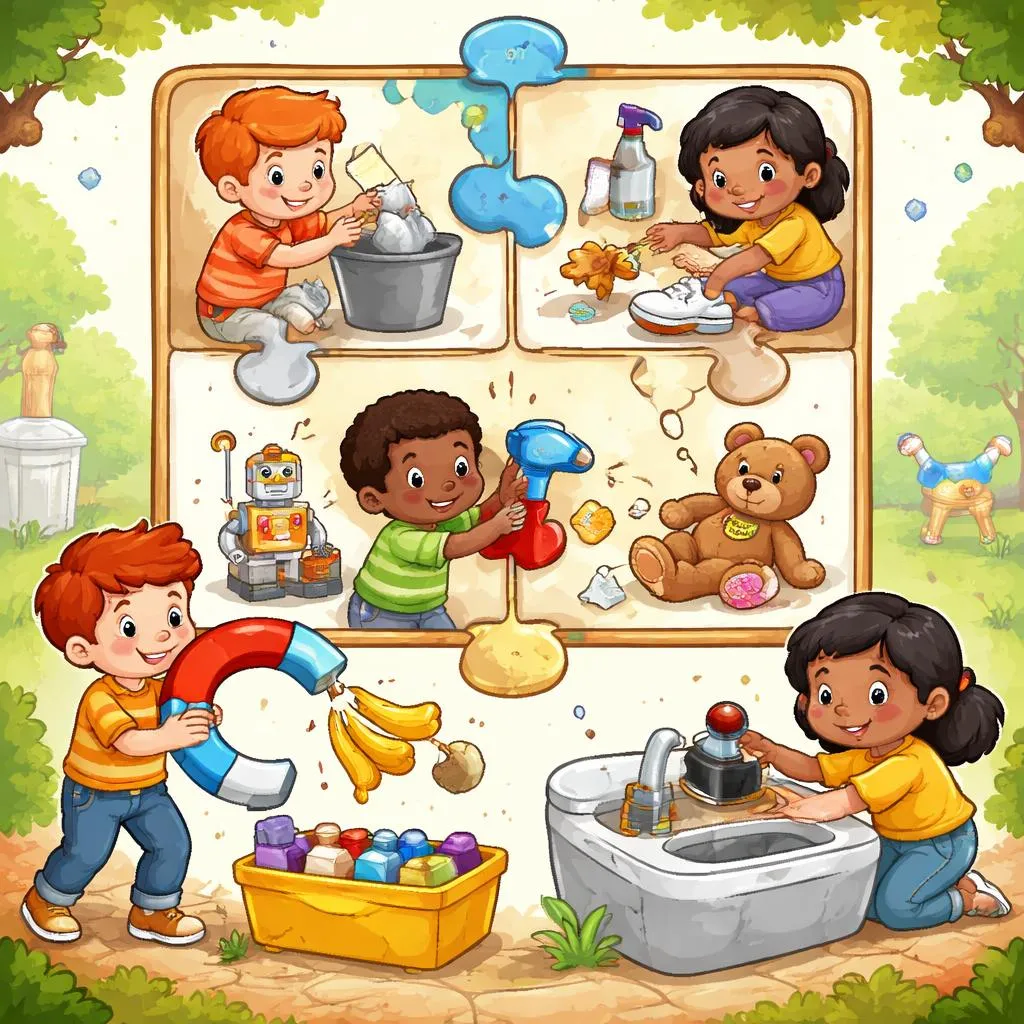

What Does “Same Word, Different Forms” Mean?
Many English words belong to families.
One root word can grow into many forms.
The family remove, removal, removable is a clear example.
All three words connect to taking something away.
But each one has a different grammar role.
Remove is a verb. Removal is a noun. Removable is an adjective.
One shared root.
Three different jobs.
This is how word families work.
Children who learn word families often understand vocabulary more deeply.
They learn patterns, not isolated words.
That makes reading easier.
Personal Pronouns Change Their Form
Children already know words can change shape.
They see:
I, me, my they, them, their
Different forms.
Connected meaning.
Word families work in a similar way.
Look at these:
Please remove the sticker. The removal took time. The cover is removable.
Same root idea.
Different grammar jobs.
Seeing these changes helps children understand how English builds meaning.
That is an important literacy skill.
From Verb to Noun to Adjective to Adverb – One Family, Many Words
This family shows useful growth.
Even with three forms, it teaches a lot.
Remove as a Verb
Remove shows action.
It means take away or move something from a place.
Examples:
Remove your shoes. Please remove the books from the desk. The doctor removed the bandage.
It is a practical everyday word.
Children may hear it at home and school.
Removal as a Noun
Removal names the act or process.
Examples:
The removal of trash helps keep parks clean. Tooth removal can sound scary.
Now the action becomes a thing or event.
That is a common noun pattern.
approve → approval arrive → arrival remove → removal
Children can notice -al often forms nouns.
That is a useful pattern.
Removable as an Adjective
Removable describes something that can be taken away.
Examples:
This label is removable. The table has removable legs.
The ending -able often means “able to be.”
That is a big clue.
Removable means able to be removed.
Children can apply this pattern to many words.
One Root, Many Roles – How Words Grow from Actions to Qualities
Look how one root expands.
remove → action removal → process or event removable → quality
One root.
Many roles.
That is how English grows.
Children can use suffixes as clues.
-al often forms nouns -able often forms adjectives
These patterns appear often.
That helps children understand unfamiliar words later.
Same Meaning, Different Jobs – Is It a Verb or a Noun?
Children sometimes mix forms.
That is natural.
Ask:
Is the word showing action?
Naming something?
Describing something?
Look here:
Correct:
Please remove the toy. The removal took minutes.
Not correct:
Please removal the toy.
Now compare:
The sticker is removable. Remove the sticker.
One describes.
One acts.
Different jobs.
Shared root.
That is the key lesson.
Adjectives and Adverbs – When Do We Add -ly?
This family does not have a common everyday adverb in this set.
That matters too.
Not every family has all forms.
Some have verbs, nouns, adjectives, and adverbs.
Some do not.
Children should know patterns can vary.
Still, removable teaches the powerful -able adjective pattern.
Compare:
washable readable removable
Children who notice this pattern often unlock many words.
That is valuable vocabulary growth.
Watch Out for Tricky Spelling Changes (Double Letters, y to i, and More)
This family has useful spelling patterns.
Remove to Removal
The final e drops.
remove → removal
This happens in many words.
approve → approval remove → removal
That pattern matters.
Remove to Removable
Again the final e drops.
remove → removable
Then -able joins.
Very common English pattern.
Children should watch for this.
Notice -able Meaning
-able often means “can be.”
That helps children infer meaning.
Even with new words.
That is strong reading support.
Let’s Practice – Can You Choose the Right Form?
Try these.
- Please ______ the books from the chair.
Answer: remove
Action word.
- The ______ of snow took hours.
Answer: removal
Names a process.
- This sticker is ______.
Answer: removable
Describes a quality.
- We need to ______ the old posters.
Answer: remove
Verb again.
Practice helps children compare forms clearly.
That builds confidence.
Tips for Parents – Help Your Child Learn Word Families in a Fun Way
Word families can be playful.
Build a Word Family Tree
Write remove in the center.
Add:
removal removable
Draw how endings change meaning.
Visual patterns help memory.
Explore the -able Pattern
Find more examples.
washable foldable movable removable
Children enjoy finding patterns.
It feels like discovery.
Use Real Objects
Find removable lids.
Talk about removable labels.
Use everyday objects.
Real examples make vocabulary stick.
Practice Word Building
Start with a root.
Add endings.
remove + al
remove + able
Word building feels like puzzle solving.
Play “Action, Thing, or Description?”
Sort the words.
Action?
Thing?
Description?
This turns grammar into a game.
Why This Word Family Helps Reading Growth
This family appears in many subjects.
Science:
removal of waste
Instructions:
removable parts
Daily reading:
remove batteries
Children who know these forms understand practical texts better.
That supports comprehension.
Useful vocabulary often builds strong reading foundations.
Common Mix-Ups Children Make Remove and Removal
Very common.
One acts.
One names.
remove the box box removal
Different jobs.
Remove and Removable
Children may think they mean the same.
But one is action.
One describes possibility.
remove it it is removable
Big difference.
Forgetting -able Means “Can Be”
This suffix is powerful.
Children should practice noticing it.
It unlocks many words.
How One Word Family Builds Bigger Vocabulary
This family teaches patterns that transfer.
Later children may understand:
move, movable wash, washable break, breakable
The -able pattern repeats.
The -al noun pattern repeats too.
One small family can lead to many discoveries.
That is how vocabulary grows.
Learning remove, removal, removable as One Family
These words teach more than definitions.
They show how one root can become action, process, and quality.
That is how English builds meaning.
When children understand remove, removal, removable as one connected family, they begin seeing patterns inside words instead of memorizing isolated vocabulary.
And once those patterns become familiar, reading, spelling, and expression often grow much more naturally.