
Opening Introduction
Sam is six years old. He looks at his baby brother, Tim. Tim is two. Tim points at a ball and says, "Ba!" Sam smiles. He says, "Yes, that's a ball!" Sam wonders. How did he learn to say "ball" and not "ba"? How do tiny kids like Tim start to learn English? Sam asks his mom.
Mom says, "When you were two, we had a simple plan. We played, we sang, we talked. It was a special plan for your little brain. It was an English learning plan for 2 year olds. It is not like school. It is all about fun and love." Sam is curious. He wants to know the plan. He wants to help Tim. Let's explore this special plan together.
Core Knowledge Explanation
What is a learning plan? A plan is a way to do something. A learning plan is a way to learn. An English learning plan for 2 year olds is very different from a plan for big kids. A two-year-old is very small. They are called toddlers. Toddlers are just starting to talk. They learn with their whole body. They learn by playing. They learn by feeling safe and happy.
The most important part of the plan is love. A toddler must feel loved. When they feel safe, their brain is ready to learn. The second part is routine. Routine means doing the same things every day. Toddlers love routine. It helps them know what will happen. An English learning plan for 2 year olds fits into the daily routine. Breakfast time, bath time, playtime, bedtime. We use English during these times.
The plan has simple goals. The first goal is listening. Toddlers listen first. They listen to words again and again. They hear "milk", "cup", "more", "up". They start to understand. The second goal is speaking. They try to say words. They might say "mih" for milk. That is okay. We say the word correctly. "Yes, milk!" We do not say, "No, say milk!" We just say the word with a smile.
The plan uses very simple words. We teach nouns. Nouns are names of things. "Mama", "Dada", "ball", "dog", "cat", "shoe", "book". We teach verbs. Verbs are action words. "Go", "stop", "up", "down", "open", "close". We teach a few adjectives. Adjectives are describing words. "Big", "hot", "yummy", "dirty". That is all. We do not teach grammar. We do not teach spelling. We just talk about what is happening right now.
How do we teach? We use play. Play is the work of a toddler. We use songs. Songs have repetition. Repetition means saying the same thing many times. "The Wheels on the Bus" is a great song. It has simple words and actions. We use books. Board books with one picture on each page. "Cow." "Duck." We use daily activities. During bath, we say "water", "splash", "wash". During meals, we say "eat", "more", "all done".
An English learning plan for 2 year olds is not about sitting at a desk. It is about living and playing in English. It is about making happy connections. The word "cookie" is happy because it is yummy. The word "hug" is happy because it is warm. The brain remembers happy words. This plan builds a strong, happy base for all future English learning.
Fun Interactive Learning
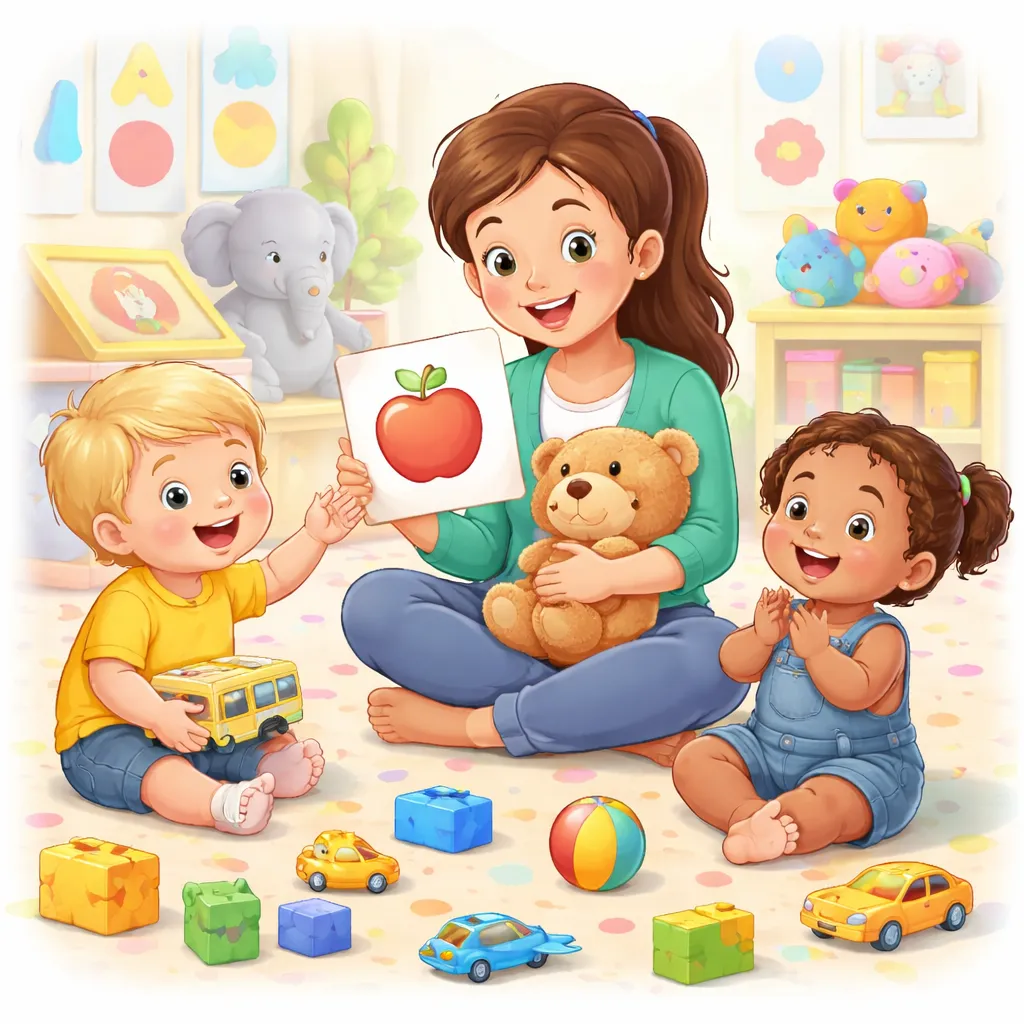
Now, you are a big kid. You can help a toddler learn. Let's play some games that are part of an English learning plan for 2 year olds. First, the "Point and Say" game. Sit with your little brother or sister. Look at a picture book. Point to a picture of a dog. Say, "Dog. Woof woof!" Let the toddler point. You say the word. This is fun and easy.
Second, the "Action Song" game. Sing "Head, Shoulders, Knees, and Toes". Touch your head. Help the toddler touch their head. Sing slowly. Do the actions. The toddler will watch and try. They will learn body parts in a fun way.
Third, the "Toy Box" game. Get a box of toys. Take out one toy. Say, "Car. The car goes vroom." Make the car move. Then say, "Ball. The ball is red. Bounce the ball." Keep it simple. Let the toddler hold the toy. Repeat the word many times.
You can also be a "Word Detective" for your house. Walk around with a toddler. Point to things. "Door. Chair. Light. Window." Say the word clearly. The toddler is exploring the world. You are giving the world a name in English. You are a very helpful teacher.
Expanded Learning
All around the world, toddlers learn language the same way. They listen, they babble, they say words. In some families, toddlers hear two or three languages. Their brains are amazing. They can learn them all. The English learning plan for 2 year olds works for any language. The plan is love, play, and talk.
Long ago, people did not have a special plan. They just talked to their babies. They sang lullabies. They told stories. That was the plan. Today, we know more about the brain. We know that the first three years are very important for language. But the old way was still good. Talking and singing is the best way.
Let's sing a song about the plan. Sing this to the tune of "London Bridge".
Toddlers learn through play and fun, play and fun, play and fun. Toddlers learn through play and fun, that's the happy plan! First we listen, then we talk, then we talk, then we talk. First we listen, then we talk, that's the happy plan! Big kids help with words and games, words and games, words and games. Big kids help with words and games, that's the happy plan!
You can sing this to remind yourself how toddlers learn.
What You Will Learn
You are learning about how language grows. You are learning new words: toddler, routine, repetition, nouns, verbs, adjectives, listening, speaking, brain, connection. You are learning about teaching: play, sing, read, point, say, help.
You are learning kind sentences. You can say, "Let me help you learn this word." You can ask, "What is this called?" You can explain, "Toddlers learn by playing." You are using English to talk about learning itself. This makes you wise.
You are building wonderful skills. You are building empathy. Empathy means understanding how others feel. You think about how a toddler feels. You are building teaching skills. You learn to be patient and clear. You are building leadership skills. You are a helpful big sibling or friend. You are building your own English by teaching simple words.
You are forming a caring habit. The habit of helping others learn. You see someone who knows less. You help them. You do it with kindness. This habit makes you a great friend and a great person. Understanding an English learning plan for 2 year olds shows you that everyone starts small. And everyone can grow with help.
Using What You Learned in Life
You can use this knowledge at home. If you have a younger sibling, you can be their English playmate. Use the games we talked about. You will help your parents. You will help your sibling. And you will feel proud.
At school, you might have a "Reading Buddy" program. You can read a simple board book to a younger child. You can point and say the words. You are using the toddler learning plan. Your teacher will be very happy.
When you play with your toys, think like a teacher. How would you explain this toy to a two-year-old? What words would you use? This makes you think about language in a simple, clear way. It is good for your own brain.
When you feel frustrated because English is hard, remember your two-year-old self. You started with "ba" for ball. Now you can read this article. You followed a plan. You grew. You can keep growing. The English learning plan for 2 year olds is the first step on a long, wonderful road. And you are already far down that road.
Closing Encouragement
You have learned something very special today. You are a language scientist. You are a helper. You are a kind teacher. I am so proud of you. Understanding how little ones learn helps you understand your own amazing journey.
Keep this knowledge in your heart. Use it to be kind and helpful. Share it with your friends. You are a smart and caring person.
Remember, every expert was once a beginner. Every reader once said "ba". Every speaker once listened. You have come so far. And you can go even further. Great work, my wonderful teacher and learner.