
Opening Introduction
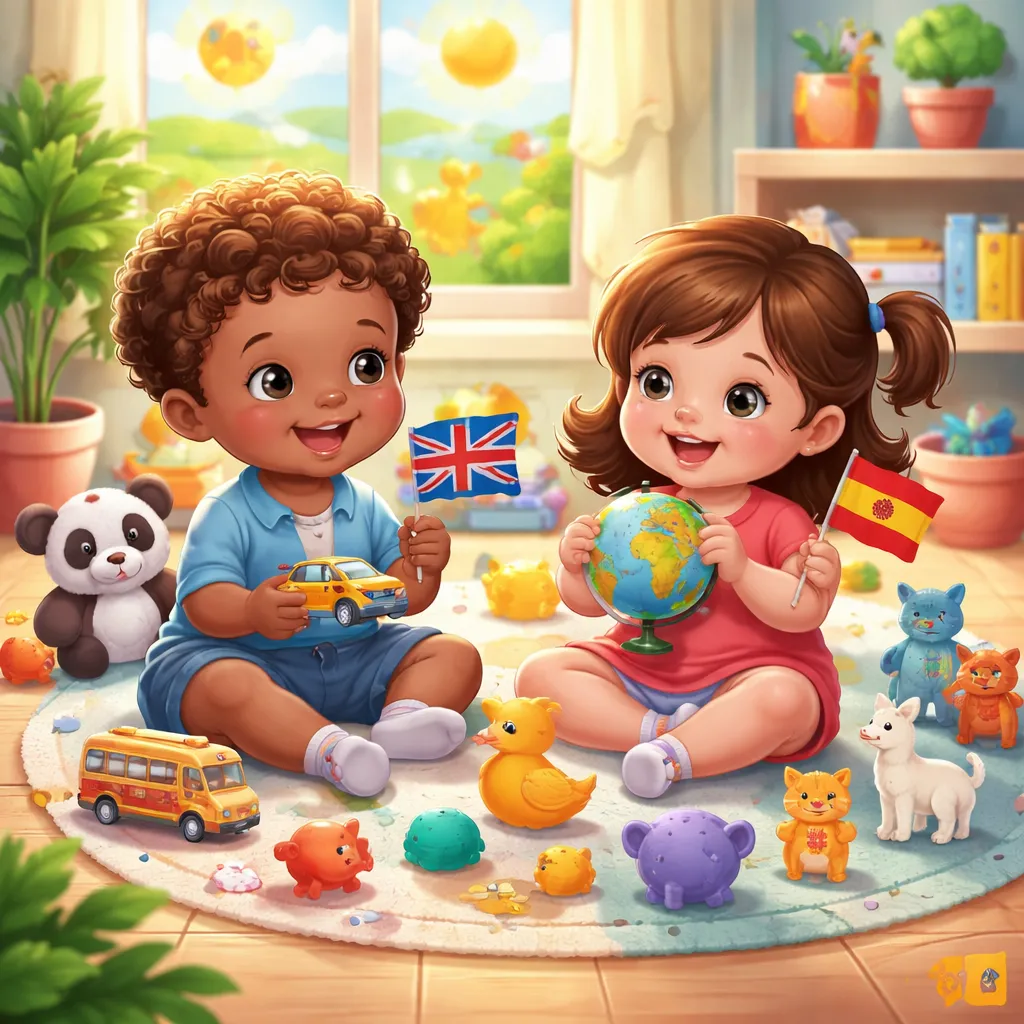
Leo looks at his baby cousin, Mateo. Mateo is two years old. He lives in a house where people speak two languages. His mom speaks Spanish. His dad speaks English. When Mateo wants milk, he sometimes says "leche" and sometimes says "milk". Leo thinks this is amazing. How does Mateo's brain know two words for the same thing? Leo asks his aunt, "How is Mateo learning two languages at once?" His aunt smiles. "It is a special journey," she says. "It is called English learning for bilingual toddlers. It is about hearing two languages every day in a natural, loving way." Leo is curious. Let's explore this amazing journey together.
Core Knowledge Explanation
What does bilingual mean? Bilingual means using two languages. A toddler is a very young child, usually between one and three years old. So, a bilingual toddler is a little child who is learning two languages at the same time. This is a wonderful and natural thing. Many children around the world grow up with two or even three languages. Their brains are like super sponges. They can soak up the sounds, words, and grammar of more than one language.
How does English learning for bilingual toddlers work? It works through immersion. Immersion means being surrounded by the language. The toddler hears English (and another language) during daily life. They hear it during playtime, bath time, meal time, and bedtime. They do not sit in a classroom. They learn by listening and interacting. They learn because they need to communicate. They want to say "cookie" or "juice" or "hug". They learn the words that get them what they need and want.
There are different ways families do this. One common way is called "one parent, one language". One parent always speaks English to the child. The other parent always speaks the other language. This is clear for the child. They know which language to use with which person. Another way is "home language and outside language". The family speaks one language at home. The child learns English at daycare or in the community. Both ways work. The key is consistency. Consistency means doing it regularly. The child needs to hear both languages often.
You might wonder, does this confuse the toddler? The answer is no. At first, a bilingual toddler might mix words from both languages in one sentence. This is normal. It is called code-mixing. They are not confused. They are just using all the words they know. Over time, they learn to separate the languages. They learn that Grandma understands English and Abuelita understands Spanish. Their brain is sorting it out. Sometimes, a bilingual toddler might start talking a little later than a child who hears one language. This is also normal. They are processing twice as much information. When they start talking, they often catch up very fast.
English learning for bilingual toddlers is not about flashcards or tests. It is about love and communication. It is about songs and stories. It is about making both languages a happy part of the child's world. The benefits are huge. Bilingual children often become good at switching tasks. They are often more empathetic. Empathetic means they understand other people's feelings well. They can also talk to more people and learn about more cultures. It is a gift.
Fun Interactive Learning
You are a big kid. You can help a bilingual toddler in your life. Let's do some fun activities that support English learning for bilingual toddlers. First, be a "Language Model". If you speak English, talk to the toddler in English during play. Use simple words. "Red ball." "Big truck." "You are building a tall tower!" Describe what you are doing. "I am putting the block on top." The toddler will listen and learn.
Second, have a "Bilingual Book Time". Get a simple picture book. Name the pictures in English. "Dog. Cat. Car." Then, ask a parent or older sibling to name the same pictures in the other language. "Perro. Gato. Coche." The toddler hears two words for the same picture. This is a fun way to build vocabulary in both languages.
Third, sing "Bilingual Songs". Sing a song like "Head, Shoulders, Knees, and Toes" in English. Then, sing it in the other language if you know it. The toddler learns the body parts in two languages with the same tune. Music makes the words stick.
Fourth, play "Label the House". Get some sticky notes. Write the English word for things in your house. "Door", "Window", "Table", "Chair". Stick them on the objects. Point to them and say the word when you walk by with the toddler. This helps the toddler connect the written word, the spoken word, and the object.
Fifth, use "Bilingual Toys". If you have toy animals, say their names and sounds in both languages. "The cow says 'moo' in English. The cow says 'mu' in Spanish." This is playful and educational. Remember, the goal is to make English learning for bilingual toddlers a natural, joyful part of play. You are not a teacher. You are a playmate who uses English.
Expanded Learning
Bilingualism is very common in the world. In countries like Canada, many children learn English and French. In India, children might learn Hindi and English. In Singapore, children often learn English and Mandarin. People have been raising bilingual children for thousands of years. It is a normal part of human life. Your bilingual friend or sibling is part of a big, global family.
Long ago, some people thought learning two languages was bad. They thought it would confuse children. Now, scientists know that is not true. Brain scans show that bilingual brains are active in different ways. They are flexible and strong. Knowing about English learning for bilingual toddlers helps us celebrate this ability. It is a superpower.
Let's make a song about being bilingual. Sing this to the tune of "Twinkle, Twinkle, Little Star".
I can speak in two tongues, yes, I can, hear me talk! One with Mom and one with Dad, when we go for a walk. I say "hello" and I say "hola", words are fun for me. I can learn both English and Spanish, just wait and you will see. I can speak in two tongues, yes, I can, hear me talk! My brain is smart, I'm a language spark, shining bright as can be!
You can change the languages to match the ones in your life. Singing celebrates the joy of two languages.
What You Will Learn
You are learning about language and the brain. You are learning new words: bilingual, toddler, immersion, consistency, code-mixing, empathetic, flexible. You are learning about methods: one parent one language, home language. You are learning about the benefits of being bilingual.
You are learning helpful sentences. You can say, "My cousin is a bilingual toddler." You can explain, "Bilingual children sometimes mix languages, and that's okay." You can ask, "How can I help a toddler learn English?" You are using English to talk about complex ideas in a simple way. This is a great skill.
You are building wonderful abilities. You are building cultural awareness. You appreciate different languages. You are building teaching skills. You learn how to model language for a younger child. You are building patience. You understand that language learning takes time. You are building observation skills. You notice how a toddler uses language.
You are forming an inclusive habit. The habit of valuing all languages. You see bilingualism as a gift, not a problem. You support your friends and family who are on this journey. Understanding English learning for bilingual toddlers makes you a more understanding and supportive friend, sibling, and global citizen.
Using What You Learned in Life
Use this knowledge to be a great big sibling or cousin. If you have a bilingual toddler in your family, talk to them in English. Read them simple books. Sing songs. Your interaction is a powerful tool. At school, if you have a classmate who is learning English as a second language, be kind. Remember, they are processing a lot. You can be a friendly buddy. Use simple English and gestures to help.
In your community, be proud of your own language skills. If you are bilingual, that is amazing. Share your knowledge. If you are not, maybe you can learn a few words in another language from your bilingual friend. This shows respect and curiosity. When you watch TV shows with characters who speak two languages, notice how they switch. It is a real-life example of English learning for bilingual toddlers all grown up.
Always remember, language is about connection. Every word in every language is a bridge between people. By supporting a bilingual toddler, you are helping build a stronger, more connected world. You are a language ambassador.
Closing Encouragement
You have learned something very special today. You are a language explorer. You are a patient teacher. You are a caring friend. I am so proud of you. Understanding English learning for bilingual toddlers shows you are thoughtful and curious about the world.
Keep this knowledge in your heart. Use it to be kind and helpful. Celebrate the bilingual people in your life. Their ability is a beautiful thing.
Remember, every language is a different color in the crayon box of the world. Bilingual toddlers have more colors to draw with. And you can help them use those colors to create a bright, beautiful picture. Keep learning, keep helping, keep celebrating languages. Great work, my wonderful language champion.