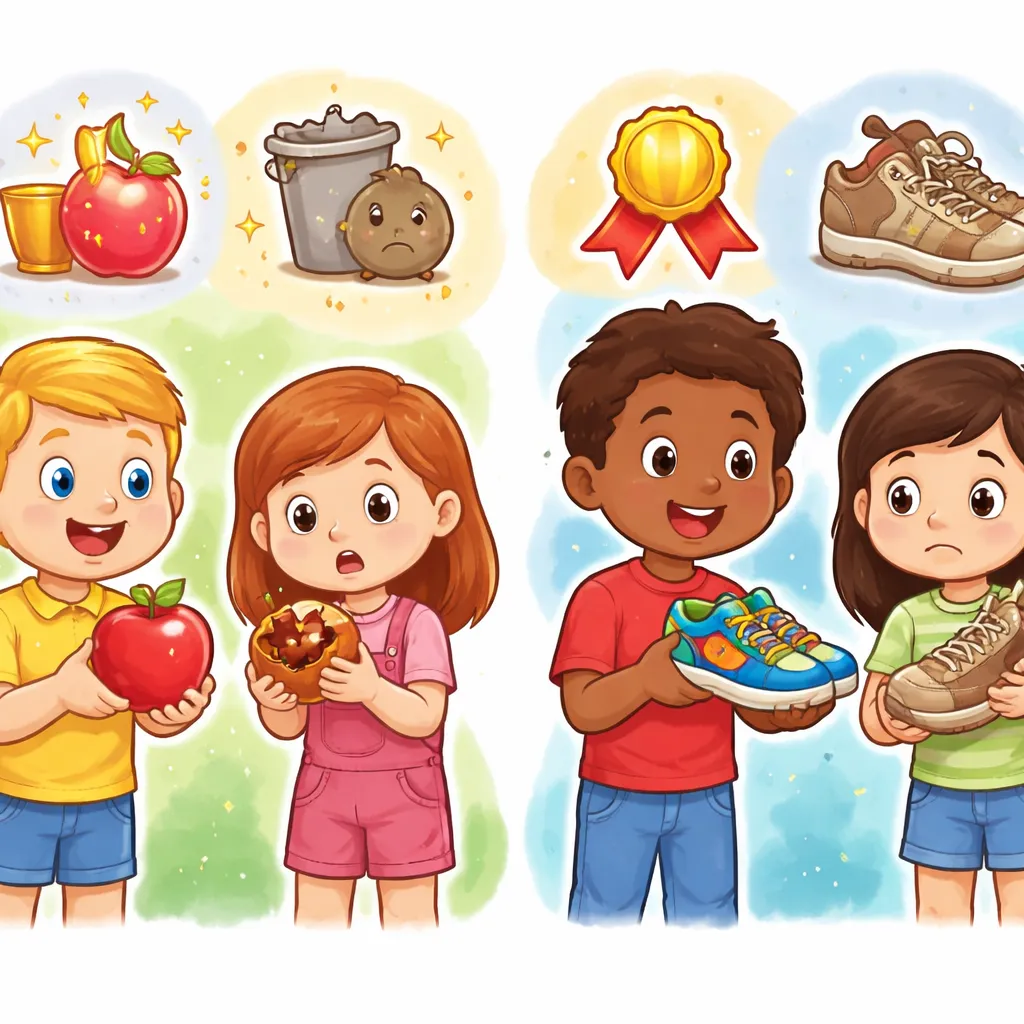

Worse and Inferior: Are They Really the Same?
When learning English, children often encounter words with similar meanings but subtle differences. Worse and inferior are two such words. Both refer to something that is not as good as another thing, but they are not always interchangeable. Understanding these differences will help children use these words more effectively in conversations and writing.
In this article, we will explore the meanings of worse and inferior, their proper usage, and how parents can help children grasp these concepts in their everyday language.
Are Similar Words Really Interchangeable?
On the surface, worse and inferior may seem like synonyms because both suggest something is not as good as something else. However, their usage varies, and the contexts in which each word fits are different.
Worse is more common and often used in informal, everyday language to compare two things negatively. It can refer to something being of lower quality or in worse condition than something else. Inferior is more formal and is often used in academic or professional contexts. It implies not just being worse but being of a lower rank or quality in a more absolute sense.
Let’s dive deeper into these differences and explore how each word is typically used.
Set 1: Worse vs Inferior — Which One Is More Common?
Worse is the more commonly used word in everyday language. It is versatile and can be used in a wide variety of situations. Children might use it when talking about their day, comparing two toys, or describing how they feel.
For example:
“This test is worse than the last one.” “I feel worse today than I did yesterday.”
Inferior, on the other hand, is less commonly used in day-to-day conversations. It is more formal and usually found in academic, professional, or technical discussions. You might use inferior when describing the quality of something in a more official context.
Examples of inferior usage:
“The quality of the second product was inferior to the first.” “He received inferior treatment compared to his colleagues.”
In general, worse is a more accessible word for children, while inferior may require more explanation.
Set 2: Worse vs Inferior — Same Meaning, Different Contexts
While both words indicate something being lower in quality, worse is more commonly used in general situations. It is often employed when talking about personal feelings, conditions, or experiences that have declined.
For instance:
“My headache is getting worse.” “The weather was even worse than yesterday.”
Inferior is used in more formal contexts to express a lower rank or quality. It typically applies to things that are compared in terms of performance, status, or quality in an objective way.
For example:
“The inferior quality of this product led to a lot of complaints.” “This hotel offers inferior services compared to the others in the area.”
Thus, while both words describe something being of lower quality, inferior is typically reserved for more formal, professional, or technical comparisons, whereas worse is more flexible and used in casual conversation.
Set 3: Worse vs Inferior — Which Word Is “Bigger” or More Emphatic?
When you compare worse and inferior, you’ll find that inferior carries a stronger, more formal sense of being of a lower quality or rank. It can suggest something that is not just worse in one aspect but overall lower in quality or value.
For example:
“The inferior materials used in the construction of the building caused it to collapse.”
In contrast, worse is generally more relative and can apply to different aspects of a situation. It is often less emphatic, simply indicating that one thing is worse than another.
For instance:
“This situation is worse than I expected, but it’s not the end of the world.”
Thus, inferior tends to be a stronger word, suggesting a more absolute lower quality, whereas worse is more flexible and often implies relative comparison.
Set 4: Worse vs Inferior — Concrete vs Abstract
Both worse and inferior can be used in abstract and concrete situations, but worse is more commonly used in everyday situations, including those involving personal feelings, health, or even specific objects.
Examples with worse:
“My cold is getting worse.” “This book is worse than the one I read last week.”
Inferior is more often used to describe quality or status in more formal or abstract terms. It often refers to comparisons where something is regarded as of a lower rank, status, or quality, and can apply to both tangible objects and intangible qualities.
Examples with inferior:
“Her inferior skills in the competition didn’t allow her to win.” “The inferior quality of the job made it harder for the company to succeed.”
While both words can be used in abstract contexts, inferior is more about objective measures of quality or rank, while worse can be used in a broader range of personal, emotional, or situational contexts.
Set 5: Worse vs Inferior — Verb or Noun? First Understand the Role
Both worse and inferior function as adjectives, but their use as nouns differs. Worse is mostly used as an adjective to compare two things, but it can also be used in expressions like “the worse of the two.”
For example:
“The first option is worse than the second.” “We need to deal with the worse part of the problem.”
Inferior is used more formally and does not often function as a noun in the same way that worse does. It is primarily an adjective describing something of lower quality. However, it can be used as a noun to refer to a person or thing of lower rank.
For example:
“The inferior product didn’t sell well.” “He treated me as though I were his inferior.”
In both cases, understanding how the word functions in the sentence can help clarify whether it’s describing something or serving as a comparison.
Set 6: Worse vs Inferior — American English vs British English
Both worse and inferior are used in American and British English, but worse tends to be more common in both dialects for general comparisons. Inferior is more formal and is more likely to be used in professional or technical settings.
For example, in American English, you might hear:
“My cold is worse than I thought it would be.”
In British English, you might hear:
“The inferior design didn’t meet our expectations.”
Thus, while both words are used in both varieties of English, worse is more likely to be heard in casual conversations, while inferior is more common in formal settings.
Set 7: Worse vs Inferior — Which Fits Formal Situations?
Inferior is more appropriate for formal situations, particularly in business, academic, or technical contexts. It is used to describe something that is objectively of lower quality or rank.
For example:
“The inferior quality of the materials resulted in a subpar product.” “The inferior design was rejected by the clients.”
Worse, on the other hand, is more appropriate for informal situations, especially when describing personal experiences, feelings, or minor comparisons.
For example:
“This test was worse than I expected.” “The weather is worse than yesterday.”
Thus, inferior fits better in formal contexts, while worse is more natural in everyday conversations.
Set 8: Worse vs Inferior — Which One Is Easier for Kids to Remember?
Worse is certainly easier for children to remember and use. It is a simple, commonly used word that they will hear in a variety of contexts, from conversations with family to media and school discussions.
For example:
“My room is worse than hers.” “I feel worse today than I did yesterday.”
Inferior, however, may require more explanation. It’s a formal term and not often used in casual conversations, making it harder for younger children to naturally remember or use.
For example:
“The inferior product didn’t perform as well as expected.” “His inferior performance was noted by the teacher.”
Thus, worse is more intuitive and accessible for children, while inferior may be introduced later as they advance in their language skills.
Mini Exercise: Can You Spot the Differences Between These Similar Words?
Try the following quiz to test your understanding of worse and inferior.
“This test is ____ than the last one.” a) Worse b) Inferior “The ____ quality of the product led to complaints.” a) Worse b) Inferior “She felt ____ after missing the bus.” a) Worse b) Inferior “The company’s ____ customer service made people unhappy.” a) Worse b) Inferior Parent Tips: How to Help Kids Learn and Remember Similar Words
Encourage children to notice when words like worse and inferior are used in everyday conversations. Parents can help by offering examples from TV shows, books, or their own experiences. This approach not only builds vocabulary but also helps children understand the nuances of language and how different words fit various contexts.