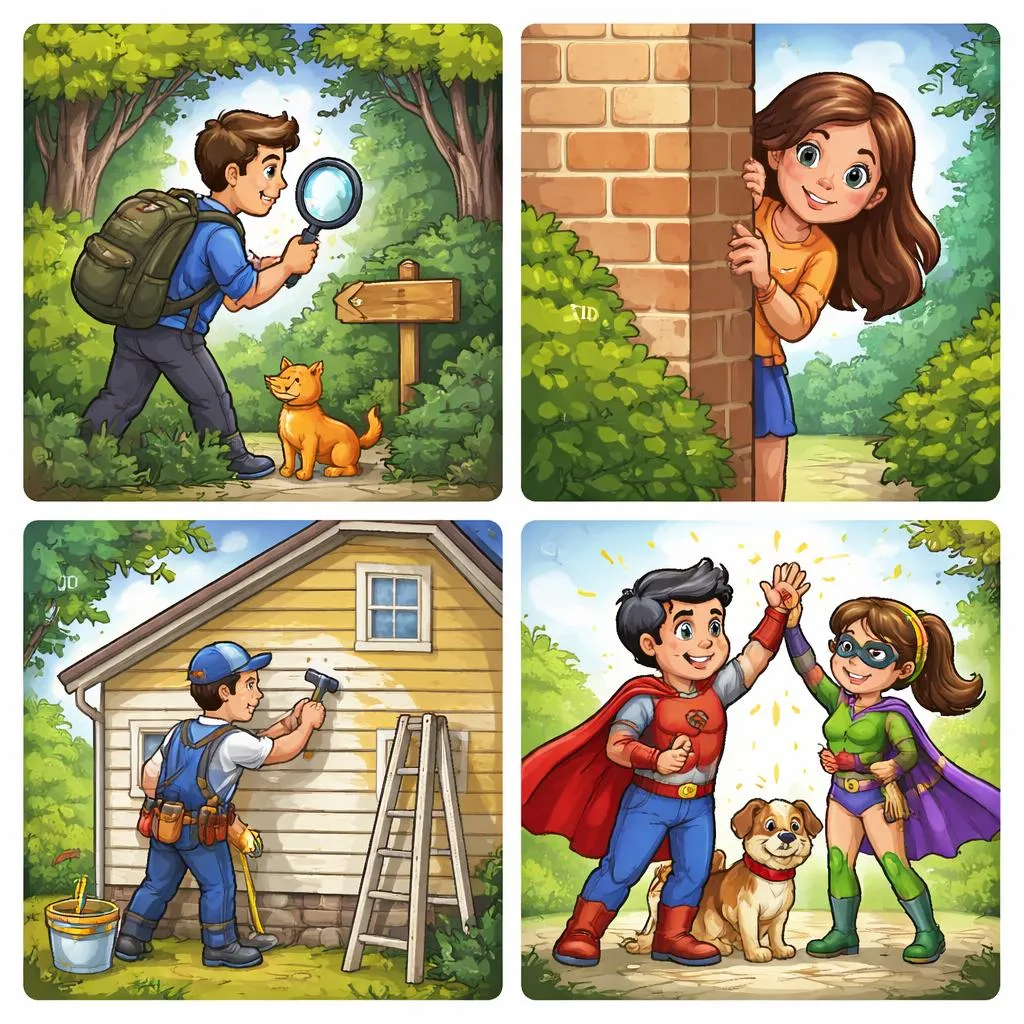

A square has four sides. You turn your head sideways to see something. The words “side, sideways, siding, sidekick” all come from one family. Each word talks about an edge, a direction, or a helper. But each one has a different job in a sentence. Learning this family helps children describe spaces, movements, and friendship. Let us explore these four words together.
What Does “Same Word, Different Forms” Mean? One core idea can grow into many word shapes. The meaning stays the same at the heart. But the word changes its ending for a new role. For example, “side” is usually a noun. “Sideways” is an adverb or adjective. “Siding” is a noun. “Sidekick” is a noun. Knowing these four forms helps a child talk about positions and companions.
Personal Pronouns Change Their Form Pronouns change from “he” to “him” or “his”. Our word family changes by adding suffixes, not by changing person. Think of “side” as the core edge or position. “Sideways” turns that position into a direction. “Siding” turns the idea into a building material. “Sidekick” turns it into a loyal friend or partner. Each form answers a simple question. What edge or position? Side. What direction? Sideways. What covers a house? Siding. Who helps a hero? Sidekick.
From Verb to Noun to Adjective to Adverb – One Family, Many Words This family has nouns, an adverb, and an adjective. Let us start with the noun “side”. Noun: The left side of the room is brighter. “Side” means an edge, surface, or position next to something.
Next is the word “sideways”. Adverb: Please move sideways so I can pass. “Sideways” means toward one side. “Sideways” can also be an adjective. Adjective: He gave me a sideways glance.
Then we have the noun “siding”. Noun: The house has blue vinyl siding. “Siding” means the outer covering on a building.
Finally the noun “sidekick”. Noun: Batman’s sidekick is Robin. “Sidekick” means a close companion who helps someone. This family has no verb form. That is fine. Many families focus on positions and things.
One Root, Many Roles – How Words Grow from Actions to Qualities The Old English word “side” meant flank or long part. From this root, we built a spatial family. “Side” kept the main noun meaning. Adding -ways made “sideways” (direction toward the side). Adding -ing made “siding” (the material on the side of a building). Adding -kick made “sidekick” (a partner who stands by your side). Children can see the same pattern in other families. For example, “back, backwards, backing, backer”. Also “front, frontwards, fronting, frontrunner”. Learning compound words like “sidekick” is fun and useful.
Same Meaning, Different Jobs – Is It a Verb or a Noun? Look at each word’s job carefully. “Side” is a noun. Example: Which side of the street has shade?
“Sideways” is an adverb or an adjective. Adverb example: The crab walks sideways. Adjective example: A sideways look told me to stop.
“Siding” is a noun. Example: The old siding needs painting.
“Sidekick” is a noun. Example: Every hero needs a loyal sidekick. Each form has a clear job. That makes this family easy to learn. Only “sideways” has two roles, but both are about direction.
Adjectives and Adverbs – When Do We Add -ly? “Sideways” is already an adverb. It does not need -ly. In fact, we never say “sidewaysly”. Many direction words use -ways: always, anyway, sideways. Teach this as a small group of special words. Other examples: “lengthwise, crosswise, clockwise”. For young learners, focus on “sideways” as the main adverb. A simple reminder: “Sideways tells where or how. You move sideways. You look sideways.”
Watch Out for Tricky Spelling Changes (Double Letters, y to i, and More) “Side” has no double letters. Add -ways to make “sideways”. Side + ways = sideways (no changes). Add -ing to make “siding”. Side + ing = siding (drop the final e). We drop the e because English avoids two vowels in a row. Add -kick to make “sidekick”. Side + kick = sidekick (no changes). A common mistake is writing “sideing” for “siding”. Say “Siding has no e. Drop the e from side before adding ing.” Another mistake is “sidekick” spelled “sidekik”. Say “Kick has a ck. Sidekick has a ck.” Another mistake is writing “sides” instead of “side”. “Sides” means multiple edges. That is fine, but it is plural, not a different word.
Let’s Practice – Can You Choose the Right Form? Try these sentences with your child. Read each one aloud. Pick the correct word from the family.
The right ______ of the car has a scratch. Answer: side (noun)
The crab moved ______ across the sand. Answer: sideways (adverb)
The house needs new wooden ______. Answer: siding (noun)
The superhero’s ______ helped save the day. Answer: sidekick (noun)
Which ______ of the bed do you sleep on? Answer: side (noun)
He gave me a ______ hug without turning his body. Answer: sideways (adjective)
The workers installed blue ______ on the garage. Answer: siding (noun)
A good ______ supports the hero without taking the spotlight. Answer: sidekick (noun)
I parked on the ______ of the road. Answer: side (noun)
The bookshelf fell ______ and hit the wall. Answer: sideways (adverb)
After the practice, ask your child one question. Is this word an edge, a direction, a building material, or a helper friend? That simple question teaches grammar through real objects and roles.
Tips for Parents – Help Your Child Learn Word Families in a Fun Way Use a box to teach “side”. Point to each face of the box. Say “This is one side.” Count all six sides together.
Use walking to teach “sideways”. Walk forward. Say “This is forward.” Walk sideways like a crab. Say “Now I am moving sideways.” Ask your child to try.
Drive through a neighborhood to teach “siding”. Point to a wooden house. Say “That house has wood siding.” Point to a vinyl house. Say “That siding is blue.”
Use a favorite story to teach “sidekick”. Ask “Who is the hero’s best friend?” Say “That friend is the sidekick.” Examples: Robin to Batman, Donkey to Shrek, Tinker Bell to Peter Pan.
Play “fill in the blank” during car rides. Say “The left ______ of the road has more trees.” (side) Say “A fish swims ______ sometimes.” (sideways) Say “The house needs new ______ before winter.” (siding) Say “A funny ______ makes the hero look better.” (sidekick)
Read a picture book with clear left and right. Ask “Which side is the dog on?”
Turn a drawing activity into a word lesson. Draw a square. Label each edge “side”. Draw a crab. Draw an arrow showing “sideways”. Draw a house. Color one wall and label “siding”. Draw a superhero and a smaller person next to them. Label “sidekick”.
When your child makes a mistake, stay calm. If they say “Look at the side of the boxs,” say “Almost. The box has sides. Side is one edge. Sides are many edges.” If they say “He moved side,” say “Close. He moved sideways. Side is the edge. Sideways is the direction.”
Write the four words on sticky notes. Put them on a wall or a door. Each time you pass through a doorway, point to the left side and right side.
Remember that spatial words are everywhere. Use them during play, walks, and chores. Soon your child will name every side of a room. They will walk sideways like a crab for fun. They will notice siding on houses in your town. And they will call their best friend a sidekick. That is the joy of learning one small word family together.