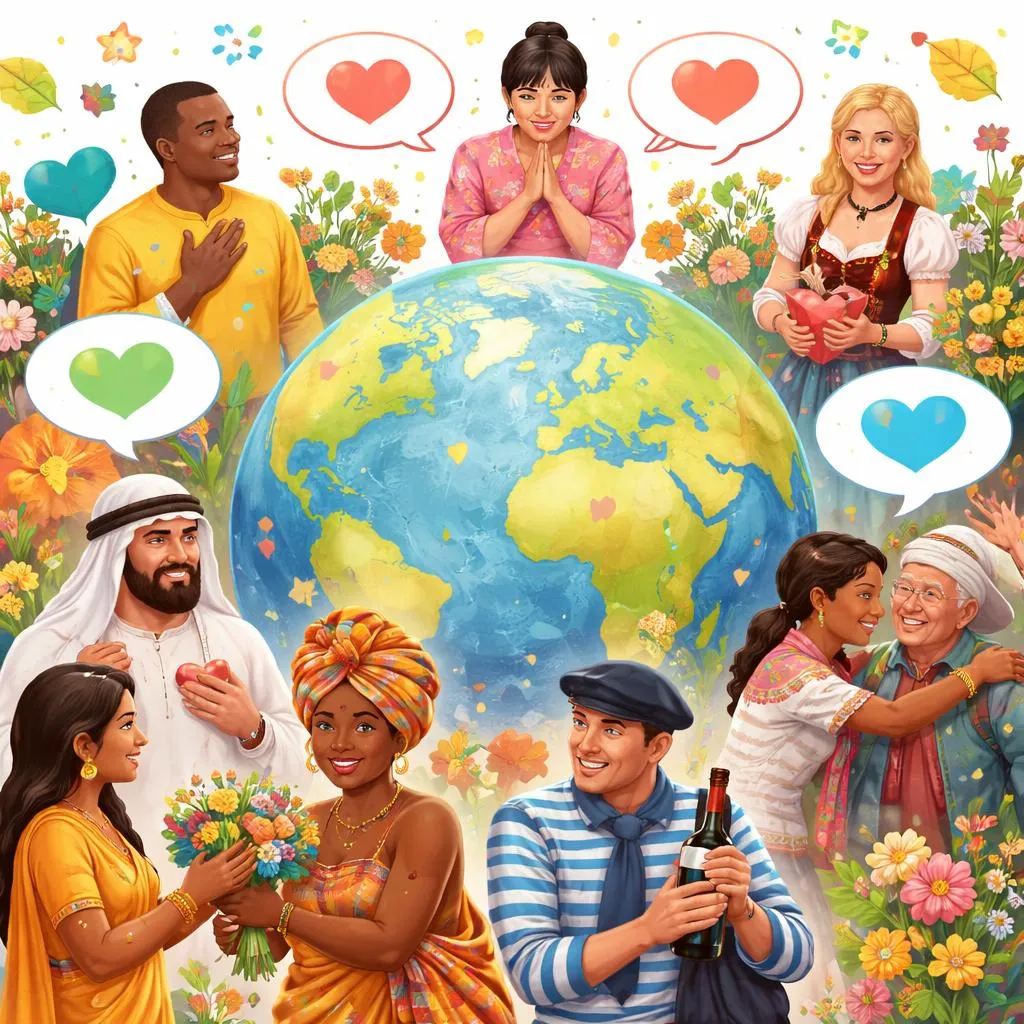

Saying thank you is important.
It shows respect.
It shows appreciation.
Every culture values gratitude.
Every language has its own expression.
The words sound different.
The meaning is universal.
How Is Thank You Said in European Languages?
Spanish Gracias
French Merci
German Danke
Italian Grazie
Portuguese Obrigado (male speaker) Obrigada (female speaker)
Dutch Dank je
Swedish Tack
Polish Dziękuję
Greek Ευχαριστώ
These languages belong to different language families.
Pronunciation patterns vary.
Spelling systems differ.
Gratitude remains clear and direct.
How Is Thank You Said in Asian Languages?
Chinese (Mandarin) 谢谢
Japanese ありがとう
Korean 감사합니다
Thai ขอบคุณ
Vietnamese Cảm ơn
Hindi धन्यवाद
Indonesian Terima kasih
Filipino (Tagalog) Salamat
Some Asian languages use tones.
Some change endings for politeness.
Some use honorific grammar.
Respect is built into structure.
Context guides choice.
How Is Thank You Said in the Middle East and Africa?
Arabic شكرا
Turkish Teşekkür ederim
Persian ممنون
Swahili Asante
Zulu Ngiyabonga
Yoruba Ẹ ṣé
Hausa Na gode
Africa and the Middle East contain many language families.
Scripts may differ.
Pronunciation systems vary.
Gratitude connects communities.
How Is Thank You Said in the Americas and Indigenous Languages?
English Thank you
French (Canada) Merci
Quechua Sulpayki
Guarani Aguyje
Navajo Ahéhee’
Cherokee Wado
Hawaiian Mahalo
Indigenous languages carry history.
Expressions reflect tradition.
Language connects identity.
Why Learn Thank You in Many Languages?
Learning to say thank you in different languages improves cultural awareness.
It supports travel communication.
It builds professional relationships.
It strengthens social interaction.
It encourages empathy.
It shows effort.
It shows respect.
A simple word of gratitude, spoken in another person’s language with correct pronunciation and appropriate tone, can create meaningful connection, strengthen intercultural understanding, and demonstrate appreciation across diverse linguistic, cultural, and social environments in today’s global society.
How Do Historical Contact and Trade Influence Thank You Expressions?
Language changes over time.
Trade spreads words.
Migration spreads sounds.
Cultural contact shapes vocabulary.
Some gratitude words travel across borders because long periods of commercial exchange, political interaction, and cultural influence allow certain polite expressions to become widely recognized beyond their original linguistic communities.
Borrowed words appear in neighboring languages.
Pronunciation may shift slightly.
Spelling may adapt to new scripts.
Meaning usually remains stable.
Historical contact leaves linguistic traces.
Gratitude terms sometimes reflect religious influence.
Religious traditions shape polite formulas.
Ceremonial language affects formal thanks.
History shapes vocabulary patterns.
How Do Social Hierarchies Affect Thank You Usage?
In many societies, age matters.
Status matters.
Professional rank matters.
Language adjusts to hierarchy because speakers often modify vocabulary, tone, and grammatical endings when addressing elders, teachers, supervisors, or officials in order to demonstrate respect and maintain appropriate social boundaries.
Honorific systems exist in some languages.
Verb endings may change.
Pronouns may change.
Sentence structure may expand.
Politeness markers signal awareness.
Informal speech signals familiarity.
Correct choice strengthens relationships.
Incorrect choice may create discomfort.
Sociolinguistic awareness improves communication.
How Does Tone Influence Sincerity?
Words alone are not enough.
Voice quality matters.
Speed affects meaning.
Intonation shapes perception because rising or falling pitch patterns can signal enthusiasm, indifference, gratitude, or sarcasm depending on context and cultural interpretation.
Soft tone may sound gentle.
Flat tone may sound neutral.
Sharp tone may sound impatient.
Cultural expectations differ.
Prosody carries emotional weight.
Listening carefully improves understanding.
Expressive control improves clarity.
How Do Children Acquire Gratitude Expressions Across Cultures?
Language acquisition begins early.
Polite formulas appear in childhood.
Imitation supports learning.
Repetition strengthens habit because consistent modeling within family and educational environments reinforces the association between social interaction and verbal appreciation.
Children connect actions with words.
They observe adults.
They practice routine phrases.
Gradual development increases complexity.
Longer phrases appear later.
Cultural norms guide teaching.
Language socialization builds empathy.
How Do Multilingual Speakers Switch Between Thank You Forms?
Multilingual speakers adjust language quickly.
Context determines choice.
Audience influences vocabulary.
Code-switching occurs naturally because bilingual and multilingual individuals often select gratitude expressions based on situational appropriateness, social relationship, and communicative goal within a single interaction.
Professional setting requires formality.
Family setting allows informality.
International meetings require clarity.
Language flexibility supports adaptability.
Cognitive awareness strengthens accuracy.
Practice increases fluency.
How Does Script Diversity Affect Written Thank You?
Languages use different writing systems.
Some use Latin alphabet.
Some use Cyrillic.
Some use Arabic script.
Some use syllabaries or logographic systems because orthographic traditions develop historically and shape how gratitude expressions appear visually across regions.
Visual form influences recognition.
Typography influences presentation.
Digital keyboards influence usage.
Standardization supports education.
Literacy strengthens preservation.
Script diversity reflects history.
How Do Idiomatic Expressions Express Gratitude?
Some languages use idioms.
Some use metaphors.
Expressions may extend beyond simple thank you because cultural creativity allows gratitude to appear in poetic, symbolic, or expanded forms that convey deeper emotional tone.
Blessings may replace thanks.
Wishes may express appreciation.
Honor phrases may appear in ceremonies.
Idioms add richness.
Figurative language increases nuance.
Context determines interpretation.
How Does Globalization Influence Gratitude Language?
International travel increases contact.
Media spreads vocabulary.
English expressions appear worldwide.
Loanwords circulate globally because digital communication, tourism, and multinational business interactions expose speakers to new polite formulas that may gradually enter local usage patterns.
Hybrid expressions develop.
Accent adapts borrowed words.
Local grammar integrates foreign terms.
Language evolves continuously.
Globalization accelerates change.
How Does Expressing Gratitude Strengthen Social Bonds?
Gratitude reduces tension.
Gratitude acknowledges effort.
Gratitude encourages cooperation because recognizing another person’s contribution reinforces positive social dynamics and promotes mutual respect within communities.
Teams function better with appreciation.
Families benefit from positive language.
Workplaces value polite communication.
Schools promote respectful interaction.
Social harmony depends on courtesy.
Language supports harmony.
Linguistic Depth Behind Simple Words
A short phrase may appear simple.
Structure may be complex.
Hidden grammar may exist because even brief gratitude expressions can encode tense, person, gender, honorific level, or cultural expectation within compact morphological units shaped by historical development and sociolinguistic norms.
Surface simplicity hides structural detail.
Linguistic diversity enriches expression.
Comparative study reveals variation.
Understanding deepens respect.
Expanding Global Communication Awareness
Learning thank you in many languages broadens worldview.
It increases phonological awareness.
It improves memory retention.
It strengthens intercultural competence because exposure to diverse lexical systems enhances cognitive flexibility and encourages appreciation for the intricate ways in which human societies encode politeness, reciprocity, and interpersonal recognition within language.
Repeated exposure builds confidence.
Active practice builds fluency.
Cultural curiosity promotes growth.
Language knowledge empowers communication.
A simple act of expressing gratitude across linguistic boundaries, when delivered with careful pronunciation, contextual awareness, and cultural sensitivity, becomes a meaningful bridge that connects individuals from different backgrounds while highlighting the remarkable structural diversity and shared human values embedded within global languages.