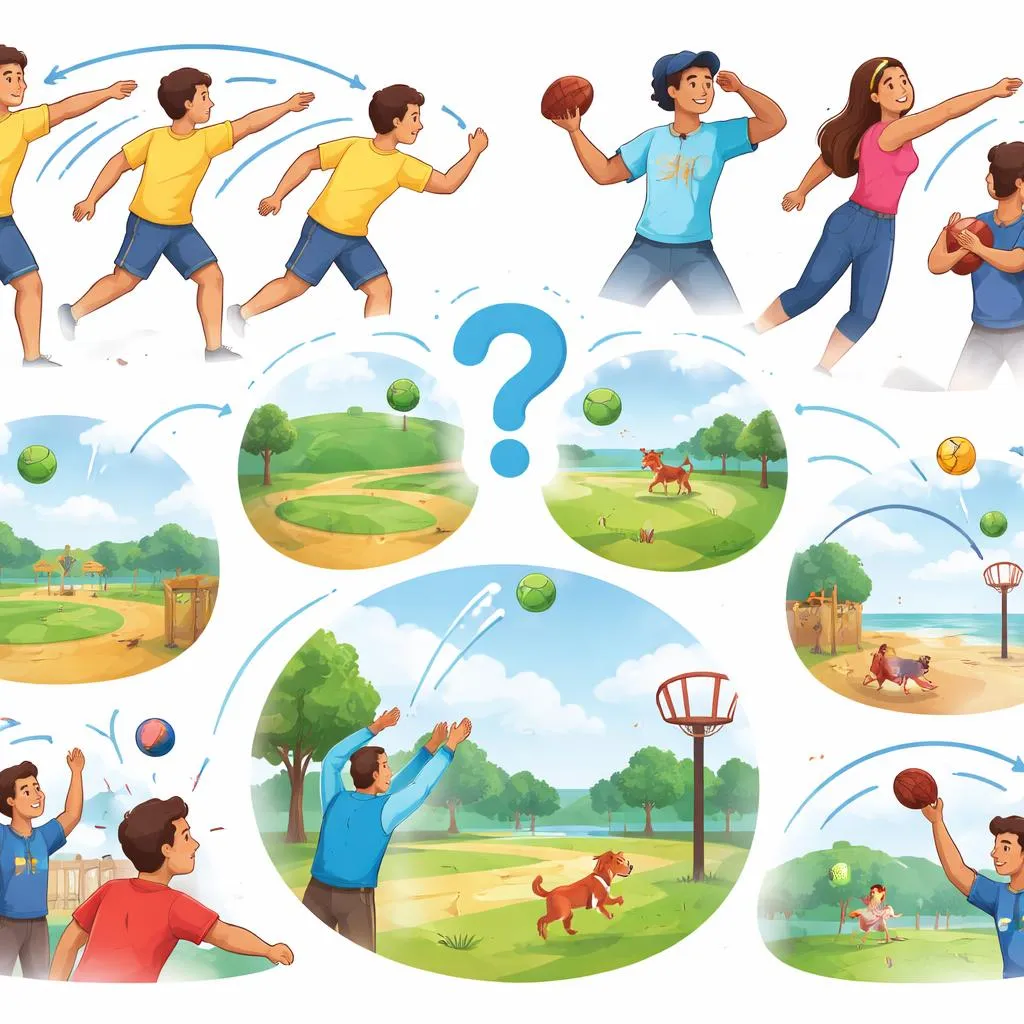

You throw a ball to your dog. A good thrower aims carefully. The words “throw, thrower, throwing, thrown, overthrow” all come from one family. Each word talks about sending something through the air. But each one has a different job in a sentence. Learning this family helps children describe sports, accidents, and even revolutions. Let us explore these five words together.
What Does “Same Word, Different Forms” Mean? One core idea can grow into many word shapes. The meaning stays the same at the heart. But the word changes its ending or adds a prefix for a new role. For example, “throw” is a verb or a noun. “Thrower” is a noun. “Throwing” is a noun or a verb form. “Thrown” is a verb form (past participle). “Overthrow” is a verb or a noun. Knowing these five forms helps a child talk about tossing and power.
Personal Pronouns Change Their Form Pronouns change from “he” to “him” or “his”. Our word family changes by adding suffixes and prefixes. Think of “throw” as the core action of propelling. “Thrower” turns that action into a person. “Throwing” turns the action into an activity. “Thrown” shows the action is done (past participle). “Overthrow” adds “over-” to mean defeat or to throw too far. Each form answers a simple question. What action? Throw. Who throws? Thrower. What activity? Throwing. What is the past participle? Thrown. What action defeats a leader or throws too far? Overthrow.
From Verb to Noun to Adjective to Adverb – One Family, Many Words This family has verbs, nouns, and a verb form. Let us start with the verb “throw”. Verb: Throw the paper in the bin. “Throw” means to send something through the air with your arm.
“Throw” can also be a noun. Noun: That was a good throw.
Next is the noun “thrower”. Noun: The quarterback is a skilled thrower. “Thrower” means a person who throws.
Then “throwing” as a noun. Noun: Throwing a ball is fun. “Throwing” can also be a verb form. Verb (ongoing): He is throwing the frisbee.
Then “thrown” as a verb form. Verb (past participle): The ball was thrown across the field.
Finally the verb “overthrow”. Verb: The rebels tried to overthrow the king. “Overthrow” can also be a noun. Noun: The overthrow of the government happened quickly. “Overthrow” also means to throw a ball too far. Verb: The quarterback overthrew the receiver.
One Root, Many Roles – How Words Grow from Actions to Qualities The Old English word “trawan” meant to twist or throw. From this root, we built a family about propelling. “Throw” kept the main verb and noun meanings. Adding -er made “thrower” (the person). Adding -ing made “throwing” (the activity). Adding -n (past participle) made “thrown” (done). Adding the prefix “over-” made “overthrow” (to throw over or defeat). Children can see the same pattern in other families. For example, “blow, blower, blowing, blown, overblow”. Learning prefixes helps kids understand leadership changes.
Same Meaning, Different Jobs – Is It a Verb or a Noun? Look at each word’s job carefully. “Throw” can be a verb or a noun. Verb example: Throw me the keys. Noun example: That was a perfect throw.
“Thrower” is a noun. Example: A good thrower practices a lot.
“Throwing” is a noun or a verb form. Noun example: Throwing rocks is dangerous. Verb example: She is throwing a party.
“Thrown” is a verb form (past participle). Example: The ball was thrown high.
“Overthrow” can be a verb or a noun. Verb example: The army overthrew the dictator. Noun example: The overthrow shocked the world. Each form has a clear job.
Adjectives and Adverbs – When Do We Add -ly? This family has no common adverb form. We do not say “throwingly.” Use other words to describe throwing. Example: She threw accurately. For young learners, focus on the different meanings of “overthrow.” A simple reminder: “Overthrow a leader means remove from power. Overthrow a ball means throw past the target.”
Watch Out for Tricky Spelling Changes (Double Letters, y to i, and More) “Throw” has no double letters. Add -er to make “thrower”. Throw + er = thrower (no changes). Add -ing to make “throwing”. Throw + ing = throwing (no changes). Add -n (past participle) to make “thrown”. Throw + n = thrown (no changes). Add prefix “over-” to make “overthrow”. Over + throw = overthrow (no changes). A common mistake is writing “throw” as “throe” (which means pain). Say “Throw has a w, like show and slow.” Another mistake is “thrower” spelled “throer” (missing w). Say “Thrower keeps the w.” Another mistake is “throwing” spelled “throing” (missing w). Say “Throwing has a w.” Another mistake is “overthrow” spelled “overthrow” (correct) but some write “over throw” as two words. “Overthrow” as one word is correct.
Let’s Practice – Can You Choose the Right Form? Try these sentences with your child. Read each one aloud. Pick the correct word from the family.
Please ______ the ball to me. Answer: throw (verb)
The pitcher is a fast ______. Answer: thrower (noun)
______ a boomerang is tricky. Answer: throwing (noun)
The crumpled paper was ______ into the trash can. Answer: thrown (verb form)
The citizens tried to ______ the unfair leader. Answer: overthrow (verb)
That was a wild ______. The ball went past me. Answer: throw (noun)
The child is ______ the toy across the room. Answer: throwing (verb form)
A good ______ aims and releases smoothly. Answer: thrower (noun)
The ball was ______ so high it got stuck in a tree. Answer: thrown (verb form)
The ______ of the king led to a new ruler. Answer: overthrow (noun)
After the practice, ask your child one question. Is this word an action, a person, an activity, a done action, or a defeat/over-throw? That simple question teaches grammar through motion and history.
Tips for Parents – Help Your Child Learn Word Families in a Fun Way Use a ball to teach “throw”. Say “Throw the ball gently so I can catch it.”
Use a baseball player to teach “thrower”. Say “A pitcher is a thrower.”
Use a game to teach “throwing”. Say “Throwing a beanbag into a hole takes practice.”
Use a crumpled paper to teach “thrown”. Say “The paper was thrown away.”
Use a story about a kingdom to teach “overthrow”. Say “In stories, rebels overthrow a bad king.” Also use “overthrow” in sports. Say “The quarterback overthrew the receiver.”
Play “fill in the blank” during car rides. Say “______ the stick for the dog.” (throw) Say “A good ______ never throws at someone’s face.” (thrower) Say “______ a frisbee is fun at the beach.” (throwing) Say “The truck was ______ into reverse.” (thrown - into gear) Say “The team hopes to ______ the champions.” (overthrow)
Read a story about a sport or a revolution. Ask “Who is the best thrower?” Ask “What happens when people overthrow a ruler?”
Turn a drawing activity into a word lesson. Draw a hand with a ball. Label “throw”. Draw a person in a pitcher’s stance. Label “thrower”. Draw a motion arrow from a hand. Label “throwing action”. Draw a ball in the air with “past” written. Label “thrown”. Draw a falling crown. Label “overthrow a king”.
When your child makes a mistake, stay calm. If they say “The overthrow the ball,” say “Almost. He overthrew the ball. Overthrow is the verb for past tense? Overthrew is the past tense of overthrow.” If they say “He is a throw,” say “Close. He is a thrower. Throw is the action. Thrower is the person.”
Write the five words on sticky notes. Put them on a wall near your sports equipment. Each time you play catch, point to “throw”.
Remember that throwing needs care. Use these words to teach safety. “Do not throw at people.” “A responsible thrower looks first.” Soon your child will throw a ball with skill. They will become a good thrower. They will enjoy throwing games. They will know a ball that is thrown far. And they will learn what overthrow means in games and in history. That is the powerful motion of learning one small word family together.