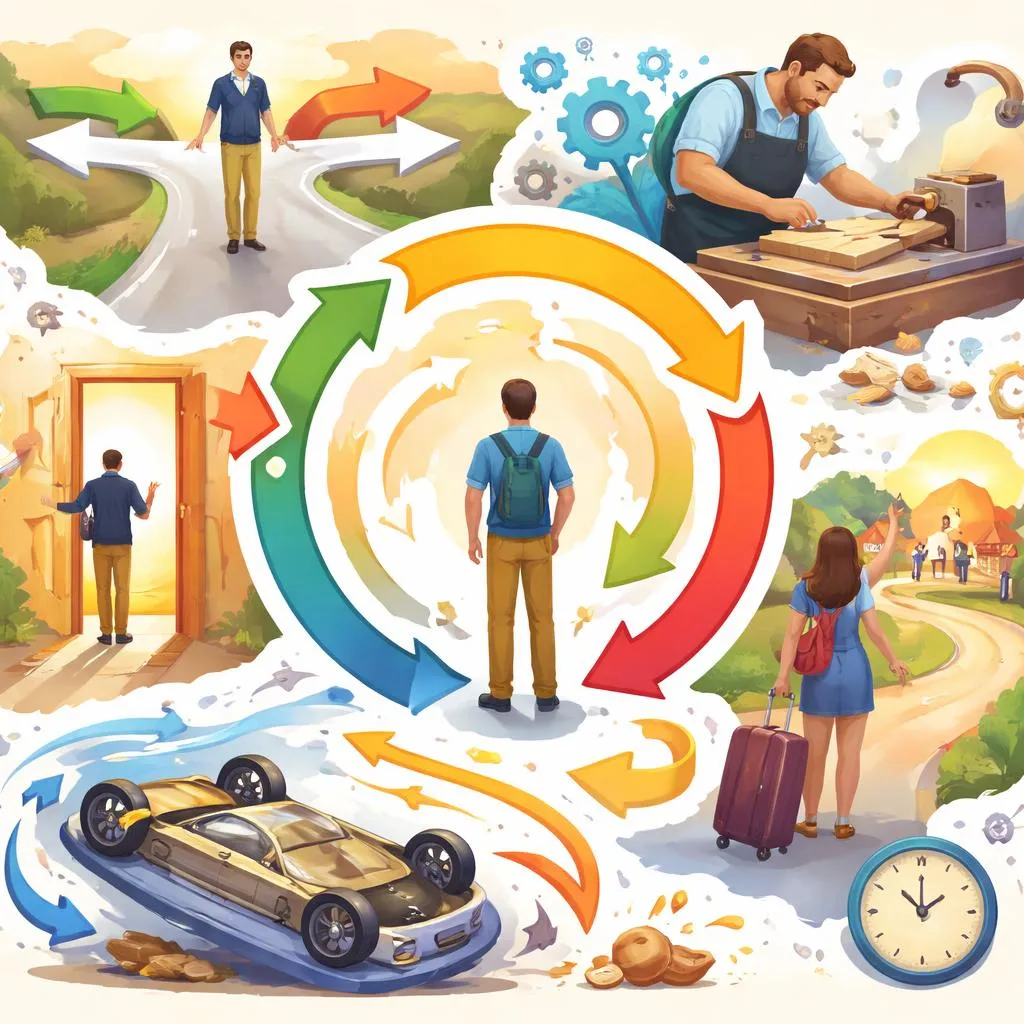

You turn the page to read more. A turner helps you flip pancakes. The words “turn, turner, turning, return, overturn” all come from one family. Each word talks about changing direction or position. But each one has a different job in a sentence. Learning this family helps children describe movement and change. Let us explore these five words together.
What Does “Same Word, Different Forms” Mean? One core idea can grow into many word shapes. The meaning stays the same at the heart. But the word changes its ending or adds a prefix for a new role. For example, “turn” is a verb or a noun. “Turner” is a noun. “Turning” is a noun or a verb form. “Return” is a verb or a noun. “Overturn” is a verb or a noun. Knowing these five forms helps a child talk about rotation and reversal.
Personal Pronouns Change Their Form Pronouns change from “he” to “him” or “his”. Our word family changes by adding suffixes and prefixes. Think of “turn” as the core action of rotating. “Turner” turns that action into a person or a tool. “Turning” turns the action into an activity. “Return” adds “re-” to mean go back. “Overturn” adds “over-” to mean flip over or cancel. Each form answers a simple question. What action? Turn. Who or what turns? Turner. What activity? Turning. What action goes back? Return. What action flips over? Overturn.
From Verb to Noun to Adjective to Adverb – One Family, Many Words This family has verbs and nouns. Let us start with the verb “turn”. Verb: Turn left at the next street. “Turn” means to change direction or rotate.
“Turn” can also be a noun. Noun: It is your turn to roll the dice. “Turn” means a chance in a sequence.
Next is the noun “turner”. Noun: The pancake turner is in the drawer. “Turner” means a tool for flipping or a person who turns.
Then “turning” as a noun. Noun: The turning of the seasons brings change. “Turing” can also be a verb form. Verb (ongoing): The earth is turning on its axis.
Then the verb “return”. Verb: Please return the book to the library. “Return” can also be a noun. Noun: We look forward to your return home.
Finally the verb “overturn”. Verb: The strong wind could overturn the small boat. “Overturn” can also be a noun. Noun: The overturn of the law surprised everyone.
One Root, Many Roles – How Words Grow from Actions to Qualities The Old English word “turnian” came from Latin “tornare” (to turn on a lathe). From this root, we built a family about rotation. “Turn” kept the main verb and noun meanings. Adding -er made “turner” (the person or tool). Adding -ing made “turning” (the activity). Adding the prefix “re-” made “return” (to turn back). Adding the prefix “over-” made “overturn” (to turn over). Children can see the same pattern in other families. For example, “spin, spinner, spinning, respin, overspin”. Learning the prefixes “re-” and “over-” helps kids understand actions.
Same Meaning, Different Jobs – Is It a Verb or a Noun? Look at each word’s job carefully. “Turn” can be a verb or a noun. Verb example: Turn the doorknob gently. Noun example: Wait for your turn.
“Turner” is a noun. Example: A spatula is a pancake turner.
“Turning” is a noun or a verb form. Noun example: The turning point changed everything. Verb example: The wheels are turning.
“Return” can be a verb or a noun. Verb example: Return the toy to the shelf. Noun example: The return of spring is welcome.
“Overturn” can be a verb or a noun. Verb example: The cat might overturn the water bowl. Noun example: The overturn of the table made a mess. Each form has a clear job.
Adjectives and Adverbs – When Do We Add -ly? This family has no common adverb form. We can make “turningly” but it is rare. Use other words to describe turning. Example: The wheels turned smoothly. For young learners, focus on the verbs. A simple reminder: “Turn is to rotate. Return is to go back. Overturn is to flip over.”
Watch Out for Tricky Spelling Changes (Double Letters, y to i, and More) “Turn” has no double letters. Add -er to make “turner”. Turn + er = turner (no changes). Add -ing to make “turning”. Turn + ing = turning (no changes). Add the prefix “re-” to make “return”. Re + turn = return (no changes). Add the prefix “over-” to make “overturn”. Over + turn = overturn (no changes). A common mistake is writing “turn” as “turm” (switched letters). Say “Turn has T-U-R-N.” Another mistake is “turner” spelled “turner” (correct) but some write “turner” (same). Good. Another mistake is “turning” spelled “turning” (correct) but some write “turning” (same). Good. Another mistake is “return” spelled “return” (correct) but some write “retrun” (switched letters). Say “Return is RE + TURN.” Another mistake is “overturn” spelled “overturn” (correct) but some write “over turn” as two words. “Overturn” as one word is correct.
Let’s Practice – Can You Choose the Right Form? Try these sentences with your child. Read each one aloud. Pick the correct word from the family.
Please ______ the page to see the next picture. Answer: turn (verb)
A piece of paper can be a book page ______. Answer: turner (noun)
The ______ of the earth gives us day and night. Answer: turning (noun)
Please ______ the library book when you are finished. Answer: return (verb)
The big wave could ______ the small boat. Answer: overturn (verb)
It is my ______ to choose the game. Answer: turn (noun)
The spatula is a pancake ______. Answer: turner (noun)
The car is ______ right at the corner. Answer: turning (verb form)
We are looking forward to your ______ home. Answer: return (noun)
The ______ of the court’s decision was unexpected. Answer: overturn (noun)
After the practice, ask your child one question. Is this word a rotation, a person/tool, an activity, a going-back action, or a flipping action? That simple question teaches grammar through movement.
Tips for Parents – Help Your Child Learn Word Families in a Fun Way Use a game to teach “turn”. Say “It is your turn to hide the toy.”
Use a kitchen tool to teach “turner”. Say “This spatula is a pancake turner.”
Use a wheel to teach “turning”. Say “The turning of the wheel makes the car move.”
Use a trip to the library to teach “return”. Say “We return the books to the library when done.”
Use a bowl to teach “overturn”. Say “Do not overturn the bowl of soup.”
Play “fill in the blank” during car rides. Say “______ right at the stop sign.” (turn) Say “The egg ______ sits by the stove.” (turner) Say “The ______ of the key opened the lock.” (turning) Say “Please ______ the game to the box.” (return) Say “The wind could ______ the umbrella.” (overturn)
Read a story about a bicyclist or a judge. Ask “Where does the character turn?” Ask “Did the court overturn the law?”
Turn a drawing activity into a word lesson. Draw an arrow curving. Label “turn”. Draw a spatula flipping a pancake. Label “turner”. Draw a wheel with motion lines. Label “turning”. Draw a person going back home. Label “return”. Draw a chair flipped on its side. Label “overturn”.
When your child makes a mistake, stay calm. If they say “I will turner the knob,” say “Almost. I will turn the knob. Turner is the tool or person.” If they say “Please return the book back,” say “You can say return the book or bring it back. Return already means back.”
Write the five words on sticky notes. Put them on a wall near a door. Each time you leave and come back, point to “return”.
Remember that turning and returning are part of life. Use these words to teach patience. “Your turn will come.” Soon your child will know when to turn. They will use a turner in the kitchen. They will understand the turning of the seasons. They will return things after using them. And they will never overturn a glass of milk on purpose. That is the circular power of learning one small word family together.