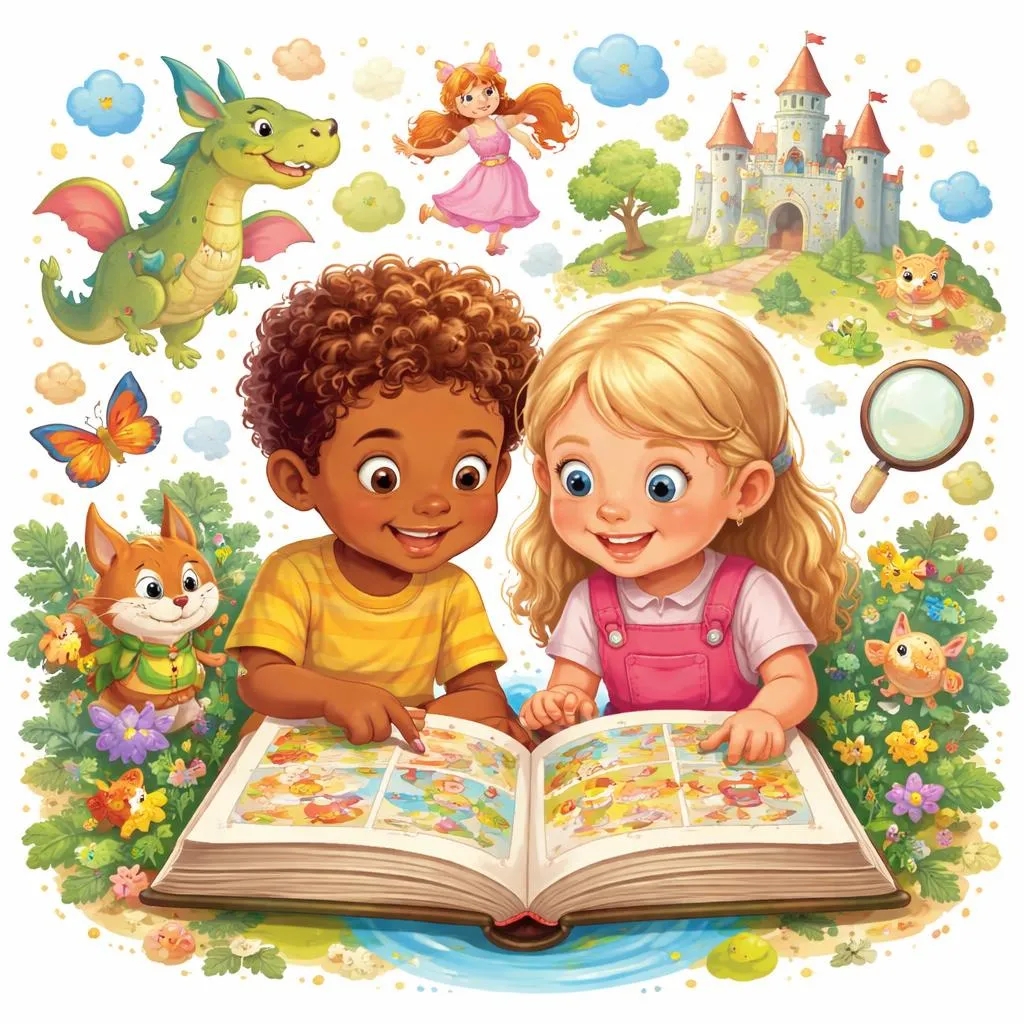

Pictures carry meaning that words alone cannot convey. They show relationships between characters. They reveal settings and emotions. Children's story illustration provides this visual support systematically. Each image connects to text on the page. This combination creates multiple pathways to understanding. This article explores practical teaching applications for illustrated stories. The focus remains on language development through visual art. Let us examine how illustrations support English learning.
What Is Children's Story Illustration? Children's story illustration refers to the images accompanying narrative text in books for young readers. These pictures serve multiple purposes. They show what characters look like. They depict settings where action occurs. They reveal emotional states through facial expressions. They add details not mentioned in words.
Illustrations range from simple line drawings to elaborate paintings. Some books feature pictures on every page. Others include occasional full-page art. The style varies with the story's tone. Funny stories often use cartoon-like images. Serious stories may use realistic or atmospheric art. The common thread involves visual support for verbal content.
Vocabulary Learning Through Illustrations Children's story illustration provides visual definitions for new words. When text introduces "giraffe," the picture shows a giraffe. When characters enter a "castle," the illustration reveals towers and walls. This immediate visual reference builds word meaning without translation.
Concrete nouns become clear through pictures. Objects unfamiliar in daily life appear in illustrations. "Carriage," "cottage," "crown," and "cave" gain meaning through images. Students see what these words represent.
Action verbs gain clarity through illustrated movement. "Leap," "crawl," "soar," and "dive" show characters in motion. The picture reveals what the action looks like. This visual support aids verb acquisition.
Descriptive adjectives connect to visual qualities. "Enormous" characters fill the page. "Tiny" creatures appear small. "Shiny" objects sparkle in illustrations. Color words match actual hues. Size words match actual proportions.
Story Comprehension Through Visual Support Children's story illustration supports understanding of narrative elements. Character identification becomes immediate. Readers see who is who. They track characters across pages using visual recognition. This frees cognitive resources for following plot.
Setting comprehension deepens through environmental art. A forest looks different from a desert. A castle differs from a cottage. Illustrations establish atmosphere. They show time of day and weather conditions. This contextual information supports overall understanding.
Emotional content becomes visible through facial expressions. Happy characters smile. Sad characters cry. Angry characters frown. Students read these visual cues. They connect feelings to story events. This builds emotional vocabulary alongside plot comprehension.
Sequence relationships appear through page layout. Multiple illustrations on one page may show time passing. Characters moving across spreads reveal journey progress. Visual sequencing reinforces narrative structure.
Grammar Patterns in Illustrated Stories Children's story illustration makes grammatical relationships visible. Prepositions show clearly in pictures. "The cat is under the table" appears visually. "The bird flies over the house" shows the spatial relationship. Students see what prepositions mean.
Pronoun reference becomes clear through consistent illustration. Characters maintain visual identity across pages. When text says "he" or "she," the picture shows which character. This visual support clarifies pronoun reference.
Plural forms appear in illustrations. One dog versus three dogs shows the difference. The visual quantity reinforces grammatical number. Students internalize plural markers through repeated visual exposure.
Verb tense sometimes connects to illustration style. Past tense events may appear in sepia tones. Present tense action may use bright colors. Some illustrations show change over time. This visual tense marking supports understanding.
Learning Activities with Illustrations Several activities work well with children's story illustration. Picture prediction activates prior knowledge. Show illustrations without reading text. Ask what might happen in the story. Students use visual clues to guess plot. This builds inferential thinking.
Wordless picture walks develop narrative language. Cover the text. Move through illustrations page by page. Students tell the story using only pictures. This builds oral narrative skills.
Detail detection practices careful observation. Ask specific questions about illustrations. "What color is the mother's dress?" "How many birds are in the tree?" "What is on the table?" This builds attention to visual information.
Illustration comparison develops analytical thinking. Show illustrations from different versions of the same story. Compare artistic styles. Compare what each illustrator emphasized. This builds visual literacy.
Printable Flashcards from Illustrations Illustrations themselves become excellent flashcards. Scan or photocopy key images from children's story illustration. Create cards with pictures on one side. Add vocabulary words on the reverse.
Character flashcards feature main figures. Each card shows a story character. Students name the character and recall one story fact. This builds character recognition and story recall.
Setting flashcards depict story locations. Forest, castle, cottage, and cave images provide setting vocabulary. Students describe what happens in each location.
Object flashcards highlight key items. Magical objects, important tools, and special foods appear in many stories. Students match objects to the stories where they appear.
Educational Games with Illustrations Games transform children's story illustration into interactive experiences. Illustration bingo works well. Create cards with story elements shown in pictures. Call out descriptions. Students mark matches on their cards.
Match game pairs illustrations with text. Create cards with pictures and cards with corresponding sentences. Students match each picture to the text it illustrates. This builds text-picture connection understanding.
Story sequencing with illustration copies supports comprehension. Provide multiple pictures from one story. Students arrange them in correct order. This builds understanding of narrative structure.
Draw that scene engages creative visualization. Read a descriptive passage without showing the illustration. Students draw what they imagine. Compare drawings to the actual illustration. This builds visualization skills essential for reading.
Printable Materials for Illustration Lessons Printable materials support structured learning with illustrated stories. Illustration analysis guides focus attention. Provide simple prompts. What do you see in this picture? What colors did the artist use? How do the characters feel?
Story maps combine words and images. Provide templates with spaces for drawing key scenes and writing short descriptions. Students complete for each story read.
Vocabulary collectors with picture spaces encourage visual word learning. Provide sheets with columns for new words, student drawings, and definitions. Drawing the word strengthens memory.
Comic strip templates allow creative application. Students create their own illustrated stories using vocabulary and structures from studied texts. This combines art with language production.
Art Techniques in Story Illustration Understanding illustration techniques enriches appreciation. Watercolor creates soft, dreamy images. Collage uses cut paper for texture. Digital art offers clean lines. Each style suits different story types.
Color choices carry meaning. Warm colors suggest happiness or energy. Cool colors create calm or sadness. Bright colors attract attention. Muted colors recede. Students notice these choices.
Perspective affects reader experience. Close-up views create intimacy. Wide shots show entire scenes. Bird's-eye views show layouts. Worm's-eye views emphasize size. Students discuss how perspective affects feeling.
Line quality communicates mood. Smooth lines feel calm. Jagged lines create tension. Thick lines feel bold. Thin lines suggest delicacy. Visual vocabulary expands through discussion.
Creating Classroom Illustrations Students benefit from creating their own illustrations. Provide blank paper and art supplies after reading. Ask students to illustrate favorite scenes. This engages multiple learning modalities.
Illustration from description builds comprehension. Read descriptive passages. Ask students to draw what they hear. Compare results. Notice what details everyone included. Notice what varied.
Story innovation through art extends learning. Students change story elements in their illustrations. What if the setting changed? What if a new character appeared? Draw the changed story.
Classroom galleries display student work. Hang illustrations with captions. Students view each other's art. They read accompanying text. This builds classroom community around stories.
Connecting Illustrations to Writing Illustrations inspire writing activities. Students write stories to match wordless picture books. They add text to existing illustrations. They describe their own drawings in words.
Caption writing practices concise expression. Students write one sentence per illustration. This builds summarizing skills. It connects visual and verbal expression.
Speech bubble addition creates dialogue practice. Provide photocopied illustrations without words. Students add speech bubbles showing character conversations. This builds dialogue writing skills.
Illustrated vocabulary journals combine art and language. Students create personal dictionaries with drawings for each word. The visual memory aid supports retention.
Children's story illustration provides essential support for language learners. Pictures make abstract words concrete. They show relationships invisible in text alone. They reveal emotions through facial expressions. They establish settings through visual detail. The combination of image and text creates redundant meaning. When one channel misses information, the other provides it. This redundancy supports comprehension for developing readers. Young learners access stories through pictures while building skills with words. Illustrations bridge the gap between listening comprehension and reading independence.