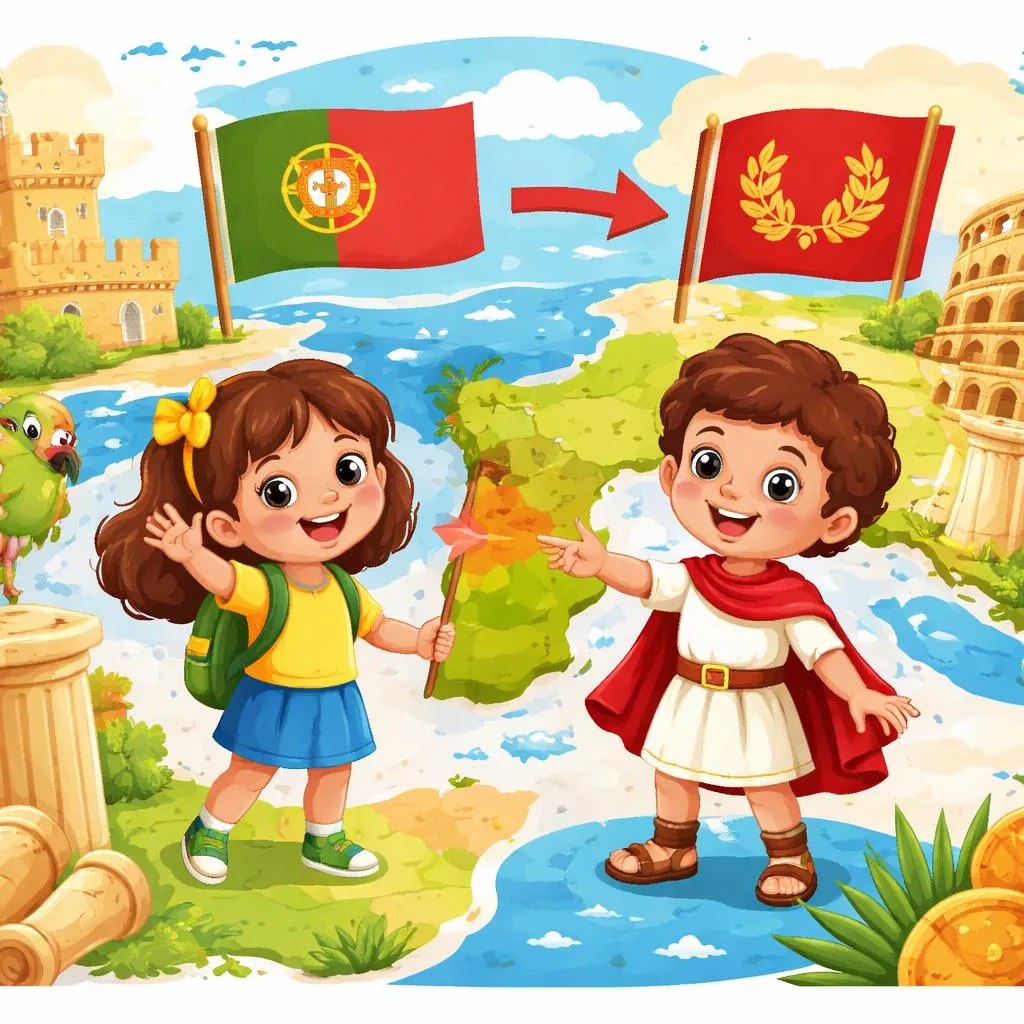

What Is Portuguese Portuguese is a language. People speak it in many countries. People speak it in Portugal. People speak it in Brazil. People speak it in other places too.
Portuguese is used every day. People use it at home. People use it at school. People use it at work.
What Is a Latin Language A Latin language comes from Latin. Latin was spoken long ago. People spoke Latin in ancient times. Latin spread to many places.
Over time, Latin changed. New languages grew from it. These are called Latin languages.
Is Portuguese a Latin Language Yes, Portuguese is a Latin language. It comes from Latin. It grew from the same roots as other languages.
Portuguese belongs to a family. This family is called the Romance languages. Romance languages come from Latin.
Other Latin Languages Spanish is a Latin language. French is a Latin language. Italian is a Latin language. Romanian is a Latin language.
These languages share history. They share similar words. They share similar sounds.
Why Portuguese Is Latin Portuguese words come from Latin words. Many sounds come from Latin sounds. Sentence patterns also come from Latin.
The language changed slowly. Changes happened over many years. The Latin base stayed strong.
Portuguese and Spanish Portuguese and Spanish are similar. They look alike. They sound alike sometimes.
Many words are close. Children can notice similarities easily.
Portuguese and French Portuguese and French share roots. Some words look different. Some words sound different.
The family connection is still there. History connects them.
Portuguese and Italian Italian stays close to Latin. Portuguese also keeps Latin features. Both belong to the same family.
Family languages feel related.
What Romance Languages Mean Romance does not mean love here. Romance means Roman. Roman means Latin speaking people.
This word comes from history. Children learn it slowly.
How Latin Spread Latin spread with the Roman Empire. People moved to new places. They brought Latin with them.
Local speech mixed with Latin. New languages formed.
Portuguese History in Simple Words Portugal was part of this history. Latin arrived long ago. The language slowly changed.
Portuguese became its own language. It kept its Latin base.
Why This Matters for Learning Knowing the language family helps learning. Children see connections. Connections help memory.
Learning one Latin language helps with others. Words feel familiar.
Portuguese Words from Latin Many Portuguese words come from Latin. School words come from Latin. Family words come from Latin.
Children do not need to memorize roots. They notice patterns naturally.
Portuguese Sounds and Latin Some sounds stayed similar. Some sounds changed. Change is normal in languages.
The base remains Latin.
Portuguese Grammar and Latin Portuguese grammar has gender. Latin also had gender. Portuguese verbs change forms. Latin verbs also changed forms.
Structure shows history.
Portuguese Today Portuguese is a modern language. People use it now. It is alive and growing.
Even modern Portuguese keeps Latin roots.
Portuguese and Culture Language connects to culture. Portuguese culture grew with the language. Latin history is part of it.
Children learn culture through language.
Portuguese for Children Children do not need history lessons. They need simple facts. Portuguese comes from Latin.
This answer is enough at first.
Portuguese and Other Language Families Not all languages come from Latin. English is not a Latin language. German is not a Latin language.
Knowing families helps comparison.
Why Language Families Help Families group languages together. They show shared history. They show shared features.
This makes learning clearer.
Portuguese as a Latin Language Review Portuguese comes from Latin. It belongs to the Romance family. It shares roots with Spanish and French.
The answer is clear.
Is Portuguese a Latin Language for Children Yes, Portuguese is a Latin language. It grew from Latin long ago. It shares features with other Latin languages.
Children can remember this easily.
Language Learning and Curiosity Simple questions lead to learning. Curiosity helps growth. Clear answers build confidence.
Learning languages feels exciting.
Portuguese and Language Growth Understanding roots helps later learning. Small facts build big knowledge. Step by step works best.
Language learning stays calm. Confidence grows naturally. Curiosity continues.
Portuguese and Latin Letters Portuguese uses the Latin alphabet. The letters look familiar. Children recognize many letters.
The alphabet helps reading. Familiar shapes feel safe.
Portuguese and Latin Vocabulary Many Portuguese words look like Latin words. Some words sound similar. Some words look similar.
Children notice this slowly. They do not need to memorize lists.
Portuguese and School Words School words often come from Latin. Book words come from Latin. Number words come from Latin.
Learning feels easier with patterns.
Portuguese and Family Words Family words share roots. Mother words are similar. Father words are similar.
Children enjoy spotting similarities.
Portuguese and Daily Words Daily words often have Latin roots. Food words. Home words. Time words.
Everyday language shows history.
Portuguese and Pronunciation Portuguese pronunciation has Latin roots. Some sounds stayed close. Some sounds changed over time.
Change is normal in language.
Portuguese and Stress Patterns Portuguese has stress in words. Latin also had stress. Stress helps meaning.
Children hear stress naturally.
Portuguese and Word Endings Many Portuguese words have endings. Latin also used endings. Endings show meaning.
Children notice endings later.
Portuguese and Gender Portuguese nouns have gender. Latin nouns had gender too. This feature stayed.
Children learn gender slowly. No pressure is needed.
Portuguese and Verbs Portuguese verbs change form. Latin verbs changed form too. The system comes from Latin.
Verb changes come later in learning.
Portuguese and Sentence Order Portuguese sentence order feels familiar. Latin influenced this order. Ideas flow clearly.
Clear structure helps understanding.
Portuguese and Reading Practice Reading Portuguese becomes easier with time. Latin roots help recognition. Familiar patterns support fluency.
Reading feels smoother.
Portuguese and Writing Practice Writing comes after reading. Children write simple words first. Latin roots appear naturally.
Practice builds confidence.
Portuguese and Listening Skills Listening supports learning. Children hear rhythm. They hear melody.
Latin influence shaped rhythm.
Portuguese and Songs Songs help learning. Portuguese songs repeat words. Repetition supports memory.
Music feels joyful.
Portuguese and Stories Stories use common words. Latin roots appear often. Children recognize patterns.
Stories make learning gentle.
Portuguese and Other Romance Languages Portuguese shares words with Spanish. Portuguese shares words with French. Portuguese shares words with Italian.
Family connections feel interesting.
Portuguese and Spanish Comparison Many words look similar. Some sounds differ. Meaning often stays close.
Comparison builds awareness.
Portuguese and French Comparison French sounds are softer. Portuguese sounds are nasal sometimes. Roots are still shared.
Difference does not block understanding.
Portuguese and Italian Comparison Italian stays close to Latin. Portuguese also shows Latin features. Both feel musical.
Music supports memory.
Portuguese and Romanian Romanian is also a Latin language. It sounds different. Roots connect them.
Families can be diverse.
Portuguese and Language Families Language families group languages. Latin languages form one family. Germanic languages form another.
Families help organization.
Portuguese and English English is not a Latin language. English borrowed Latin words. Borrowing is common.
Languages influence each other.
Portuguese and Borrowed Words Portuguese borrowed words too. Languages grow by sharing. Sharing enriches language.
Children accept this easily.
Portuguese and History History shaped language. People moved. Words moved with them.
Language tells stories of people.
Portuguese and Exploration Portuguese spread to new places. The language traveled far. Latin roots traveled too.
Global language grew.
Portuguese Today Around the World Portuguese is spoken globally. Different places have accents. Roots stay the same.
Variation is normal.
Portuguese and Brazilian Portuguese Brazilian Portuguese sounds different. Roots are still Latin. Children hear both varieties.
Learning stays flexible.
Portuguese and European Portuguese European Portuguese keeps tradition. Latin roots are clear. Both varieties connect.
One language can have many voices.
Portuguese and Children Learning Children learn best with simple facts. Portuguese comes from Latin. That is enough at first.
More details come later.
Portuguese and Confidence Clear answers build confidence. Confidence supports curiosity. Curiosity supports learning.
Learning feels positive.
Portuguese and Multilingual Learning Children may learn many languages. Knowing families helps. Patterns repeat across languages.
Experience builds skill.
Portuguese and Pattern Recognition Patterns appear slowly. Children notice similar words. Recognition feels rewarding.
Reward supports motivation.
Portuguese and Long Term Learning Language learning takes time. Roots support memory. Strong foundations matter.
Step by step works best.
Portuguese and Review Portuguese comes from Latin. It is a Romance language. It shares roots with others.
The idea stays clear.
Portuguese and Simple Explanation Simple explanations work well. Too many details are not needed. Clarity matters most.
Children remember clear ideas.
Portuguese as a Latin Language Summary Portuguese grew from Latin. History shaped it. Modern use keeps it alive.
This fact supports learning.
Portuguese and Language Curiosity Curiosity opens doors. Children ask questions. Questions lead to learning.
Learning stays exciting.
Portuguese and Teacher Guidance Teachers guide gently. They repeat key ideas. They support understanding.
Support builds trust.
Portuguese and Classroom Use Classrooms use clear language. Family facts help memory. Portuguese fits into language lessons.
Learning feels organized.
Portuguese and Knowledge Growth Small facts grow into knowledge. One answer leads to more questions. Growth feels natural.
Language learning is a journey.
Portuguese and Final Review Portuguese is a Latin language. It comes from Latin. It belongs to the Romance family.
Children can remember this easily.
Portuguese and Future Learning Future lessons add details. The base stays strong. Roots support progress.
Learning continues smoothly.
Portuguese and Language Confidence Confidence grows with understanding. Understanding grows with clarity. Clarity supports success.
Language learning feels calm.
Portuguese and Learning Joy Joy supports memory. Positive learning lasts longer. Languages feel friendly.
Children enjoy the process.
Portuguese and Language Growth Understanding language families helps. Portuguese fits clearly into Latin languages. This knowledge supports future study.
Step by step learning works best. Confidence grows naturally. Curiosity continues.What Is Portuguese Portuguese is a language. People speak it in many countries. People speak it in Portugal. People speak it in Brazil. People speak it in other places too.
Portuguese is used every day. People use it at home. People use it at school. People use it at work.
What Is a Latin Language A Latin language comes from Latin. Latin was spoken long ago. People spoke Latin in ancient times. Latin spread to many places.
Over time, Latin changed. New languages grew from it. These are called Latin languages.
Is Portuguese a Latin Language Yes, Portuguese is a Latin language. It comes from Latin. It grew from the same roots as other languages.
Portuguese belongs to a family. This family is called the Romance languages. Romance languages come from Latin.
Other Latin Languages Spanish is a Latin language. French is a Latin language. Italian is a Latin language. Romanian is a Latin language.
These languages share history. They share similar words. They share similar sounds.
Why Portuguese Is Latin Portuguese words come from Latin words. Many sounds come from Latin sounds. Sentence patterns also come from Latin.
The language changed slowly. Changes happened over many years. The Latin base stayed strong.
Portuguese and Spanish Portuguese and Spanish are similar. They look alike. They sound alike sometimes.
Many words are close. Children can notice similarities easily.
Portuguese and French Portuguese and French share roots. Some words look different. Some words sound different.
The family connection is still there. History connects them.
Portuguese and Italian Italian stays close to Latin. Portuguese also keeps Latin features. Both belong to the same family.
Family languages feel related.
What Romance Languages Mean Romance does not mean love here. Romance means Roman. Roman means Latin speaking people.
This word comes from history. Children learn it slowly.
How Latin Spread Latin spread with the Roman Empire. People moved to new places. They brought Latin with them.
Local speech mixed with Latin. New languages formed.
Portuguese History in Simple Words Portugal was part of this history. Latin arrived long ago. The language slowly changed.
Portuguese became its own language. It kept its Latin base.
Why This Matters for Learning Knowing the language family helps learning. Children see connections. Connections help memory.
Learning one Latin language helps with others. Words feel familiar.
Portuguese Words from Latin Many Portuguese words come from Latin. School words come from Latin. Family words come from Latin.
Children do not need to memorize roots. They notice patterns naturally.
Portuguese Sounds and Latin Some sounds stayed similar. Some sounds changed. Change is normal in languages.
The base remains Latin.
Portuguese Grammar and Latin Portuguese grammar has gender. Latin also had gender. Portuguese verbs change forms. Latin verbs also changed forms.
Structure shows history.
Portuguese Today Portuguese is a modern language. People use it now. It is alive and growing.
Even modern Portuguese keeps Latin roots.
Portuguese and Culture Language connects to culture. Portuguese culture grew with the language. Latin history is part of it.
Children learn culture through language.
Portuguese for Children Children do not need history lessons. They need simple facts. Portuguese comes from Latin.
This answer is enough at first.
Portuguese and Other Language Families Not all languages come from Latin. English is not a Latin language. German is not a Latin language.
Knowing families helps comparison.
Why Language Families Help Families group languages together. They show shared history. They show shared features.
This makes learning clearer.
Portuguese as a Latin Language Review Portuguese comes from Latin. It belongs to the Romance family. It shares roots with Spanish and French.
The answer is clear.
Is Portuguese a Latin Language for Children Yes, Portuguese is a Latin language. It grew from Latin long ago. It shares features with other Latin languages.
Children can remember this easily.
Language Learning and Curiosity Simple questions lead to learning. Curiosity helps growth. Clear answers build confidence.
Learning languages feels exciting.
Portuguese and Language Growth Understanding roots helps later learning. Small facts build big knowledge. Step by step works best.
Language learning stays calm. Confidence grows naturally. Curiosity continues.
Portuguese and Latin Letters Portuguese uses the Latin alphabet. The letters look familiar. Children recognize many letters.
The alphabet helps reading. Familiar shapes feel safe.
Portuguese and Latin Vocabulary Many Portuguese words look like Latin words. Some words sound similar. Some words look similar.
Children notice this slowly. They do not need to memorize lists.
Portuguese and School Words School words often come from Latin. Book words come from Latin. Number words come from Latin.
Learning feels easier with patterns.
Portuguese and Family Words Family words share roots. Mother words are similar. Father words are similar.
Children enjoy spotting similarities.
Portuguese and Daily Words Daily words often have Latin roots. Food words. Home words. Time words.
Everyday language shows history.
Portuguese and Pronunciation Portuguese pronunciation has Latin roots. Some sounds stayed close. Some sounds changed over time.
Change is normal in language.
Portuguese and Stress Patterns Portuguese has stress in words. Latin also had stress. Stress helps meaning.
Children hear stress naturally.
Portuguese and Word Endings Many Portuguese words have endings. Latin also used endings. Endings show meaning.
Children notice endings later.
Portuguese and Gender Portuguese nouns have gender. Latin nouns had gender too. This feature stayed.
Children learn gender slowly. No pressure is needed.
Portuguese and Verbs Portuguese verbs change form. Latin verbs changed form too. The system comes from Latin.
Verb changes come later in learning.
Portuguese and Sentence Order Portuguese sentence order feels familiar. Latin influenced this order. Ideas flow clearly.
Clear structure helps understanding.
Portuguese and Reading Practice Reading Portuguese becomes easier with time. Latin roots help recognition. Familiar patterns support fluency.
Reading feels smoother.
Portuguese and Writing Practice Writing comes after reading. Children write simple words first. Latin roots appear naturally.
Practice builds confidence.
Portuguese and Listening Skills Listening supports learning. Children hear rhythm. They hear melody.
Latin influence shaped rhythm.
Portuguese and Songs Songs help learning. Portuguese songs repeat words. Repetition supports memory.
Music feels joyful.
Portuguese and Stories Stories use common words. Latin roots appear often. Children recognize patterns.
Stories make learning gentle.
Portuguese and Other Romance Languages Portuguese shares words with Spanish. Portuguese shares words with French. Portuguese shares words with Italian.
Family connections feel interesting.
Portuguese and Spanish Comparison Many words look similar. Some sounds differ. Meaning often stays close.
Comparison builds awareness.
Portuguese and French Comparison French sounds are softer. Portuguese sounds are nasal sometimes. Roots are still shared.
Difference does not block understanding.
Portuguese and Italian Comparison Italian stays close to Latin. Portuguese also shows Latin features. Both feel musical.
Music supports memory.
Portuguese and Romanian Romanian is also a Latin language. It sounds different. Roots connect them.
Families can be diverse.
Portuguese and Language Families Language families group languages. Latin languages form one family. Germanic languages form another.
Families help organization.
Portuguese and English English is not a Latin language. English borrowed Latin words. Borrowing is common.
Languages influence each other.
Portuguese and Borrowed Words Portuguese borrowed words too. Languages grow by sharing. Sharing enriches language.
Children accept this easily.
Portuguese and History History shaped language. People moved. Words moved with them.
Language tells stories of people.
Portuguese and Exploration Portuguese spread to new places. The language traveled far. Latin roots traveled too.
Global language grew.
Portuguese Today Around the World Portuguese is spoken globally. Different places have accents. Roots stay the same.
Variation is normal.
Portuguese and Brazilian Portuguese Brazilian Portuguese sounds different. Roots are still Latin. Children hear both varieties.
Learning stays flexible.
Portuguese and European Portuguese European Portuguese keeps tradition. Latin roots are clear. Both varieties connect.
One language can have many voices.
Portuguese and Children Learning Children learn best with simple facts. Portuguese comes from Latin. That is enough at first.
More details come later.
Portuguese and Confidence Clear answers build confidence. Confidence supports curiosity. Curiosity supports learning.
Learning feels positive.
Portuguese and Multilingual Learning Children may learn many languages. Knowing families helps. Patterns repeat across languages.
Experience builds skill.
Portuguese and Pattern Recognition Patterns appear slowly. Children notice similar words. Recognition feels rewarding.
Reward supports motivation.
Portuguese and Long Term Learning Language learning takes time. Roots support memory. Strong foundations matter.
Step by step works best.
Portuguese and Review Portuguese comes from Latin. It is a Romance language. It shares roots with others.
The idea stays clear.
Portuguese and Simple Explanation Simple explanations work well. Too many details are not needed. Clarity matters most.
Children remember clear ideas.
Portuguese as a Latin Language Summary Portuguese grew from Latin. History shaped it. Modern use keeps it alive.
This fact supports learning.
Portuguese and Language Curiosity Curiosity opens doors. Children ask questions. Questions lead to learning.
Learning stays exciting.
Portuguese and Teacher Guidance Teachers guide gently. They repeat key ideas. They support understanding.
Support builds trust.
Portuguese and Classroom Use Classrooms use clear language. Family facts help memory. Portuguese fits into language lessons.
Learning feels organized.
Portuguese and Knowledge Growth Small facts grow into knowledge. One answer leads to more questions. Growth feels natural.
Language learning is a journey.
Portuguese and Final Review Portuguese is a Latin language. It comes from Latin. It belongs to the Romance family.
Children can remember this easily.
Portuguese and Future Learning Future lessons add details. The base stays strong. Roots support progress.
Learning continues smoothly.
Portuguese and Language Confidence Confidence grows with understanding. Understanding grows with clarity. Clarity supports success.
Language learning feels calm.
Portuguese and Learning Joy Joy supports memory. Positive learning lasts longer. Languages feel friendly.
Children enjoy the process.
Portuguese and Language Growth Understanding language families helps. Portuguese fits clearly into Latin languages. This knowledge supports future study.
Step by step learning works best. Confidence grows naturally. Curiosity continues.