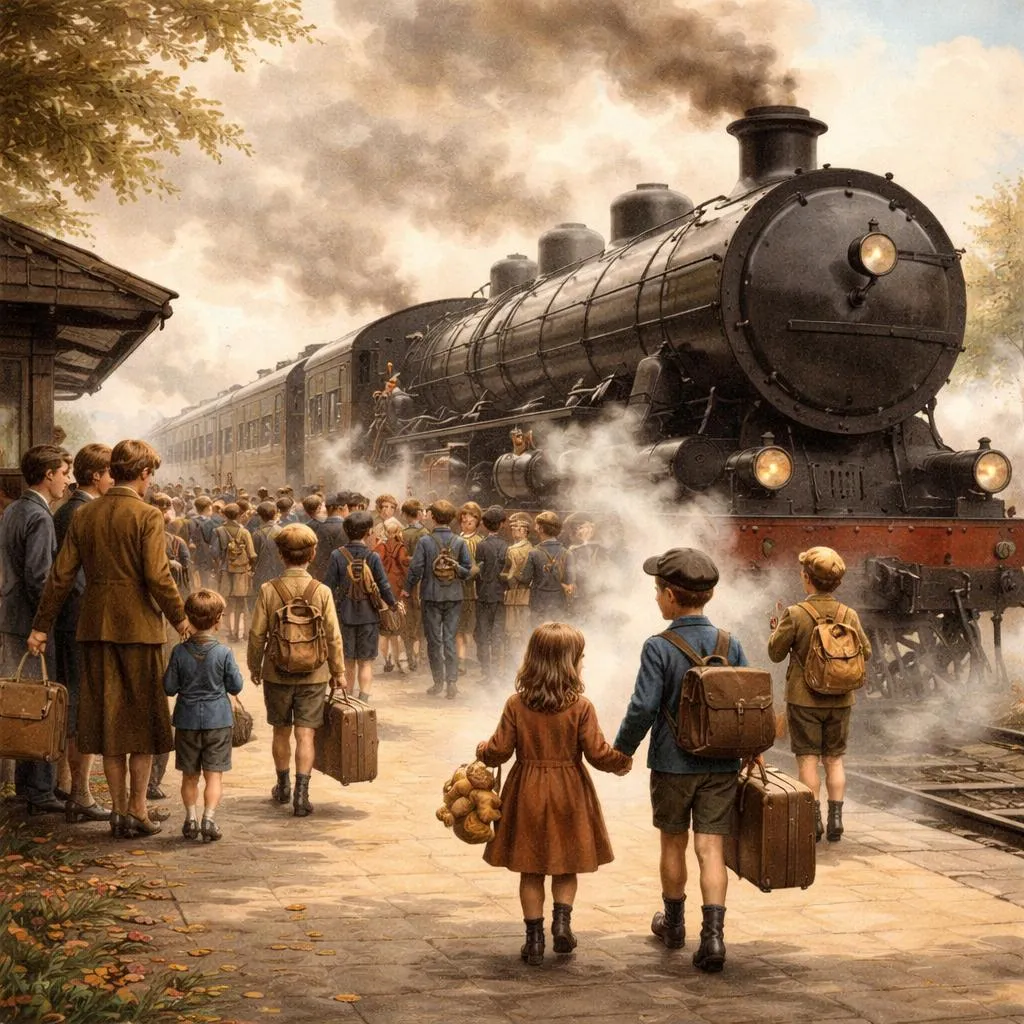

Some stories capture historical moments through personal experience. They transport readers to different times. The question is the children's train a true story arises often with such narratives. This story touches on real historical events. Understanding the facts behind fiction enriches reading. This article explores the historical context of this moving tale. The focus remains on language development through historical narrative. Let us examine how this story supports English learning.
What Is the Children's Train Story? The story known as The Children's Train tells of young evacuees during wartime. Children leave their families for safety. They travel by train to rural areas. Strangers care for them in the countryside. The story follows one child's experience specifically.
Several versions of this narrative exist. A popular novel bears this title. Films have portrayed similar events. The basic premise involves child evacuation during conflict. This historical practice actually occurred in multiple countries during World War II.
Is the Children's Train a True Story? The question is the children's train a true story requires a nuanced answer. The specific characters in fictional versions are invented. Their personal stories come from imagination. However, the evacuation events depicted actually happened historically.
During World War II, many European countries evacuated children from cities. Bombing threatened urban areas significantly. Britain organized Operation Pied Piper. Thousands of children left London and other cities. They traveled to countryside homes. Families hosted these young evacuees. Similar programs existed in other nations.
Italy experienced such evacuations as well. Children from southern cities traveled north. They stayed with rural families during bombing campaigns. These historical events inspired fictional narratives later. So the story blends invented characters with authentic historical situations.
Vocabulary Learning from the Story This narrative introduces vocabulary related to war and evacuation. Conflict words appear throughout. "War," "bombing," "danger," "safety," and "protection" establish the historical context. Students learn words for difficult situations.
Travel vocabulary describes the journey. "Train," "station," "platform," "journey," "luggage," and "ticket" appear naturally. Students build transportation vocabulary through story context.
Emotion words carry the personal experience. "Fear," "hope," "loneliness," "courage," "sadness," and "relief" describe character feelings. These abstract words gain meaning through story events.
Family words contrast with separation. "Mother," "father," "sister," "brother," "home," and "family" appear throughout. The contrast between family and separation makes these words powerful.
Phonics Points in the Story The story contains useful phonics patterns for practice. The "tr" blend appears in key words. "Train," "travel," "trip," and "countryside" share this sound. Students notice the pattern across related vocabulary.
The "ch" sound appears in important nouns. "Children," "church," "lunch," and "teacher" occur naturally. These common words provide sound practice in context.
Long vowel sounds appear in emotion words. "Fear" contains the long "e" sound. "Hope" contains the long "o" sound. "Safe" contains the long "a" sound. Students connect sounds to meaning.
Word families extend from story vocabulary. "Train" connects to "rain" and "pain." "Safe" connects to "cafe" and "chafe." Students extend patterns from story words.
Grammar Patterns in the Story The narrative models past tense consistently. "The children left the city." "They traveled for many hours." "Kind families welcomed them." Students encounter regular and irregular past forms in historical context.
Present tense appears in dialogue. Characters speak in the moment. "I am scared," said the little girl. "You will be safe here," promised the farmer. Students see tense shifts between narration and speech.
Question forms express uncertainty. "Where are we going?" "Will I see my mother again?" "Who will take care of me?" These questions reflect children's real concerns. Students hear question patterns expressing genuine emotion.
Comparative language describes new surroundings. "The countryside was quieter than the city." "The farm smelled fresher than home." "The food tasted different from usual." These comparisons build descriptive language.
Learning Activities with the Story Several activities work well with this narrative. Timeline creation connects story to history. Research actual evacuation timelines. Compare to events in the story. This builds historical understanding alongside reading.
Map activities trace evacuation routes. Find cities that sent children away. Locate rural areas that received them. Measure distances traveled. This combines geography with comprehension.
Letter writing extends the narrative. Imagine being an evacuated child. Write a letter home describing experiences. Use details from the story. This builds empathy and writing skills.
Comparison charts examine fiction versus history. Create two columns. List fictional elements in one. List historical facts in the other. This develops critical thinking about narrative truth.
Printable Flashcards for Story Vocabulary Flashcards reinforce key vocabulary from the story. Create cards for transportation words. "Train," "station," "platform," "track," "carriage," and "engine" appear. Use simple drawings on one side, words on the reverse.
Emotion word flashcards support feeling vocabulary. Create cards with "scared," "hopeful," "lonely," "brave," "sad," and "relieved." Match each feeling to moments in the story.
Family word flashcards build relationship vocabulary. "Mother," "father," "sister," "brother," "grandparent," and "family" appear. Students connect words to story relationships.
Setting flashcards depict story locations. "City," "countryside," "farm," "station," "school," and "home" provide place vocabulary. Students describe what happened in each setting.
Educational Games with the Story Games transform the narrative into interactive learning. Story bingo works well. Create cards with story elements. Train, city, countryside, farmer, mother, separation, reunion. Call out descriptions. Students mark matches.
Timeline sequencing builds historical understanding. Create cards with evacuation events in mixed order. Students arrange them chronologically. This connects story to historical timeline.
Character role play develops empathy. Assign roles of evacuated child, parent, host family. Students act out scenes showing different perspectives. This builds emotional understanding and oral language.
Fact or fiction game tests comprehension. Read statements about the story. Students decide if they represent fact or fiction. This develops critical thinking about narrative truth.
Printable Materials for Story Lessons Printable materials support structured learning with the story. KWL charts organize historical inquiry. What students already Know. What they Want to learn. What they Learned after reading.
Venn diagrams compare fiction and history. One circle for fictional elements. One circle for historical facts. Overlap for elements that are both.
Comprehension questions check understanding. Create questions about characters, setting, plot, and historical context. Students answer after reading.
Vocabulary collectors encourage active word learning. Provide sheets with columns for new words, student drawings, and historical connections. Drawing scenes from history makes words memorable.
Historical Context Exploration Understanding the real events behind the question is the children's train a true story enriches reading. World War II created dangerous conditions for children. Air raids threatened major cities. Governments organized evacuations to protect the young.
Operation Pied Piper in Britain moved over three million people. Most were children. They carried gas masks and small suitcases. Labels identified each child. They boarded trains to unknown destinations. Rural families volunteered to host them.
Similar programs existed across Europe. Italian children left cities in the south. They traveled to northern rural areas. Some stayed for months or years. Letters connected them to families. Reunions after the war brought joy and sometimes sadness.
These historical facts provide context for fictional narratives. Understanding them deepens appreciation of stories. Students learn history while developing language skills.
Connecting Past to Present The story creates opportunities for modern connections. Discuss current refugee children. How are their experiences similar? How are they different? This builds empathy and global awareness.
Family history interviews connect to personal experience. Ask grandparents about wartime experiences. Did anyone experience evacuation? What stories do families tell? This connects reading to personal history.
Peace discussions emerge naturally from war stories. What causes conflict? How can peace be maintained? Students explore these big questions using simple language.
Gratitude expressions follow from historical understanding. Students express thanks for safety and peace. They appreciate aspects of modern life the evacuated children missed.
Character Education Connections The story supports character education naturally. Courage appears throughout. Children leave everything familiar. They face unknown situations bravely. Students discuss what courage looks like in their lives.
Kindness features prominently. Strangers open homes to children. Communities care for the vulnerable. Students explore how kindness appears in their communities.
Hope sustains characters through difficulty. They believe in reunion. They imagine better days. Students discuss what gives them hope during challenges.
Resilience emerges as children adapt. They make new friends. They learn new ways. They grow through difficulty. Students connect this to their own resilience.
The children's train narrative demonstrates how fiction carries historical truth. The question is the children's train a true story leads to rich exploration. Specific characters may be invented, but their experiences reflect real history. Students learn vocabulary of war and evacuation. They encounter grammar in emotionally engaging contexts. They develop historical understanding alongside language skills. This combination of linguistic and historical learning creates powerful educational experiences. Young learners acquire English while exploring how ordinary people survived extraordinary times.