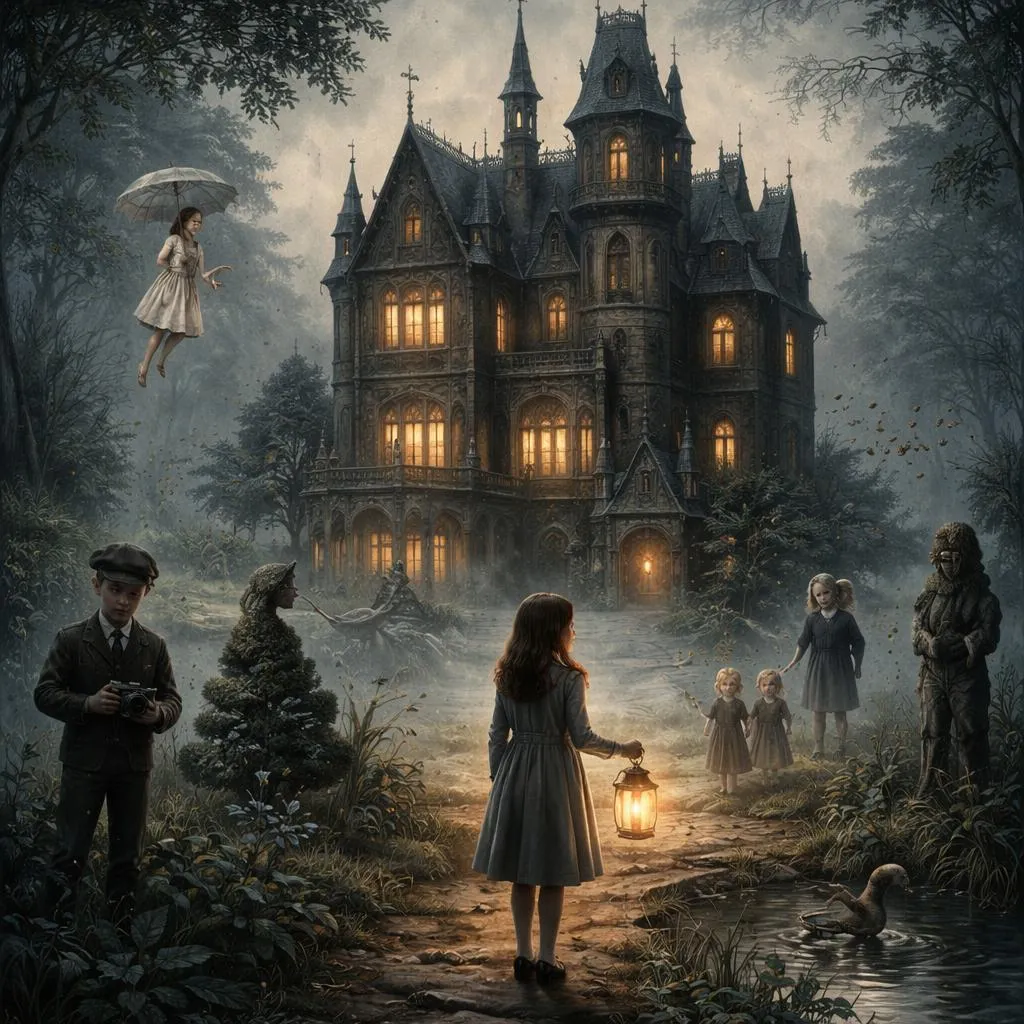

What Is Miss Peregrine's Home for Peculiar Children? Let us explore this fascinating book together. Miss Peregrine's Home for Peculiar Children is a novel by Ransom Riggs. It tells the story of a boy named Jacob discovering a mysterious orphanage. The children there have unusual abilities called peculiarities. One girl floats in the air without effort. Another has bees living inside her body. A boy is invisible and cannot be seen at all. The story blends fantasy, horror, and adventure elements. What makes the book truly unique is its photographs. Vintage pictures appear throughout the pages. These strange, old photographs show the peculiar children. Readers see the floating girl and invisible boy captured on film. The photos make the fantasy world feel strangely real and possible.
The Real Story Behind the Photographs The real story begins with the author finding old photographs. Ransom Riggs collected vintage photos from flea markets and fairs. He found boxes of mysterious pictures people had discarded. The images showed people doing strange and impossible things. Children appeared to float or had unusual features. Riggs felt these pictures needed stories attached to them. They seemed to come from another world entirely. He decided to build a novel around these found photographs. The peculiar children in his book became the people in the pictures. This creative approach made the story unique in publishing. The photos ground the fantasy in something that feels authentic. Readers wonder about the real people once captured on film.
Meaning and Explanation of Found Photography Found photography describes images discovered without context. Someone took these pictures long ago for unknown reasons. The subjects remain unidentified and mysterious. Their stories were lost when families discarded the photos. This creates a strange feeling when viewing them. We see real people from the past frozen in time. But we know nothing about their lives or deaths. The mystery invites imagination to fill the gaps. Ransom Riggs used this invitation creatively. He imagined entire lives for these anonymous faces. The peculiar powers became explanations for strange images. A girl appearing to float might actually have that ability. A boy looking strange might be hiding invisible friends. The photographs become evidence of a hidden world.
Categories of Photographs in the Book We can identify several types of photographs in the story. Levitation images show children appearing to float. These are some of the most famous in the book. Invisibility pictures show empty spaces with hints of presence. A chair slightly moved, a shape barely visible. Strength photographs capture impossible feats of power. Children holding massive objects with ease. Fire images show flames that do not burn. Children playing with fire without harm. Animal connection photos depict children with creatures. Birds, bees, and other animals in unusual relationships. Time manipulation images hint at the loops. Clocks showing wrong times, aged and young together. Each photo category connects to a specific peculiarity.
Daily Life Connections Through the Story This story connects to children's experiences in unique ways. Feeling different from others is a universal childhood experience. The peculiar children feel strange and out of place. Many children relate to this sense of otherness. Finding a hidden world appeals to imagination. Children often imagine secret places and magical spaces. Old photographs exist in many family homes. Children can explore their own family photos for mysteries. Wondering about people in old pictures feels familiar. Stories about protecting friends resonate deeply. The peculiar children protect each other from danger. Friendship and loyalty matter in the book as in life. We can point out these connections during reading. "Those children felt different too sometimes." "Look at old photos at home and imagine stories."
Vocabulary Learning from the Story The story introduces rich and unusual vocabulary. Peculiar means strange, odd, or unusual in some way. The children embrace this word for their differences. Ymbryne names the shape-shifting guardians of the children. They can transform into birds at will. Loop describes a time bubble where days repeat forever. The children live safely in these repeating moments. Hollowgast names the terrible monsters hunting peculiars. They cannot be seen by normal humans. Wights are hollows who regained human form. They serve as villains in the story. Cairnholm is the Welsh island where the home sits. The setting becomes almost a character itself. We can teach these words with examples from the story. Use them in sentences about plot events.
Phonics Points in the Story The story provides useful phonics practice with unusual names. Miss has the short I and double S. Peregrine has the short E and long I. Peculiar has the short E and long U. Character names offer interesting patterns. Jacob has the long A and short O. Emma has the short E and short A. Enoch has the long E and short O. Place names provide phonics elements. Wales has the long A and L blend. London has the short O and short U. Island has the long I and silent S. Creature words demonstrate patterns. Hollow has the short O and low sound. Monster has the short O and ER ending. Bird has the IR combination. We can focus on one sound pattern from each chapter. Find all words with that sound in the section. Write them on photograph shapes for practice.
Grammar Patterns in the Narrative The story models useful grammar for young readers. Past tense carries the main narrative throughout. "Jacob traveled to the island seeking answers." Present tense appears in dialogue and descriptions. "I see the monsters too," he tells his grandfather. Future tense shows character intentions. "We will protect the loop from the hollows." Questions drive the mystery forward. "What happened to the children?" "Who is Miss Peregrine really?" Commands appear in moments of danger. "Run to the house!" "Do not look back!" Descriptive language paints vivid scenes. "The dark, crumbling house stood against the stormy sky." Prepositional phrases describe locations. "Inside the loop, beyond the door, through the bog." We can point out these patterns during reading.
Learning Activities for the Story Many activities deepen engagement with this unique book. Create your own peculiar photograph using props. Pose in ways that suggest special abilities. Write stories for real old photographs from home. Imagine who the people were and what they did. Draw a peculiar child with their special ability. Write a description of how the power works. Create a time loop in the classroom for one day. Repeat the same schedule and notice feelings. Design a map of Cairnholm Island. Mark important locations from the story. Create a hollowgust monster from art materials. Make it as terrifying as imagination allows. These activities make the story world tangible and personal.
Printable Materials for the Story Printable resources support deep engagement with the book. Create character cards for each peculiar child. Include name, peculiarity, and important facts. Design photograph frames for drawing peculiar images. Add captions describing what the photo shows. Make vocabulary cards with words and simple definitions. Peculiar, ymbryne, loop, hollowgast, wight included. Create a timeline of story events for tracking. Mark key moments in Jacob's journey. Design a loop diagram showing how time repeats. Illustrate the same day happening over and over. Make comparison charts between characters. Similarities and differences among peculiars. These printables structure novel study activities.
Educational Games About the Story Games make the peculiar world playful and interactive. Play "Peculiar Charades" acting out different abilities. Floating, invisibility, fire control, and strength appear. Create "Match the Photo" pairing pictures with character descriptions. Use actual photos from the book or created ones. Play "Loop Tag" where tagged players freeze. They repeat the same motion like a time loop. Design "Hollow Hunt" hiding and seeking like monsters. One player hunts while others hide quietly. Play "Ymbryne Says" like Simon Says with bird transformations. "Ymbryne says turn into a bird and fly." Create "Peculiar Bingo" with story elements. Fill cards with characters, places, and events. These games build book knowledge through active participation.
Teaching About Difference and Acceptance The story teaches powerful lessons about being different. Peculiar children cannot help their unusual abilities. They were born this way and cannot change. Society might fear or reject them if discovered. The book shows them creating their own community. They protect and accept each other completely. This models acceptance for all kinds of differences. Children learn that peculiar does not mean bad. It means unique and special in some way. The story validates children who feel different. It shows them finding belonging and family. We can discuss these themes during reading. "How do the children help each other?" "What makes a good friend to someone different?" The monsters represent fear of the unknown. Overcoming fear comes through understanding and courage.
The Role of Photographs in Storytelling The photographs make this story unique in children's literature. They serve as evidence for the fantastic events. Readers see proof that peculiar children existed. The photos create a bridge between reality and imagination. Real old photographs feel authentic and true. But they show impossible things happening. This tension creates the book's special magic. Children can explore this technique in their own writing. Use real photos as prompts for stories. Combine actual images with imaginary narratives. The photos ground fantasy in something recognizable. This makes the impossible feel possible somehow. The technique teaches that inspiration exists everywhere. Old boxes, flea markets, and family albums hide stories. We just need imagination to find them.
The Mystery of Real Vintage Photos The real story behind the book involves genuine mystery. Ransom Riggs found photos of real people long dead. Their identities remain unknown forever perhaps. Who was the levitating girl in the old picture? What happened to the boy surrounded by bees? These real mysteries add depth to the fiction. The book gives them imaginary answers and happy endings. In the story, these children found safety and love. They discovered others like themselves and a home. This satisfies something deep in readers. We want the mysterious people to have happy stories. The book provides this comfort while preserving mystery. Children can wonder about their own found photos. Each old picture holds a story waiting to be told. The real and imaginary blend together beautifully.